Category Archives: Food Microbiology Research

Research – Quality changes and shelf life prediction of cooked cured ham stored at different temperatures

Journal of Food Protection

Cooked cured ham is a ready-to-eat food that is popular among consumers. Stored temperature has a key effect on the quality and shelf life of ham. In this work, the quality changes and shelf life prediction of cooked cured ham stored at different temperatures were investigated. Sensory evaluation, physical and chemical indicators, and aerobic plate count were determined. Results showed that high storage temperature of cooked ham accelerates quality deterioration. Partial least squares (PLS) regression analysis based on the variable importance for projection (VIP) identified nine important variables for predicting the shelf life of cooked cured ham. Compared with either PLS or back-propagation artificial neural network (BP-ANN), the hybrid PLS–BP-ANN model better predicts the shelf life of cooked cured ham using the nine important variables. This study provides a theoretical basis and data support for the quality control of cooked cured ham and a new idea for research on the shelf life prediction of cooked cured ham.

Research – Ozone Treatments for Preserving Fresh Vegetables Quality: A Critical Review

MDPI

Ozone is recognized as an antimicrobial agent for vegetables storage, washing, and processing. This strong disinfectant is now being used in the food industry. In this review, the chemical and physical properties of ozone, its generation, and factors affecting ozone processing efficiency were explained as well as recent regulatory developments in the food industry. By then selecting three vegetables, we show that ozone avoids and controls biological growth on vegetables, keeping their attractive appearance and sensorial qualities, assuring nutritional characteristics’ retention and maintaining and increasing the shelf-life. In liquid solution, ozone can be used to disinfect processing water and vegetables, and in gaseous form, ozone helps to sanitize and preserve vegetables during storage. The multifunctionality of ozone makes it a promising food processing agent. However, if ozone is improperly used, it causes some deleterious effects on products, such as losses in their sensory quality. For an effective and a safe use of ozone, specific treatment conditions should be determined for all kinds of vegetables. In a last step, we propose highlighting the different essential characteristics of ozone treatment in order to internationally harmonize the data relating to the treatments carried-out.

Research – Rapid Testing and Interventions to Control Legionella Proliferation following a Legionnaires’ Disease Outbreak Associated with Cooling Towers

MDPI

Legionella_Plate_01

Most literature to date on the use of rapid Legionella tests have compared different sampling and analytical techniques, with few studies on real-world experiences using such methods. Rapid tests offer a significantly shorter feedback loop on the effectiveness of the controls. This study involved a complex of five factories, three of which had a history of Legionella contamination in their cooling water distribution system. Multiple sampling locations were utilised to take monthly water samples over 39 months to analyse for Legionella by both culture and quantitative polymerase chain reaction (qPCR). Routine monitoring gave no positive Legionella results by culture (n = 330); however, samples were frequently (68%) positive by qPCR for Legionella spp. (n = 1564). Legionella spp. qPCR assay was thus found to be a good indicator of cooling tower system health and suitable as a routine monitoring tool. An in-house qPCR limit of 5000 genomic units (GU)/L Legionella spp. was established to trigger investigation and remedial action. This approach facilitated swift remedial action to prevent Legionella proliferation to levels that may represent a public health risk. Cooling tower operators may have to set their own action levels for their own systems; however, in this study, 5000 GU/L was deemed appropriate and pragmatic. View Full-Text

Research – Microbiological contamination of ready to eat algae and evaluation of Bacillus cereus behavior by microbiological challenge test

Journal of Food Protection

Consumption of seaweeds, often categorized as a superfood, is becoming popular in western countries. Algae can be marketed fresh, but are usually sold dehydrated to ensure longer shelf life. The consumption, often as ready to eat, open up possible risks for public health because of foodborne pathogens that can contaminate the raw material during harvesting or manipulation. In this study, fourteen ready to eat foods based on dehydrated algae, representative of the most consumed species, were considered. The microbial content, with a focus on Listeria monocytogenes and Bacillus cereus, was investigated by plate counts and B. cereus strains were isolated and identified by 16s rRNA gene sequencing. The microbiological quality was heterogeneous among the samples and, in particular, marine bacteria, Listeria spp., B. cereus and coliforms were detected. To contribute to related risk assessment, the ability of B. cereus to grow during refrigerated storage was evaluated, to our knowledge for the first time, by a microbiological challenge test on two ready to eat foods based on Undaria pinnatifida and Palmaria palmata.  Despite this study demonstrating the inability of B. cereus to proliferate in seaweed-based food, its presence in dehydrated foodstuffs cannot rule out the replication after rehydration before consumption, making it necessary to shed light on the possible risks for consumers.

Research – Biofilm-forming ability of poultry Campylobacter jejuni strains in the presence and absence of Pseudomonas aeruginosa

Canadian Journal of Microbiology

The aims of this study were to evaluate the ability of Campylobacter jejuni isolated from a poultry slaughterhouse to form biofilm in the presence and absence of Pseudomonas aeruginosa, and the effect of surface (stainless steel, polystyrene), temperature (7, 25, and 42 °C), and oxygen concentration (microaerophilic and aerobic conditions) on the formation of biofilm. The genes ahpCcadFclpPdnaJdocAflaAflaBkatAkpsMluxSracR, and sodB, related to biofilm formation by C. jejuni, were also investigated. All isolates formed biofilm on stainless steel and on polystyrene, in both aerobic and microaerophilic atmospheres, including temperatures not optimal for C. jejuni growth (7 and 25 °C), and biofilm also was formed in the presence of P. aeruginosa. In dual-species biofilm on stainless steel, biofilm formation was 2–6 log CFU·cm−2 higher at 7 °C for all isolates, in comparison with monospecies biofilm. Ten genes (ahpCcadFclpPdnaJdocAflaAflaBluxSracR, and sodB) were detected in all isolates, but katA and kpsM were found in four and six isolates, respectively. The results obtained are of concern because the poultry C. jejuni isolates form biofilm in different conditions, which is enhanced in the presence of other biofilm formers, such as P. aeruginosa.

Research – Investigation of On-Farm Transmission Routes for Contamination of Dairy Cows with Top 7 Escherichia coli O-Serogroups

Springer

Shiga toxin-producing Escherichia coli (STEC) are foodborne bacterial pathogens, with cattle a significant reservoir for human infection. This study evaluated environmental reservoirs, intermediate hosts and key pathways that could drive the presence of Top 7 STEC (O157:H7, O26, O45, O103, O111, O121 and O145) on pasture-based dairy herds, using molecular and culture-based methods. A total of 235 composite environmental samples (including soil, bedding, pasture, stock drinking water, bird droppings and flies and faecal samples of dairy animals) were collected from two dairy farms, with four sampling events on each farm. Molecular detection revealed O26, O45, O103 and O121 as the most common O-serogroups, with the greatest occurrence in dairy animal faeces (> 91%), environments freshly contaminated with faeces (> 73%) and birds and flies (> 71%). STEC (79 isolates) were a minor population within the target O-serogroups in all sample types but were widespread in the farm environment in the summer samplings. Phylogenetic analysis of whole genome sequence data targeting single nucleotide polymorphisms revealed the presence of several clonal strains on a farm; a single STEC clonal strain could be found in several sample types concurrently, indicating the existence of more than one possible route for transmission to dairy animals and a high rate of transmission of STEC between dairy animals and wildlife. Overall, the findings improved the understanding of the ecology of the Top 7 STEC in open farm environments, which is required to develop on-farm intervention strategies controlling these zoonoses.

RASFF Alert – Histamine – Chilled Tuna Loins

European Food Alerts

RASFF

histamine (>1000 mg/kg – ppm) in chilled tuna loins from Sri Lanka in France

USA – USDA -FSIS Outbreak Table

FSIS USDA

The table below lists outbreak investigations in which FSIS responded by posting a recall of FSIS-regulated product linked to illness, a public health alert, and/or an after-action review report. The table does not include outbreak investigations that did not result in one or more of these outcomes.

The Outcomes & References column includes links to recall notices, public health alerts, and after-action review reports, as well as CDC outbreak notices for selected multistate foodborne outbreaks, which provide additional information. For a list of all foodborne outbreaks reported to CDC since 1998, please use the CDC National Outbreak Reporting System Dashboard.

Outbreak Year Pathogen Product Outcomes & References Active
2021 Salmonella Hadar Turkey (suspect) Yes
2021 Escherichia coli O145 (E-coli) Beef, ground (suspect) No
2021 Escherichia coli O157:H7 (E-coli) Unknown

CDC Notice: View CDC Investigation Notice

No
2021 Listeria monocytogenes Unknown No
2021 Escherichia coli O157:H7 (E-coli) Beef, ground (suspect) Yes
2020 Listeria monocytogenes Italian-style deli meats (suspect)

CDC Notice: View CDC Investigation Notice

No
2019 Salmonella Schwarzengrund Turkey, ground FSIS Recall: Butterball LLC Recalls Turkey Products Due to Possible Salmonella Schwarzengrund Contamination
FSIS After-Action Review:

CDC Notice: CDC Notice: Schwarzengrund-03-2019

No
2019 Escherichia coli O157:H7 (E-coli) Beef, ground FSIS Recall: New Seasons Market Recalls Ready-To-Eat Sesame Noodle Chicken Salad Products Due to Misbranding and Undeclared Allergens
FSIS After-Action Review:

Yes
2019 Salmonella Beef, ground FSIS Recall: Central Valley Meat Co., Inc. Recalls Ground Beef Products Due to Possible Salmonella Dublin Contamination
FSIS After-Action Review:

CDC Notice: CDC Notice: Dublin-11-2019

No
2019 Escherichia coli O157:H7 (E-coli) Beef, ground FSIS Recall: K2D Foods Recalls Raw Ground Beef Products Due to Possible E. coli O103 Contamination

CDC Notice: CDC Notice: O103-04-2019

No
2018 Salmonella Typhimurium Chicken salad FSIS Recall: Triple T Specialty Meats Inc. Recalls Chicken Salad Products Due to Possible Salmonella Contamination
FSIS After-Action Review:

CDC Notice: CDC Notice: Typhimurium-02-2018

No
2018 Listeria monocytogenes Pork patty rolls FSIS Recall: 165368 C. Corporation Recalls Pork Products Due to Possible Listeria Contamination

CDC Notice: CDC Notice: Lm-11-2018

No
2018 Salmonella Reading Turkey, ground FSIS Recall: Jennie-O Turkey Store Sales, Inc. Recalls Raw Ground Turkey Products due to Possible Salmonella Reading Contamination
FSIS Recall: Jennie-O Turkey Store Sales, LLC Recalls Raw Ground Turkey Products due to Possible Salmonella Reading Contamination
FSIS After-Action Review:

CDC Notice: CDC Notice: Reading-07-2018

No
2018 Salmonella Newport Beef, ground FSIS Recall: JBS Tolleson, Inc. Recalls Raw Beef Products due to Possible Salmonella Newport Contamination
FSIS Recall: JBS Tolleson, Inc. Recalls Raw Beef Products Due to Possible Salmonella Newport Contamination

CDC Notice: CDC Notice: Newport-10-2018

No
2018 Listeria monocytogenes Ham, ready-to-eat FSIS Recall: Johnston County Hams Recalls Ready-To-Eat Ham Products Due to Possible Listeria Contamination
FSIS Recall: Ukrop’s Homestyle Foods Recalls Ready-To-Eat Meat and Poultry Products Due to Possible Listeria Contamination
FSIS After-Action Review:

CDC Notice: CDC Notice: Lm-10-2018

No
2018 Escherichia coli O157:H7 (E-coli) Beef, ground FSIS Recall: Publix Super Markets Inc. Recalls Ground Chuck Products Due To Possible E. coli O26 Contamination
FSIS Recall: Cargill Meat Solutions Recalls Ground Beef Products due to Possible E. coli O157:H7 Contamination
FSIS After-Action Review:

CDC Notice: CDC Notice: O26-09-2018

No
2018 Salmonella I 4,[5],12:i:- Chicken FSIS Recall: Empire Kosher Poultry Inc. Recalls Chicken Products Due To Possible Extraneous Material Contamination

CDC Notice: CDC Notice: Salmonella-08-2018

No
2018 Salmonella Enteritidis Chicken, raw, breaded FSIS After-Action Review:

No
2017 Escherichia coli O157:H7 (E-coli) Beef, ground FSIS Recall: Vermont Livestock Slaughter And Processing LLC, Recalls Ground Beef Due To Possible E. Coli O157:H7 Contamination No
2016 Salmonella I 4,[5],12:i:- Chicken, rotisserie FSIS After-Action Review:

No
2016 Escherichia coli O157:H7 (E-coli) Beef, ground FSIS Recall: Adams Farm Slaughterhouse Recalls Beef, Veal, And Bison Products Due To Possible E. Coli O157:H7 Adulteration

CDC Notice: CDC Notice: O157H7-09-2016

No
2016 Escherichia coli O157:H7 (E-coli) Beef, ground FSIS Recall: PT Farm, LLC Recalls Beef Products Due To Possible E. Coli O157:H7 Contamination No
2016 Escherichia coli O157:H7 (E-coli) Beef, ground FSIS Recall: Good Food Concepts, LLC D.B.A. Ranch Foods Direct Recalls Non-Intact Beef Products Due To Possible E. Coli O157:H7 Contamination No
2016 Salmonella I 4,[5],12:i:- Pork (including at pig roasts) FSIS Recall: Kapowsin Meats Inc. Recalls Pork Products Due To Possible Salmonella Contamination
FSIS After-Action Review:

No
2016 Escherichia coli O157:H7 (E-coli) Beef, ground FSIS Recall: Snapp’s Ferry Packing Company Recalls Beef Product Due To Possible E. Coli O157:H7 Contamination No
2015 Salmonella I 4,[5],12:i:- and Salmonella Infantis Pork (including at pig roasts) FSIS Recall: Kapowsin Meats Recalls Pork Product Due To Possible Salmonella Contamination
FSIS After-Action Review:

CDC Notice: CDC Notice: Salmonella-08-2015

No
2015 Salmonella Enteritidis Chicken, stuffed FSIS Recall: Aspen Foods Recalls Frozen, Raw, Stuffed & Breaded Chicken Products Due to Possible Salmonella Enteritidis Contamination
FSIS After-Action Review:

CDC Notice: CDC Notice: Enteritidis-07-2015

No
2015 Salmonella Enteritidis Chicken, stuffed FSIS Recall: Barber Foods Recalls Stuffed Chicken Products Due To Possible Salmonella Enteritidis Contamination
FSIS After-Action Review:

CDC Notice: CDC Notice: Enteritidis-07-2015

No

USA – Marler renews call for declaring ‘outbreak serotypes’ of Salmonella as adulterants in meat and poultry

Food Safety News

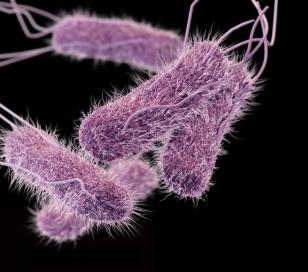
Salmonellaa

Image CDC

Food safety attorney Bill Marler wants to know what’s up with his petition calling on the USDA to declare specific “outbreak serotypes” of Salmonella as adulterants in meat.

He filed the petition more than a year ago, on Jan. 19, 2020, with USDA’s Food Safety and Inspection Service (FSIS), on behalf of Rick Schiller, Steven Romes, the Porter family, Food & Water Watch, Consumer Federation of America, and Consumer Reports.

The petition asks FSIS to declare the following Salmonella “outbreak serotypes” as per se contaminants in meat and poultry products:

Salmonella Agona, Anatum, Berta, Blockely, Braenderup, Derby, Dublin, Enteritidis, Hadar, Heidelberg, I 4,[5],12:i:-, Infantis, Javiana, Litchfield, Mbandaka, Mississippi, Montevideo, Muenchen, Newport, Oranienburg, Panama, Poona, Reading, Saintpaul, Sandiego, Schwarzengrund, Senftenberg, Stanley, Thompson, Typhi, and Typhimurium.

Research – Raw pet food microbiology safety risks rise with owner cognitive bias

Pet Food Industry

The optimistic belief that Salmonella only infects other people exemplifies a cognitive bias.

Although still a small portion of the overall pet food market, raw pet food sales grew at faster rates than kibble or conventional wet dog and cat foods during the pandemic. With the rising popularity of raw pet foods, people may believe they are following safe practices more than they…

To read more you will need to login to their site.