Category Archives: Food Microbiology Research

USA -FDA Core Investigation Table Update

FDA

Date
Posted
Ref Pathogen or
Cause of Illness

Product(s)
Linked to
Illnesses

(if any)
Total
Case Count

Status
4/20/

2022

1064 Not Yet
Identified
Dry Cereal 231 adverse
event reports
Active
4/13/

2022

1057 Listeria
monocytogenes
Not Yet
Identified
15 Active
4/6/

2022

Not App Norovirus* Raw Oysters See
CDC Alert
Active
3/30/

2022

1060 Not Yet
Identified
Meal Replacement
Drink
6 adverse
event reports
Active
3/16/

2022

1055 Salmonella
Saintpaul
Not Yet
Identified
60 Active
2/17/

2022

1056 Cronobacter
sakazakii
Powdered
Infant
Formula
See
Advisory
Active
2/9/

2022

1040 Listeria
monocytogenes
Not Yet
Identified
17 Active
2/2/

2022

1054 Enteroinvasive
E. coli
O143:H26
Not
Identified
16 Closed
1/10/

2022

1050 E. coli
O121:H19
Romaine 4 Closed
12/29/

2021

1052 E. coli
O157:H7
Packaged
Salad
See Outbreak
Advisory
Closed
12/20/

2021

1039 Listeria
monocytogenes
Packaged
Salad
See Outbreak
Advisory
Closed
12/15/

2021

1048 Listeria
monocytogenes
Packaged
Salad
See Outbreak
Advisory
Closed

Research – Food Safety in Focus: Clarifying Potential Hazards on Low-Moisture Foods

Newswise

Newswise — Washington D.C. — New research on hazards in low-moisture foods fills critical knowledge gaps and identifies cutting-edge decontamination tools that empowers food safety professionals to reduce risks in low-moisture foods and prevent foodborne illness outbreaks. To evaluate these hazards, the Institute for the Advancement of Food and Nutrition Sciences (IAFNS) supported a body of research on this topic.

The persistence of pathogens and viruses in ingredients and ready-to-eat foods has wide-ranging impacts on our food supply, and ultimately our health. Because low-moisture foods (LMF) such as nuts, dried fruits, cereal products, and chocolate are often used as ingredients in the manufacture of other foods, they carry significant potential for the amplification of outbreaks and recalls over a wide variety of products.

There has been worldwide recognition of the need to more seriously manage the microbiological hazards associated with these products. In particular, the underlying factors that mediate pathogen survival in LMF under standard processing and storage conditions—as well as mechanisms for isolating and inactivating them—have yet to be fully understood.

To address this need, IAFNS supported a body of research on this topic. Part of these studies were performed as part of a multi-center research collaboration between the University of Guelph, Health Canada, and North Carolina State University. This collaboration between investigators in the United States and Canada enabled the investigators’ diverse perspectives and expertise to strengthen this line of research.

For example, foodborne bacterial and viral pathogens such as Listeria monocytogenesSalmonella, and norovirus can survive in LMF and in dry food processing environments for months, or even years. Whether—and for how long—these pathogens remain capable of causing human illness is not completely understood. According to Dr. Jeff Farber of the University of Guelph, “the increased awareness of the importance of low-moisture foods as a possible vehicle for foodborne illness has already led to better approaches towards prevention and control and will continue to do so in the future.”

Furthermore, the lower moisture content of dry foods and manufacturing environments can substantially increase the heat resistance of foodborne pathogens and can increase their tolerance to further treatments, posing a vexing food safety challenge. As such, IAFNS supported further work by Dr. Meijun Zhu at Washington State University to comprehensively evaluate L. monocytogenes survival in LMF during heat processing, and to examine factors impacting their resistance. According to Dr. Zhu, “L. monocytogenes can survive in LMF for an extended period. The desiccation stability of L. monocytogenes in LMF is impacted by water activity, food matrices, and storage temperature. The thermal resistance of L. monocytogenes in LMF is inversely related to water activity and depends on the food composition. In general, L. monocytogenes is more stable at lower water activity and fat-rich food matrix.”

The key findings from this series of studies and their impact on public health are summarized below.

Findings

Identifying Novel Genes That Facilitate Survival of Salmonella in LMF

Ten genes important to Salmonella survival on LMF were impaired and their survival studied on pistachios. Pistachios were treated with pathogens and then measured after treatment, after drying, and after 120 days. The findings support a mutagenesis and sequencing strategy to identify genes key to Salmonella survival on LMF.

Modeling L. monocytogenes Survival on Model LMF

Three model LMF were inoculated with a 4-strain cocktail of L. monocytogenes to evaluate their survival under long-term (8-12+ months) storage at 23°C and 4°C. Decreases in L. monocytogenes during storage on the LMF were the result of both cellular inactivation and transition to a viable-but-not-nonculturable state. The surviving cells — specifically after long-term storage at 4°C on the chocolate liquor and pistachios — remained infectious and capable of replication. These findings will help predict future microbial health risk incidents. The paper also calls for adding LMF to food safety questionnaires used during listeriosis outbreaks because of this concern.

Pathogen Inactivation

Two decontamination methods were studied for inactivating a cocktail of Salmonella or Listeria monocytogenes inoculated on dried strawberry, dried apple, raisins, chocolate crumb, cornflakes and pistachios. One method was based on an acid-ethanol sanitizer and the other combined UV radiation, ozone and peroxide. Both methods show promise in reducing risks in LMF depending on the type of pathogen and product.

Virus Isolation

Foodborne viruses such as norovirus and hepatitis A virus (HAV) are highly transmissible, persist in the environment, and resist inactivation. Foods can become contaminated with these viruses during harvest, handling or processing. This study compared a bead-based magnetic assay with an existing International Organization for Standardization (ISO) method for virus recovery and tested it on chocolate, pistachios and cornflakes. Thus, depending on the food matrix and the virus, the bead-based assay efficiently and rapidly extracts viruses from LMF.

L. monocytogenes Survival and Virulence on Apples, Strawberries and Raisins

The survival of Listeria monocytogenes was measured during long-term storage on three fruits. After dry inoculation and storage at two different temperatures and humidity levels, the results show that L. monocytogenes is rapidly inactivated during storage on raisins and dried strawberries at 23°C, but capable of long-term survival at 4°C.

Virus Inactivation

This study examined the survival of foodborne viruses in LMF during 4-week storage at room temperature. It also evaluates a treatment geared toward inactivating viruses. Pistachios, chocolate and cereal were inoculated with hepatitis A virus and two related viruses. Then viral survival was measured over a four-week incubation at room temperature. The study found that while foodborne viruses can persist for a long time in LMF, combining UV radiation, ozone and peroxide as a treatment may represent an effective inactivation method.

Viable but Nonculturable

In this study, dried apples, strawberries and raisins were mixed with a five-strain cocktail of Salmonella and then dried. However, Salmonella could not be recovered, even after being enriched. The use of microscopy methods revealed that 56-85% of Salmonella cells were still viable despite their nonculturable state. These data suggest that the unique combination of stressors on dried fruit can keep pathogens viable but undetectable by culture, posing hidden risks for food safety.

The safety of low moisture foods in the food supply is capturing more scientific attention. Examining the survival and inactivation of pathogens and viruses on specific foods under common production conditions provides insights into the extent of contamination and methods to prevent it. This new information fills critical knowledge gaps and identifies cutting-edge decontamination tools that empower food safety professionals to reduce risks in low-moisture foods and prevent foodborne illness outbreaks.

The Institute for the Advancement of Food and Nutrition Sciences (IAFNS) Food Microbiology Committee continues to proactively improve the understanding and control of microbial food safety hazards to enable scientifically informed decision making. IAFNS committed to leading positive change across the food and beverage ecosystem. IAFNS is a 501(c)(3) science-focused nonprofit uniquely positioned to mobilize government, industry and academia to drive, fund and lead actionable research. iafns.org.

USA – Parnell brothers plan to file objections to magistrate’s denial recommendation

Food Safety News

Brothers Stewart Parnell, 67, and Michael Parnell, 63, will each be filing objections to the federal habeas corpus recommendations against them in relation to food safety felonies involving the deadly 2008-09 multistate Salmonella outbreak associated with Peanut Corporation of America .

And Magistrate Judge Thomas Q. Langstaff has granted both brothers 14 additional days to file objections to his recommendation for denial of their habeas corpus petitions brought under Section 2255.

In the two decisions, running about 40-pages each, the magistrate judge came to very similar conclusions. For the Stewart Parnell Motion 2255, he makes this conclusion: “Petitioner has failed to establish by a preponderance of the evidence trial counsel’s ineffective assistance. Wherefore, it is recommended that Petitioner Stewart Parnell’s Motion to Vacate, Set Aside, or Correct Sentence Pursuant to 28 U.S.C. § 2255 be denied.”

And his conclusion for Michael Parnell’s Motion 2255: “Petitioner has failed to establish by a preponderance of the evidence trial counsel’s ineffective assistance. Wherefore, it is recommended that Petitioner Michael Parnell’s Motion to Vacate, Set Aside, or Correct Sentence Pursuant to 28 U.S.C. § 2255 be denied.”

Department of Justice attorneys, however,  did not have any objections to granting the Parnells more time to file objections.

USA – FDA investigates outbreak linked to cereal; continues with other outbreak work

Food Safety News

The FDA is investigating more than 200 “adverse events” related to an unnamed dry cereal. In recent days reports from across the country regarding illnesses linked to Lucky Charms cereal have been filed with government agencies and the iwaspoisoned.com website.

The reports include vomiting, diarrhea and other gastrointestinal symptoms. The Food and Drug Administration has separately reported in recent days that is is investigating complaints about Lucky Charms but has not released any other details about the investigation. General Mills, the maker of Lucky Charms, has reported that it is not aware of any confirmed illnesses associated with the cereal.

As of April 20, the FDA has initiated an on-site inspection in relation to the complaints about the cereal. 

The agency has not reported any information about the people who made the complaints of adverse events related to the cereal and has not reported where they live.

Research – Raw-milk cheeses: What are the associated health risks and what preventive measures can be taken?

ANSES

Salmonella, enterohaemorrhagic E. coli, Listeria monocytogenes – a wide range of bacteria can be found in the raw-milk cheeses and other raw-milk dairy products we consume. These are sometimes involved in cases of food poisoning, leading them to be recalled or withdrawn from the market. In order to further improve the control of these risks, ANSES has identified the types of raw-milk cheeses on which efforts should focus as a priority.

ANSES received a request from the Directorate General for Food to identify and classify the main bacterial hazards associated with the various types of raw-milk cheeses and other dairy products made from raw milk. The aim was also to assess the main sources of contamination and the means implemented to control the associated risks.

The main microbiological hazards in raw-milk cheeses and dairy products

In France over the last decade, 34%, 37% and 60% of outbreaks of salmonellosis, listeriosis and enterohaemorrhagic E. coli (EHEC) infections respectively have been linked to the consumption of raw-milk cheeses. While some bacteria can cause gastroenteritis symptoms (Salmonella spp. and Staphylococcus aureus), others can have much more serious consequences such as kidney failure (EHEC) or even death (L. monocytogenes, EHEC).

The main sources of these hazards are soft cheeses with a surface mould (such as Camembert, Brie and Crottin) and short-ripened uncooked pressed cheeses (such as Morbier, Reblochon and Saint-Nectaire). Next come soft washed-rind cheeses such as Munster and Maroilles.

Continue efforts to prevent microbiological risks, from farm to consumer

The means implemented to control microbiological risks in the main dairy sectors (cattle, sheep, goats), from the rearing stage to the consumption stage, were studied by the Agency. It concluded that:

At farm level, good animal husbandry and hygiene practices are well known in the various sectors. The efforts already well under way in terms of hygiene during milking and the management of mastitis should be continued;
At the production stage, levels of risk control are also very high; the Agency recommends continuing to implement good hygiene practices and to carry out self-checks in order to best anticipate any risk of an outbreak;
At consumer level, in order to avoid a foodborne infectious disease, it is essential to comply with the information on the packaging or that given by the seller concerning the temperature at which the cheese should be stored in the refrigerator and its use-by date. Lastly, ANSES reiterates its recommendation that pregnant women, immunocompromised individuals, people over the age of 65 and young children should avoid consuming raw-milk cheeses, with the exception of hard pressed cheeses such as Gruyère and Comté.

“For several years now, we have been seeing a strong commitment on the part of the various raw-milk cheese sectors to preventing microbiological risks. Thanks to the actions taken, levels of hygiene and risk control are now very high on farms. The self-checks implemented at the processing stage are able to identify a large number of problematic batches. However, there is still a residual risk and it is important to identify new ways of optimising the current control measures. For example, this could involve improving epidemiological investigations, identifying poor hygiene practices at an earlier stage, or communicating more with consumers”, explains Laurent Guillier, who coordinated ANSES’s expert appraisal.

Did you know?

Contrary to popular belief, removing the rind from a raw-milk cheese is not enough to protect yourself against bacteria, as these can be found everywhere in the cheese.

On the other hand, when raw-milk cheeses are well cooked, as in an oven-baked recipe, they no longer pose a health risk.

A new forthcoming expert appraisal
This work to classify raw-milk cheeses was a first step in responding to the formal request. The expert appraisal work is continuing, to evaluate the effectiveness of the various health measures such as the sorting of milk at farm level and self-checks at the production stage. The next step will be to identify priority work areas for further reducing microbiological risks.

Click to access BIORISK2019SA0033.pdf

USA – New Salmonella outbreak possibly linked to chicken under investigation by USDA

Food Safety News

The USDA is investigating a new Salmonella Enteritidis outbreak but little information has been released.

Chicken has been identified as the possible source for the pathogen, according to the U.S. Department of Agriculture’s Food Safety Inspection Service.

The agency has not released any information regarding the number of infected people or where they live. Similarly, no information  has been released about companies involved in the investigation or brands of chicken involved.

As of April 19 the Centers for Disease Control and Prevention had not released any information regarding the outbreak.

Research – Initial and Final Cell Concentrations Significantly Influence the Maximum Growth Rate of Listeria monocytogenes in Published Literature Data for Whole Intact Fresh Produce

Journal of Food Protection

Listeria monocytogenes has shown the ability to grow on fresh uncut produce, however the factors that control growth are not well understood. Peer reviewed journal articles (n=29) meeting the inclusion criteria and related to the growth of Listeria monocytogenes of fresh produce were found through university library databases and Google Scholar searches. Growth models were fit to each of the extracted 130 datasets to estimate log CFU/day rates of growth using the DMfit tool. Multiple linear stepwise regression models for factors influencing growth rate were developed using the software R. Factors included were temperature, nutrient level of inoculation buffer, initial cell concentration, final cell concentration, inoculation method, container permeability, and surface characteristics. The full model produced adjusted-R2, AIC and RMSE values of 0.41, 488 and 1.61 respectively. Stepwise regression resulted in a reduced model with parameters for incubation temperature, inoculation buffer type, initial and final cell concentrations, container characteristics and produce surface characteristics. Model fit statistics improved slightly in the reduced model. A further reduced 3-parameter model included storage temperature and initial and final cell concentration with interaction terms. This 3-parameter model had adjusted-R2, AIC and RMSE values of 0.66, 417 and 1.24 respectively. Incubation temperature (p=1.00E-09) initial cell concentration (p=3.05E-12) final cell concentration (p=4.17E-09) all had highly significant effects on maximum growth rate. Our findings show the importance of inoculum concentration and produce microbial carrying capacity on the estimated growth rate and highlight the overall importance that temperature has on growth rate. Future experiments should consider initial inoculum concentration carefully when conducting growth studies for L. monocytogenes on whole produce.

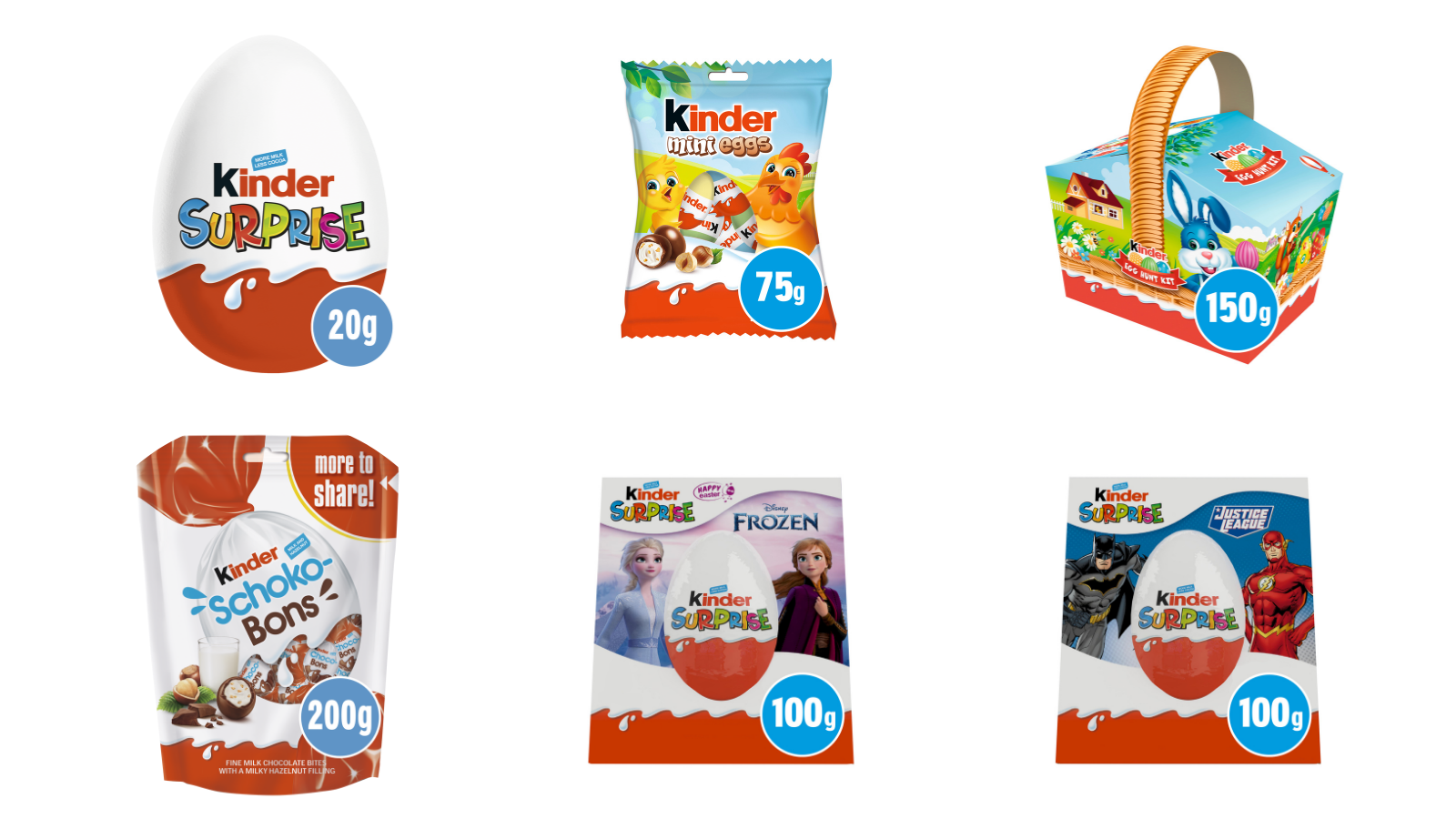
UK – ‘Don’t take the risk’: The FSA, FSS and UKHSA issue reminder that a range of Kinder egg products and Schoko-Bon’s should not be eaten this Easter weekend

FSA

The agencies are continuing to work with Public Health Scotland, Public Health Wales, Public Health Agency Northern Ireland – as well as international public health and food safety authorities – to investigate an ongoing outbreak of Salmonella linked to certain Kinder egg product ranges and Schoko-Bons produced at one of the Ferrero company’s factories, in Arlon, Belgium.

Full details on the products affected and the recall can be found here (Opens in a new window).

Kinder product recall items

As of 15 April, there are 70 cases linked to this outbreak in the UK. The majority of the cases are in children under 5 years of age.

Emily Miles, Chief Executive of the Food Standards Agency said:

“As we go into the Easter weekend, we are strongly urging consumers to follow the advice in the latest recall notice and to check any Kinder products they might have already bought against the list detailed in the notice, as they may pose a risk to health. If they do have any products on the list, they should not eat them and should discard them immediately.

“We have emphasised to the business and the authorities in Belgium the importance of taking a precautionary approach to their recall and trust that they will continue to put consumers’ needs first in any action they take.”

Dame Jenny Harries, Chief Executive of the UK Health Security Agency (UKHSA), said:

“We’re reminding people of the recall this Bank Holiday weekend as it’s possible these products have been bought and stored as gifts, or for events such as Easter trails.

“It’s crucial these products are not eaten and are discarded. Salmonella infection can be severe and many children affected in this outbreak have been very unwell and hospitalised, so anyone giving chocolate products to friends or family should take extra care to ensure their Easter gifts are not amongst those products recalled.

“Thank you to parents and guardians  who worked with us and other public health authorities in the UK to tell us what their children had eaten prior to becoming unwell – this allowed us to rapidly pinpoint a potential source of infection and helped food chain investigations both in this country and in Europe. We understand this has been a worrying time for these families, and their responses have helped to prevent more children and vulnerable adults being affected.”

Symptoms of salmonellosis – or infection with salmonella – typically resolve themselves within a few days. However, symptoms can be more severe, especially in young children, those who are pregnant and those with weakened immune systems.

Anybody with concerns that they have symptoms of salmonellosis should contact their GP or call NHS 111. Salmonella can be spread from person to person as well as from food, so anyone affected should adhere to good hygiene practices, such as washing hands thoroughly after using the bathroom and avoiding handling food for others where possible, if you have symptoms.

Notes to Editors:

The following products have been recalled and regardless of best-before date, should not be eaten.

The recall includes:

Kinder Surprise 20g & 3x 20g

Kinder Surprise 100g

Kinder Egg Hunt

Kinder Mini Eggs

Kinder Schoko-Bons

USA – Food Safety Microsite

CDC

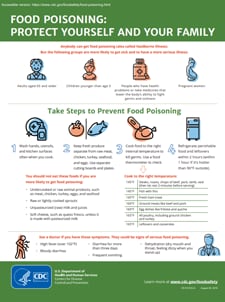
Food Poisoning Basics

Learn about the causes, signs, and symptoms of food poisoning and tips for how to prevent yourself and your family from getting sick.

Screenshot of PDF for how to protect yourself and your family from food poisoning

Research – Harmless or deadly? New study examines evolution of E. coli

UTS

A new study, published in Nature Communications, suggests genetic material from E. coli bacteria in farm animals could be contributing to the evolution of deadly strains of E. coli in humans.

Genetic material from E. coli bacteria in farm animals could be contributing to the evolution of deadly pandemic strains of E. coli in humans, new research shows.

E. coli usually live as harmless bacteria in the gastrointestinal tracts of birds and mammals, including humans. They also reside, independent of a host, in environments such as water and soil, and in food products including chicken and turkey meat, raw milk, beef, pork and mixed salad.

These bacteria can cause disease if they possess or acquire factors that allow them survive in areas of the human body outside the gut.

E. coli is the primary source of urinary tract infections, a common reason for hospital admissions. It can also lead to sepsis, which kills 11 million people globally each year, and meningitis, an infection that affects the brain and spinal cord.

Dr Cameron Reid, from the University of Technology Sydney, said the aim of the study, recently published in Nature Communications, was to better understand the evolution and genomic characteristics of an emerging strain of E. coli known as ST58.