Category Archives: Food Microbiology Research

India – 24 wedding guests fall ill after drinking mango juice served with dinner

India Tv News

HIGHLIGHTS

  • 24 people fell ill in Uttar Pradesh’s Mathura after having food at a wedding
  • These people did not wake up in the morning and were found unconscious by their family members
  • Prima facie, it appears to be a case of food poisoning

In a suspected case of food poisoning, 24 people fell ill in Uttar Pradesh’s Mathura on Saturday after having food at a wedding, police said.

Chief Medical Officer Ajay Kumar Verma said the ‘baraat’ of one Nandu had gone to Nathu ki Garhi village in Agra on Friday from Parkham (Beri) village under the Farah police station area here. Some of the guests returned home at night.

Belgium – Additive in Barry Callebaut chocolate Salmonella case came from Hungary

Food Safety News

The contaminated raw materials that forced Barry Callebaut to halt chocolate production in Belgium came from Hungary.

One batch of lecithin was unloaded at the Wieze factory on June 25. Barry Callebaut confirmed Salmonella Tennessee has been identified in the lecithin system of the factory and in samples of the delivered material. This batch came from a lecithin manufacturer in Hungary and was transported by a third party. The lecithin involved is only used at this site.

On June 27, Barry Callebaut detected a Salmonella positive on a production lot manufactured in Wieze and lecithin was identified as the source of the contamination on June 29.

Lecithin is used in all chocolate production lines in Wieze, so the company decided to stop the lines and to block all chocolate products manufactured from June 25 to 29, except for cocoa production which is not linked to the lecithin circuit.

On July 1, Barry Callebaut confirmed that, based on its internal investigation, no affected products had entered the retail food chain. No implicated chocolate has been exported by the company outside Europe.

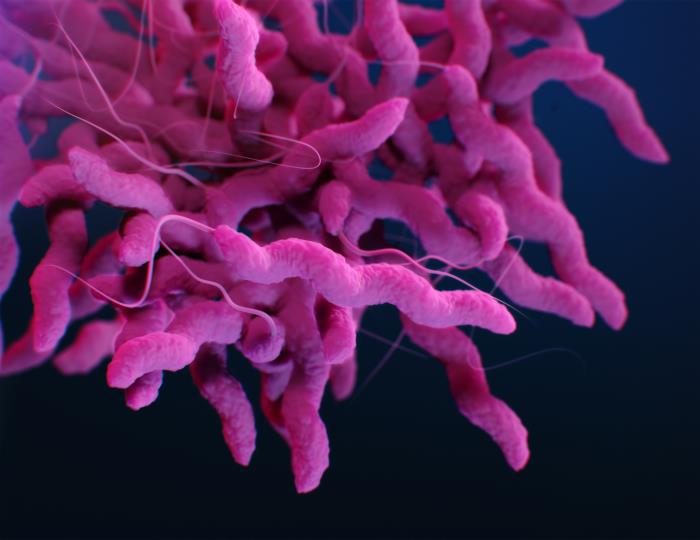
Research – Risk factors for campylobacteriosis in Australia: outcomes of a 2018–2019 case–control study

BMC

Campylobacter kswfoodworld

Background

We aimed to identify risk factors for sporadic campylobacteriosis in Australia, and to compare these for Campylobacter jejuni and Campylobacter coli infections.

Methods

In a multi-jurisdictional case–control study, we recruited culture-confirmed cases of campylobacteriosis reported to state and territory health departments from February 2018 through October 2019. We recruited controls from notified influenza cases in the previous 12 months that were frequency matched to cases by age group, sex, and location. Campylobacter isolates were confirmed to species level by public health laboratories using molecular methods. We conducted backward stepwise multivariable logistic regression to identify significant risk factors.

Results

We recruited 571 cases of campylobacteriosis (422 C. jejuni and 84 C. coli) and 586 controls. Important risk factors for campylobacteriosis included eating undercooked chicken (adjusted odds ratio [aOR] 70, 95% CI 13–1296) or cooked chicken (aOR 1.7, 95% CI 1.1–2.8), owning a pet dog aged < 6 months (aOR 6.4, 95% CI 3.4–12), and the regular use of proton-pump inhibitors in the 4 weeks prior to illness (aOR 2.8, 95% CI 1.9–4.3). Risk factors remained similar when analysed specifically for C. jejuni infection. Unique risks for C. coli infection included eating chicken pâté (aOR 6.1, 95% CI 1.5–25) and delicatessen meats (aOR 1.8, 95% CI 1.0–3.3). Eating any chicken carried a high population attributable fraction for campylobacteriosis of 42% (95% CI 13–68), while the attributable fraction for proton-pump inhibitors was 13% (95% CI 8.3–18) and owning a pet dog aged < 6 months was 9.6% (95% CI 6.5–13). The population attributable fractions for these variables were similar when analysed by campylobacter species. Eating delicatessen meats was attributed to 31% (95% CI 0.0–54) of cases for C. coli and eating chicken pâté was attributed to 6.0% (95% CI 0.0–11).

Conclusions

The main risk factor for campylobacteriosis in Australia is consumption of chicken meat. However, contact with young pet dogs may also be an important source of infection. Proton-pump inhibitors are likely to increase vulnerability to infection.

Research – Genomic analysis of Listeria monocytogenes from US food processing environments reveals a high prevalence of QAC efflux genes but limited evidence of their contribution to environmental persistence

Researchgate

Background Quaternary ammonium compound (QAC) efflux genes increase the minimum inhibitory concentration of Listeria monocytogenes ( Lm ) to benzalkonium chloride sanitizer, but the contribution of these genes to persistence in food processing environments is unclear.

The goal of this study was to leverage genomic data and associated metadata for 4969 Lm isolates collected between 1999 and 2019 to: (1) evaluate the prevalence of QAC efflux genes among Lm isolates from diverse US food processors, (2) use comparative genomic analyses to assess confounding factors, such as clonal complex identity and stress tolerance genotypes, and (3) identify patterns in QAC efflux gene gain and loss among persistent clones within specific facilities over time.

Results The QAC efflux gene cassette bcrABC was present in nearly half (46%) of all isolates. QAC efflux gene prevalence among isolates was associated with clonal complex (𝛘 ² < 0.001) and clonal complex was associated with the facility type (𝛘 ² < 0.001). Consequently, changes in the prevalence of QAC efflux genes within individual facilities were generally attributable to changes in the prevalence of specific clonal complexes. Additionally, a GWAS and targeted BLAST search revealed that clonal complexes with a high prevalence of QAC efflux genes commonly possessed other stress tolerance genes. For example, a high prevalence of bcrABC in a clonal complex was significantly associated with the presence of the SSI-1 gene cluster ( p < 0.05). QAC efflux gene gain and loss were both observed among persistent populations of Lm in individual facilities, suggesting a limited direct role for QAC efflux genes as predictors of persistence.

Conclusion This study suggests that although there is evidence that QAC efflux genes are part of a suite of adaptations common among Lm isolated from some food production environments, these genes may be neither sufficient nor necessary to enhance persistence. This is a crucial distinction for decision making in the food industry. For example, changes to sanitizer regimen targeting QAC tolerance would not address other contributing genetic or non-genetic factors, such as equipment hygienic design which physically mediates sanitizer exposure.

Research – Effect of citral on the thermal inactivation of Escherichia coli O104:H4 in ground beef

Journal of Food Protection

The objective of the present study was to analyze the combined effect of heat treatment (55 to 62.5 °C) and citral (0 to 3%) on the heat resistance of Escherichia coli O104:H4 inoculated in ground beef. Inoculated meat packages were immersed in a circulating water bath stabilized at 55, 57.5, 60 and 62.5 °C for different times. The surviving microbial cells were counted in tryptic soy agar. A factorial design (4 x 4) was used to analyze the effect and interaction of heat treatment and citral. The results showed that heat and citral promoted E. coli O104:H4 thermal inactivation, suggesting a synergistic effect. At 55 °C, the incorporation of citral at 1, 2 and 3%, decreased D values (control: 42.75 min) by 85, 89, and 91%, respectively ( p < 0.05). Similarly, other evaluated temperatures exhibited a citral concentration-dependent effect ( P < 0.05). In conclusion, the findings could be a valuable tool for the food industry in designing a safe thermal process for inactivating E. coli O104:H4 in ground beef under similar thermal inactivation conditions.

Research – Microbiological quality of ready-to-eat salad products collected from retail and catering settings in England during 2020-21 

Journal of Food Protection

Salad and other fresh produce were collected in England from retail and catering during 2020-21 and  were tested for Salmonella, Shiga-toxin producing Escherichia coli (STEC), Listeria , Bacillus cereus , and generic E. coli. Of the 604 samples collected , 57% were from retail and 43% from catering: 61% were either salad leaves or salad leaves mixed with other products. Equal numbers of samples were prepacked or loose and 50% were refrigerated at the time of sampling. Combining results for all microbiological parameters, 84% were interpreted as satisfactory, 12% as borderline and 4% as unsatisfactory. One sample (prepacked  leaves, cucumber and tomato from a caterer) was categorised as unacceptable/potentially injurious due to detection of STEC O76, no STEC from human infections in the UK matched this isolate. No Salmonella enterica were detected but L. monocytogenes was recovered from 11 samples, one at 20 CFU/g the remainder at <20 CFU/g. B. cereus was detected at borderline levels (10 3 – <10 5 CFU/g) in 9% of samples and at an unsatisfactory level (>10 5 CFU/g) in one. E. coli were detected in 3% of samples at borderline (20 – <10 2 CFU/g) and in 4% at unsatisfactory (>10 2 CFU/g) levels. There was a significant association between the detection of L. monocytogenes and borderline/unsatisfactory levels of E. coli . There were no generic risks detected in association with the higher levels of B. cereus, STEC or Listeria but elevated levels of E. coli were predominantly confined to loose products from the UK and collected from caterers in the summer or autumn of 2021. Amongst the L. monocytogenes isolates, only one matched that from human cases and was recovered from a prepacked mixed salad from a catering business in 2021. This isolate was the same strain as that responsible for a multi country outbreak (2015-18) associated with Hungarian-produced frozen sweetcorn: no link to the outbreak food-chain was established.

Research – Antimicrobial Susceptibility and Molecular Characterization of Escherichia coli Recovered from Milk and Related Samples

MDPI

There is a rising concern about illnesses resulting from milk consumption due to contamination by pathogenic microorganisms including Escherichia coli. This study examined the occurrence and antimicrobial susceptibility of E. coli isolated from cow milk and related samples. Furthermore, partial sequencing was done to ascertain the genetic relatedness and possible cross contamination among the samples. In all, 250 samples, that is, 50 each of raw milk, cow teat, milkers’ hands, milking utensils, and fecal matter of cows, were cultured for the identification of E. coli. E. coli was detected in 101/250 samples (40.4%). Milk and fecal samples recorded the highest percentages of 68.0% and 66.0%, respectively. Forty-two (42) E. coli strains examined for antimicrobial resistance showed an overall 25.5% resistance, 15.0% intermediate resistance, and 59.5% susceptibility. The isolates had a high level of resistance to teicoplanin (100.0%), but were susceptible to chloramphenicol (95.2%) and azithromycin (92.9%). The Multiple Antibiotic Resistance (MAR) index pattern ranged from 0.1 to 0.5, and 40.5% exhibited multiple drug resistance. The E. coli strains formed 11 haplotypes, and a phylogenic tree analysis showed relatedness among the isolates in other African countries. This observation is an indication of cross contamination among the milk and its related samples. View Full-Text

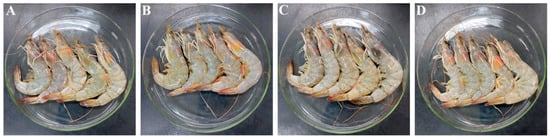
Research – Efficacy of 405 nm Light-Emitting Diode Illumination and Citral Used Alone and in Combination for Inactivation of Vibrio parahaemolyticus on Shrimp

MDPI

Vibrio parahaemolyticus is a widely distributed pathogen, which is frequently the lead cause of infections related to seafood consumption. The objective of the present study was to investigate the antimicrobial effect of the combination of 405 nm light-emitting diode (LED) and citral on V. parahaemolyticus. The antimicrobial effect of LED illumination and citral was evaluated on V. parahaemolyticus not only in phosphate-buffered saline (PBS) but also on shrimp. Quality changes of shrimp were determined by sensory evaluation. Changes in bacteria cell membrane morphology, cell membrane permeability, cell lipid oxidation level, and DNA degradation were examined to provide insights into the antimicrobial mechanism. The combination of LED treatments and citral had better antimicrobial effects than either treatment alone. LED combined with 0.1 mg/mL of citral effectively reduced V. parahaemolyticus from 6.5 log CFU/mL to below the detection limit in PBS. Combined treatment caused a 3.5 log reduction of the pathogen on shrimp within 20 min and a 6 log reduction within 2 h without significant changes in the sensory score. Furthermore, combined LED and citral treatment affected V. parahaemolyticus cellular morphology and outer membrane integrity. The profile of the comet assay and DNA fragmentation analysis revealed that combination treatment did not cause a breakdown of bacterial genomic DNA. In conclusion, LED may act synergistically with citral. They have the potential to be developed as novel microbial intervention strategies. View Full-Text

Sweden – Foodborne illness figures rise in Sweden in 2021

Food Safety News

The number of foodborne infections climbed in Sweden in 2021 compared to the year before but most are still below pre-Coronavirus pandemic levels.

The report by the National Veterinary Institute (SVA), Folkhälsomyndigheten (the Public Health Agency of Sweden), Livsmedelsverket (the Swedish Food Agency) and Jordbruksverket (Swedish Board of Agriculture) showed a rise for Campylobacter, Salmonella, Listeria, E. coli and Yersinia infections.

Disease surveillance relies on patients seeking care and fewer people have done this during the pandemic. This is believed to be related to patients with symptoms choosing to not seek care and a true reduction in disease incidence because of changes in general hygiene such as increased handwashing, physical distancing and reduced travel because of COVID-19-related recommendations, according to the agencies.

New Zealand – National Microbiological Database Programme

MPI

Introduction

This introduction is not part of the Animal Products Notice, but is intended to indicate its general effect.

Purpose

This notice supplements the requirements of the Animal Product Regulations 2021 and sets requirements for microbiological sampling and testing of animal material and animal products intended for human consumption.

Background

The National Microbiological Database (NMD) Programme is a standardised microbiological sampling and testing programme to provide ongoing monitoring of microbiological process control across all industry participants.

Who should read this Animal Products Notice?

You should read this notice if you are:•an operator who processes red meat or poultry intended for human consumption; or a recognised laboratory that tests red meat or poultry intended for human consumption

Why is this important?

A failure to comply with this notice may be an offence under section 135(1)(c) of the Animal Products Act 1999 and may result in further action by an animal products officer.