Category Archives: Food Microbiology Blog

Research – Austria reports Salmonella and Yersinia data for 2022

Food Safety News

Submissions of human Salmonella isolates are approaching pre-COVID-19 pandemic levels in Austria after a decline in 2020 and 2021, according to the Federal Ministry of Labour, Social Affairs, Health and Consumer Protection (BMSGPK).

In 2022, the number of isolates sent to the National Reference Centre for Salmonella increased by 118. This past year, 1,166 Salmonella isolates were submitted to the reference center compared with 1,048 in 2021. It is still below the 1,872 sent in 2019.

In 2022, the Austrian National Reference Centre for Yersinia at the Austrian Agency for Health and Food Safety (AGES) received 201 human isolates.

Of these, 107 were pathogenic, and 94 were non-pathogenic. Among the pathogenic ones, 105 belonged to Yersinia enterocolitica including 88 serovar O:3; biovar 4, and two were Yersinia pseudotuberculosis.

A total of 130 cases of yersiniosis were reported to BMSGPK. This was about the same level as in 2021. Based on data from 38 patients, 22 cases reported diarrhea, 11 had cases of abdominal pain and three each mentioned vomiting and fever.
USA – FDA – Core Outbreak Table – Update

FDA

What’s New

  • On 4/11/2023, an updated outbreak advisory was issued for the outbreak of hepatitis A virus linked to frozen organic strawberries (reference #1143).
  • The outbreak of Listeria monocytogenes (ref #1127) linked to enoki mushrooms has ended and the FDA investigation is closed.
Date
Posted
Ref Pathogen
or
Cause of
Illness
Product(s)
Linked to
Illnesses

(if any)
Total
Case
Count

Status
3/29/2023 1141 Salmonella Infantis Raw Flour See
CDC
Investigation
Notice
Active
3/8/2023 1144 Salmonella Hartford Not Yet
Identified
53 Active
3/1/2023 1143 Hepatitis A Virus Frozen Organic
Strawberries
See
Outbreak
Advisory
Active
2/15/2023 1123 Listeria
monocytogenes
Not Yet
Identified
See
CDC
Investigation
Notice
Active

MasterChef cooks cause food poisoning in Spain

Food Safety News

More than 40 people are suspected to have been affected by food poisoning as part of a TV cooking show in Spain.

Health officials in Valencia confirmed to local media that 44 diners invited to a recording of the MasterChef program on Jan. 19 suffered food poisoning. The episode was aired earlier this week. Symptoms included vomiting and diarrhea.

MasterChef is a popular reality television cooking show broadcast in several countries where contestants make a range of dishes, which are judged by experts.

Reports first surfaced on Twitter with a woman reporting she was one of many people who had gotten sick after tasting food served outside an aquarium in Valencia for staff as part of the program. A range of items, including seafood, were prepared for about 120 people.

Analysis, traceability information, and documentation of the process and treatment of food used and cooked were shown to health authorities.

However, officials were unable to find the source of the infection because of the time that had passed since the event meaning there was no food left to test.

The producer of the program in Spain, Shine Iberia, apologized to the affected diners.

“This is an absolutely exceptional case in these 11 years of MasterChef in Spain, a program where it is an absolute priority to guarantee the nutritional care of the people involved.”

Traveling to Mexico? Here’s how to avoid food poisoning on vacation.

Food Poisoning News

The inexpensive food and delicious smells often tempt travelers to purchase food from the numerous street vendors. Before indulging, however, it is recommended to be vigilant of how ingredients are stored and how the raw meats are handled. Food that is cooked in front of the customer, rather than appearing to be pre-cooked, is a much safer option. When food, even if cooked, is left at room temperature too long, the dangers of cross-contamination and bacterial growth are much higher.

An easy rule to follow is also simply trusting your instincts and avoiding vendors whose food carts are untidy or produce rotten odors. Look for hand-sinks, access to water, or refrigeration units.

Ceviche is also a very common dish in Mexico. Raw fish is exponentially more likely to be contaminated than cooked fish, especially if it is not stored correctly. Travelers should be especially wary of eating ceviche in an area that is farther away from the coast where the fish have to be stored for longer periods of time.  In addition, all ceviche stands should have refrigeration units or copious amounts of ice.

Mexico also has a long history of unsafe drinking water – often the source of “traveler’s diarrhea.” It is generally recommended to not drink water straight from the tap or to use ice cubes made from tap water. Even if the water is purified at the source, the pipes that the water passes through may not be sanitary. Caution should also be exercised when purchasing fruit juices or horchata made with ap water.  Recommendation? Stay hydrated by drinking bottled drinks.

Travelers to Mexico will have a more enjoyable trip if they make wise and informed choices regarding the food they consume. But don’t leave home without anti-diarrheal medicine!

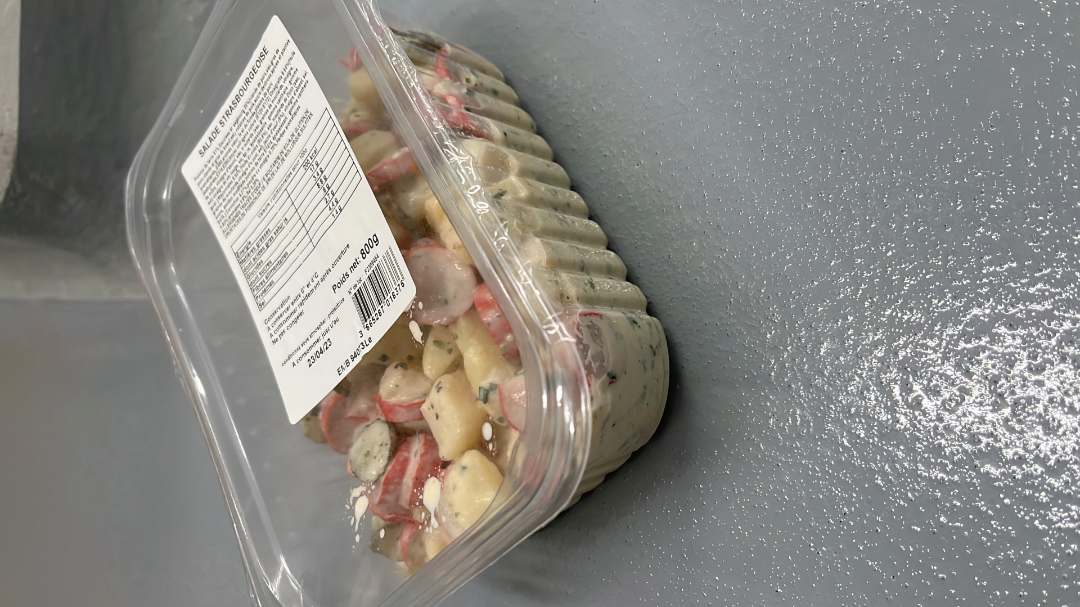
France – STRASBOURGEOISE SALAD – Listeria monocytogenes

Gov france

Identification information of the recalled product

  • Product category Feed
  • Product subcategory Others
  • Product brand name EMB 94073 The
  • Model names or references 250 g trays lot F2309452 500 g trays lot F2309453 800 g trays lot F2309454
  • Identification of products
    GTIN Batch Date
    3665287017980 trays 250 g lot F2309452 Use-by date 04/23/2023
    3665287017997 trays 500 g lot F2309453 Use-by date 04/23/2023
    3665287018376 trays 800 g lot F2309454 Use-by date 04/23/2023
  • Packaging 250 g, 500 g, 800 g trays
  • Marketing start/end date From 05/04/2023 to 23/04/2023
  • Storage temperature Product to be stored in the refrigerator
  • Geographic area of ​​sale Whole France
  • Distributors ALPHAPRIM/ANTOINE FLAVORS

Practical information regarding the recall

  • Reason for recall HEALTH RISK
  • Risks incurred by the consumer Listeria monocytogenes (causative agent of listeriosis)

France – Buche blanche cheeses – Listeria monocytogenes

Gov france

Identification information of the recalled product

  • Product categoryFeed
  • Product subcategory Milk and dairy products
  • Product brand name Fromagerie de la Picaudière
  • Model names or references Buche blanche cheeses
  • Identification of products
    Batch Date
    03/10/23 Use-by date 03/18/2023
    03/19/23 Use-by date 03/27/2023
  • Marketing start/end date From 03/14/2023 to 03/27/2023
  • Storage temperature Product to be stored in the refrigerator
  • Geographic area of ​​sale at the farm
  • Distributors The Fruit Palace in BLERE

Practical information regarding the recall

  • Reason for recall Presence of Listeria monocytogenes
  • Risks incurred by the consumer Listeria monocytogenes (causative agent of listeriosis)

France – Potted cottage cheese – Listeria monocytogenes

Gov france

Identification information of the recalled product

  • Product category Feed
  • Product subcategory Milk and dairy products
  • Product brand name Fromagerie de la Picaudière
  • Model names or references Potted cottage cheese
  • Identification of products
    Batch Date
    03/13/23 Use-by date 03/21/2023
    03/19/23 Use-by date 03/27/2023
  • Marketing start/end date From 03/14/2023 to 03/27/2023
  • Storage temperature Product to be stored in the refrigerator
  • Geographic area of ​​sale at the farm
  • Distributors The Fruit Palace in BLERE

Practical information regarding the recall

  • Reason for recall Presence of Listeria monocytogenes
  • Risks incurred by the consumer Listeria monocytogenes (causative agent of listeriosis)

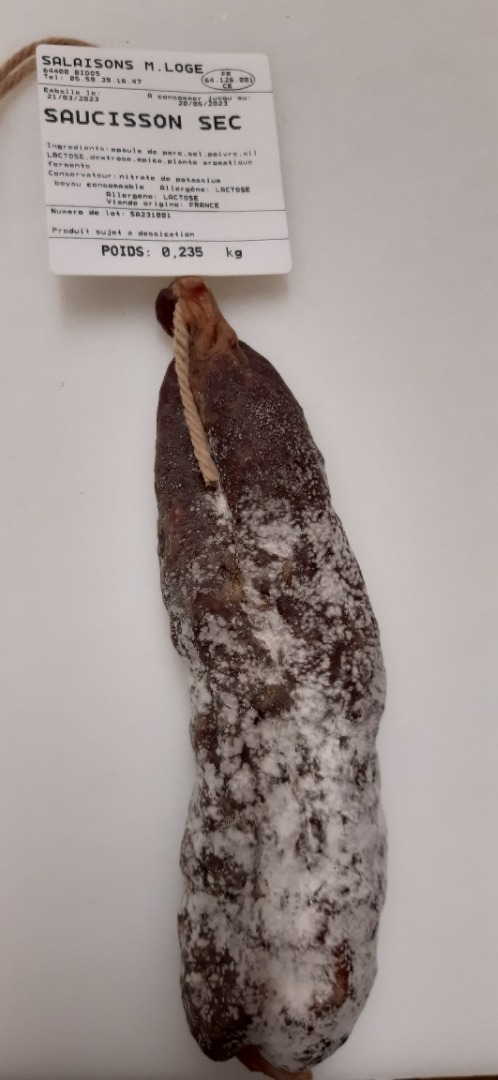
France – Dry Sausage – Salmonella

Gov france

Identification information of the recalled product

  • Product category Feed
  • Product subcategory Meats
  • Product brand name dry sausage
  • Model names or references Dry sausage batch SA231001
  • Identification of products
    Batch Date
    BATCH SA231001 Use-by date 05/31/2023
    Use-by date 05/20/2023
    Use-by date 05/21/2023
    Use-by date 05/22/2023
    Use-by date 05/23/2023
    Use-by date 05/24/2023
    Use-by date 05/25/2023
  • Packaging Naked product
  • Marketing start/end date From 03/21/2023 to 03/25/2023
  • Storage temperature Product to be stored at room temperature
  • Health mark EN 64126 001 EC
  • Geographic area of ​​sale 30Km around the manufacturing site
  • Distributors LECLERC OLORON, INTERMARCHE ARAMITS, INTERMARCHE ACCOUS, VIVAL LASSEUBE, DELICE DES VALLEES JURANCON, OLORON PRIMEUR OLORON, ROCHANGE LAGOR, LOU MERCAT GOES, FROMAGERIE ARRIBE HERRERE, BUTCHER KREMER GAN, DAVANCENS OLORON

Practical information regarding the recall

  • Reason for recall Salmonella detected during a self-check analysis

Catalonia – Alert for the presence of Clostridium perfringens in ground cinnamon from Vietnam

ACSA

Alert Ground Cinnamon

The Spanish Agency for Food Safety and Nutrition has notified the competent authorities of the autonomous communities and the Coordination Center for Health Alerts and Emergencies (CCAES), through the Coordinated  System for Rapid Information Exchange  (SCIRI), an alert, transferred by the health authorities of the Community of Madrid, regarding the presence of Clostridium perfringens in ground cinnamon from the Especias Pedroza brand.

The data of the product involved are:

  • Product name: ground cinnamon
  • Brand/Commercial Name: Pedroza Spices
  • Product appearance: plastic container
  • Batch numbers and best before date:
    • A220079, 12/31/2023
    • A222605, 02/28/2026
  • Unit Weight: 700g
  • Temperature: ambient

The withdrawal of affected products from marketing channels will be verified by the competent authorities.

People who have products affected by this alert at home are recommended to refrain from consuming them and return them to the point of purchase.

Research – How to deal with food poisoning while traveling—and how to avoid it altogether

National Geographic

Some countries have a reputation for putting travelers at a higher risk for gastrointestinal illnesses. But you can get sick from an improperly handled meal anywhere in the world.

Pad thai from a Bangkok street vendor or raw milk cheese from a bistro in France taste delicious in the moment. But for many travelers, the local dishes that make trips meaningful sometimes give them food poisoning—and the wrong sort of vacation memories.

By some metrics, gastrointestinal infections related to food or water affect 30 to 70 percent of all travelers during or immediately after their trips, according to a 2015 study in BMJ Clinical Evidence. Each year, one in six Americans and nearly one in 10 people worldwide suffer from such illnesses caused by bacteria (E. coli, salmonella, listeria), viruses (norovirus, hepatitis A), or parasites (giardiasis, roundworms, tapeworms).

Lower-income countries have a reputation for putting travelers at a higher risk for food poisoning, but people are just as likely to be sickened from an improperly handled meal in Italy or Australia—or from some sushi at their local supermarket.

Here’s why people get food poisoning, what to do if it strikes, and how to (maybe) prevent it, read at the link above.