Archives
-
Join 347 other subscribers
KSWFoodWorld
Blog Stats
- 478,933 Views
Category Archives: Food Microbiology Blog
Research – A Review of Modern Methods for the Detection of Foodborne Pathogens
Despite the recent advances in food preservation techniques and food safety, significant disease outbreaks linked to foodborne pathogens such as bacteria, fungi, and viruses still occur worldwide indicating that these pathogens still constitute significant risks to public health. Although extensive reviews of methods for foodborne pathogens detection exist, most are skewed towards bacteria despite the increasing relevance of other pathogens such as viruses. Therefore, this review of foodborne pathogen detection methods is holistic, focusing on pathogenic bacteria, fungi, and viruses. This review has shown that culture-based methods allied with new approaches are beneficial for the detection of foodborne pathogens. The current application of immunoassay methods, especially for bacterial and fungal toxins detection in foods, are reviewed. The use and benefits of nucleic acid-based PCR methods and next-generation sequencing-based methods for bacterial, fungal, and viral pathogens’ detection and their toxins in foods are also reviewed. This review has, therefore, shown that different modern methods exist for the detection of current and emerging foodborne bacterial, fungal, and viral pathogens. It provides further evidence that the full utilization of these tools can lead to early detection and control of foodborne diseases, enhancing public health and reducing the frequency of disease outbreaks.
Posted in Bacterial Toxin, Decontamination Microbial, Food Micro Blog, Food Microbiology, Food Microbiology Blog, Food Microbiology Research, Food Microbiology Testing, Food Pathogen, Food Toxin, Food Virus, foodborne disease, Foodborne Illness, foodborne outbreak, foodbourne outbreak, microbial contamination, Microbial growth, Microbiological Risk Assessment, Microbiology, Microbiology Investigations, Microbiology Risk, Mycotoxin, Pathogen, pathogenic
Research – Polyurethane Foam as a Novel Material for Ochratoxin A Removal in Tea and Herbal Infusions—A Quantitative Approach
Abstract
A novel solid-phase extraction methodology followed by UHPLC-MS/MS has been developed for Ochratoxin A (OTA) analysis in herbal infusions. For this purpose, a commercial polyurethane foam (PUF) was used as sorbent, and the experimental conditions were fully optimized. The strategy was satisfactory for reducing the matrix effect and allowed for OTA quantification in black tea and herbal infusions, with suitable recoveries and quantitation limits in agreement with those required by the maximum levels allowed by current regulations. The achieved results demonstrated the unprecedented use of polyurethane foam as an effective alternative for OTA retention and quantification in herbal infusions with the advantages of simple preparation, time saving, sustainability, and low cost for routine analysis.
Research – Human Salmonellosis: A Continuous Global Threat in the Farm-to-Fork Food Safety Continuum
Abstract
Salmonella is one of the most common zoonotic foodborne pathogens and a worldwide public health threat. Salmonella enterica is the most pathogenic among Salmonella species, comprising over 2500 serovars. It causes typhoid fever and gastroenteritis, and the serovars responsible for the later disease are known as non-typhoidal Salmonella (NTS). Salmonella transmission to humans happens along the farm-to-fork continuum via contaminated animal- and plant-derived foods, including poultry, eggs, fish, pork, beef, vegetables, fruits, nuts, and flour. Several virulence factors have been recognized to play a vital role in attaching, invading, and evading the host defense system. These factors include capsule, adhesion proteins, flagella, plasmids, and type III secretion systems that are encoded on the Salmonella pathogenicity islands. The increased global prevalence of NTS serovars in recent years indicates that the control approaches centered on alleviating the food animals’ contamination along the food chain have been unsuccessful. Moreover, the emergence of antibiotic-resistant Salmonella variants suggests a potential food safety crisis. This review summarizes the current state of the knowledge on the nomenclature, microbiological features, virulence factors, and the mechanism of antimicrobial resistance of Salmonella. Furthermore, it provides insights into the pathogenesis and epidemiology of Salmonella infections. The recent outbreaks of salmonellosis reported in different clinical settings and geographical regions, including Africa, the Middle East and North Africa, Latin America, Europe, and the USA in the farm-to-fork continuum, are also highlighted.
Posted in Decontamination Microbial, food bourne outbreak, Food Micro Blog, Food Microbiology, Food Microbiology Blog, Food Microbiology Research, Food Microbiology Testing, Food Pathogen, foodborne outbreak, foodbourne outbreak, microbial contamination, Microbial growth, Microbiological Risk Assessment, Microbiology, Microbiology Investigations, Microbiology Risk, outbreak, Pathogen, pathogenic, Salmonella, Serotype
Research – Severe Streptococcus equi Subspecies zooepidemicus Outbreak from Unpasteurized Dairy Product Consumption, Italy
Abstract
During November 2021–May 2022, we identified 37 clinical cases of Streptococcus equi subspecies zooepidemicus infections in central Italy. Epidemiologic investigations and whole-genome sequencing showed unpasteurized fresh dairy products were the outbreak source. Early diagnosis by using sequencing technology prevented the spread of life-threatening S. equi subsp. zooepidemicus infections.
Streptococcus equi subspecies zooepidemicus is a β-hemolytic streptococcus expressing Lancefield group C antigen and is 1 of 3 S. equi subspecies. S. equi subsp. zooepidemicus is an opportunistic pathogen that can infect domestic animals, pets, and wildlife (1–6). Sporadic human cases have been reported (7), characterized by clinical manifestations that vary from meningitis to sepsis. Human infection generally occurs through direct contact with infected animals or by consumption of contaminated unpasteurized milk or other dairy products (8–10). We report a large S. equi subsp. zooepidemicus outbreak in Italy.
Posted in Decontamination Microbial, Food Illness, Food Micro Blog, Food Microbiology, Food Microbiology Blog, Food Microbiology Research, Food Microbiology Testing, Foodborne Illness, foodborne outbreak, foodbourne outbreak, Illness, microbial contamination, Microbial growth, Microbiological Risk Assessment, Microbiology, Microbiology Investigations, Microbiology Risk, outbreak, Raw Milk, raw milk cheese, Raw Milk Cream, Streptococcus equi, Streptococcus equi subspecies zooepidemicus
WHO guides support limited food testing in the Pacific
There is a varied and often limited ability to test food and manage foodborne hazards in the Pacific, according to WHO.
The World Health Organization (WHO) looked at the food analysis capacity of Pacific Island countries. These nations are often vulnerable to food safety incidents and emergencies because of their geography and dependence on food imports.
The costs of establishing and operating food laboratories are relatively high. Considering the limited number of food samples tested in most Pacific Island countries, it is not practical for them to have sophisticated labs. Food is rarely tested to protect domestic consumers. It is generally only analyzed after it has become the potential source of a complaint or an illness.
WHO said it was crucial appropriate labs are identified prior to a food safety incident or emergency. A guide lists considerations for selecting referral labs and submitting samples to them.
Several nations have implemented sampling and testing of environmental water and fish and fishery products to facilitate the export of fish products. Fiji and Solomon Islands were among the first to undertake such routine analyses to meet European Union requirements.
Research – Irradiation as a Promising Technology to Improve Bacteriological and Physicochemical Quality of Fish
Abstract
Fish is an excellent source of protein and other essential minerals and vitamins; nevertheless, several food-borne disease outbreaks have been linked to the consumption of different types of fish. Therefore, we aimed to overcome these health threats by evaluating gamma radiation as a good fish preservation method. The aerobic plate count (APC), identification of most common pathogenic bacteria, organoleptic properties, proximate composition, and other chemical evaluations were detected in both untreated and gamma-treated fish. The overall grades of organoleptic evaluations ranged from good to very good. Fortunately, the overall chemical analysis of all examined fish samples was accepted. For the untreated fish samples, the APC was within and above the permissible limit (5 × 10⁷ CFU/g). Pathogenic bacteria were detected with a high prevalence rate, especially S. aureus, which was found in high percentages among examined untreated fish samples. Regarding the treated fish samples, APC and pathogenic bacterial counts were reduced in a dose-dependent manner, and the irradiation at dose 5 KGy resulted in complete eradication of the aerobic plate count (not detectable) with a mean reduction percentage equal to 100%. However, gamma irradiation has no significant effect on proximate composition; particularly, carbohydrates, proteins, and lipids were not significantly affected by low and medium doses of radiation. Therefore, gamma irradiation is a highly effective fish preservation method without any effect on fish quality. Additionally, gamma irradiation as a cold process is an attractive technology for solving the problem arising from fish-borne pathogens, and it has been purposed in this study as a cheap and safe method for reducing microbial contamination of fish.
Posted in Decontamination Microbial, Food Micro Blog, Food Microbiology, Food Microbiology Blog, Food Microbiology Research, Food Microbiology Testing, Irradiation, microbial contamination, Microbial growth, Microbiological Risk Assessment, Microbiology, Microbiology Investigations, Microbiology Risk
USA – A 2022 Salmonella Outbreak that sickened 88, hospitalizing 32 in 11 states that went unannounced – Why?
In August 2022, the U.S. Food and Drug Administration (FDA), Centers for Disease Control and Prevention (CDC), and state partners conducted an outbreak investigation into a multistate outbreak of Salmonella Typhimurium linked to cantaloupe.
- Total Illnesses: 88
- Hospitalizations: 32
- Deaths: 0
- Last Illness Onset: September 11, 2022
- States with Cases: GA (1), IL (5), IN (17), IA (39), KY (3), MI (3), MN (4), MO (2), OH (3), SC (1), WI (10)
The outbreak response investigation found:
- In August 2022, CDC notified FDA about a multistate cluster of Salmonella Typhimurium illnesses with a potential signal for melon exposures. The cases were geographically distributed in the U.S. upper Midwest.
- The isolates in this cluster of illnesses were within 7 alleles / 11 single-nucleotide polymorphisms (SNPs) of two FDA soil swab samples collected from a 2020 outbreak investigation in Indiana. As a part of the 2022 investigation, FDA and state partners collected multiple samples, but none of the resulting isolates were a definitive match to the 2022 outbreak strain.
- FDA’s 2022 traceback investigation identified 11 points of service, of which 8 traced back to a common packinghouse. Although a common packinghouse was identified, there was no convergence to a single shipment of products, and therefore three farms that supplied the common packing house were identified as potential sources of cantaloupe.
As a result of the traceback, FDA conducted investigations in Indiana at all three farms, their common packinghouse and nearby public lands. Salmonella positive environmental samples were found at each location, but none of the resulting Salmonella isolates conclusively matched the outbreak strain by whole genome sequencing (WGS). No cantaloupes were recalled and no public warning was issued due to the implicated products no longer being on the market.
Posted in Decontamination Microbial, food bourne outbreak, Food Illness, Food Micro Blog, Food Microbiology, Food Microbiology Blog, Food Microbiology Research, Food Microbiology Testing, Foodborne Illness, foodborne outbreak, foodbourne outbreak, Illness, microbial contamination, Microbial growth, Microbiological Risk Assessment, Microbiology, Microbiology Investigations, Microbiology Risk, outbreak, Salmonella
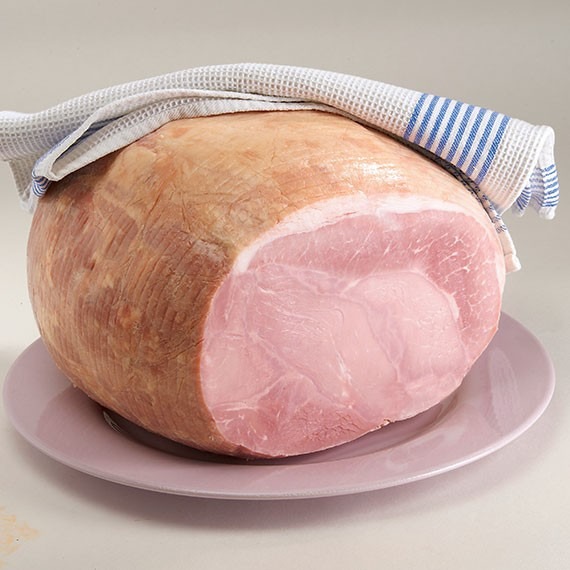
France – SUPERIOR COOKED HAM WITH SKIN SOLD IN THE DELICATESSEN CUT DEPARTMENT OF THE RIOM ES MONTAGNES MARKET STORE BETWEEN APRIL 12 AND APRIL 19, 2023 – Listeria monocytogenes

Identification information of the recalled product
- Product category Feed
- Product subcategory Meats
- Product brand name UNBRANDED
- Model names or references SUPERIOR COOKED HAM WITH SKIN SOLD IN THE DELICATESSEN CUT DEPARTMENT OF THE RIOM ES MONTAGNES MARKET STORE BETWEEN APRIL 12 AND APRIL 19, 2023
- Identification of products
GTIN Lot 1111111111116 SOLD BETWEEN APRIL 12 AND APRIL 19 - Packaging SOLD SLICED BY CUT
- Marketing start/end date From 04/12/2023 to 04/19/2023
- Storage temperature Product to be stored in the refrigerator
- Further information SUPERIOR COOKED HAM WITH SKIN SOLD IN THE DELICATESSEN CUT DEPARTMENT OF THE RIOM ES MONTAGNES MARKET STORE BETWEEN APRIL 12 AND APRIL 19, 2023
- Geographic area of sale MARKET RIOM ES MOUNTAINS
- Distributors ONLY MARKET RIOM ES MONTAGNES
Practical information regarding the recall
- Reason for recall PRESENCE DE LISTERIA
- Risks incurred by the consumer Listeria monocytogenes (causative agent of listeriosis)
Posted in food contamination, food handler, Food Hazard, Food Hygiene, Food Inspections, Food Micro Blog, Food Microbiology, Food Microbiology Blog, Food Microbiology Research, Food Microbiology Testing, Food Pathogen, Food Quality, food recall, Food Safety, Food Safety Alert, Food Safety Management, Food Safety Regulations, Food Testing, Listeria, Listeria monocytogenes
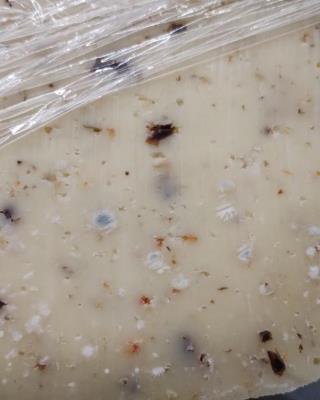
Czech Republic – Truffle Gouda cheese + herbs – Mold/Moulds

Place of inspection:
ID: 07707754
Invalid parameter:
fungi visible to the eye
There were white and green fungal colonies at the site of the cut. Food is not considered safe if it shows signs of spoilage.
The sample was taken from the loaded package. Unsuitable storage temperatures of this product were not detected during the inspection.
| Best before date: | 28/02/2023 |
| Packaging: | Sliced cheese wax |
| Date of sample collection: | 27/02/2023 |
| Reference number: | 23-000193-SZPI-CZ |
The sample was detected by the official control of the State Agricultural and Food Inspection.
Posted in food contamination, food handler, Food Hazard, Food Hygiene, Food Inspections, Food Micro Blog, Food Microbiology, Food Microbiology Blog, Food Microbiology Testing, Food Quality, food recall, Food Safety Management, Food Spoilage, Food Temperature Abuse, Food Testing, mold, Mold Toxin, Mould/Mold, Potravinynapranyri
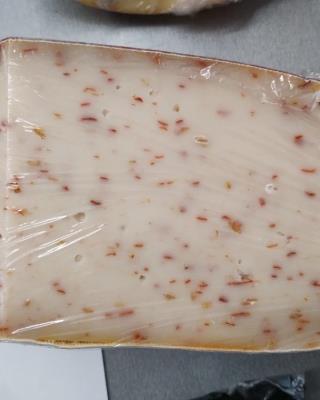
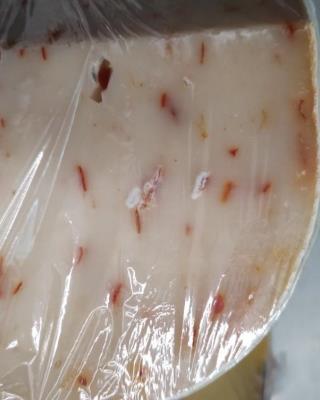
Czech Republic – Goat cheese chili – Mold/Mould


Place of inspection:
ID: 07707754
Invalid parameter:
fungi visible to the eye
There were white and green fungal colonies at the site of the cut. Food is not considered safe if it shows signs of spoilage.
The sample was taken from the loaded package. Unsuitable storage temperatures of this product were not detected during the inspection.
| Best before date: | 28/02/2023 |
| Packaging: | Sliced cheese wax |
| Date of sample collection: | 27/02/2023 |
| Reference number: | 23-000194-SZPI-CZ |
The sample was detected by the official control of the State Agricultural and Food Inspection.
Posted in food contamination, food handler, Food Hazard, Food Hygiene, Food Inspections, Food Micro Blog, Food Microbiology, Food Microbiology Blog, Food Microbiology Testing, Food Quality, food recall, Food Safety, Food Safety Management, Food Spoilage, Food Temperature Abuse, Food Testing, mold, Mold Toxin, Mould/Mold, Potravinynapranyri