
KSWFoodWorld

Posted in food bourne outbreak, Food Micro Blog, Food Microbiology, Food Microbiology Blog, Food Microbiology Research, Food Microbiology Testing, Food Safety, Food Safety Alert, foodborne outbreak, foodbourne outbreak, microbial contamination, Microbiological Risk Assessment, Microbiology, Microbiology Investigations, outbreak, Research
Two confirmed cases of E. coli O157 infection have been linked to a farm in England.
Acton Scott Historic Working Farm in Shropshire temporarily closed this past week to take precautionary measures to reduce the risk of visitors becoming infected. The steps include providing more handwashing facilities and improving safety information about feeding and touching animals.
Members of the Public Health England (PHE) West Midlands Health Protection Team and environmental health colleagues from Shropshire Council are involved in the investigation at the farm, which is owned by the council. No information was provided about the patients.

Image CDC
Mathura:
Fifteen women and two children from a Uttar Pradesh village were admitted to hospital after allegedly suffering from food poisoning, the police said on Friday.
Sample of food has been sent to Food Inspector for examination.
Cabarrus Health Alliance (CHA) is investigating a case of Hepatitis A in a worker at the Waffle House located at 1010 Vinehaven Dr. NE, Concord, NC 28025, located on Exit 60 off Interstate 85.
Possible exposure may have occurred in persons that bought and ate food from the Vinehaven Dr. Waffle House on June 20 between 9 p.m. and 12 a.m. or June 21 between 12 a.m. and 7 a.m. If you believe that you purchased and ate food during this time period, you can receive a hepatitis A vaccine to prevent contracting the virus.
Recalled Foods , Published: July 5, 2021
What foods:
Romer Vegan Organic Plant sticks fingers
Net weight. 250 grams
Production date: 08/06/2021, 15/06/2021
Best before date: 19/07/2021, 21/07/2021
EAN barcode: 5708665800120, 5708665800120
Sold in:
Irma stores throughout the country and Kvickly Taastrup and SuperBrugsen Sorø
Company recalling:
Rømer Vegan, Vrinners Bygade 45, 8420 Knebel Cause: The company has established that there is a risk of mold in products from these two lots. Risk: Mold formation means that the products are considered unsuitable as food. Advice for consumers:
The Danish Veterinary and Food Administration advises consumers to deliver the product back to the store where it was purchased or to discard it.
| GTIN | Lot | Dated |
|---|---|---|
| 3306111017522 | 300321A | Date of minimum durability 03/30/2025 |

Presence of salmonella
People who may have this product are asked not to consume it and to return it to the point of sale where it was purchased.
Foodborne illness caused by salmonella results in gastrointestinal disturbances, diarrhea, vomiting and abdominal pain, often accompanied by fever; these symptoms may be more severe in young children, immunocompromised individuals and the elderly. The incubation period can range from 6 to 72 hours.
People who have consumed the products mentioned below and who have these symptoms are invited to consult their doctor, notifying him of this consumption.
▸ Names of models or references
…
▸ Barcode
3366760046052
▸ Lot
179
▸ DLC – DDM
07/09/21
▸
350g packaging
▸ Start / end date of marketing
This product was marketed in the packaged fresh section from 06/29/2021.
▸ Consumer service contact
For any further information, please contact 04 90 80 99 99 (Monday to Friday: 8 am-6pm)
▸ Source
https://www.intermarche.com/
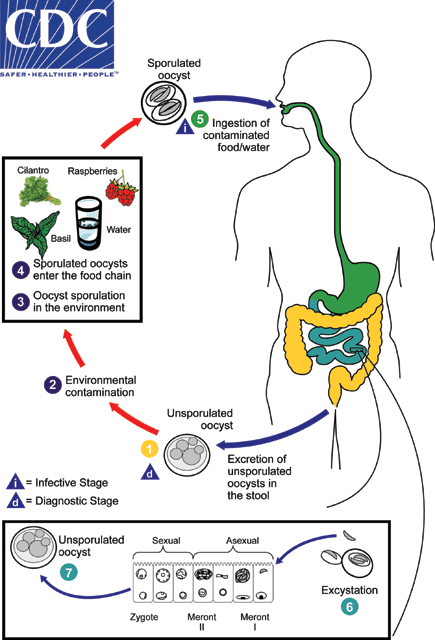
As part of our ongoing efforts to combat foodborne illness and aligned with our New Era of Smarter Food Safety initiative, today, the U.S. Food and Drug Administration released the Cyclospora Prevention, Response and Research Action Plan. Modeled after our Leafy Greens Shiga toxin-producing E. coli (STEC) Action Plan, the plan focuses on improving prevention, enhancing response activities and filling knowledge gaps in order to help prevent Cyclospora contamination of foods and to help prepare for responding to future outbreaks.
Cyclosporiasis is a foodborne intestinal illness caused by Cyclospora cayetanensis. The most common symptoms of cyclosporiasis are diarrhea, weight loss, nausea and fatigue. Cyclospora is historically associated with imported produce or travel outside the U.S.; however, we have also detected Cyclospora in domestically produced foods in recent years.
The FDA first documented Cyclospora in domestically grown produce (cilantro) in 2018 as part of an ongoing sampling assignment of fresh herbs. The testing was done as part of a surveillance sampling, and the cilantro sample was not linked to any illnesses or outbreaks. Not long after, domestically grown produce was again associated with an outbreak linked to a salad mix. During the FDA’s investigations into this outbreak, Cyclospora was also detected in an unused package of the salad containing domestically grown produce.
The availability of new testing methods for Cyclospora developed at the FDA’s Center for Food Safety and Applied Nutrition played an important role in helping the FDA identify these positive samples of Cyclospora in the cilantro and in the salad mix. The number of reported cases of this foodborne illness has been rising in recent years, in part because of better diagnostic and detection methods. According to the Centers for Disease Control and Prevention, there have been roughly 6,000 domestically acquired cases of Cyclospora over the last three years. The number of reported cases typically rises during the spring and summer, usually in May, June and July. Rising case numbers and the emergence of Cyclospora contamination in domestically grown produce prompted the FDA to create the Cyclospora Task Force in 2019. The task force is comprised of multidisciplinary experts across the FDA and CDC, with the goal of reducing the public health burden of foodborne illness caused by Cyclospora in produce.
The task force formulated the action plan announced today, which will serve as a strategic guide to improve prevention, enhance response activities and fill knowledge gaps about the presence of Cyclospora in or on foods. In the area of prevention, the new action plan highlights how we’re addressing this food safety issue through the development and delivery of prevention-focused education materials and outreach to stakeholders. We’re also working with industry to encourage the development of rapid test kits to specifically detect Cyclospora to better facilitate industry testing and root cause analysis activities. In addition, we plan to collaborate with industry to look for ways to more effectively control Cyclospora in the environment and on farms.
In the area of response, the plan is focused on expanding laboratory capacity across the FDA, state, foreign partners and academia to sample and test for Cyclospora, providing greater capacity to investigate during outbreak events. The FDA is also developing a new investigational tool to help guide assessments of farms potentially implicated in a Cyclospora outbreak to determine potential sources and routes of contamination.
Given the emerging nature of Cyclospora contamination in domestic produce, a large number of action items in this plan are aimed at addressing knowledge gaps. In this area, the FDA intends to work with CDC to better understand the case distribution of cyclosporiasis across the U.S. and to advance genotyping methods in clinical, food and environmental samples that will allow us to genetically link clinical cases to food products and environments identified by traceback during an outbreak. As part of this plan, the FDA also intends to work with industry and academia to better understand the prevalence of Cyclospora in agricultural water and to encourage data sharing to help stakeholders identify trends associated with Cyclospora contamination. Our action plan underscores the importance of collaboration across industry, academia, state, federal and foreign government partners, and other stakeholders to reduce the risks and public health burden caused by foodborne Cyclospora. We’ll continue updating this plan as actions are completed and new actions are identified.
While the U.S. has one of the safest food supplies in the world, we are focused on making it better. The FDA is focused on working with all stakeholders to achieve the goals identified in this Cyclospora Prevention, Response and Research action plan.

A parasite that’s too tiny to see without a microscope can make you ill if you eat or drink the food or water it fouls. The illness is called a cyclospora infection (or cyclosporiasis), and it can bring on problems like watery diarrhea and stomach pain.
About 15,000 people in the U.S. catch it each year, and outbreaks of the infection have been linked to different kinds of imported fresh produce.
Here’s what you need to know to stay safe and lower your chances of catching this bug. See at the link above.
The frozen, fully cooked chicken products were produced between December 26, 2020 and April 13, 2021. The products that are subject to recall are listed here. View the labels here.
The products subject to recall bear establishment number “EST. P-7089” on the product bag or inside the USDA mark of inspection. These items were shipped nationwide to retailers and institutions, including hospitals, nursing facilities, restaurants, schools and Department of Defense locations.
On June 9, 2021, FSIS was notified of two persons ill with listeriosis. Working in conjunction with the Centers for Disease Control and Prevention (CDC) and state public health partners, FSIS determined there is evidence linking the Listeria monocytogenes illnesses to precooked chicken produced at Tyson Foods Inc. The epidemiologic investigation identified three listeriosis illnesses, including one death, between April 6, 2021 and June 5, 2021. During routine sample collection, FSIS collected two precooked chicken samples from two establishments that are closely related genetically to Listeria monocytogenes from ill people. One of the samples was collected at Tyson Foods Inc. FSIS is continuing to work with federal and state public health partners to determine if there are additional illnesses linked to these products.
Additional information on the investigation may be found on the Centers for Disease Control and Prevention website.
Consumption of food contaminated with L. monocytogenes can cause listeriosis, a serious infection that primarily affects older adults, persons with weakened immune systems, and pregnant women and their newborns. Less commonly, persons outside these risk groups are affected.
Listeriosis can cause fever, muscle aches, headache, stiff neck, confusion, loss of balance and convulsions sometimes preceded by diarrhea or other gastrointestinal symptoms. An invasive infection spreads beyond the gastrointestinal tract. In pregnant women, the infection can cause miscarriages, stillbirths, premature delivery or life-threatening infection of the newborn. In addition, serious and sometimes fatal infections in older adults and persons with weakened immune systems. Listeriosis is treated with antibiotics. Persons in the higher-risk categories who experience flu-like symptoms within two months after eating contaminated food should seek medical care and tell the health care provider about eating the contaminated food.
FSIS is concerned that some product may be in consumer and institutional freezers. Consumers should not eat these products. Institutions should not serve these products. These products should be thrown away or returned to the place of purchase.
FSIS routinely conducts recall effectiveness checks to verify recalling firms notify their customers of the recall and that steps are taken to make certain that the product is no longer available to consumers. When available, the retail distribution list(s) will be posted on the FSIS website at www.fsis.usda.gov/recalls.
Members of the media who have questions regarding the recall can contact Derek Burleson, Communications Manager, Tyson Foods, at (479) 290-6466 or derek.burleson@tyson.com. Consumers who have questions can contact Tyson Foods customer relations, at (855) 382-3101.
Consumers with food safety questions can call the toll-free USDA Meat and Poultry Hotline at 1-888-MPHotline (1-888-674-6854) or live chat via Ask USDA from 10 a.m. to 6 p.m. (Eastern Time) Monday through Friday. Consumers can also browse food safety messages at Ask USDA or send a question via email to MPHotline@usda.gov. For consumers that need to report a problem with a meat, poultry, or egg product, the online Electronic Consumer Complaint Monitoring System can be accessed 24 hours a day at https://foodcomplaint.fsis.usda.gov/eCCF/.


