Category Archives: Food Inspections

UK – Birmingham and Hyndburn ranked as UK areas with worst food hygiene

The Guardian

Birmingham city council and Hyndburn borough council have been ranked as the worst areas in the UK for poor standards of hygiene in their cafes and restaurants, for the second year running, a new analysis has revealed.

Consumer group Which? said the enforcement regime was buckling under “huge strain”, with under-resourced local authorities struggling to cope with soaring complaints from the public – about dirty conditions and food poisoning, for example – and facing an increase in their workload because of Brexit.

Using official data collected by the Food Standards Agency (FSA), Which? analysed and ranked 390 local authorities across the UK. The benchmarks it used were the percentage of food businesses deemed to be at “high and medium risk” that were compliant with food hygiene standards; the percentage of premises opened but not visited or rated for risk; and interventions needed that had actually been carried out.

India – Students hospitalised in Kerala following suspected food poisoning

New Indian Express

THIRUVANANTHAPURAM: Of the four students of Ponnara Sreedhar Memorial UP School, Muttathara, hospitalised for suspected food poisoning, the condition of one is said to be critical. The students were hospitalised after they developed various health issues, including vomiting, after consuming egg and milk from the school at lunch on Wednesday.

By Friday, they were all admitted to various hospitals in the city. Since there was no improvement in their health, the four were shifted to SAT Hospital on Saturday. Though the health of three students improved, a Class V student was shifted to a ventilator after her condition turned worse. Corporation officials visited the school and promised action against those who were responsible for the issue.


Hong Kong – Stop consuming two kinds of prepackaged anchovy fillets detected with histamine

CFS   

Issue Date 25.6.2018
Source of Information Centre for Food Safety (CFS)
Food Product Prepackaged anchovy fillets
Product Name and Description (1) Product name: Filetti di Acciughe in Olio d’Oliva con Tartwfo (Anchovy Fillets with Truffle in Olive Oil)
Brand: TartufLanghe
Place of origin: Italy
Net weight: 90 grams per pack
Best before date: August 31, 2018

(2) Product name: Flat Fillets of Anchovies With Capers in Olive Oil
Brand: ROCCA
Place of origin: Italy
Net weight: 100 grams per bottle
Best before date: July 31, 2019

Reason For Issuing Alert
  • The CFS collected the two abovementioned samples from the city’super supermarket in Causeway Bay for testing under its routine Food Surveillance Programme. The test results showed that the samples contained histamine at levels of 220 milligram (mg) per 100 gram (g) and 260mg per 100g respectively.
  • Histamine is commonly found in certain kinds of fish such as tuna, sardine, mackerel and anchovy, as a result of bacterial spoilage. Consumption of fish containing high levels of histamine can cause foodborne intoxication. Symptoms of histamine poisoning include tingling and burning sensation around the mouth, facial flushing and sweating, nausea, vomiting, headache, palpitations, dizziness and rash. The onset of intoxication symptoms is within a few hours after consumption and these symptoms will normally disappear in 12 hours without long term effect, the spokesman noted.
Action Taken by the Centre for Food Safety
  • The CFS has informed the vendor concerned of the irregularities. The vendor has removed from shelves and stopped sale of the affected products, and initiated a recall according to CFS’ instructions.
  • The CFS will alert the trade to the incident and will continue to monitor the case and take appropriate follow-up action. Investigation is ongoing.
Advice to the Trade
  • Stop using or selling the affected products immediately if possess them.
Advice to Consumers
  • Not to consume the two abovementioned prepackaged anchovy fillets.
  • Call the vendor’s hotline at 2736 3866 during office hours for enquiries about the recall.
Further Information The CFS press release

USA – Possible E. coli Outbreak at Mexico Viejo Restaurant in Taylorsville, NC

Food Poisoning Bulletin

A possible E. coli outbreak is being investigated at Mexico Viejo restaurant in Taylorsville, North Carolina. Health Director Leeanne Whisnant told news outlets that more than 30 people are sick after eating chicken at that facility. One person has tested positive for an E. coli infection.

USA – Cyclospora Kwik Trip Outbreak Linked to Del Monte Vegetable Trays Grows to 144 Sick

Food Poisoning Bulletin cyclo

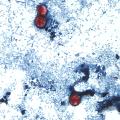
The cyclospora Kwik Trip outbreak linked to Del Monte vegetable trays has now grown to 144 patients, according to an FDA update. The patients live in Iowa, Minnesota, Wisconsin, and Michigan. Six people have been hospitalized in this outbreak because they are so sick.

Cyclospora Kwik Trip Del Monte Outbreak 622

Australia – 7 dead, 1 miscarriage: New control measures to be set up on Australian rockmelon farms

Barf Blog

In April, thousands of rockmelons were left to rot in paddocks near Geraldton on the Western Australian coast, record low prices and lost markets meant they were simply not worth picking.

Grower Carol Metcalf said the rows of rotting melons were the result of the listeria outbreak on a rockmelon farm more than 3,500 kilometres away in New South Wales.

Under a new plan released this week, all rockmelon farms in Australia will be inspected and work will be undertaken on each individual farm to ensure that the highest standards are implemented and maintained.

At the time of the outbreak on February this year, the NSW Food Authority speculated that the most likely cause of the listeria outbreak was contaminated soil possibly not being properly washed off the skin of the fruit.

In addition it was thought that a weather event may have increased the listeria bacteria on the product.

But the formal investigation into the cause of the outbreak has not been completed by the NSW Food Authority and therefore the official report on the cause has still not been released.


Research – Ruminant and chicken: important sources of Campylobacteriosis in France

Poultry Med

Campylobacter spp. are regarded as the most common foodborne bacterial zoonosis in Europe, despite potential underestimation due to underreporting of cases. In France, C. jejuni is responsible for nearly 80% of human infections while C. coli accounts for around 15%. The economic burden of campylobacteriosis has been estimated to 2.4 billion euros annually in Europe, with estimates of £50 million in 2008–2009 in the United Kingdom and 82 million euros in the Netherlands in 2011.Pathogen source attribution studies are a useful tool for identifying reservoirs of human infection. Based on Multilocus Sequence Typing (MLST) data, such studies have identified chicken as a major source of C. jejuni human infection. The use of whole genome sequence-based typing methods offers potential to improve the precision of attribution beyond that which is possible from 7 MLST loci. Using published data and 156 novel C. jejuni genomes sequenced in this study, the researchers performed probabilistic host source attribution of clinical C. jejuni isolates from France using three types of genotype data: comparative genomic fingerprints; MLST genes; 15 host segregating genes previously identified by whole genome sequencing. Consistent with previous studies, chicken was an important source of campylobacteriosis in France (31–63% of clinical isolates assigned). There was also evidence that ruminants are a source (22–55% of clinical isolates assigned), suggesting that further investigation of potential transmission routes from ruminants to human would be useful.

RASFF Alert – STEC E.coli – Frozen Herb Mix with Parsley

kswfoodworld food safety poisoning

RASFF-shigatoxin-producing Escherichia coli (stx1+, stx2+ /25g) in frozen herb mixes containing parsley from Germany in Germany

RASFF Alerts – Aflatoxin – Pistachio Nuts – Hazlenut Kernels – Groundnuts – Almonds

kswfoodworld food safety poisoning

RASFF-aflatoxins (B1 = 11.3; Tot. = 12.0 µg/kg – ppb) in pistachio nuts from Iran in Lithuania

RASFF-aflatoxins (B1 = 11.4; Tot. = 49.6 µg/kg – ppb) in hazelnut kernels from Georgia in Bulgaria

RASFF-aflatoxins (B1 = 16.17; Tot. = 20.04 / B1 = 15.72; Tot. = 20.91 µg/kg – ppb) in groundnuts without shell from Egypt in Romania

RASFF-aflatoxins (B1 = 12.49 µg/kg – ppb) in almonds from the United States in Spain

RASFF Alert – Hepatitis A – Frozen Raw Saltwater Clams

kswfoodworld food safety poisoning

RASFF-hepatitis A virus (present /2g) in frozen raw saltwater clams (Donax trunculus) from Turkey in Spain