Category Archives: Food Illness

USA- 140 Illnesses Linked To Sushi Nine Restaurant In Raleigh

Food Poisoning News

On the seventh of December, 2023, WRAL News announced an outbreak of 140 illnesses connected to the sushi restaurant, Sushi Nine. The Raleigh, North Carolina-based restaurant received notifications from consumers with adverse reactions after having consumed sushi at its business.

While a virus is believed to be the cause, the blame is under investigation. According to local reports, patrons reported experiencing symptoms that correlate similarly with those of Norovirus, often referred to as the “winter vomiting disease.” One victim, Austin Freels, shared details of his illness following eating sushi at Sushi Nine, while with family and friends a few days prior to his wedding. Austin experienced “agonizing” stomach pain, and mentioned to WRAL that while at the Emergency Room, he was told by health professionals his food poisoning case was “…one of the most severe cases…they had seen…”
Singapore – Suspension of Shiok Kitchen Catering Pte Ltd’s food business operations – Food Illness

SFA

The Ministry of Health (MOH) and the Singapore Food Agency (SFA) are investigating
two incidents of gastroenteritis affecting a total of 95 persons after consuming food prepared
by Shiok Kitchen Catering Pte Ltd between 7 and 8 Dec 2023. Those affected either sought
outpatient treatment, self-medicated, or recovered without treatment. None were
hospitalised

Research – Multi-country outbreak of Listeria monocytogenes linked to fish products

EFSA

Between 2022 and 2023, the outbreak has affected Austria, Belgium, Italy, Germany, and the Netherlands, with reports of 17 cases and two deaths. Infections have occurred mainly in the elderly. Historical human cases related to the outbreak have been detected since 2011.

Advanced molecular typing techniques identified a variant of Listeria monocytogenes which was detected in the majority of the 2022-2023 cases. The analysis of the data suggests a connection to two establishments in Lithuania during the same period. These establishments were found to have introduced contaminated fish products into the retail markets of Germany and Italy. Production has been stopped in a Lithuanian plant, likely reducing the risk of infections. Data regarding the distribution of contaminated products in Austria, Belgium, and the Netherlands is currently not available.

EFSA and ECDC experts say that further investigations are needed to identify the origin of the contamination. This will allow national authorities to implement targeted control measures and mitigation actions. Experts also recommend following good manufacturing practices, hygiene rules, and effective temperature control throughout the entire food production, distribution, and storage chain, including in households. Consumers are advised to maintain low refrigerator temperatures to inhibit the potential proliferation of bacteria such as Listeria which could be present in ready-to-eat foods.

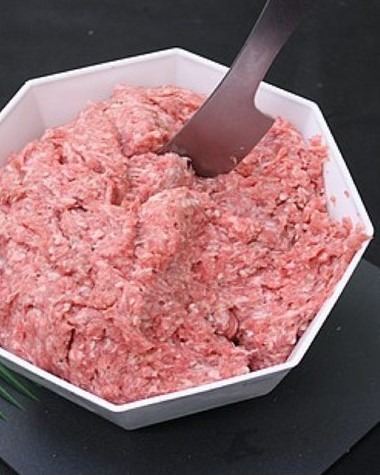
France – Plain minced meat – Salmonella

Gov France

Product category
Food
Product subcategory
Meats
Product brand name
Unbranded
Model names or references
Plain minced meat
Product identification
Batch
06122023
Start/end date of marketing
From 06/12/2023 to 07/12/2023
Storage temperature
Product to keep in the refrigerator
Geographical sales area
Forest sur Marque neighboring communes
Distributors
DELBE CATERING SHOP

France- RAW SHRIMP TAILS 28-33 pieces – Vibrio vulnificus

Gov France

Product category
Food
Product subcategory
Fishing and aquaculture products
Product brand name
Carrefour SIMPL
Model names or references
Raw shrimp tails with shell 450g
Product identification
GTIN Batch Date
3560070422067 AI/22204 (3A06) Minimum durability date 01/05/2025
Packaging
450g bag
Start/end date of marketing
From 06/12/2023 to 12/11/2023
Storage temperature
Product to keep in the freezer
Geographical sales area
Whole France
Distributors
Crossroads

Swedish E. coli cases linked to imported parsley

Food Safety News

Contaminated parsley imported from southern Europe has been linked to at least 150 E. coli cases in Sweden.

Over 100 people were infected by Enterotoxigenic E.coli (ETEC) and Enteropathogenic E. coli (EPEC) after eating food during a conference in Jönköping at the end of October. A similar outbreak sickened 50 people in Stockholm.

In Stockholm, people were infected around the same time at a restaurant that served parsley from the same producer. This led health officials to believe it was likely parsley from Italy that caused the outbreaks.

A total of 104 participants at the conference reported they had suffered illness. Samples were taken from four cases. Analysis showed they were infected with different combinations of pathogenic E. coli such as ETEC, EPEC, and Enteroaggregative E. coli (EAEC).

Research -High technology is the key to detecting foodborne outbreaks over space and time

Lex Blog

Most people think of foodborne illness outbreaks as spanning a few days or weeks. But, with current technology, disease detectives can find patients of a single outbreak spread across several years and multiple states.

That is the case with an ongoing outbreak of Listeria illnesses linked to fresh peaches that began in 2018. So far, 11 patients have been identified, most recently found in August this year. One of the patients died. Recent recalls of peaches, nectarines, and plums have been initiated while public health officials continue investigating the outbreak.

The links between people sickened in the outbreak this year and the initial patient in 2018 were made possible using whole genome sequencing (WGS). Whole genome sequencing has been likened to fingerprinting used in criminal investigations, but WGS allows the Centers for Disease Control and Prevention to look at millions of pieces of data.

“WGS examines more than 4.5 million ‘letters’ of the genetic code in disease-causing bacteria such as Salmonella. Bacteria closely related by WGS are more likely to have originated from the same source than more distantly related bacteria,” said John Besser, who retired in 2019 as Deputy Chief of the Enteric Diseases Laboratory Branch at the CDC. He continues to work on CDC-related projects through the Association of Public Health Laboratories.

“Ill persons in a WGS cluster will likely have shared exposure, such as a contaminated food product. By focusing on WGS clusters, investigators can detect outbreaks when they are small, even if cases are dispersed over multiple states or widely separated in time.”

USA – Deadly Salmonella Cantaloupe Outbreak Sickens 359, Kills 8

Food Poisoning Bulletin

The deadly Salmonella cantaloupe outbreak has sickened at least 359 people and killed eight in the United States and Canada. As of December 7, 2023, there are 129 laboratory confirmed cases in Canada, and 230 illnesses in the United States. In the U.S., 96 patients have been hospitalized and there are three deaths: two in Minnesota and one in Oregon. In Canada, 44 patients are hospitalized and there are five deaths.

Research – New sanitiser kills Salmonella in seconds

Adelaide Edu

Food poisoning outbreaks caused by bacteria such as salmonella could be significantly reduced if a new sanitiser is proven to be successful in the next stage of trials.

University of Adelaide researchers are developing plasma-activated water as an environmentally friendly food sanitiser that can kill foodborne superbugs in seconds.

“The results of our prototype trials are really exciting and showed that our sanitiser destroyed salmonella on chicken meat and eggs in just five seconds,” said lead researcher Dr Katharina Richter, a Future Making Fellow from the University of Adelaide’s Institute for Photonics and Advanced Sensing and Adelaide Medical School.

“We envisage that this sanitiser could be used as a spray or dip for at-risk foods such as eggs, meats, poultry and plant-based products during the manufacturing process, potentially providing a chemical-free alternative to current sanitisers and preventing disease.”

More than four million cases of foodborne disease are estimated to occur in Australia each year. Symptoms can range from mild to severe and include diarrhoea, vomiting, fever, aches, and pains.

“Vulnerable people such as young children, the elderly, pregnant women and people with weakened immune systems are most at risk of severe consequences and could even die of foodborne illnesses,” said Dr Richter.

USA -140 reports of food poisoning after eating at Sushi Nine, forcing temporarily closure

AOL

The co-owner of a popular Raleigh sushi restaurant is responding after dozens of people got sick after eating there. Wake County Environmental Services is investigating 140 cases of foodborne illness at Sushi Nine on Western Boulevard. The restaurant closed for 48 hours but has since reopened. With this time we have taken proactive steps to address recent reports of alleged food poison.