Foodborne outbreak caused by Salmonella enterica ser. Enteritidis (presence /25g) in frozen duck breasts from Hungary in Slovenia
KSWFoodWorld

Foodborne outbreak caused by Salmonella enterica ser. Enteritidis (presence /25g) in frozen duck breasts from Hungary in Slovenia
A cross‐border outbreak of Salmonella Mbandaka ST413 has been ongoing in the European Union/European Economic Area (EU/EEA) and the United Kingdom (UK) for over two years since September 2021. By 30 November 2022, 196 cases had been recorded and published in a joint European Centre for Disease Prevention and Control (ECDC) and European Food Safety Authority (EFSA) Rapid Outbreak Assessment. By 15 March 2024, 300 cases (an increase of 104 cases) had been reported in Estonia (n = 3), Finland (n = 98), France (n = 16), Germany (n = 2), Ireland (n = 7), the Netherlands (n = 1), and the United Kingdom (n = 173), according to the European case definition. Twenty‐three cases were hospitalised, six cases had septicaemia and one case died in the UK.
In November 2022, when the first assessment was published, ready‐to‐eat chicken products and/or fresh chicken meat were identified as probable vehicles of infection based on case interviews in Finland and the UK. Subsequent investigations by the food safety authorities in Estonia, Finland and the Netherlands and the sharing of genomic food information with EFSA in 2024 identified frozen steam‐cooked chicken breast, produced in Ukraine, as the vehicle of infections. The contaminated batches had been imported by non‐EU operators and distributed in the EU/EEA and UK markets.
The shelf lives of contaminated frozen chicken meat products expired in November and December 2023. The most recent cases were detected in Finland in October 2023 and in the UK in February 2024. Assuming that the identified contaminated batches are no longer on the market, and given the expiration dates and control measures implemented, the likelihood of new infections occurring with the outbreak strain from these batches is low. However, despite the implementation of control measures, cases continued to occur throughout 2023 in the EU/EEA and in early 2024 in the UK, suggesting undetected routes of exposure which require further investigation and pose a continued, albeit reduced, risk for new infections.
A hepatitis E-positive meat product appears to be behind most of the infections that occurred earlier this year in Finland.
The hepatitis E virus previously detected in sausages from a domestic manufacturer is similar to samples from most people affected by the outbreak at the start of 2024.
This was found during a strain comparison of viruses by the Finnish Food Authority (Ruokavirasto) and the National Institute of Health and Welfare (THL).
More than 120 people from different parts of Finland have fallen ill in the outbreak between January and March.
Taipei, March 27 (CNA) A man in his mid-60s has become the second person to have died in a suspected food poisoning outbreak at a branch of Malaysian restaurant Polam Kopitiam in Taipei that has left at least eight people who dined there ill.
The man, who ate at the vegetarian restaurant on March 19, died Wednesday morning at Shin Kong Wu Ho-Su Memorial Hospital due to multiple organ failures after efforts to resuscitate him failed, according to Hung Tzu-jen (洪子仁), the hospital’s vice superintendent.
Taipei Mayor Chiang Wan-an (蔣萬安) on Wednesday ordered all Taipei branches of Polam Kopitiam closed as prosecutors investigate the case.

FDA’s Outbreak Investigation is closed. CDC declares outbreak over.
March 26, 2024
The FDA and CDC, in collaboration with state and local partners, investigated a multistate outbreak of E. coli O157:H7 linked to all sizes of RAW FARM-brand Raw Cheddar cheese blocks (with best by dates through 10/4/2024) and shredded cheese (with best by dates through 5/10/2024).
As part of this investigation, officials in CO, CA, and UT collected various RAW FARM-brand products for testing, and all samples were negative for E. coli. While E. coli has not been found in product samples, epidemiologic evidence shows that RAW FARM-brand Raw Cheddar cheese made by RAW FARM, LLC is the likely source of this outbreak.
As of March 26, 2024, CDC announced that the outbreak is over. CDC reports a total of 11 illnesses in five states. There has been a total of five hospitalizations; two developed hemolytic uremic syndrome (HUS), a serious condition that can lead to kidney failure. No deaths were reported. The last illness onset date was February 5, 2024. FDA’s outbreak investigation is closed.
FDA and CDC will continue to monitor for additional illnesses, and this investigation may be reopened if additional cases are identified.
Public Health is investigating an outbreak of Shiga toxin-producing E. coli O157:H7 (also known as STEC). Three of the five people who got sick had testing that matched by genetic fingerprinting. This means they most likely got sick from the same source. Based on information collected, we found one common source for all sick people which was a store-made guacamole purchased at PCC Community Markets – West Seattle Co-op on February 10, 2024. Even though we think this is the most likely source of illness, we do not know for certain. We did not find out how the guacamole might have been contaminated with STEC and did not have any left to test. This outbreak appears to be over.
Groceries
March 22, 2024
LevlUP Hydration Drink Galaxy

LevlUP GmbH, Hans-Böckler-Str. 10 A, 37079 Göttingen_ Picture of the bottle with screw cap
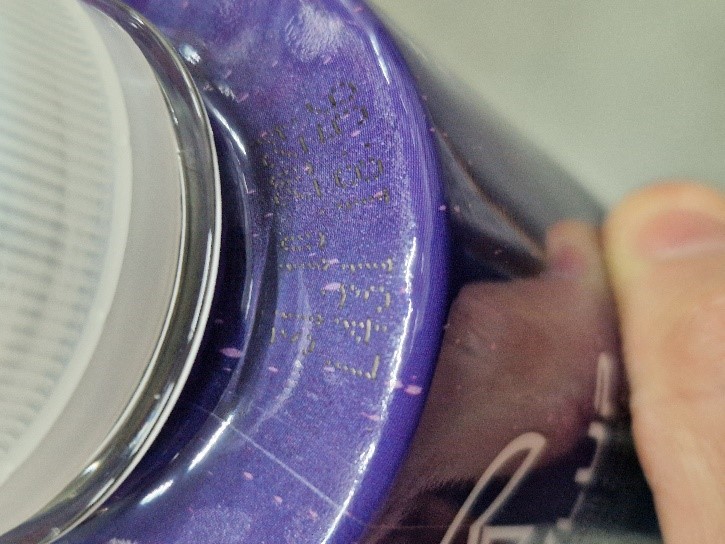
LevlUP GmbH, Hans-Böckler-Str. 10 A, 37079 Göttingen_ Image of the bottle neck with the batch number printed on it
LevlUP GmbH Hans-Böckler-Str. 10 A 37079 Göttingen
Contamination with mycelium and hyphae of molds
Nausea and vomiting may occur after consumption.
Posted in food contamination, food handler, Food Hazard, Food Illness, Food Inspections, Food Micro Blog, Food Microbiology, Food Microbiology Blog, Food Microbiology Testing, Food Quality, food recall, Food Spoilage, Food Testing, Lebensmittelwarnung, mold, Mold/ MouldAscospores, Mould/Mold, Visible Mould/Mold
Officials in the United Kingdom are looking into an E. coli outbreak linked to chili sticks that has affected five people.
The Food Standards Agency (FSA), Food Standards Scotland (FSS) and UK Health Security Agency (UKHSA) are investigating the outbreak of Shiga toxin-producing E. coli (STEC) O157 with five cases. Four sick people live in England and one in Scotland.
One person was hospitalized with illness linked to products from a Christmas market. Ongoing enquiries are concentrating on the supply of beef mince used in the product.
At the end of December 2023, Chiltern Artisan recalled its chili sticks because E. coli had been found in some of the products. The use-by date is also not always displayed on the packaging, according to the recall notice.
In December, Chiltern Artisan issued a statement for people who had bought its chili snap sticks between Oct. 14 and Dec. 24, 2023.
According to a message sent to the firm from an environmental health officer at Buckinghamshire Council, none of the patients were known to have consumed chili sticks or have any known links to Chiltern Artisan and spice samples were negative.
On January 24, 2023, the Missouri Department of Health and Human Services alerted the US Food and Drug Administration (FDA) to a possible case of Clostridium botulinum in an infant.
Although primarily breastfed, the infant had also been fed some packaged refrigerated baby food on or around January 7th (pumpkin) and January 11th (broccoli). On January 18th, the infant began to show symptoms of botulism.
By January 22nd, the infant had been hospitalized, and treatment with an anti-toxin was initiated.
The treatment was successful and the infant survived.
The baby food was manufactured by Oceanitan, LLC, a contract manufacturer of baby food products located in Los Angeles, California.

The number of Cryptosporidium outbreaks involving an agency of the UK Department for Environment, Food and Rural Affairs (Defra) increased in 2023.
The Animal and Plant Health Agency (APHA) assisted with investigations into seven Cryptosporidium parvum outbreaks linked to an animal origin. Five were in England and two were in Wales. One outbreak of cryptosporidiosis was epidemiologically linked to a milk vending machine.
Of the other human outbreaks, three were epidemiologically linked to open farms, two to commercial farms, and one to a farm shop which had animals on site.

APHA was also part of investigations into two Shiga toxin-producing E. coli (STEC) outbreaks in 2023 which were epidemiologically linked to separate animal-contact visitor attractions.

 FoodWorld