Category Archives: Food Illness

USA – Notes from the Field: Multistate Outbreak of Escherichia coli O26 Infections Linked to Raw Flour — United States, 2019

CDC

On February 20, 2019, PulseNet, the molecular subtyping network for foodborne disease surveillance, identified six Shiga toxin–producing Escherichia coli (STEC) O26:H11 infections with the same pulsed-field gel electrophoresis (PFGE) pattern combination. This PFGE pattern combination matched that of infections from a July 2018 outbreak that was associated with ground beef. In response, CDC initiated an investigation with federal, state, and local partners to identify the outbreak source and implement prevention measures.

CDC defined a case as STEC O26 infection with an isolate matching the outbreak strain by PFGE or related by core genome multilocus sequence typing scheme (cgMLST), with dates of illness onset during December 11, 2018–May 21, 2019. Investigators initially hypothesized that ground beef was the outbreak cause because of the PFGE match to the July 2018 outbreak and because in early interviews, patients commonly reported eating ground beef and leafy greens. Investigators used cgMLST to compare the genetic sequences of isolates from both outbreaks and determined that they fell into separate genetic clades (differing by 6–11 alleles), suggesting that something other than ground beef caused the illness in 2019. CDC noted that one patient consumed raw cookie dough and that most patients were young adult females, similar to demographic distributions of past flour-associated STEC outbreaks (13). Investigators developed a supplemental questionnaire focusing on beef, leafy greens, and flour exposures.

Twenty-one cases were reported from nine states (Figure). The median age of patients was 24 years (range = 7–86 years); 71% were female. Three patients were hospitalized, and none died. Among 13 patients asked about flour exposures, six reported eating, licking, or tasting raw homemade dough or batter during the week before illness onset. Three patients reported eating raw dough or batter made with the same grocery store brand of all-purpose flour, including a patient who reported eating raw dough at a bakery in Rhode Island. Overall, of 18 patients with store information, 11 reported shopping at this same grocery store chain.

The Rhode Island Department of Health visited the bakery reported by the patient and collected flour for testing. On May 21, 2019, testing identified STEC O26 from an intact bag of all-purpose flour, which was the same grocery store brand reported by other patients. PulseNet confirmed that the STEC O26 isolated from the flour was highly related to clinical isolates using cgMLST (0–1 alleles). Product distribution records collected by the Food and Drug Administration indicated that the store brand flour purchased by six patients in three states was produced in a single milling facility in Buffalo, New York. Based on results of the investigation, the store chain recalled all lots of product from its retail locations in 11 states. The milling company also recalled all lots of this product and several other lots of flour produced in that facility, resulting in the recall of additional brands and products distributed to multiple states.

Flour is increasingly recognized as a cause of STEC outbreaks (15). Raw flour is not a ready-to-eat product, and this outbreak highlights the continuing risk for illness associated with consumption of flour and raw dough or batter. The investigation was aided by considering demographic information early in the investigation because these characteristics were similar to those in past flour-associated outbreaks (13). These similarities, coupled with the discriminatory power of cgMLST, helped to guide the consideration of alternative hypotheses regarding the outbreak source and the successful identification of flour as the cause of this outbreak.

UK – Poland promises action to reassure UK on poultry meat safety

Food Safety News

Officials from Poland and the United Kingdom have met virtually to discuss the safety of Polish poultry meat after it was linked to several outbreaks.

Grzegorz Puda, Polish minister of Agriculture and Forestry, spoke remotely this past week with George Eustice, secretary of state for Environment, Food and Rural Affairs.

Puda said he had taken direct charge of the issue of Salmonella in Polish poultry meat.

“Despite the difficult pandemic situation, Poland will take all measures to minimize and eliminate the UK’s concerns about the quality and safety of Polish poultry,” he said.

“Poland is ready to cooperate with the UK on sequencing of the Salmonella genome in poultry products.”

Research – Outbreak of Shiga toxin-producing Escherichia coli O157 linked with consumption of a fast-food product containing imported cucumbers, United Kingdom, August 2020

IJID Online

Background

In August 2020, an outbreak of Shiga toxin-producing Escherichia coli (STEC) O157:H7 occurred in the United Kingdom. Whole genome sequencing revealed these cases formed a genetically distinct cluster.

Methods

Hypotheses generated from case interviews were tested in analytical studies, and results informed environmental sampling and food chain analysis. A case-case study used non-outbreak ‘comparison’ STEC cases; a case-control study used a market research panel to recruit controls.

Results

A total of 36 cases were identified; all cases reported symptom onset between 3rd and 16th August 2020. The majority of cases (83%) resided in the Midlands region of England or Wales. A high proportion of cases reported eating out, with one fast-food restaurant chain mentioned by 64% (n = 23) of cases. Both case-case (adjusted odds ratio (aOR) 31.8, 95% confidence interval (CI) 1.6 – 624.9) and case-control (aOR 9.19, 95% CI 1.0 – 82.8) studies provided statistically significant results that consumption of a specific fast-food product was independently associated with infection.

USA – Outbreak Investigation of Salmonella Duisburg: Jule’s Cashew Brie (April 2021)

FDA

The FDA, along with CDC and state and local partners are investigating a multistate outbreak of Salmonella Duisburg infections linked to the consumption of Jule’s Cashew Brie, a vegan, or plant-based cheese alternative. The firm, Jule’s Foods of Carlsbad, California, is conducting a voluntary recall of all varieties of Jule’s Foods products.

CDC identified an outbreak of five Salmonella Duisburg illnesses, which is considered a rare Salmonella serotype. All samples taken from ill patients are highly related according to Whole Genome Sequencing (WGS) analysis, or DNA fingerprinting of the pathogen. Of the five people interviewed, three (60%) reported eating Jule’s Truffle Cashew Brie– the only common product identified.

California Department of Public Health and Tennessee Department of Health state investigators collected samples of Jule’s Cashew Brie (including Cashew Brie (Classic), Truffle Cashew Brie, and Black Garlic Cashew Brie) from various retail locations. Preliminary results indicated that the Jule’s Cashew Brie products collected and analyzed in California may have been contaminated with Salmonella. Additional analysis subsequently confirmed the presence of Salmonella and additional analysis is ongoing to determine if the type of Salmonella found in these products matches the outbreak strain.

Based on these preliminary sample results, on April 21, 2021, the firm agreed to voluntarily recall all Jule’s Cashew Brie products. These tested products were sold on the firm’s website and in select retail locations. Additional distribution information is included in the firm’s recall announcement and below. Additionally, as a precaution the firm is also recalling its plant-based dairy alternative Jule’s Spinach Artichoke Dip and Jule’s Vegan Ranch Dressing. These products were sold directly to customers via the internet.

On April 21, 2021, FDA investigators and California Department of Public Health state inspectors arrived at the firm to conduct an inspection and collect additional product and environmental samples. The FDA investigation is ongoing to determine the source of contamination. Additional information will be provided as it becomes available.

Recommendation

Consumers, restaurants, and retailers should not eat, sell, or serve recalled Jule’s Foods products. Consumers should throw away recalled Jule’s Foods products or return to the place of purchase for a refund.

FDA recommends that anyone who received or suspects having received recalled Jule’s brand products use extra vigilance in cleaning and sanitizing any surfaces and containers that may have come in contact with the products to reduce the risk of cross-contamination. This includes cutting boards, slicers, countertops, refrigerators, and storage bins.


Product Images

Outbreak Investigation of Salmonella Duisburg Jule's Brie

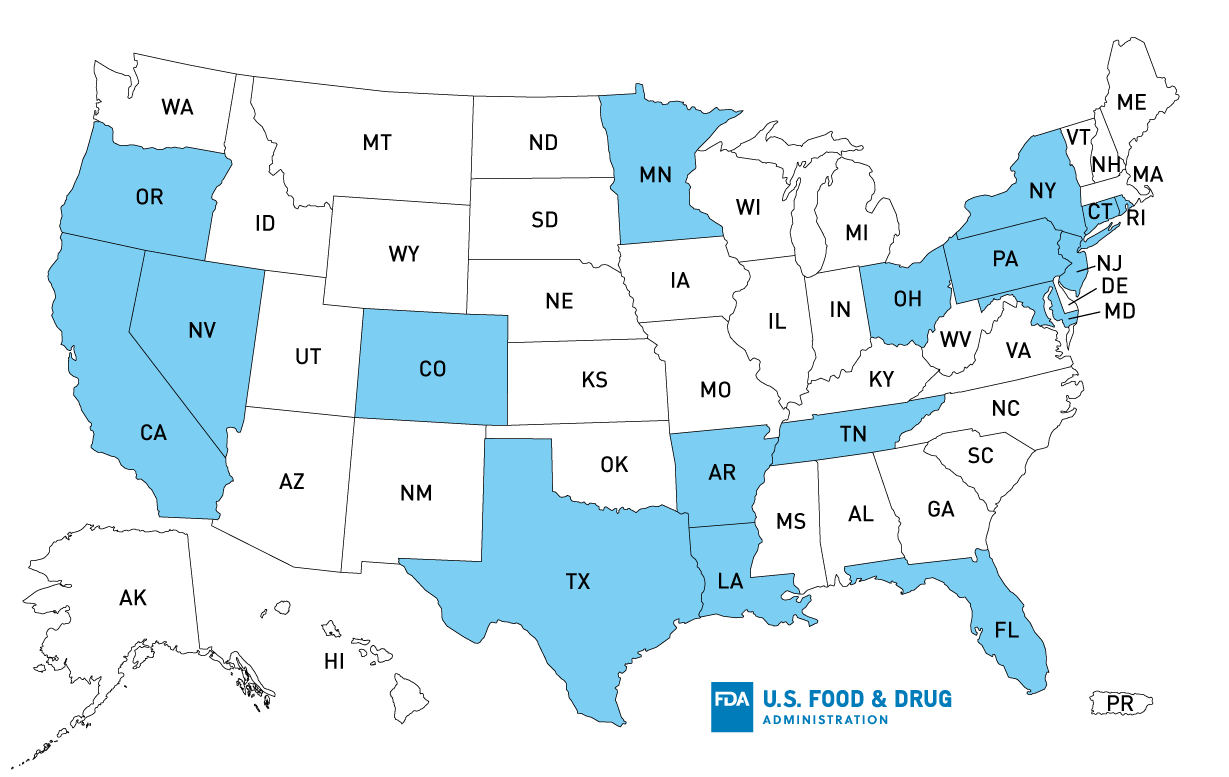
Map of U.S. Distribution of Recalled Jule’s Foods Products

Outbreak Investigation of Salmonella Duisburg - Cashew Brie Products - Map of U.S. Distribution (04-23-2021)

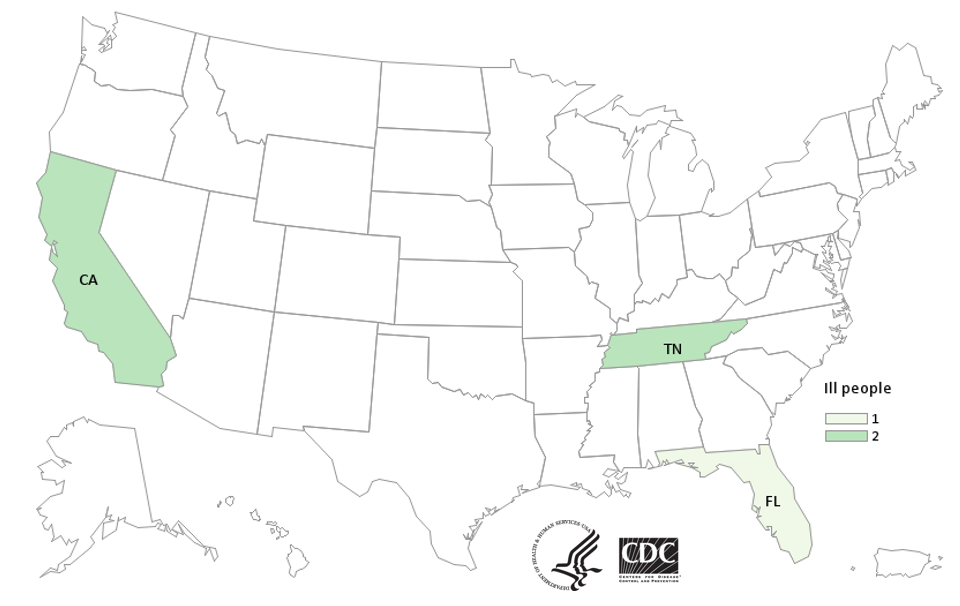
Case Count Map Provided by CDC

Case Count Map Provided by CDC - Salmonella Duisburg  - Cashew Brie Products

Case Counts

Total Illnesses: 5
Hospitalizations: 2
Deaths: 0
Last Illness Onset: February 27, 2021
States with Cases: CA (2), FL (1), TN (2)
Product Distribution*: Arkansas, California, Colorado, Connecticut, Florida, Louisiana, Maryland, Minnesota, Nevada, New York, New Jersey, Ohio, Oregon, Pennsylvania, Rhode Island, Tennessee, Texas
*Distribution has been confirmed for states listed, but product could have been distributed further, reaching additional states

Singapore – 151 get food poisoning after eating from International French School canteen

Straits Times

SINGAPORE – More than 150 students and staff from the International French School in Ang Mo Kio have contracted food poisoning after eating from its canteen.

The cafeteria has been closed this week as a precaution, said the school.

As at noon on Friday (April 23), 151 people had reported symptoms of gastroenteritis, the Ministry of Health and Singapore Food Agency told The Straits Times.

According to its website, catering is provided by Chartwells – a company which was also involved in cases of food poisoning at the residential colleges of the National University of Singapore in 2019.

USA – A likely Salmonella Outbreak tied to Jule’s Foods Brie products

Food Poison Journal

Jule’s Foods of Carlsbad, CA is voluntarily recalling all Jule’s Foods products, because the product was potentially contaminated with Salmonella.

Products include:

Jule’s Cashew Brie (Classic)

UPC: 860388001507 – all expiration dates

Jule’s Truffle Cashew Brie

UPC: 860388001514 – all expiration dates

Jule’s Black Garlic Cashew Brie

UPC: 860388001552 – all expiration dates

Jule’s Artichoke Spinach Dip

UPC: 860388001569 – all expiration dates

Jule’s Vegan Ranch Dressing

UPC: 860388001521 – all expiration dates

To date, FDA has preliminary confirmation of Salmonella in brie products containing cashews. We are working with the FDA to isolate the source of the pathogen in samples which were collected by the California Department of Public Health. Jule’s Foods is issuing this recall in connection with a Salmonella outbreak under investigation by the FDA and CDC.

Products were distributed to primarily independently owned grocery stores in Arkansas, California, Colorado, Connecticut, Florida, Louisiana, Maryland, Minnesota, Nevada New York, New Jersey, Ohio, Oregon, Pennsylvania, Rhode Island, Tennessee, Texas as well as direct to consumer. Jule’s Foods Brie products are 6 ounces and wrapped in white cheese paper. A full list of stores is available at www.JulesFoods.net

Singapore – Holland Close stall Kin Hoi suspended following gastroenteritis outbreak

Channel News Asia

SINGAPORE: Kin Hoi has been directed to suspend its food business operations with effect from Tuesday (Apr 20) until further notice after 15 cases of gastroenteritis were linked with the stall, the Ministry of Health (MOH) and the Singapore Food Agency (SFA) said on Wednesday.

Fifteen people reported gastroenteritis symptoms between Mar 28 and Apr 15 after consuming food prepared by Kin Hoi, and MOH and SFA were notified of the most recent case on Apr 19.

One person was hospitalised, but has since been discharged. MOH and SFA are investigating the incident.

Kin Hoi’s stall is located at 6 Holland Close and it also offers food delivery. The eatery, which is registered under the name Meetup @ 352, specialises in Thai-style seafood items such as cockles and grilled prawns.

USA – At Least 16 Customers Are Sick After Eating At This Popular Sandwich Chain

Eat This

A new case of suspected food poisoning at a major fast-food chain is being investigated in Illinois. According to the latest reports, several customers have fallen ill after eating at a Jimmy John’s location in Bloomington.

Food Safety News reports that there have been at least 16 cases of illness, 15 of which were student athletes from Illinois State University’s lacrosse team. According to iwaspoisoned.com, a website used for reporting cases of food poisoning, several of them required hospital treatment for fluid replacement because of severe vomiting and diarrhea.

Denmark – Deaths reported as Danish Salmonella outbreak grows

Food Safety News

A Salmonella outbreak in Denmark is continuing to affect more people and has also been linked to three deaths.

The Statens Serum Institut (SSI) previously reported that 25 people were infected and 14 had needed hospital treatment with most falling ill this past month.

The agency has now revealed 33 people have the same type of Salmonella typhimurium in the country and 19 have been hospitalized.

Switzerland – Pathogenic bacteria in food

BLV

The main pathogenic bacteria in food are Campylobacter and Salmonella. But Listeria in cheese and enterohemorrhagic Escherichia coli (ECEH) bacteria in young shoots have also made headlines in recent years.

Räucherfisch

Current

Smoked fish, what are the health risks?

04/16/2021 – Smoked fish are popular specialties in Switzerland. Consumed without cooking, they can become a food safety concern if hygiene rules are not respected during processing.

An assessment of the dietary risks associated with smoked fish was carried out as part of a pilot study in collaboration with the Office for Consumer Affairs of the canton of Vaud.

The study did not reveal any major risk, but follow-up should be ensured in order to maintain a high level of food safety and quality. The cantonal authorities concerned will keep this topic in their monitoring program and the FSVO plans to carry out a more detailed assessment.

Eingefärbtes rasterelektronisches Bild von Campylobacter jejuni

The prevention of infections with food germs of bacterial origin requires careful observance of simple hygiene rules in the kitchen .

Likewise, it is very important to wash your hands after coming into contact with animal products, as Campylobacter, Salmonella, Listeria and EHEC are transmitted from animals to humans. These diseases are called zoonoses.

Campylobacter

Infection with Campylobacter bacteria is the most common zoonosis in Switzerland, as in other European countries. It is the cause of gastrointestinal diseases in humans. The illness can last for about a week and in some circumstances may require hospitalization.

Campylobacter infection is characterized by abdominal pain, watery or bloody diarrhea, and an increase in temperature. Vomiting and high fever can also occur.

Infection is caused by contaminated food that has not been sufficiently cooked before consumption or that has come into direct contact with animals. In southern countries, contaminated water sources also represent a significant risk. The main source of infection, however, remains poultry meat.

According to data from the Federal Office of Public Health (OFSP), there are around 1,000 cases of Campylobacter infections each year. All patients do not consult their doctor, this figure is actually much higher. Overall, the number of cases has grown steadily over the past few years to reach around 7,500 during the year 2014.

Prevent Campylobacter infections

Campylobacter bacteria can survive in food, but cannot multiply there. Since contamination by Campylobacter does not affect foodstuffs, it is not possible to identify their presence by smell or appearance.

Campylobacter can be safely eliminated by thoroughly cooking the food at 70 ° C for at least 2 minutes by roasting, cooking or pasteurization. Freezing the food reduces the number of Campylobacter, without eliminating them completely.

Salmonella

Salmonella infection is most often manifested by inflammatory bowel disease with sudden onset of diarrhea, nausea, vomiting, fever, headache and abdominal pain. Salmonella infections are subject to notification .

They usually occur by ingesting contaminated food. The danger comes mainly from poultry, eggs, egg preparations, unpasteurized milk and meat products. Contamination through other animal products, utensils used, water, humans, etc. can occur throughout the food manufacturing process.

Prevent salmonellosis  

Salmonella infections are fought on two levels:

  1. the number of infected domestic animals should be reduced; 
  2. contamination of food with salmonella must be avoided and their multiplication stopped.

Listeria

In people without weakened immune systems, a Listeria infection is usually accompanied by mild symptoms or even no symptoms at all. People who are immunocompromised can experience a variety of serious symptoms, the outcome of which can be fatal. During pregnancy, a Listeria infection can lead to miscarriage or cause a child to have sepsis or meningitis when it is born.

Listeria transmission is caused by the ingestion of contaminated raw food, mainly of animal origin: meat, smoked fish, cold cuts, soft cheese. Transmission through contact with infected animals is rarer.

Prevent listeriosis  

In the first place, the general rules of hygiene should be observed when in contact with food and animals. Pregnant women and people with weakened immune systems should in particular avoid raw vegetables, raw or undercooked meat as well as raw fish and seafood, soft cheese and cheese made from unpasteurized milk. .

Enterohemorrhagic Escherichia coli (EHEC)

The majority of people infected with EHEC have abdominal pain accompanied by cramping, a short-term fever followed by intestinal colic which becomes violent, and slightly bloody hemorrhagic diarrhea. In a minority of people, only watery diarrhea is observed. Cases of EHEC infections are very rare in Switzerland. The mortality rate reaches 3 to 5%.

Escherichia coli bacteria naturally belong to our intestinal flora. EHECs are a pathogenic line of these generally harmless bacteria. Infection occurs first by consuming contaminated animal foods, mainly undercooked ground beef and unpasteurized dairy products. Contaminated drinking water, young shoots, potatoes and unpasteurized apple juice can, for example, also contain EHEC. More rarely, cases of transmission of EHEC are observed through contact with animals or animal faeces.

Prevent EHEC infections

Since a very small number of infectious agents is enough to get sick, it is important to follow the general rules of hygiene. It is therefore strongly recommended to wash your hands thoroughly after having been in contact with animals and to cook the meat thoroughly when preparing meals. Raw food should always be stored in the refrigerator.

Further information