Category Archives: Food Illness

EU – EU countries investigate Salmonella illnesses linked to imported tahini, halva

Food Safety News

Five European countries have reported Salmonella infections with at least some of them linked to tahini and halva from Syria.

Up to 80 people may have been affected since 2019 in Germany, Sweden, Norway, Denmark and the Netherlands with several types of Salmonella being linked to the outbreak.

RASFF Alert – Foodborne outbreak -Suspected Histamine -Frozen Yellowfin Tuna Loins

RASFF

Foodborne outbreak suspected (histamine poisoning) to be caused by frozen yellowfin tuna loins from Spain in Italy

USA – Outbreak Investigation of Salmonella: Jule’s Cashew Brie (April 2021) – Outbreak Over

FDA

he FDA, along with CDC, state and local partners, investigated a multistate outbreak of Salmonella infections linked to the consumption of Jule’s Cashew Brie, a vegan, or plant-based cheese alternative. On April 23, 2021, Jule’s Foods of Carlsbad, California, conducted a voluntary recall of all varieties of Jule’s Foods products.

As of July 7, 2021, CDC announced that the outbreak is over. There are a total of 20 illnesses in four states. Two additional strains of SalmonellaSalmonella Typhimurium and Salmonella Chester, have been linked to this outbreak. The illnesses of Salmonella Chester have the same genetic fingerprint as Salmonella found in a sample of Jule’s Cashew Brie collected by the California Department of Public Health (CDPH).

Illnesses of Salmonella Duisburg and Salmonella Urbana have been previously reported and are linked to this outbreak. Other strains of Salmonella have been identified in raw and finished product samples and environmental samples but have not been linked to illnesses.

Based on FDA traceback investigation and sample results, the cashews used by Jule’s Foods have been identified as the likely source of contamination in the Jule’s Cashew Brie products. The FDA worked with the cashew supplier to ensure that potentially contaminated product was removed from the market and that the supplier implemented corrective actions.

Recommendation

CDC announced that the outbreak is over. There are no recommendations for consumers, restaurants, or retailers.


Product Images

Outbreak Investigation of Salmonella Duisburg Jule's Brie

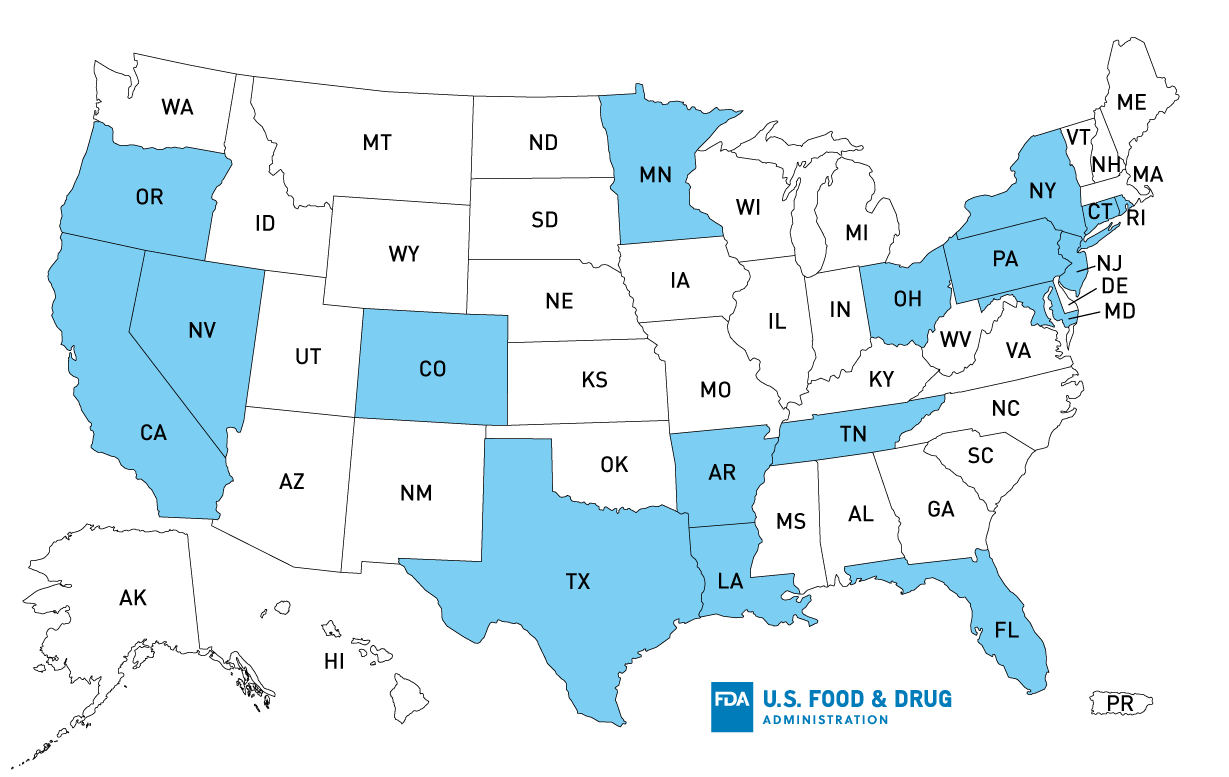
Map of U.S. Distribution of Recalled Jule’s Foods Products

Outbreak Investigation of Salmonella Duisburg - Cashew Brie Products - Map of U.S. Distribution (04-23-2021)

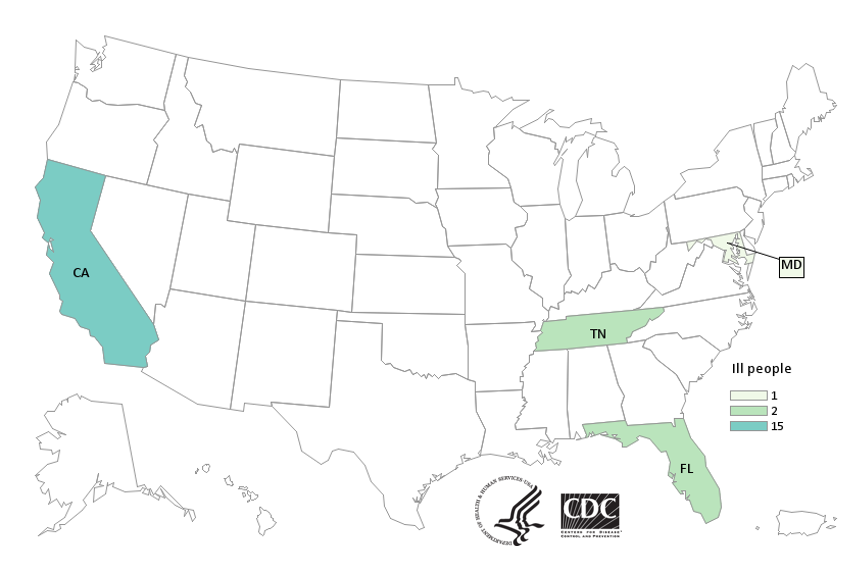
Case Count Map Provided by CDC

Outbreak Investigation of Salmonella in Cashew Brie Products - CDC Case Count Map (July 7, 2021)

Case Counts

Total Illnesses: 20
Hospitalizations: 5
Deaths: 0
Last Illness Onset: May 9, 2021
States with Cases: CA (15), FL (2), MD (1), TN (2)
Product Distribution*: Arkansas, California, Colorado, Connecticut, Florida, Louisiana, Maryland, Minnesota, Nevada, New York, New Jersey, Ohio, Oregon, Pennsylvania, Rhode Island, Tennessee, Texas
*Distribution has been confirmed for states listed, but product could have been distributed further, reaching additional states

Finland – Salmonella outbreak affects 450 in Jyväskylä, Linked to imported lettuce

Outbreak News Today

In a follow-up on the salmonella outbreak in the Jyväskylä region of Finland, the City of Jyväskylä said imported lettuce served in day care centres has been confirmed as the source of an outbreak of salmonella bacterial infections that affected about 450 children and day care centre staff.

The salad contained domestic cucumber, peas and foreign iceberg lettuce. Domestically-produced cucumbers and peas were also suspected to be the cause of the outbreak, but the city said tests had revealed no connection between these products and the salmonella infections.

The most likely source of Salmonella is iceberg lettuce, which came to Finland from Germany via Sweden.

Research – FAO’s work on food safety and quality

FAO

With an estimated 600 million cases of foodborne illnesses annually, unsafe food is a threat to human health and economies globally. Therefore, ensuring food safety is a public health priority and an essential step to achieving food security. Effective food safety and quality control systems are key not only to safeguarding the health and well-being of people, but also to fostering economic development and improving livelihoods by promoting access to domestic, regional and international markets.

The Food Safety and Quality Unit supports the strengthening of systems of food safety and quality control at national, regional and international levels. This involves:

  • Strengthening national food control regulatory capacities and global trade facilitation by providing leadership in supporting countries in the assessment and progressive development of food control systems, including food safety policy and food control regulatory frameworks;
  • Supporting development of institutional and individual capacities for food control and food safety management, including the management of food safety emergencies;
  • Supporting science-based food safety governance and decisions by providing sound scientific advice (through the JECFA and JEMRA expert bodies) to underpin food safety standards at national, regional and international levels;
  • Enhancing food safety management along food chains to prevent diseases and trade disruptions by supporting developing countries to apply risk-based food safety management along food chains that are appropriate for national and local production systems and in compliance with Codex texts;
  • Providing food safety platforms, databases and mechanisms which support networking, dialogue and global access to information and facilitating effective communication internationally on key food safety issues;
  • Developing food safety intelligence and foresight by becoming a major actor in the collection, analysis and communication of food chain intelligence; and
  • Evaluating new technologies to improve food safety and protect public health.

FAO is a recognized leader in the development of global food safety initiatives and translating these into country level action. The Food Safety and Quality Programme supports an integrated and multidisciplinary approach to food safety management and holistic and feasible “food chain” solutions to specific food safety problems as laid out in FAO’s Strategy for Improving Food Safety Globally. The foundations for this approach are based on science.

FAO’s Food Safety and Quality Unit often works in partnership with national and international bodies and organizations where such partnerships are mutually beneficial and where there is a compatibility of mandate and guiding principles.

Ireland – A Foodborne Outbreak of Cryptosporidiosis Likely Linked to Salad Leaves

IMJ

Click to access A-Foodborne-Outbreak-of-Cryptosporidiosis-Likely-Linked-to-Salad-Leaves.pdf

India – 17 Hospitalised After Suspected Food Poisoning In Uttar Pradesh Village

NDTV

Mathura: 

Fifteen women and two children from a Uttar Pradesh village were admitted to hospital after allegedly suffering from food poisoning, the police said on Friday.

Sample of food has been sent to Food Inspector for examination.

USA – Concord Waffle House link in Hepatitis A scare

Food Poison Journal

Cabarrus Health Alliance (CHA) is investigating a case of Hepatitis A in a worker at the Waffle House located at 1010 Vinehaven Dr. NE, Concord, NC 28025, located on Exit 60 off Interstate 85.

Possible exposure may have occurred in persons that bought and ate food from the Vinehaven Dr. Waffle House on June 20 between 9 p.m. and 12 a.m. or June 21 between 12 a.m. and 7 a.m. If you believe that you purchased and ate food during this time period, you can receive a hepatitis A vaccine to prevent contracting the virus.

USA – Listeria Outbreak Linked to Fully Cooked Chicken

FDA

Fast Facts
  • Illnesses: 3
  • Hospitalizations: 3
  • Deaths: 1
  • States: 2
  • Recall: Yes
  • Investigation status: Active
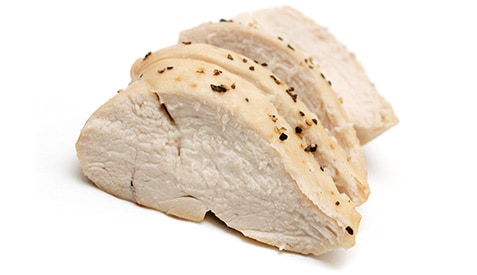
Precooked chicken

Recalled Food

Frozen, fully cooked chicken products, such as chicken strips and diced chicken, and products made with fully cooked chicken, supplied by Tyson Foods Inc.external icon

  • Shipped nationwide to retailers and institutions including hospitals, nursing facilities, restaurants, schools and Department of Defense locations
  • Products include frozen, fully cooked chicken strips, diced chicken, chicken wing sections, and fully cooked pizza with chicken
  • Products were sold under many brands including Tyson, Jet’s Pizza, Casey’s General Store, Marco’s Pizza, and Little Caesars
  • The products subject to recall bear establishment number “EST. P-7089” on the product bag or inside the USDA mark of inspection
  • See the complete list of recalled productsexternal icon, including product and date codes, on the USDA-FSIS website
What Businesses Should Do
  • Do not serve or sell recalled products.
  • Long-term care facilities, hospitals, and other facilities that serve people at higher risk for severe Listeria illness should take extra precautions.
    • Listeria is particularly harmful to people who are 65 years or older, pregnant, or have a weakened immune system.
    • All of the sick people in this outbreak ate foods served at a long-term care facility or hospital.
  • Follow USDA-FSIS’s guidanceexternal icon to prevent the spread and growth of Listeria.
What You Should Do
  • Do not eat any recalled products. Throw them away or return them to where you bought them.
  • Follow these five steps to clean your refrigerator, containers, and surfaces that may have touched the recalled products. Listeria can survive in the refrigerator and can easily spread to other foods and surfaces.
  • Call your healthcare provider right away if you have these symptoms after eating recalled products:
    • If you are pregnant: Fever and muscle aches. Your illness may be mild, but Listeria can cause pregnancy loss or premature birth. It can also cause serious illness or death in newborns.
    • If you are not pregnant: Headache, stiff neck, confusion, loss of balance, and convulsions, in addition to fever and muscle aches.
Symptoms of Listeria Illness
  • Listeria can cause severe illness (known as invasive listeriosis) when the bacteria spread beyond the gut to other parts of the body.
    • Pregnant people, adults 65 years or older, and people with weakened immune systems are at higher risk for severe illness.
  • Symptoms of severe illness usually start 1 to 4 weeks after eating contaminated food. However, symptoms can start as late as 10 weeks after.
    • Pregnant people usually experience only fever, fatigue, and muscle aches. However, Listeria can cause pregnancy loss or premature birth. It can also cause serious illness or death in newborns.
    • People who are not pregnant may experience headache, stiff neck, confusion, loss of balance, and convulsions, in addition to fever and muscle aches.
  • Listeria can also cause common food poisoning symptoms, like diarrhea and fever. People who experience these symptoms usually recover without treatment.
  • For more information about Listeria, see the Listeria Questions and Answers page.
file alt solid icon
Investigation Details
usa map icon
Map
chart icon
Timeline

USA – Public Health Alert Concerning A Possible Listeria Contamination of Little Hatch’s Ready To Eat Foods

FDA

Audience

Consumers who have recently purchased Little Hatch’s:

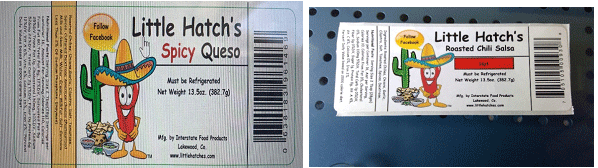
  • Jalapeno Cream Cheese Dip (13.5 oz or 14 oz)
  • Queso (13.5 oz)
  • Spicy Queso (13.5 oz)
  • Roasted Chili Salsa Medium (13.5 oz)
  • Roasted Chili Salsa Hot (13.5 oz)

Product

  • Little Hatch’s ready to eat foods: Jalapeno Cream Cheese Dip, Queso, Spicy Queso, Roasted Chili Salsa Medium and Roasted Chili Salsa Hot, sold in 13.5 oz or 14 oz containers in the refrigerated section of grocery stores
  • Little Hatch’s products are manufactured by Interstate Food Products, LLC and distributed to:
    • Whole Foods Market Distribution Center, Denver, CO
    • Whole Foods Market Rocky Mountain Regional states – CO, KS, MO, NM, UT, TX, WY
    • Natural Grocers, Denver, CO
    • Lucky Market, Denver, CO
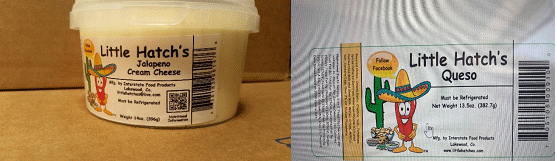
Little Hatch’s products

Purpose

The FDA advises consumers not to purchase or eat Little Hatch’s ready to eat Jalapeno Cream Cheese Dip, Queso, Spicy Queso, Roasted Chili Salsa Medium and Roasted Chili Salsa Hot sold in 13.5 oz or 14 oz containers due to a possible Listeria monocytogenes contamination. Listeria monocytogenes is a species of disease-causing bacteria, which causes an infection called listeriosis. A listeriosis infection can have serious adverse effects for women who are or may become pregnant, the elderly, and persons with weakened immune systems.

Summary of Problem and Scope

The FDA detected Listeria monocytogenes in retail samples of Jalapeno Cream Cheese Dip, Queso and Spicy Queso and subsequently initiated an inspection at the manufacturing facility. The FDA confirmed Listeria monocytogenes in 23 of 149 samples taken from processing, packaging, and storage areas at the facility, including various food-contact surfaces.

On May 20 2021, Interstate Food Products, initiated a voluntary recall of “Little Hatch’s” brand Jalapeno Cream Cheese, Queso, and Spicy Queso products with specific sell by dates that the FDA tested and found positive for Listeria monocytogenes. On June 15, 2021, Interstate Food Products indicated to the FDA that they may need to further expand the recall to include “Little Hatch’s” brand Roasted Chili Salsa Hot after conducting their own testing and confirming additional positive Listeria monocytogenes findings.

FDA Actions

The FDA is issuing this alert because the agency is concerned with the firm’s ongoing Listeria monocytogenes contamination. The FDA is continuing its efforts to remove Little Hatch’s product from the market.

Recommendations for Consumers

  • Contact your healthcare providers immediately if you are experiencing illness after consuming these products.
  • Contact your healthcare providers if you have recently consumed these products and are concerned about your health.
  • Consumers who have purchased these products should throw the food away and follow these steps:
    • Wash the inside walls and shelves of the refrigerator, cutting boards and countertops, and utensils that may have had contact with contaminated foods; then sanitize them with a solution of one tablespoon of chlorine bleach to one gallon of hot water; dry with a clean cloth or paper towel that has not been previously used.
    • Wipe up spills in the refrigerator immediately and clean the refrigerator regularly.
    • Wash hands with warm water and soap for at least 20 seconds before and after handling food and following any cleaning and sanitation process.
    • Pregnant women, the elderly and those with weakened immune systems should avoid certain foods, including raw fish, which carry a higher risk for Listeria monocytogenes.

Reporting Problems to the FDA

To report a complaint or adverse event (illness or injury), you can

Visit www.fda.gov/fcic for additional consumer and industry assistance.