Category Archives: Food Illness

USA – Is TikTox, Twitter and Reddit the new FDA and CDC as it relates to the Daily Harvest mystery?

Food Poison Journal

A lot of people say they have had liver complication and have had their gallbladders removed.

A number of people say they got sick after eating different Daily Harvest products, most commonly the recalled Leek and Lentil meals.

Doctors seem to have very few answers as to what is causing their illnesses.

TikTok:

https://www.tiktok.com/foryou?is_copy_url=1&is_from_webapp=v1 — TIkTok user posts about illness after eating Daily Harvest.

Twitter:

“I ate the Daily Harvest Lentil + Leek crumbles. I was lucky I didn’t end in the ER. I felt really sick: fever, headache, stomach ache, nausea and severe bouts of vomiting. I was not able to eat. I spent 2 days in bed recovering. Daily Harvest response is a joke” — @sandrav_nyc, June 23 (Twitter)

Reddit posts:

“Two weeks ago I tried the crumbles for the first time. That night, I had debilitating stomach pain, like nothing I had ever felt before. It was so bad I had to go to the ER as a last ditch effort to alleviate and manage the pain. After a CT scan, IV, meds, and a week on a bland diet I thought perhaps it was some sort of bug.
Denmark – Denmark hit by a trio of Listeria outbreaks with unknown sources; eight deaths reported

Food Safety News

AdobeStock_195439963

Officials in Denmark are investigating three separate Listeria monocytogenes outbreaks that have affected almost 30 people with eight deaths reported.

The Statens Serum Institut, Danish Veterinary and Food Administration (Fødevarestyrelsen) and DTU Food Institute are trying to find the sources of these outbreaks.

One had already been reported but the Statens Serum Institut has updated the number of people sick. This incident has affected nine people, all of them have been hospitalized and four have died. Five cases are men and four are women.

Patients range from 33 to 93 years old and all had an underlying disease or other immune system issue prior to infection that made them particularly vulnerable, such as meningitis or sepsis. Eight are from the Hovedstaden region of the country. Sample dates range from May 13 to June 6, 2022.

Whole genome sequencing found the strains were closely related and of the sequence type (ST) 37.

Speaking earlier in June, Nikolas Hove from Fødevarestyrelsen said it was rare to see so many Listeria infections in such a short period of time and officials were working to find out which foods were the cause of illness, so the outbreak could be stopped.

Fødevarestyrelsen has written to a number of large industry organizations calling for their members to sharpen in-house monitoring of Listeria. If they find the bacterium in the environment or products, they can have it typed for free at Fødevarestyrelsen’s laboratory.

USA – FDA Investigating Another Infant Death Potentially Related to Abbott Baby Formula

Food Safety Tech

On Wednesday, June 22, the FDA announced that it was investigating the death of an infant that occurred in January 2022 and is potentially related to Abbott baby formula. In a statement, the FDA said that it was notified of the death through a consumer complaint received on June 10, 2022. “The agency has initiated an investigation, given that the complaint referenced that the infant had consumed an Abbott product. However, the investigation of this most recent consumer complaint is in its preliminary stages and the agency will provide an update as it learns more,” the statement read.

The FDA has previously reported its review of complaints related to nine infant deaths. Two were found to be associated with the Abbott Nutrition Sturgis plant investigation. However, the FDA notes that, despite extensive investigation, the evidence does not rule in or rule out a definitive link between these infant deaths and the product produced at Abbott Nutrition’s Sturgis, Michigan-based plant.

USA – Outbreak Investigation of Hepatitis A Virus: Strawberries (May 2022)

FDA

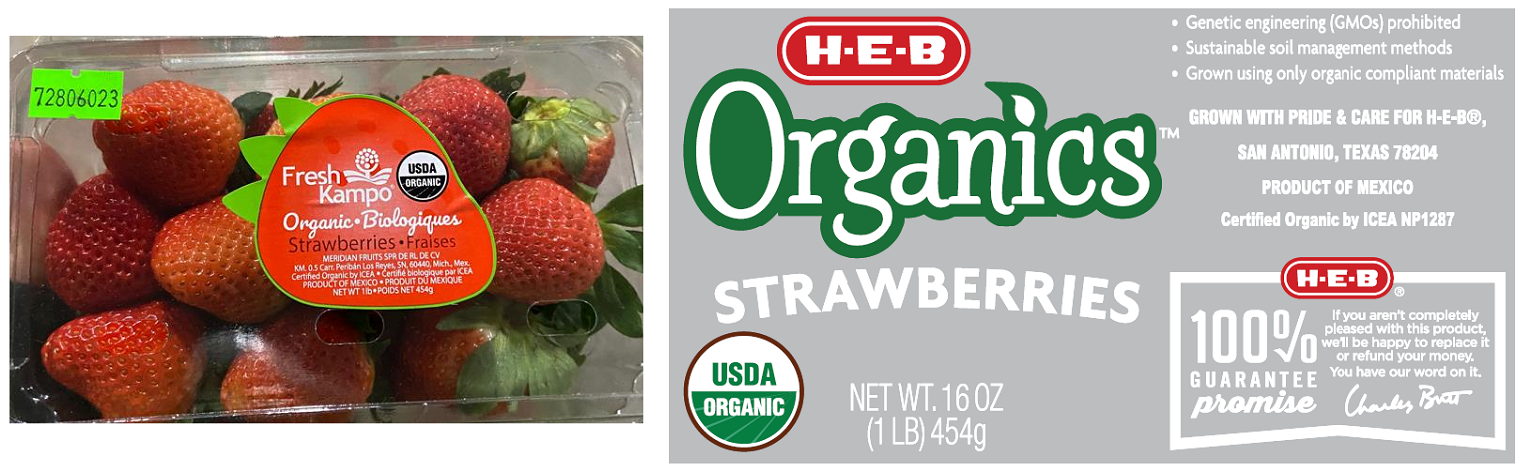
The FDA, along with CDC, and state and local partners, is investigating a multistate outbreak of hepatitis A infections in the United States linked to fresh organic strawberries. These potentially contaminated strawberries were imported from Baja California, a state in northern Mexico, and branded as FreshKampo and HEB by a common supplier; they were purchased between March 5, 2022, and April 15, 2022. The Public Health Agency of CanadaExternal Link Disclaimer and the Canadian Food Inspection AgencyExternal Link Disclaimer are also investigating an outbreak of hepatitis A. Imported FreshKampo brand fresh organic strawberries have been identified as the likely source of the outbreak in Canada.

Currently, these imported fresh organic strawberries are past shelf life and are not available for purchase in stores. People who purchased these fresh organic strawberries between March 5, 2022, and April 15, 2022, and then froze those strawberries for later consumption, should not eat them. If you are unsure of what brand you purchased, when you purchased your strawberries, or where you purchased them from prior to freezing them, the strawberries should be thrown away.

The downstream product removal conducted by Urban Remedy and reported on June 10, 2022, is now considered a market withdrawal. It has been determined that the product was not made using implicated strawberries.

This investigation is ongoing and this advisory will be updated as more information becomes available.

Recommendation

Consumers, restaurants, and retailers should not sell, serve, or eat any fresh organic strawberries branded as FreshKampo or HEB if purchased between March 5, 2022, and April 15, 2022. People who purchased the fresh strawberries and then froze those strawberries for later consumption should not eat them. They should be thrown away. Currently, the potentially contaminated product is past its shelf life. If you are unsure of what brand you purchased, when you purchased your strawberries, or where you purchased them from prior to freezing them, the strawberries should be thrown away.

If consumers purchased fresh organic strawberries branded as FreshKampo or HEB between March 5, 2022, and April 15, 2022, ate those berries in the last two weeks, and have not been vaccinated against hepatitis A, they should immediately consult with their healthcare professional to determine whether post exposure prophylaxis (PEP) is needed. PEP is recommended for unvaccinated people who have been exposed to hepatitis A virus in the last two weeks because vaccination can prevent a hepatitis A infection if given within 14 days of exposure. Those with evidence of previous hepatitis A vaccination or previous hepatitis A infection do not require PEP.

Contact your healthcare provider if you think you may have symptoms of a hepatitis A infection after eating these fresh organic strawberries, or if you believe that you have eaten these strawberries in the last two weeks.

Product Images

Outbreak Investigation of Hepatitis A Virus: Strawberries (May 2022) - Sample Product Images

Case Counts

Total U.S. Illnesses: 18 (including 1 probable case)
Hospitalizations: 13 (including 1 probable case)
Deaths: 0
Last illness onset: May 6, 2022
States with Cases: CA (16), MN (1), ND (1)
Product Distribution: Nationwide

USA – Outbreak Investigation of Salmonella: Peanut Butter (May 2022)

FDA

The FDA, along with CDC and state and local partners, are investigating a multistate outbreak of Salmonella Senftenberg infections linked to certain Jif brand peanut butter products produced at the J.M. Smucker Company facility in Lexington, Kentucky.

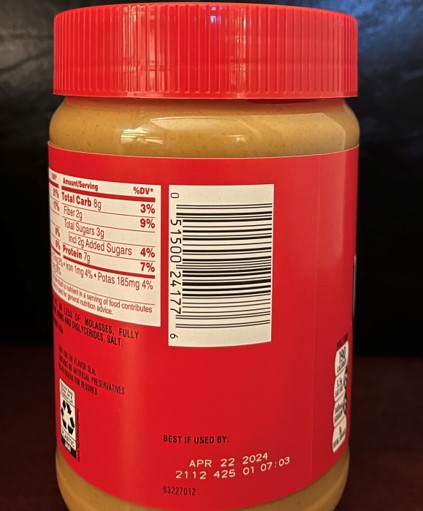
J.M. Smucker Company has voluntarily recalled certain Jif brand peanut butter products that have the lot codes described below. Photo examples are included below.

FDA has posted a list of additional recalls being conducted by companies that have used the recalled Jif peanut butter as an ingredient in the manufacturing of a new product (e.g., chocolate products) or in repackaging the product (e.g., snack cups). This list will be updated as the agency receives notification of new recalls.

In addition, USDA has issued a recall on ready-to-eat Super Asian Chicken Salads that were made with recalled Jif peanut butter and sold at an Amazon Go retail location in Washington state.

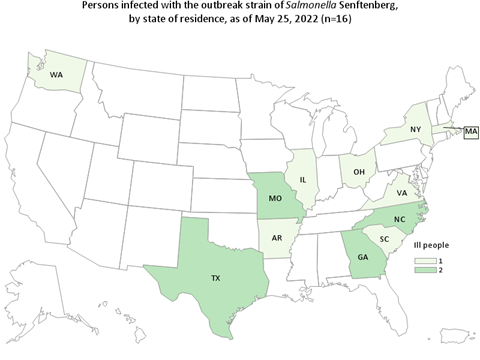
As of May 25, 2022, CDC reports that of the 10 people interviewed, 10 (100%) reported eating peanut butter prior to becoming ill. Nine people reported brand information, and all nine (100%) reported eating different varieties of Jif brand peanut butter.

FDA’s investigation is ongoing and more information will be provided as it becomes available.

Recommendation

Consumers, restaurants, and retailers should not eat, sell, or serve any recalled Jif brand peanut butter, including recalled products that contain the recalled Jif peanut butter. Consumers should also avoid feeding recalled peanut butter to pets or other animals, including wild birds.

For Consumers

Follow these steps:

  1. Check if you have Jif peanut butter in your home.
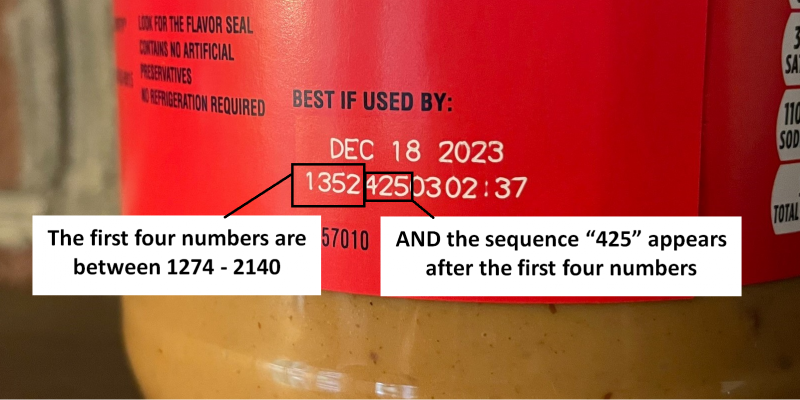
  2. Locate the lot code on the back of the jar, under the Best If Used By Date (the lot code may be next to the Best If Used By Date for cups or squeeze pouches).
  3. In the lot code, if the first four digits are between 1274 and 2140, and if the next three numbers after that are ‘425’, this product has been recalled and you should not consume this product. An example is below.

If you are unsure what to do with your recalled product, you can call or email J.M. Smucker Company for more information:

The J.M. Smucker Co. Hotline: 800-828-9980
Website: jif.com/contact-usExternal Link Disclaimer

FDA recommends that if you have used the recalled Jif brand peanut butter that have lot code numbers 1274425 through 2140425 and the first seven digits end with 425, you should wash and sanitize surfaces and utensils that could have touched the peanut butter. If you or someone in your household ate this peanut butter and have symptoms of salmonellosis, please contact your healthcare provider.

For Retailers, Re-packers, and Manufacturers

In addition to the steps above, FDA recommends referring to the firm’s recall press for the UPC codes and other retailer information. Do not sell or serve recalled peanut butter or products containing recalled peanut butter.

Product Images

Outbreak Investigation of Salmonella in Peanut Butter (May 2022) - Sample Recalled Product Label
Outbreak Investigation of Salmonella in Peanut Butter (May 2022) - Sample Label

Case Count Map Provided by CDC

Outbreak Investigation of Salmonella in Peanut Butter (May 2022) - CDC Case Count Map as of May 25, 2022

Case Counts

Total Illnesses: 16
Hospitalizations: 2
Deaths: 0
Last Illness Onset: May 2, 2022
States with Cases: AR (1), GA (2), IL (1), MA (1), MO (2), OH (1), NC (2), NY (1), SC (1), TX (2), VA (1), WA (1)
Product Distribution: Nationwide and International (see below)

International Distribution for Recalled Products

The recall impacts markets outside of the U.S.

Customer information provided by J.M. Smucker on May 23, 2022 shows that it was distributed to the following countries and locations: Canada, Dominican Republic, Singapore, Malaysia, Taiwan, Korea, Thailand, Honduras, Spain, Japan.

For additional information, international officials and customers can visit the company’s recall page.

USA – Several people sickened by bacterial outbreak in Sanders County – Campylobacter

KPAX

The source of a bacterial outbreak in Sanders County that caused several people to become ill has been confirmed.

State and county officials recently notified the Montana Department of Transportation (MDT) that the Kennedy Creek water box has been associated with a Campylobacter outbreak.

The Montana Department of Environmental Quality (DEQ) has labelled this untreated water as a health concern and advised MDT to close off public access to the water.

After Sanders County Public Health officials confirmed several cases of infection from Campylobacter bacteria, the water from the untreated creek was tested and the presence of this bacteria was confirmed, according to MDT.

Over 20 people have tested positive for the bacterial infection and have reported diarrhea, abdominal pain, nausea, and fever after drinking water from the location.

India – Two dozen students fall sick due to food poisoning

Daily Pioneer

In a shocking incident of negligence, about two dozen students of Kaushal Vikash Kendra, Mango fell victim to food poisoning at their hostel on Tuesday. The students fell sick after eating egg curry and ‘puri’ for breakfast this morning.

One of the victims said she fell sick after consuming egg curry and puri this morning. “ Though a section of girls have other versions but I must say all the girls fell sick after almost an hour of consuming breakfast only,” she said.

Significantly, none of the people from the Kaushal Vikash Kendra management was available for comment on the issue.

Another section of the students claimed that they fell sick due to eating food brought online during a birthday party on Monday night. “It was my friend’s birthday on Monday. We celebrated the occasion by throwing a party at the hostel. She had bought cake, fast food from Mango. In the morning, all those who enjoyed the party had started suffering from loose motion and vomiting. Then we were brought to the MGM medical college hospital by the management,” informed a student.

However, one of the five ailing students who were admitted to the medical college hospital’s emergency ward, could not say anything about five other girls from the same centre found undergoing treatment lying in the corridor of the emergency block.

Arun Kumar, superintendent, MGM Medical College Hospital said that in all two dozen girls were brought for the treatment at noon. “The girls were down due to food poisoning. Six of the girls were sent back after first-aid, but the rest of them were admitted for treatment,” said Kumar, adding that the condition of all the girls is stable.

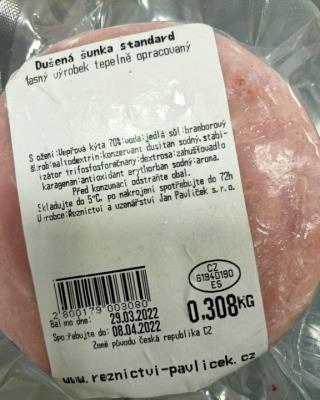
Czech Republic – Standard ham stew – Listeria monocytogenes

Potravinynapranyri

Illustration photo no. 1

Place of inspection:
Namest nad Oslavou ( Masarykovo nam. 966, 67571 Namest nad Oslavou )
Company ID: 27720918
Unsatisfactory parameter:

Listeria monocytogenes

The pathogenic bacterium Listeria monocytogenes has been detected in the product. This bacterium can cause a disease called listeriosis.

Expiration date: 4/8/2022
Producer: Řeznictví a uzenářství Jan Pavlíček sro
Country of origin:  Czechia
Sampling date: March 30, 2022
Reference number: 22-000043-SVS-CZ
The sample was found by an official inspection of the State Veterinary Administration.

Belgium – The FASFC has decided to issue a conditional authorization to Ferrero – Kinder – Salmonella

AFSCA

In late March – early April, consumers fell ill after consuming Kinder brand chocolate products. Following epidemiological investigations and the analysis of samples, a link was established with the Ferrero factory in Arlon.

The FASFC then immediately began an in-depth investigation at Ferrero in Arlon and decided on April 8 to withdraw the authorization for this factory and to recall all the products in the Kinder range from this production site.

In May, Ferrero applied to the AFSCA for authorization to be able to produce again.

The FASFC has decided to give Ferrero a conditional authorization for their production plant in Arlon.

This conditional authorization will be granted for a period of 3 months . During this period, the raw materials, as well as each batch of foodstuffs produced, will be analysed. It is only if these analyses give a compliant result that the products can be placed on the market.

This decision comes after several weeks of in-depth analyses during which the FASFC carried out several on-site checks both at the level of the internal procedures put in place by Ferrero and of the factory’s infrastructure.

The FASFC is of the opinion that, in the current state of affairs, Ferrero offers the necessary guarantees of compliance with food safety rules and requirements.

Nevertheless, the FASFC opted for a conditional authorization because the Agency considers that it is essential to be able to verify the concrete application of all the internal procedures once the factory has resumed its production activities.

In the event of favourable inspection results at the end of this 3-month period, a final authorization may be issued.

For his part, the Federal Minister of Agriculture, David Clarinval, in charge of the FASFC, is delighted with the favourable progress of the file: “ I salute the quality work carried out by the FASFC in this complicated file. The conditional authorization of the Ferrero factory in Arlon is the first step towards a final authorization. I will continue to follow developments in this case closely. »

Research – Vital Surveillances: Epidemiological Analysis of Foodborne Botulism Outbreaks — China, 2004–2020

China CDC

kswfoodworld

  • Abstract

    IntroductionFoodborne botulism is a rare, potentially fatal illness resulting from the ingestion of foods contaminated with preformed botulinum neurotoxin types A, B, E, or F, produced by Clostridium botulinum. The descriptive epidemiology of foodborne botulism outbreaks in China during 2004−2020 was performed to inform public health response strategies.

    MethodsData from 22 of 31 provincial-level administrative divisions (PLADs) of the National Foodborne Disease Outbreaks Surveillance System during 2004−2020 and Embase, China National Knowledge Infrastructure (CNKI), Wanfang Data, and Chinese Science and Technique Journals (CQVIP) from January 2004 to December 2020 to identify indexed publications in the Chinese literature using the following search terms “botulism,” or “botulinum toxin,” or “Clostridium botulinum.” The number and proportion of outbreaks, illnesses, and deaths by PLAD, food types, and contributing factors were calculated.

    ResultsDuring 2004−2020, a total of 80 foodborne botulism outbreaks occurred in China, involving 386 illnesses and 55 deaths; most outbreaks were reported between June and August, with a sharp peak in January; 22 out of 31 PLADs reported foodborne botulism outbreaks, Xinjiang reported the largest number of outbreaks (20), followed by Qinghai (13); the most commonly implicated food was home-prepared traditional processed stinky tofu and dried beef, accounting for 51.25% events. Improper processing and improper storage in contributing factors accounted for 77.50% outbreaks. Initial misdiagnosis occurred in 27.50% of cases.

    ConclusionsOutbreaks of foodborne botulism had a high case-fatality rate. Targeted food safety and popularization education to farmers and herdsmen in Xinjiang and Qinghai related to botulism prevention should be carried out, and timely outbreak investigation and hospital surge capacity should be improved.

  • Belgian scholars in consumers of sausages first described botulism in 1896 (1). It was confirmed that the growth and germination of toxins occurred only under particular conditions in an anaerobic low salt, low-acid environment. People who ingest food contaminated with botulinum neurotoxin (BoNT) produced by botulinum toxin can have a potentially fatal outcome (2). Outbreaks have been reported worldwide. In Canada, the first Clostridium botulinum type E outbreak in 1944 in Nanaimo, British Columbia was reported in 1947 (3); In China, Wu et al. first reported botulism in Xinjiang in 1958 due to edible semi-finished noodle sauce (4). A better understanding of the epidemiology of botulism outbreaks can help tailor local prevention and public health response strategies. Here, we reviewed surveillance data on outbreaks, illnesses, and deaths of botulism in China from 2004 to 2020.