Category Archives: Food Hygiene

Research – Inactivation of Foodborne Viruses by High-Pressure Processing (HPP)

MDPI

Rotavirus

High-pressure processing (HPP) is an innovative non-thermal food preservation method. HPP can inactivate microorganisms, including viruses, with minimal influence on the physicochemical and sensory properties of foods. The most significant foodborne viruses are human norovirus (HuNoV), hepatitis A virus (HAV), human rotavirus (HRV), hepatitis E virus (HEV), human astrovirus (HAstV), human adenovirus (HuAdV), Aichi virus (AiV), sapovirus (SaV), and enterovirus (EV), which have also been implicated in foodborne outbreaks in various countries. The HPP inactivation of foodborne viruses in foods depends on high-pressure processing parameters (pressure, temperature, and duration time) or non-processing parameters such as virus type, food matrix, water activity (aw), and the pH of foods. HPP was found to be effective for the inactivation of foodborne viruses such as HuNoV, HAV, HAstV, and HuAdV in foods. HPP treatments have been found to be effective at eliminating foodborne viruses in high-risk foods such as shellfish and vegetables. The present work reviews the published data on the effect of HPP processing on foodborne viruses in laboratory media and foods. View Full-Text

RASFF Alerts – Salmonella – Various Chicken/Turkey/Egg Products from Poland – Raw Smoked Bacon Strips – Organic Chilli Pepper – Black Pepper – Sesame Seeds – Chipolata – Paprika Powder – Turkey Fillets – Turkey Escalopes

European Food Alerts

RASFF

Salmonella (in 1 out of 5 samples /25g) in raw smoked bacon strips from Germany in Germany

RASFF

Salmonella (presence /25g) in organic chilli pepper from Uganda in the Netherlands

RASFF

Salmonella (presence /25g) in organic sesame seeds from Turkey in the Netherlands

RASFF

Salmonella (presence /25g) in chipolata from the Netherlands in the Netherlands

RASFF

Salmonella (presence /25g) in paprika powder from China in Spain

RASFF

Salmonella enterica ser. Matadi (presence /25g), Salmonella enterica ser. München (presence /25g), Salmonella enterica ser. Newport (presence /25g) and Salmonella enterica ser. Saintpaul (presence /25g) in black pepper from Brazil in Germany

RASFF

Salmonella enterica ser. Abaetetuba (in 1 out of 10 samples /25g), Salmonella enterica ser. Coeln (in 1 out of 10 samples /25g), Salmonella enterica ser. Matadi (in 1 out of 10 samples /25g), Salmonella enterica ser. Newport (in 1 out of 10 samples /25g) and Salmonella enterica ser. Oranienburg (in 2 out of 10 samples /25g) in black pepper from Brazil in Germany

RASFF

Salmonella enterica ser. Saintpaul (presence /25g) in black pepper from Brazil in Germany

RASFF

Salmonella enterica ser. Typhimurium (presence /25g) in chilled turkey fillets and escalopes from France in Finland

RASFF

Salmonella enterica ser. salamae (in 3 out of 5 samples /25g) in frozen turkey breast fillets from Poland, via Estonia in Finland

RASFF

Salmonella enterica ser. Enteritidis (in out of 5 samples /25g) in chilled chicken thighs from Poland in Lativa

RASFF

Salmonella enterica ser. Liverpool (in 1 out of 5 samples /25g) in sesame seeds from Uganda in Germany

RASFF

suspicion of Salmonella enterica ser. Enteritidis (found in faecal samples) in eggs from Poland in Poland

RASFF

Salmonella enterica ser. Enteritidis (presence /25g) in frozen chicken broiler fillets from Poland in Lithuania

RASFF

Salmonella (presence /25g) in chilled chicken meat from Poland in Poland

RASFF

Salmonella enterica ser. Enteritidis (presence/ /25g) in chilled chicken broiler soup sets from Poland in Lithuania

RASFF

Salmonella enterica ser. Infantis (presence /25g) in chicken wings from Poland in Lithuania

RASFF Alert – Listeria monocytogenes – Frozen Pre-Cooked Chicken Curry Cassolettes

European Food Alerts

RASFF

Listeria monocytogenes (< 10 CFU/g) in frozen pre-cooked chicken curry cassolettes from Spain in France

RASFF Alerts – Aflatoxin – White Rice – Pistachios

European Food Alerts

RASFF

aflatoxins (B1 = 3 µg/kg – ppb) in white rice from Pakistan in Spain

RASFF

aflatoxins (B1 = 24; Tot. = 27 µg/kg – ppb) in pistachios from Turkey in Belgium

Switzerland – Early detection for food safety

FFSVO

For sustainable assurance of food safety and the prevention of fraud, the FSVO identifies newly emerging risks to the health of Switzerland’s population. Early detection of this kind allows appropriate action to be taken in real time.

The FSVO compiles the most important food safety information every month 

Monitoring developments in the field of food safety is an essential task of early detection. This is why the FSVO summarises and evaluates the main information in Seismo Info. The publication is sent out by newsletter.

The aim of early detection for food safety is to identify and assess potential risks of food to the health of consumers.

The FSVO distinguishes between different types of risk:

  • Microbiological risks in foodstuffs and food fraud and deception
  • Chemical risks in foodstuffs and commodities
  • Nutrition-related risks

Monitoring system

The detection of newly emerging risks requires vigilant monitoring of societal and ecological changes, technological developments, economic trends and political conditions.

To perform these tasks, the FSVO manages an early detection system for food safety. This system considers information from a variety of sources, as well as the opinion of experts from the federal government, the cantons, industry and universities. The FSVO is also part of an international network that regularly shares information on new risks, assesses these risks and discusses the action to be taken.

Information and communication

The information gathered is compiled in the ADURA database, which can be accessed by federal and cantonal experts and to some extent also by the public.

The FSVO summarises and evaluates the main information every month in Seismo Info. The publication is communicated via the «Food safety and nutrition» newsletter (Subscription in French, German or Italian).

«Briefing letters» are short summaries of issues. They are characterised by in-depth research on a specific topic. Their purpose is to draw attention to hazards or risks that could endanger food safety in the medium to long term.

Anyone can contribute to early detection by submitting information to seismo@blv.admin.ch. Specialists check the information and incorporate it into the ADURA database or Seismo Info as appropriate.

USA – Lancaster Foods Recalls All Conventional Butternut Squash Items That Were Processed between the Dates of 12/22/20 and 01/08/21 Due to Possible Health Risk

FDA

Lancaster Foods LLC has initiated a voluntary product recall of its processed butternut squash items because they have the potential to be contaminated with Listeria Monocytogenes, an organism which can cause serious and sometimes fatal infections in young children, frail or elderly people, and others with weakened immune systems. Although healthy individuals may suffer only short-term symptoms such as high fever, severe headache, stiffness, nausea, abdominal pain and diarrhea, Listeria infection can cause miscarriages and stillbirths among pregnant women.

No illnesses have been reported to date in connection with this problem.

The recalled items were distributed in NC, VA, DC, MD, PN, NY, NJ, CT, RI, MA, NH, and VT mainly through retail stores.

The products noted:

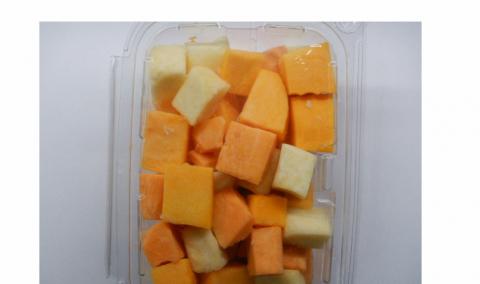
  1. 16 oz Autumn Medley – UPC 8 13055 01115 6; with the expiration dates of 01/05/21, 01/07/21, and 01/09/21 noted on the bottom scan label. The brand name is Lancaster Foods and the package is a clear plastic tamper-evident clamshell.
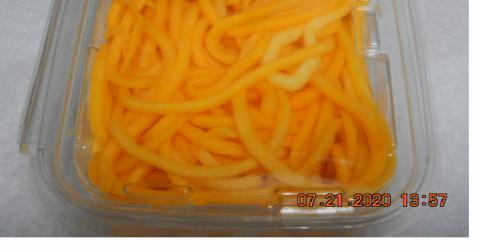
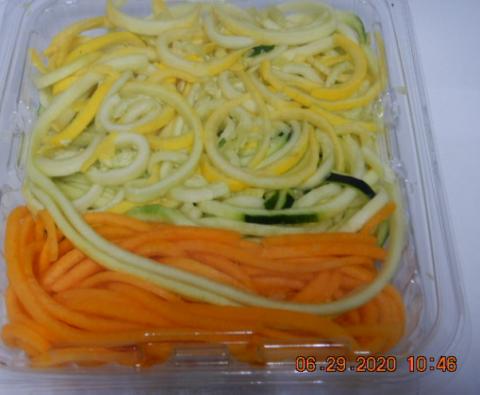
  2. 12 oz Butternut Squash Noodles – UPC 8 13055 01749 3; with the expiration date of 01/10/21 noted on the bottom scan label. The brand name is Lancaster Foods and the package is a clear plastic tamperevident clamshell.
  3. 12 oz Butternut Squash Noodles – UPC 8 13055 01864 3; with the expiration dates of 01/05/21, 01/08/21, 01/10/21, 01/11/21, 01/12/21, 01/15/21, and 01/17/21 noted on the bottom scan label. The brand name is Lancaster Foods and the package is a clear plastic tamper-evident clamshell.
  4. 12 oz Butternut Squash Noodles – UPC 6 88267 17259 5; with the expiration dates of 01/08/21, 01/10/21, 01/12/21, 01/13/21, 01/14/21, 01/15/21, and 01/17/21 noted on the bottom scan label. The brand name is Store Brand and the package is a clear plastic tamper-evident clamshell.
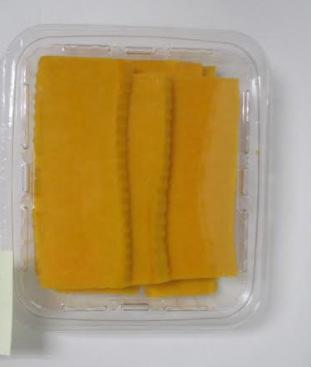
  5. 21 oz Butternut Squash Planks – UPC 8 13055 01272 6; with the expiration dates of 01/02/21, 01/08/21, 01/12/21, 01/15/21, and 01/17/21 noted on the bottom scan label. The brand name is Lancaster Foods and the package is a clear plastic tamper-evident clamshell.
  6. 20 oz Squash Noodle Medley – UPC 8 13055 01836 0; with the expiration dates of 01/05/21, 01/08/21, 01/13/21, 01/14/21, and 01/16/21 noted on the bottom scan label. The brand name is Lancaster Foods and the package is a clear plastic tamper-evident clamshell.
  7. 20 oz Squash Noodle Medley – UPC 6 88267 18585 4; with the expiration dates of 01/03/21, 01/08/21, 01/11/21, 01/17/21, 01/18/21, and 01/19/21 noted on the bottom scan label. The brand name is Store Brand and the package is a clear plastic tamper-evident clamshell.
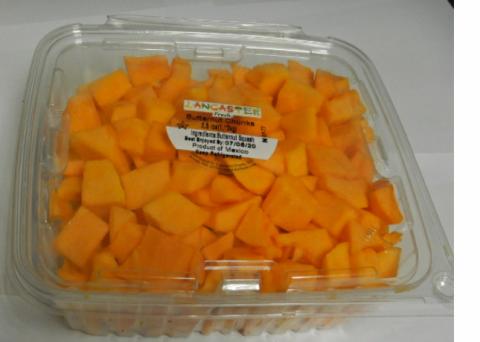
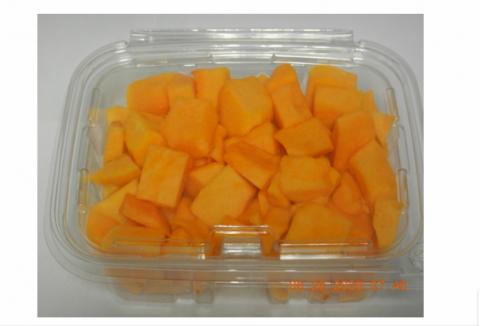
  8. 2.5# Butternut Squash Chunks – UPC 8 13055 01596 3; with the expiration dates of 01/04/21, 01/12/21, 01/15/21, and 01/18/21 noted on the bottom scan label. The brand name is Lancaster Foods and the package is a clear plastic tamper-evident clamshell.
  9. 20 oz Butternut Squash Chunks – UPC 8 13055 01150 7; with the expiration dates of 01/05/21, 01/08/21, 01/09/21, 01/13/21, and 01/16/21 noted on the bottom scan label. The brand name is Lancaster Foods and the package is a clear plastic tamper-evident clamshell.
  10. 24 oz Butternut Squash Chunks – UPC 8 13055 01300 6; with the expiration dates of 01/12/21, 01/13/21, 01/15/21 noted on the bottom scan label. The brand name is Lancaster Foods and the package is a clear plastic tamper-evident clamshell.
  11. 12 oz Butternut Squash Chunks – UPC 8 13055 01391 4; with the expiration dates of 01/04/21, 01/05/21, 01/07/21, 01/11/21, 01/12/21, 01/15/21, 01/17/21, and 01/20/21 noted on the bottom scan labels. The brand name is Lancaster Foods and the package is a clear plastic tamper-evident clamshell.
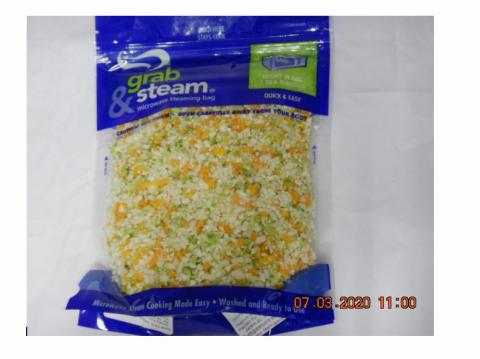
  12. 15 oz Veggie Rice Blend – UPC 8 13055 01014 2; with the expiration dates of 01/07/21 and 01/09/21 noted on the bottom scan labels. The brand name is Lancaster Foods and the package is a stand-up steam pouch with ‘grab & steam’ printed on the header.

Out of an abundance of caution, Lancaster Foods has temporarily halted production of these items as the FDA and the company investigate the source of the issue. Consumers who have purchased units noted above are urged to return them to the place of purchase for a full refund.

Consumers with questions may contact the company at 1-410-799-0010, extension 1530. The hours are from 0800 to 1700 in the Eastern time zone on the days of Monday through Sunday. Voicemails received after hours will be returned the next day.


Company Contact Information

Consumers:
Lancaster Foods, LLC
 1-410-799-0010, extension 1530

Product Photos

New Zealand – Pestell’s confirmed as source of listeria in ham products in December 2020 food recall

MPI

A New Zealand Food Safety and Nelson Marlborough Public Health Service investigation has confirmed the source of listeria contamination last month that resulted in illness for 4 people and led to recalls of ham products from a number of South Island supermarkets, and 3 stores in the greater Wellington region.

The contamination originated at meat supplier Pestell’s Rai Bacon Company Ltd, where it was discovered in products and in the processing environment. This was confirmed through the results of DNA testing, received this week.

As a result of the recall in December, Pestell’s have stopped producing and selling ready-to-eat ham products.

Investigations into the source of listeria involved followup with the suppliers of the cooked ready-to-eat meats to the supermarket, including Pestell’s.

In October, routine testing by Pak’n Save Blenheim detected listeria in some packaged meat products and the affected products were recalled. It was identified after genome testing that the listeria found as a result of the testing, had the same sequencing as the listeria found in Pestell’s products.

New Zealand Food Safety’s food compliance services national manager, Melinda Sando, says, “We knew where the supermarket was getting its stock from. We went to Pestell’s and took samples for testing from their processing environment and their products. Listeria was detected in product and environment samples.

“These samples were then sent to ESR, and they did genome sequencing. The sequencing of those isolates (cells) showed they were identical, which means they are from a specific source.

“Nobody wants to put their customers at risk. We worked quickly to minimise the risk to the public and resolve the issues.

“There was good cooperation from the supplier and retailers,” Ms Sando says.

Nelson Marlborough Public Health Service medical officer of health, Dr Andrew Lindsay, says: “Listeriosis infection can be serious among vulnerable groups such as pregnant women and their unborn babies, newborn babies, people with weakened immune systems and elderly people.

“We will continue to work closely with New Zealand Food Safety should any more cases emerge. To date, no further cases associated with the recalled products have been identified. However, as listeria can survive freezing, consumers are reminded to check food in their fridges and freezers and if they have any of the recalled product follow the advice from New Zealand Food Safety.”

For information about the recalled product, including dates, and batches, refer to:

Pestell’s brand ham products food recall

Research – Bacillus cereus food poisoning with fatal multi-organ failure.

BMJ

bacillus

This case represents a rare fulminant course of fried-rice associated food poisoning in an immunocompetent person due to pre-formed exotoxin produced by Bacillus cereus, with severe manifestations of sepsis, including multi-organ (hepatic, renal, cardiac, respiratory and neurological) failure, shock, metabolic acidosis, rhabdomyolysis and coagulopathy. Despite maximal supportive measures (continuous renal replacement therapy, plasmapheresis, N-acetylcysteine infusion and blood products, and broad-spectrum antimicrobials) and input from a multidisciplinary team (consisting of infectious diseases, intensive care, gastroenterology, surgery, toxicology, immunology and haematology), mortality resulted. This case is the first to use whole genome sequencing techniques to confirm the toxigenic potential of B. cereus. It has important implications for food preparation and storage, particularly given its occurrence in home isolation during the COVID-19 pandemic.

View Full Text

Australia – O’Brien’s Wholesale Meats Pty Ltd — O’Brien’s Leg Hams (Various Weights) – Listeria monocytogenes

Product Safety Australia

Photograph of O'Brien's Leg Hams (Various Weights)

O’Brien’s Full Boneless Leg Ham
Use by: 24 March 2021, 1 April 2021 and
6 April 2021

O’Brien’s Champagne Leg Ham
O’Brien’s Half Leg Ham
O’Brien’s Full Leg Ham
Use by: 1 April 2021 and 6 April 2021

O’Brien’s Half Boneless Leg Ham
O’Brien’s Third Leg Ham
Use by: 6 April 2021

Leg Ham in plastic vacuum packing bag

Identifying features

Other
Batch codes: 20493, 20505 and 20513

What are the defects?

The recall is due to microbial (Listeria monocytogenes) contamination.

What are the hazards?

Listeria may cause illness in pregnant women and their unborn babies, the elderly and people with low immune systems.

What should consumers do?

Any consumers concerned about their health should seek medical advice and should return the products to the place of purchase for a full refund.

For further information, consumers can contact O’Brien’s Wholesale Meats on 08 8280 3911 or https://www.obriensmeat.com.au

Traders who sold this product

Independent food retailers including IGA and butcher shops in SA, NT, NSW and Vic, and Foodlands in SA

Where the product was sold
New South Wales
Northern Territory
South Australia
Victoria
Dates available for sale
  • 1 December 2020 – 19 January 2021

Recall advertisements and supporting documentation

Coordinating agency

Food Standards Australia New Zealand is the coordinating agency for this recall.

Research – Genetic insights could help tackle food bug

Roslin

Scientists have identified regions in the genetic makeup of chickens that are linked to resistance to Campylobacter  ̶  the leading bacterial cause of food-borne gastroenteritis worldwide.

Data obtained in the study inform the extent to which parts of the chicken genetic code can be linked to the prevalence of Campylobacter in the chicken gut.

A study led by researchers from the Roslin Institute, in collaboration with the poultry breeding company Aviagen, investigated the genetic make-up of 3,000 chickens bred for meat, to discover whether parts of their genetic code were associated with resistance to Campylobacter colonisation.

This was achieved by looking for variation at specific positions in the chickens’ genome and their association with numbers of Campylobacter in the gut of the birds.

Scientists combined this with analyses of the expression of genes in chickens that were resistant or susceptible to colonisation by the bacteria.

All the chickens were naturally exposed to Campylobacter present in their environment, which mimics how chickens are exposed on a commercial farm.

Campylobacter infections are common in people, who can develop diarrhoea and severe complications after handling or eating contaminated chicken meat.

Each year, it is estimated that more than 500,000 people in the UK are infected, costing the country approximately £50 million.

These results show that whilst there are genetic factors that influence Campylobacter colonisation, these factors play a minor role and therefore it is crucial to characterise and understand the role of the non-genetic and environmental factors to further reduce Campylobacter levels in poultry.