Category Archives: Food Hygiene

USA – Norovirus outbreak linked to Seattle area restaurant

Outbreak News Today

Eurofins

Seattle-King County Public Health reports investigating an outbreak of norovirus-like illness associated with vomiting, diarrhea, abdominal pain, and chills at Rock Wood Fired Pizza in Renton, an inner-ring suburb of Seattle.

Since February 22, 2022, 9 people from 2 separate meal parties reported becoming ill after eating food from the Rock Wood Fired Pizza between February 19 and 20, 2022.

Environmental Health Investigators visited the restaurant on February 23, 2022. Investigators did not find any risk factors that are known to contribute to the spread of norovirus. The restaurant closed on February 23, 2022, to complete a thorough cleaning and disinfection. All ready-to-eat foods were discarded for those processed before the restaurant was disinfected.

Environmental Health investigators revisited the restaurant on February 24 and confirmed proper cleaning and disinfection was completed. The restaurant was reopened on February 24, 2022.
USA – Cronobacter Illnesses Linked to Powdered Infant Formula

CDC

On February 17, Abbott three brands of formula produced at its manufacturing facility in Sturgis, Michigan. Parents and caregivers of newborns should not feed their baby recalled Similac, Alimentum, or EleCare powdered infant formulas.

Fast Facts
  • Illnesses: 3
  • Deaths: 1
  • States: 3 (Minnesota, Ohio, Texas)
  • Recall: Yes
  • Investigation status: Active
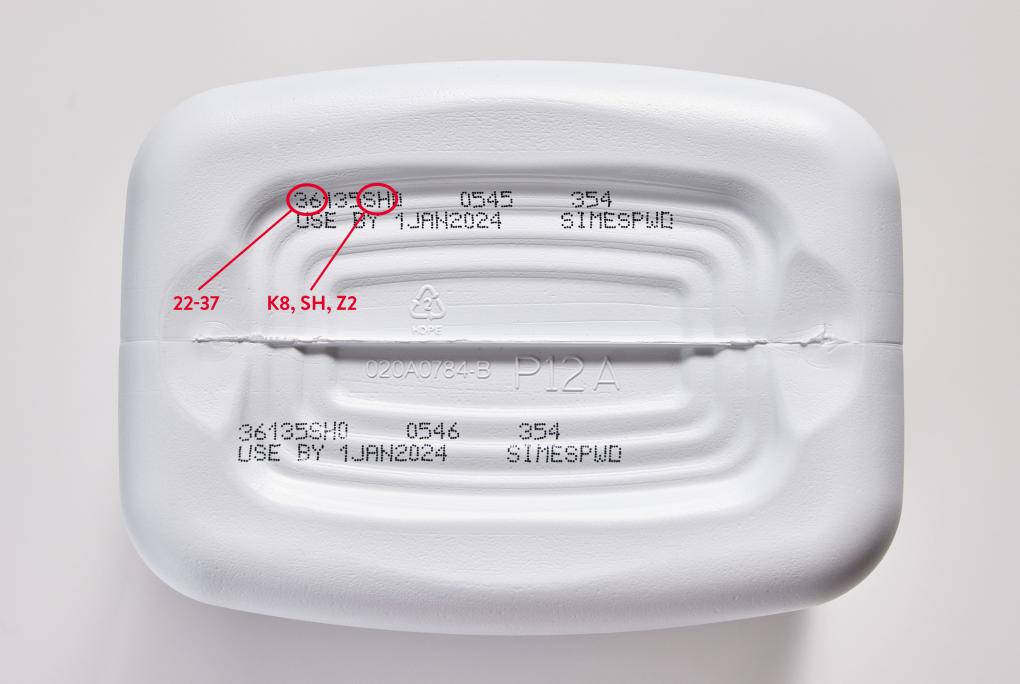
Powdered infant formula container with product coding

Recalled Powdered Infant Formula

On February 17, Abbott recalledexternal icon three brands of formula produced at its manufacturing facility in Sturgis, Michigan.

Recalled Similac, Alimentum, or EleCare powdered formula have all three of these conditions:

  • First two digits of the code are 22 through 37, AND
  • Code on the container contains “K8,” “SH,” or “Z2,” AND
  • Use-by date is 4-1-2022 (APR 2022) or later.

To find out if the product you have is included in this recall, review these codes in the bottom of the package. See the recall noticeexternal icon for more information.

What Parents and Caregivers Should Do

Do not feed your baby any recalled powdered formula.

Contact your baby’s healthcare provider if:

  • Your baby has symptoms of Cronobacter illness (fever and poor feeding, excessive crying, or very low energy).
  • Your regular formula is not available, and you need recommendations on other ways to feed your baby.
Symptoms
  • The first symptom of Cronobacter infection in infants (0–1 year old) is usually a fever, accompanied by poor feeding, excessive crying, or very low energy. Some infants may also have seizures. Infants with these symptoms should be seen by a medical provider as soon as possible.
  • Cronobacter germs can cause a dangerous blood infection (sepsis) or make the linings surrounding the brain and spinal cord swell (meningitis). Infections in infants usually occur in the first days or weeks of life. Infants 2 months of age and younger are most likely to develop meningitis if they are infected with Cronobacter.
What Healthcare Providers/Laboratories Should Do
  • If a Cronobacter infection is diagnosed by a laboratory culture, CDC encourages clinicians and laboratories to inform their local or state health department.
  • Cronobacter can be detected in the blood or cerebrospinal fluid (CSF) of patients with meningitis or sepsis caused by these bacteria. Cronobacter bacteria grow on routine culture media and microbiological laboratories can detect Cronobacter from blood or CSF samples.
  • CDC does not recommend testing infants for Cronobacter infection unless they have symptoms of meningitis or sepsis, even if they consumed recalled formula.
  • CDC does not recommend testing stool for Cronobacter. Cronobacter infection does not typically cause diarrhea in infants.
  • CDC does not recommend testing formula for Cronobacter contamination unless an infant has a diagnosed Cronobacter infection.
alert icon
Please contact your local or state health department if your child has been diagnosed with Cronobacter infection and consumed recalled formula.
Description of Cases

On February 10, 2022, CDC was notified of FDA’s investigation of consumer complaints of infant illness related to products from Abbott Nutrition in Sturgis, Michigan. These complaints include three reports of Cronobacter sakazakii infections and one report of Salmonella Newport infection in infants. CDC and FDA are conducting additional laboratory testing and investigation to better understand these cases.

The most recent investigation details are summarized below:

From September 16, 2021, to January 5, 2022, CDC received reports of three Cronobacter cases in infants that were later found to be linked to this ongoing investigation:

  • Three infants in Minnesota, Ohio, and Texas consumed formula produced at the Sturgis, Michigan, facility before they got sick. Formula consumed included Similac Sensitive, Similac Pro-total Comfort, and Similac Advance. Cronobacter may have contributed to the death of an infant in Ohio.
  • These are the same cases identified in the consumer complaints received by FDA.

On February 16, 2022, CDC asked clinicians and state and local health departments to provide information on other cases of Cronobacter associated with infant formula from November 2020 through the present. Since then, CDC has received reports of more possible cases of Cronobacter illnesses in infants who might have consumed recalled formula. CDC is investigating to determine if these cases are linked to formula products produced at the Abbott Nutrition facility in Sturgis, Michigan. CDC is performing whole genome sequencing on Cronobacter bacteria isolated from available patient samples to compare with the environmental samples taken at the facility to determine if there is any relation.

CDC’s routine outbreak surveillance has not detected an outbreak of Salmonella illnesses linked to the case reported to FDA.

About Cronobacter

Cronobacter sakazakii is a germ found naturally in the environment and can live in very dry places. The germs can live in dry foods, such as powdered infant formula, powdered milk, herbal teas, and starches. Cronobacter infection is not reportable in most states, meaning doctors are not required to report cases to their health department. Cronobacter illnesses are rare, but when infections happen, they can be deadly for infants. CDC typically receives reports of 2 to 4 infections in infants per year, but the total number of cases that occur in the United States each year is not known.

How Cronobacter Can Spread
  • At a production factory, Cronobacter could get into formula powder if contaminated raw materials are used to make the formula or if the formula powder touches a contaminated surface in the manufacturing environment.
  • Powdered infant formula could also become contaminated at home or elsewhere after the container is opened. For example, Cronobacter could get into the formula if formula lids or scoops are placed on contaminated surfaces and later touch the formula or if the formula is mixed with contaminated water or in a contaminated bottle. See more information on how to safely prepare and store powdered infant formula.

Sweden – ICA recalls Zucchini – may contain Salmonella

Livsmedelsverket

ICA is recalling zucchini because the product may contain salmonella. The product can pose a health hazard to consumers. The recall applies to zucchini purchased from 2022-02-25 in Skåne, Västra Götaland, Kronoberg, Kalmar, Blekinge, Halland, Närke, Östergötland, Värmland, Gotland and Öland. 

Recall Notice

Research – Multidrug resistance of Escherichia coli in fish supply chain: A preliminary investigation

Wiley Online

Abstract

Ninety-five Escherichia coli isolates recovered from different supply points of freshwater fish namely fish pond (W1, n = 16), wholesale fish market (W2, n = 14), retail fish market (R1, n = 29), street fish vending unit (R2, n = 30), and modern fish vending unit (R3, n = 6) were investigated for antimicrobial-resistant profile and prevalence of antibiotic-resistant genes. Overall, multidrug-resistant (MDR) E. coli in the fish supply chain was 21% with higher MDR incidence in the downstream fish supply points. MDR was relatively higher in the tertiary fish supply points viz., retail fish market (45%), street fish vending unit (30%), and modern fish vending unit (15%) compared to the secondary fish supply point, that is, wholesale fish market (5%) and primary fish supply point, that is, fish pond (5%). All the ampicillin-resistant isolates carried ampC gene, whereas only 21% of the β-lactam resistant isolates carried blaCTX-M-gp1. The tetracycline resistance determinant, tetA (89%) was predominant in the tetracycline-resistant isolates compared to tetB and tetD (11%). The trimethoprim resistance gene, dfrA and sulfonamide-resistance gene, Sul1 were detected in 9% of the trimethoprim-resistant isolates and 9% of the sulfonamide-resistant isolates, respectively. Enterobacterial repetitive intergeneric consensus-PCR has delineated the MDR isolates from the different fish supply points into three major clusters but all the MDR isolates from the street fish vending point are grouped into a single cluster. The results indicate an increase in the proportion of MDR E. coli and the occurrence of diverse MDR profiles in the downstream points of the fish supply chain that needs to be addressed to avoid fish-food-borne antimicrobial resistance.

USA – Company recalls yeast because of potential Salmonella contamination

Food Safety News

Mitsubishi International Food Ingredients Inc. is recalling a yeast extract because of potential contamination.

The Food and Drug Administration reported today that the Dublin, OH, company has recalled 15-kilogram — 33-pound —  bags of “Yeast Extract Ajirex” packed in boxes because of potential contamination with Salmonella.

There is concern that the product may be in the stream of commerce or in homes or businesses because of the long shelf life, which extends into August this year.

The company reports that the recalled yeast was distributed in Georgia, Illinois, Pennsylvania and Texas.

One customer, GFS, has reported using the yeast in products, but the FDA notice did not report what products.

The recalled yeast can be identified by the following label information: Batch/Lot: AR21B13401 Product Number: 6225796 205 01M Expiration Date: Aug 2, 2022.

UK – Former butcher fined after Listeria outbreak link; his family now running shop

Food Safety News

A former butcher in England was fined this week after his business was linked to a Listeria outbreak. Officials said it was one of the biggest environmental health investigations the authorities have ever had.

Robert Bowring of Bowring Butchers was prohibited from managing any food business during sentencing at Nottingham Crown Court. While he is not allowed to manage food processes and production, he will be able to undertake tasks such as deliveries.

The Mansfield District Council launched an investigation in April 2019 after being told by Public Health England East Midlands, now the UK Health Security Agency (UKHSA), that whole genome sequencing had linked two cases of listeriosis to Bowring. The suspected source was Bowring Butchers and potted beef.

The court was told about the death of Kathleen Ferguson who was admitted to hospital after becoming ill. Listeria was found in a blood sample, confirming listeriosis, although cause of death was recorded as heart disease. Analysis revealed that the bacteria in Ferguson’s blood was from the same source as those in samples taken in Bowring’s premises, where she was a regular customer. Two care homes had also been supplied with meat by Bowring.

Sentencing Judge Nigel Godsmark said although Ferguson died with, rather than of, listeriosis, the consequences could have been serious, particularly for vulnerable and elderly people in care homes.

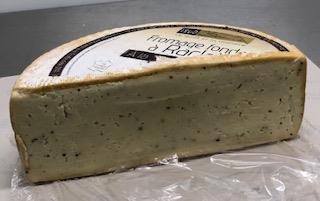
France – Fondant with summer truffle – Listeria monocytogenes

Gov france

Identification information of the recalled product

  • Product category Food
  • Product subcategory Milk and dairy products
  • Product brand name Bachler
  • Model names or references Summer truffle raclette
  • Identification of products
    GTIN Lot Dated
    2313545066300 213655 Date of minimum durability 04/24/2022
  • Packaging Sold in the traditional cheese section
  • Marketing start/end date From 08/02/2022 to 21/02/2022
  • Storage temperature Product to be stored in the refrigerator
  • Health mark EN 47-306-001 EC
  • Geographic area of ​​sale E. Leclerc cheese section 68300
  • Distributors E.Leclerc ALCOBA DISTRIBUTION

Practical information regarding the recall

  • Reason for recall Presence of Listeria Monocytogenes
  • Risks incurred by the consumer Listeria monocytogenes (causative agent of listeriosis)

Sweden – Salmonella in meat sick 15 in Sweden

Europe Cities

Disease In Food

More than a dozen people recently fell ill in Sweden with Salmonella infections after eating poorly cooked burgers.

An outbreak with 15 cases of salmonellosis after a lunch at a hotel restaurant was investigated by the local food authority and the regional public health authority in Jämtland Härjedalen.

The Salmonella Enteritidis outbreak occurred among students and teachers from Fjällgymnasiet high school during a ski competition in northern Sweden.

Based on information from 11 patients, the first date for disease onset was January 28 and the last was February 4. The age range was 17 to 57 years with a median age of 19. Ten of the patients were men and one was female, all were from northern Sweden.

All the sick had a common meal where they ate ground (minced) burgers. Some of those who ate lunch reported that the burgers were clearly poorly cooked.

After finding Salmonella in samples of minced meat, further tracing of the batch of frozen beef and pork involved was carried out by local authorities, revealing that it came from Poland.

Salmonella was found in three of six meat samples but there is no ongoing risk of people getting sick as the batch involved was only distributed to restaurants and has now been withdrawn.

Belgium – “Le Sapin Blanc” goat cheese – Listeria monocytogenes

AFSCA

Recall by Colruyt
Product: “Le Sapin Blanc” goat cheese.
Problem: Presence of the bacterium Listeria monocytogenes.
During microbiological checks, the presence of Listeria monocytogenes was observed in the product Le Sapin Blanc goat cheese 80 g bearing the expiry dates (BBD) 20/2/2022 and 3/3/2022.

Colruyt has therefore decided to withdraw the product concerned from sale.

Customers who have purchased this product are invited not to consume it and to bring it back to the store, where they will be reimbursed. In the meantime, all stores have removed the affected products from the shelves.

Product Description :

Le Sapin Blanc goat cheese Use-by
dates (BBD): 2022/2/20 and 2022/3/3
Sales period: from 2022/1/25 to 2022/2/18 included Article number
: 22567
batch: 15012224
Weight: 80g
Producer: Prolaidis Export

This product has been offered for sale in Colruyt stores in Belgium.

For more information , customers can contact Colruyt Group Customer Service on 0800 99 124.

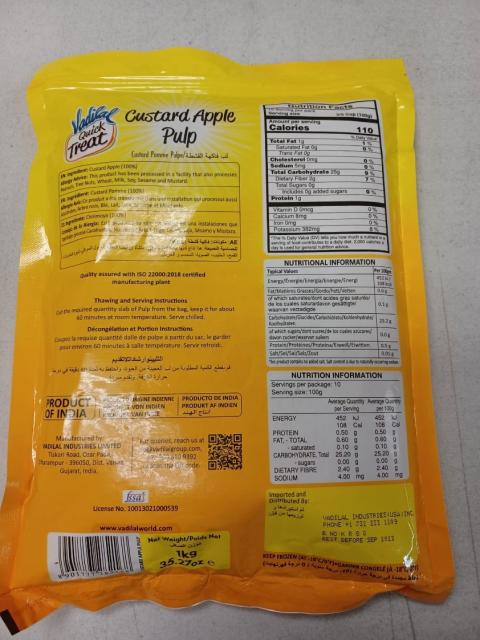
USA – Vadilal Industries (USA) Recalls “Custard Apple Pulp” Because of Possible Health Risk – Salmonella

FDA

Vadilal Custard Apple Pulp packet, back label

Summary

Company Announcement Date:
FDA Publish Date:
Product Type:
Food & Beverages
Reason for Announcement:
Salmonella
Company Name:
Vadilal Industries Inc.
Brand Name:
Vadilal
Product Description:
frozen custard apple pulp

Company Announcement

Vadilal Industries (USA) Inc. of Newark, NJ is voluntarily recalling two batches of frozen Custard Apple Pulp because it has the potential to be contaminated with Salmonella, an organism which can cause serious and sometimes fatal infections in young children, frail or elderly people, and others with weakened immune systems. Healthy persons infected with Salmonella often experience fever, diarrhea (which may be bloody), nausea, vomiting and abdominal pain. In rare circumstances, infection with Salmonella can result in the organism getting into the bloodstream and producing more severe illnesses such as arterial infections (i.e., infected aneurysms), endocarditis and arthritis.

The product was distributed nationwide through retail stores and is sold in 35.27-ounce packets. The packets are labeled as “Custard Apple Pulp” and the batch codes are printed on the back of the packet. The product code, description, lot code, UPC and Best Before information are noted below.

Product Code Product Description & Size Batch /lot code UPC Best Before
FPEP44302 Custard Apple Pulp KWHO, KRQO 8901777282168 September 2023

The recall was initiated after FDA received a single complaint reporting 5 illnesses and FDA sampling revealed the presence of Salmonella in the product.

Consumers who have purchased Custard Apple Pulp with these batch codes should discontinue use or return it to the store of purchase for a full refund. Retailers that may have further distributed the recalled lot codes should share this notice with their customers.

Customers with questions may contact the Vadilal Industries at +1 732-333-1209 Monday to Friday from 9:00 AM to 5:00 PM (EST).

Company Contact Information

Vadilal Industries (USA)
7323331209
ib@vadilalgroup.com


Company Contact Information

Consumers:
Vadilal Industries
 +1-732-333-1209