Category Archives: E.coli

RASFF Alert – E.coli – Live Mussels

RASFF-Logo

RASFF – too high count of Escherichia coli (7900 CFU/100g) in live mussels from France in France

Research – Biofilm-forming ability of pathogenic strains isolated from retail food in Poland

Journal of Food Protection

Biofilms have a significant impact on food safety in the food industry. Many foodborne outbreaks have been associated with pathogenic strains that can form a biofilm. The present study aimed to examine the ability to form biofilms by pathogenic strains collected from retail food samples under the Official Control and Monitoring Program in Poland. Biofilm formation was assessed by the qualitative detection of EPS production on Congo Red Agar, tube method, crystal violet biofilm assay, and MTT assay. A total of 40 isolates from food samples (10 strains for each of the species Listeria monocytogenes, Staphylococcus aureus, Escherichia coli, and Bacillus cereus ) were examined. . . The study classifies strains as adherent strain, slightly adherent, nonadherent (A, SA and N); as weak, moderate, and strong biofilm formation (WBF, MBF and SBF); and weak, moderate, and high metabolic activity (WMA, MMA and HMA). Incubation conditions and time influenced the biofilm levels formed. Moreover, growth medium had a significant impact on biofilm formation. Results showed that 22.5% strains demonstrated A type in LBB and 77.5% SA type in LBB in the test tube while the stronger adhesion was obtained in BHI with 2% sucrose. Among the isolates incubated in the BHI medium with 2% sucrose, A type was observed in 60% of isolates (60%).. CV assay result show that the after 24 h incubation in LBB, SBP was 7,5% while after 48 h – 37.5% tested strains. For BHI medium supplemented with 2% sucrose after 24 h incubation strains 42.5% was classified as SBP and 37.6% after 48h.MTT assay result indicate that 15% strains incubate in LBB (24h) was HMA, and after 48h incubation time HMA show 25%. For BHI medium supplemented with 2% sucrose after 24 h or 48 h incubation strains 70% and 85 % was classified as HMA.


Research – Survival of toxigenic Escherichia coli on chamomile, peppermint, green, black, ginger, and cinnamon teas during storage and brewing

Wiley Online

In this study, the persistence of toxigenic Escherichia coli (E. coli ) on dried chamomile, peppermint, ginger, cinnamon, black and green teas stored under 4, 10, and 25°C was determined. The E. coli survival rate in ginger and cinnamon teas decreased below 0 on Day 5. In the other tested teas, E. coli survivability showed a downward trend over time, but never dropped to 0. Chamomile tea retained the greatest population of viable E. coli . Meanwhile, die‐off of E. coli was higher at 25°C compared to lower temperatures. Additionally, fate of E. coli during brewing at 60, 70 and 80°C was evaluated. The E. coli population was reduced to below 2 Log colony forming units (CFU)/g after 1 min at 80°C, At the same time, the E. coli survival at 60°C was higher than that at 70°C in all tested teas. The data indicated that if E. coli survives after storage of prepared teas, it may also survive and grow after the brewing process, especially if performed using temperatures <80°C. Finally, we analyzed the correlations between temperature, time, tea varieties and E. coli survival, and successfully constructed a random forest regression model. The results of this study can be used to predict changes in E. coli during storage and fate during the brewing process. Results will form the basis of undertaking a risk assessment.

Research – Study suggests green tea extracts could reduce risk of infection with diarrhoea-causing Norovirus

First Post

Scientists also found that green tea extract in combination with chitosan films can reduce levels of bacteria such as E coli and L innocua to undetectable levels after 24 hours of exposure

It’s not uncommon for one to get an upset stomach occasionally, particularly after eating outside food. This is often the result of different kinds of bacteria and viruses present in the food items. In a research, published in the International Journal of Food Science on 4 July 2020, scientists found that green tea extracts can help in reducing the risk of getting infected with a diarrhoea-causing virus known as norovirus.

RASFF Alert – E.coli – Enterobacteriaceae – Black Cumin Cheese

RASFF-Logo

RASFF – absence of labelling (allergens, nutritional information) and of expiry date on and high counts of Enterobacteriaceae (1.6E7 CFU/g) and of Escherichia coli (6.7E6 CFU/g) in black cumin cheese from the Netherlands in Germany

Research -New study shows link between animal operation and orchard contamination

Food Safety News

One in every five air samples in almond orchards adjacent to a poultry operation tested positive for E. coli during a two-year study published recently.

“Microorganisms Move a Short Distance into an Almond Orchard from an Adjacent Upwind Poultry Operation” comes as romaine growers continue to study the impact of a 100,000-head cattle feed lot adjacent to Arizona growing fields.

Lettuce growers from regions in California are also looking at implications of having animal operations in the areas near food crops. The Food and Drug Administration recently posted a conclusion that animal operations were the likely cause behind romaine E. coli outbreaks in 2018-19.

The almond research, published in the peer-reviewed journal Applied and Environmental Microbiology,

Research -Evaluation of Public Health Risk for Escherichia coli O157:H7 in Cilantro

Science Direct

This study sought to model the growth and die-off of Escherichia coli (E. coli) O157:H7 along the cilantro supply chain from farm-to-fork to investigate its risk to public health. Contributing factors included in the model were on farm contamination from irrigation water and soil, solar radiation, harvesting, and transportation and storage times and temperatures. The developed risk model estimated the microbiological risks associated with E. coli O157:H7 in cilantro and determined parameters with the most effect on the final concentration per serving for future mitigation strategies. Results showed a similar decrease in the E. coli O157:H7 (median values) concentrations along the supply chain for cilantro grown in both winter and summer weather conditions. With an estimated 0.1% prevalence of E. coli O157:H7 contamination for cilantro post-harvest used for illustration, the model predicted the probability of illness from consuming fresh cilantro as very low with fewer than two illnesses per every one billion servings of cilantro (1.6 x 10⁻⁹; 95th percentile). Although rare, 3.7% and 1.6% of scenarios run in this model for summer and winter grown cilantro, respectively, result in over 10 cases per year in the United States. This is reflected in real life where illnesses from cilantro are seen rarely but outbreaks have occurred. Sensitivity analysis and scenario testing demonstrated that ensuring clean and high quality irrigation water and preventing temperature abuse during transportation from farm to retail, are key to reducing overall risk of illness.

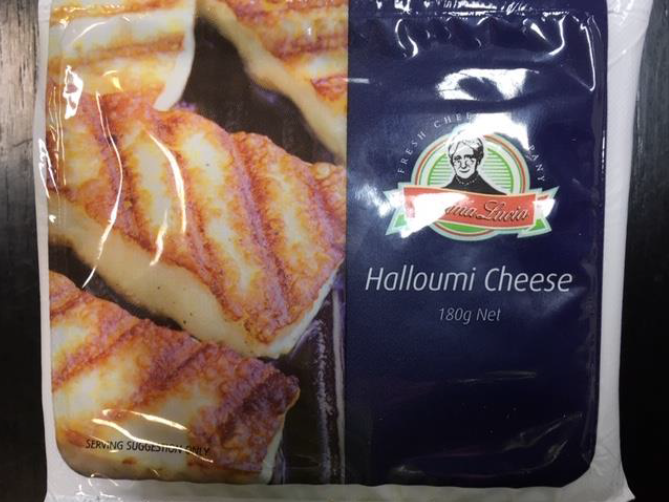
New Zealand – Mamma Lucia brand Halloumi Cheese – E.coli

MPI

A pack of Mamma Lucia Brand Halloumi Cheese (180g)

Product identification
Product type Cheese
Name of product (size) Mamma Lucia brand Halloumi Cheese (180g)
Batch marking 20139
Date marking Use by 14 11 20
Package size and description The product is sold in a 180g plastic package.
Distribution The product is imported from Australia.

The affected product has only been sold at Mediterranean Foods Trattoria & Deli, 42 Constable Street, Newtown, Wellington.

Notes This recall does not affect any other Mamma Lucia brand products.

Consumer advice

Customers are asked to check the batch and date mark printed on the product packaging.

Affected product should not be consumed. There have been no reports of associated illness, however if you have consumed any of this product and have any concerns about your health, seek medical advice.

Customers should return the product to their retailer for a full refund.

Escherichia coli (E. coli) is a bacterium that normally lives in the intestines of people and other warm-blooded animals. Although most strains of E. coli are harmless, some types can cause serious illness with severe diarrhoea and stomach cramps.

Who to contact

If you have questions, contact Mediterranean Foods (Wgtn) Limited:

  • Phone: 021 750 211
  • Address: 30 Landfill Road, Owhiro Bay, Wellington.

Australia – Mamma Lucia Halloumi Cheese -E.coli

FSANZ

Product information

Fresh Cheese Company is undertaking a recall of one batch (Batch 20139) of the Mamma Lucia Halloumi Cheese 180g. The product has been for sale at IGA, independent food retailers and delicatessens in Vic. There are no other batches affected by this recall.

Date markings

Use by 14 11 20

Mamma Lucia Halloumi Cheese

Problem

The recall is due to possible E.coli contamination.

Food safety hazard

Food products contaminated with E.coli may cause illness if consumed.

Country of origin

Australia

What to do​

Consumers should not eat this product. Any consumers concerned about their health should seek medical advice. Customers should return the product to the place of purchase for a full refund.

For further information please contact:

Fresh Cheese Company
Phone 03 9301 9444
www.provedoregroup.com.au

Related links:


Japan and South Korea – Thousands sick in E. coli outbreaks

Food Safety News

Officials in Korea are investigating an E. coli outbreak that has affected 100 people while more than 3,000 students and teachers recently got food poisoning in Japan, according to media reports.

The Korea Centers for Disease Control and Prevention (KCDC) has been investigating an Enterohemorrhagic E. coli (EHEC) outbreak with the local municipality and relevant ministries since mid-June. EHEC is also known as Shiga toxin-producing E. coli (STEC).

The outbreak in a kindergarten in Ansan-si, Gyeonggi Province had 58 confirmed cases as of late June with 114 people showing symptoms. Most of these are students of the kindergarten but three are family members of pupils.

A total of 21 people — 19 kindergarten students and two family members — were in hospital for inpatient care. Sixteen people — 14 students and two family members — had onset of symptoms suspected to be hemolytic uremic syndrome (HUS), a type of kidney failure associated with E. coli infection, and four people were receiving dialysis treatment.