Category Archives: E.coli

Research – Differential Survival of Generic E. coli and Listeria spp. in Northeastern U.S. Soils Amended with Dairy Manure Compost, Poultry Litter Compost, and Heat-Treated Poultry Pellets and Fate in Raw Edible Radish Crops

Journal of Food Protection

Composted or heat-treated Biological Soil Amendments of Animal Origin (BSAAO) can be added to soils to provide nutrients for fresh produce. These products lower the risk of pathogen contamination of fresh produce when compared with use of untreated BSAAO; however, meteorological conditions, geographic location, and soil properties can influence the presence of pathogenic bacteria, or their indicators (e.g., generic E. coli) and allow potential for produce contamination. Replicated field plots of loamy or sandy soils were tilled and amended with dairy manure compost (DMC), poultry litter compost (PLC), or no compost (NoC) over two different field seasons, and non-composted heat-treated poultry pellets (HTPP) during the second field season. Plots were inoculated with a three-strain cocktail of rifampicin-resistant E. coli (rE.coli) at levels of 8.7 log CFU/m2. Direct plating and most probable number (MPN) methods measured the persistence of rE.coli and Listeria spp. in plots through 104 days post-inoculation. Greater survival of rE. coli was observed in PLC plots in comparison to DMC plots and NoC plots during year 1 (P < 0.05). Similar trends were observed for year 2, where rE. coli survival was also greater in HTPP amended plots (P < 0.05). Survival of rE. coli was dependent on soil type, where water potential and temperature were significant covariables. Listeria spp. were found in NoC plots, but not in plots amended with HTPP, PLC or DMC. Radish data demonstrate that PLC treatment promoted the greatest level of rE.coli translocation when compared to DMC and NoC treatments (P  < 0.05). These results are consistent with findings from studies conducted in other regions of the US and informs Northeast produce growers that composted and non-composted poultry-based BSAAO supports greater survival of rE. coli in field soils. This result has the potential to impact the food safety risk of edible produce grown in BSAAO amended soils as a result of pathogen contamination.
USA – CDC – Say No to Raw Dough

CDC

hazegg.jpg

What You Need to Know

  • Don’t taste or eat raw (unbaked) dough or batter.
  • Don’t let children handle or play with raw dough, including play clay and dough for crafts.
  • Uncooked flour and raw eggs can contain germs that can make you sick if you taste raw dough.
  • Wash your hands, bowls, utensils, and countertops after handling raw flour, eggs, or dough.

Spending time with family while baking is a great way to celebrate special occasions. When making cookies, brownies, cakes, or bread, you might be tempted to taste a bite before it’s fully baked.

But you can get sick after eating or tasting raw (unbaked) dough or batter. Children can get sick from handling or eating raw dough used for crafts or play clay, too. Follow these safety tips to help you and your loved ones stay healthy when preparing and handling raw dough.

Raw Dough Can Contain Germs That Make You Sick

Flour doesn’t look like a raw food, but most flour is raw. That means it hasn’t been treated to kill germs that cause food poisoning, such as Escherichia coli (E. coli). These harmful germs can contaminate grain while it’s still in the field or flour while it’s being made. Steps like grinding grain and bleaching flour don’t kill harmful germs—and these germs can end up in flour or baking mixes you buy at the store. You can get sick if you eat unbaked dough or batter made with flour containing germs. Germs are killed only when food made with flour is baked or cooked.

CDC investigated outbreaks of E. coli infections linked to raw flour or cake mix in 20162019, and 2021. Some of these investigations led to recalls. Flour and baking mixes containing flour have long shelf lives, meaning they do not go bad quickly. It’s a good idea to check your pantry to see if you have any flour or baking mixes that have been recalled in recent years (search FDA’s recall listexternal icon). If you have any recalled flour or baking mixes, throw them away.

Raw eggs are another ingredient in dough and batter that can make you or your loved ones sick. Raw or lightly cooked eggs can contain Salmonella, a germ that causes food poisoning. Find out how to handle and cook eggs properly.

Some companies make edible cookie dough and brownie batter that you can find in stores. These products are made with heat-treated flour and pasteurized eggs or no eggs. Read the label carefully to make sure the dough is meant to be eaten without baking or cooking.

Stay Safe When Handling Flour and Other Raw Ingredients

Follow these practices to prevent food poisoning when you are baking and cooking with flour and other raw ingredients.

  • Do not taste or eat any raw dough or batter. This includes dough or batter for cookies, brownies, cakes, pie crusts, tortillas, pizza, biscuits, pancakes, or crafts made with raw flour, such as homemade play dough or holiday ornaments.
  • Do not let children play with or eat raw dough, including dough for crafts.
  • Bake raw dough, such as cookie dough, and batter, such as cake mix, before eating.
  • Follow the recipe or package directions for cooking or baking. Use the temperature and cooking time given in the recipe or directions.
  • Do not make milkshakes with products that contain raw flour, such as cake mix.
  • Do not use raw homemade cookie dough in ice cream.
    • Cookie dough ice cream sold in stores contains dough that has been treated to kill harmful germs.
  • Keep raw foods, such as flour and eggs, separate from ready-to-eat foods. Because flour is a powder, it can spread easily.
  • Follow label directions to refrigerate products containing raw dough or eggs until they are baked or cooked (for example, store-bought cookie dough).
  • Clean up thoroughly after handling flour, eggs, or raw dough.
    • Wash your hands with soap and water after handling flour, raw eggs, or any surfaces they have touched.
    • Wash bowls, utensils, countertops, and other surfaces with warm, soapy water.

Recognize Food Poisoning Symptoms

Food poisoning symptoms may range from mild to severe and can differ depending on the germ you swallowed.

Symptoms of E. coli infection include stomach cramps that can be severe, diarrhea (often bloody), and vomiting. People usually get sick 3 to 4 days after swallowing the germ and recover within a week. However, some people develop a serious illness called hemolytic uremic syndrome (HUS), which can result in kidney failure, stroke, and even death.

Symptoms of Salmonella infection include diarrhea, fever, and stomach cramps. Symptoms start 6 hours to 6 days after swallowing the germ and go away within 4 to 7 days.

Some groups of people have a greater chance of infection and severe illness. These groups include children younger than 5, adults age 65 and older, and people who have health problems or take medicines that lower the body’s ability to fight germs and sickness.

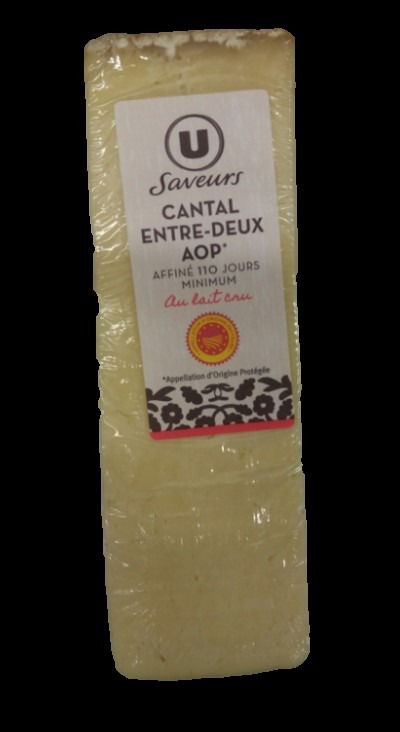
France – Cantal Entre Deux AOP with raw milk – STEC E.coli O26

Gov france

Identifying information for the recalled product

  • Product category Food
  • Product sub-category Milk and dairy products
  • Product brand name U FLAVORS
  • Names of models or references Cantal Entre Deux AOP with raw milk U FLAVORS (220g)
  • Product identification
    GTIN Lot Dated
    3368952539939 16821443 Use-by date 12/07/2021
    3368952539939 16821452 Use-by date 12/12/2021
  • Packaging under film
  • Start date / End of marketing From 08/11/2021 to 12/09/2021
  • Storage temperature Product to be stored in the refrigerator
  • Health mark FR 63 113 081 CE
  • Geographical sales area Whole France
  • Distributors ALL STORES IN THE SOUTH WEST AND EAST REGIONS

Practical information regarding the recall

  • Reason for recall Following the detection of STEC O26: H11 strains
  • Risks incurred by the consumer Toxinogenic Escherichia coli shiga (STEC)

Research -EU One Health report: drop in reported zoonotic diseases in humans and foodborne outbreaks in 2020

EFSA

Campylobacteriosis was the most reported zoonosis in the EU in 2020, with 120,946 cases compared to more than 220,000 the previous year. It was followed by salmonellosis, which affected 52,702 people compared to 88,000 in 2019. The number of reported foodborne outbreaks also fell by 47%. These findings are based on the annual EU One Health zoonosis report, by EFSA and ECDC.

Experts acknowledged the impact of the COVID-19 pandemic in Europe in the remarkable drop in reported zoonotic diseases in humans – ranging from 7% to 53% depending on the reported disease in question – and foodborne outbreaks.

Possible factors behind the large decrease in cases include changes in health seeking behaviour, restrictions on travel and on events, the closing of restaurants, quarantine, lockdown, and other mitigation measures such as the use of masks, physical distancing and hand sanitisation.  

The next most commonly reported diseases were yersiniosis (5,668) and infections caused by Shigatoxin-producing E.coli (4,446). Listeriosis was the fifth most reported zoonosis (1,876 cases), mainly affecting people over the age of 64.

Listeriosis and West Nile virus infections were the diseases with the highest case fatality and hospitalisation rates – with most locally acquired human infections of West Nile virus reported in Greece, Spain and Italy.

The report also monitors foodborne outbreaks in the EU, events during which at least two people contract the same illness from the same contaminated food. A total of 3,086 foodborne outbreaks were reported in 2020. Salmonella remained the most frequently detected agent and caused about 23% outbreaks. The most common sources of salmonellosis outbreaks were eggs, egg products and pig meat.

The report also includes data on Mycobacterium bovis/caprae, BrucellaTrichinellaEchinococcus, Toxoplasma gondii, rabies, Q fever and tularaemia.

EFSA is publishing two interactive communication tools on foodborne outbreaks – a story map and a dashboard. The story map provides general information on foodborne outbreaks, their causative agents and implicated food vehicles. The dashboard allows people to search and query the large amount of data on foodborne outbreaks collected by EFSA from EU Member States and other reporting countries since 2015.

RASFF Alerts – E.coli – Cream – Clams

RASFF

High content of Escherichia coli in cream from Bosnia and Herzegovina in Croatia and Sweden

RASFF

Elevated E. coli count in clams from Italy in Spain

Research – High-Pressure-Induced Sublethal Injuries of Food Pathogens—Microscopic Assessment

MDPI

High Hydrostatic Pressure (HHP) technology is considered an alternative method of food preservation. Nevertheless, the current dogma is that HHP might be insufficient to preserve food lastingly against some pathogens. Incompletely damaged cells can resuscitate under favorable conditions, and they may proliferate in food during storage. This study was undertaken to characterize the extent of sublethal injuries induced by HHP (300–500 MPa) on Escherichia coli and Listeria innocua strains. The morphological changes were evaluated using microscopy methods such as Scanning Electron Microscopy (SEM), Transmission Electron Microscopy (TEM), and Epifluorescence Microscopy (EFM). The overall assessment of the physiological state of tested bacteria through TEM and SEM showed that the action of pressure on the structure of the bacterial membrane was almost minor or unnoticeable, beyond the L. innocua wild-type strain. However, alterations were observed in subcellular structures such as the cytoplasm and nucleoid for both L. innocua and E. coli strains. More significant changes after the HHP of internal structures were reported in the case of wild-type strains isolated from raw juice. Extreme condensation of the cytoplasm was observed, while the outline of cells was intact. The percentage ratio between alive and injured cells in the population was assessed by fluorescent microscopy. The results of HHP-treated samples showed a heterogeneous population, and red cell aggregates were observed. The percentage ratio of live and dead cells (L/D) in the L. innocua collection strain population was higher than in the case of the wild-type strain (69%/31% and 55%/45%, respectively). In turn, E. coli populations were characterized with a similar L/D ratio. Half of the cells in the populations were distinguished as visibly fluorescing red. The results obtained in this study confirmed sublethal HHP reaction on pathogens cells. View Full-Text

Information – Raw Milk

ACSA

Raw milk

milk

____________________________________________________________________________________________

  • Always boil raw milk
  • Store at 4ºC
  • Consume it within 3 days of purchasing it

TREAT RAW MILK SAFELY

The raw milk has unique virtues such as its taste, texture and smell. At the same time, it is a very direct link with good farmers, because it can only be sold by farms that meet a series of animal health and hygiene requirements in their milking facilities .

However, raw milk, due to its special composition, can contain bacteria that are harmful to health, mainly Salmonella , Campylobacter , Listeria  and Escherichia coli.

In Spain, the direct sale of raw milk to the consumer is allowed as long as the requirements established in the hygiene package regulations and the additional requirements established in Royal Decree 1086/2020 , of December 9, by which regulate and make flexible certain conditions of application of the provisions of the European Union regarding hygiene in the production and marketing of food products and activities excluded from their scope of application are regulated.

Milk-producing farms may only supply raw milk from their own farm directly to the final consumer or to retail establishments that supply directly to the final consumer if they meet the following requirements:

  • The establishment is authorized and registered in the General Registry of Food and Food Companies
  • The milk has to be sold
  • The package label indicates the expiration date not exceeding three days after milking and the following indications:
    • Raw milk without heat treatment: Consume only after boiling for at least one minute.
    • Store refrigerated between 1 and 4 ºC.
  • Retail establishments may only use raw milk as a raw material or ingredient for food processing if it is boiled or subjected to an equivalent culinary treatment.
  • However, catering establishments that serve food to vulnerable communities , such as hospitals, nursery schools, colleges or homes for the elderly, cannot use raw milk.

To drink milk safely , follow the instructions below:

2_Recipient llet Transport raw milk quickly to your home and boil it immediately , in order to destroy any bacteria it contains. Use a container with a wide base and stir while it boils. Once the boiling foam has risen, turn off the heat. Immediately, you have to cool it down and put it in the refrigerator, in the coldest place, at a temperature below 4ºC, and it is necessary to keep it covered to prevent it from becoming contaminated and acquiring odors from other foods.
3_Temperature llet If you cannot boil the milk right away, put it in the fridge at a temperature below 4ºC. But boil it as soon as possible .
4_Frozen llet You can also freeze raw milk , just like you do with other foods. Freezing, however, does not kill bacteria, so to ensure safety, remember that it is best to always boil milk before freezing . To maintain its structure and prevent it from precipitating, it must be stirred well before freezing and, even, it must be stirred several times while it freezes.
5_ Thawed llet You must defrost the milk in the refrigerator. It may happen that it has a slightly grainy texture, which is normal. Remember to keep frozen milk well covered to prevent it from absorbing strange odors.
6_Consum llet It is recommended that raw milk be consumed within 3 days of  purchase, that is, without exceeding 72 hours.

Pregnant women, children, the elderly and people with depressed immunity are more susceptible to foodborne infections, for this reason, they must take special care to strictly comply with these measures. 

Click to access Trate-la-leche-cruda-con-seguridad.pdf

RASFF Alerts – E.coli – Mussels – Clams

RASFF

Escherichia coli oltre i limiti in vongole (Camelea gallina) dall’Italia //too high count of Escherichia coli in clams (Camelea gallina) from Italy in Italy and Spain

RASFF

Escherichia coli in mussels from Netherlands in Belgium

RASFF

Escherichia coli in live mussels (Mytilus galloprovincialis) from Spain in Italy

RASFF Alerts – STEC E.coli – Boneless Beef – Dough for Cookies

RASFF

STEC stx2 in Chilled boneless beef from Brazil in Belgium and Netherlands

RASFF

VTEC/STEC in ready dough for cookies from Germany in Austria

RASFF Alert – EPEC E.coli – China Rose Spouts

RASFF

Presence of EPEC in China Rose sprouts from Netherlands in Slovakia and the Czech Republic