Summary
Do not use, sell, serve or distribute the affected product
Sober Island brand OG Oysters recalled due to generic E. coli.
The recalled product was sold in Nova Scotia.
Do not use, sell, serve or distribute the affected product
Sober Island brand OG Oysters recalled due to generic E. coli.
The recalled product was sold in Nova Scotia.
Do not use, sell, serve or distribute the affected product
Mother Dairy brand Paneer Fresh Cheese recalled due to generic E. coli.
The recalled product was sold in Alberta.
VTEC/EHEC in chilled lamb rump steaks from New Zealand in Austria, Germany and Sweden
STEC (stx+;eae+) in minced meat in Belgium and the Netherlands
STEC (stx+;eae+) in horse meat from Italy in Belgium
Posted in E.coli, food contamination, food handler, Food Hazard, Food Hygiene, Food Inspections, Food Micro Blog, Food Microbiology, Food Microbiology Blog, Food Microbiology Testing, Food Pathogen, Food Poisoning, food recall, Food Safety, Food Safety Alert, Food Safety Management, Food Testing, Food Toxin, RASFF, STEC, STEC E.coli, VTEC
The Canadian Food Inspection Agency (CFIA) has announced the fall 2022 import requirements for U.S. romaine lettuce with special requirements for certain lettuce produced in California’s Salinas Valley.
Whole-head romaine lettuce and products containing romaine lettuce such as bagged salads that were produced in the four Salinas Valley counties of Santa Cruz, Santa Clara, San Benito, and Monterey must “submit an attestation form and Certificates of Analysis for each shipment to demonstrate that the romaine lettuce does not contain detectable levels of E. coli O157:H7,” according to the Canadian Food Inspection Agency (CFIA).
Posted in CFIA, Decontamination Microbial, E.coli, E.coli O157, E.coli O157:H7, Food Micro Blog, Food Microbiology, Food Microbiology Blog, Food Microbiology Research, Food Microbiology Testing, microbial contamination, Microbiological Risk Assessment, Microbiology, Microbiology Investigations, Microbiology Risk, STEC, STEC E.coli

| Batch | ||
|---|---|---|
| see attached product list | ||
Posted in E.coli, food contamination, food handler, Food Hazard, Food Hygiene, Food Inspections, Food Micro Blog, Food Microbiology, Food Microbiology Blog, Food Microbiology Testing, Food Pathogen, Food Poisoning, food recall, Food Safety, Food Safety Alert, Food Safety Management, Food Testing, Food Toxin, Haemolytic Uremic Syndrome, HUS, Shigatoxin, STEC, STEC E.coli
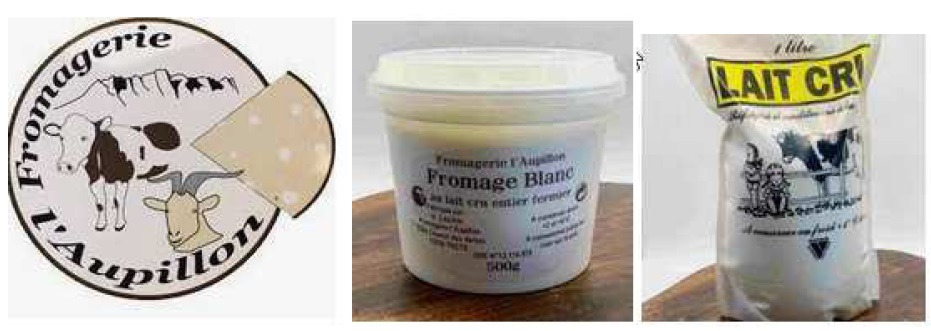
At least a dozen children have been sickened in France with officials linking illnesses to a dairy company.
Since early June, 12 cases of haemolytic uremic syndrome (HUS) have been reported in the Provence-Alpes-Côte d’Azur and Occitanie regions. HUS is a severe complication associated with E. coli infection that causes kidney failure and sometimes death.
Seven boys and five girls aged 11 months to 9 years old are sick. They fell ill from June 4 to July 18.
In France, Shiga toxin-producing E. coli (STEC) surveillance is only based on HUS in children younger than 15, so it only catches the most severe cases.
Santé publique France, the Directorate General for Food (DGAL) and Directorate General for Health (DGS) are part of the investigation.
Posted in E.coli, food bourne outbreak, Food Illness, Food Micro Blog, Food Microbiology, Food Microbiology Blog, Food Microbiology Research, Food Microbiology Testing, Foodborne Illness, foodborne outbreak, foodbourne outbreak, Haemolytic Uremic Syndrome, HUS, Illness, microbial contamination, Microbiological Risk Assessment, Microbiology, Microbiology Investigations, Microbiology Risk, outbreak, STEC, STEC E.coli
Each year, during the summer period, an increase in foodborne infections, including paediatric haemolytic uremic syndrome (HUS), is observed. HUS is a serious infectious disease most often food-borne. In children, this syndrome is most often caused by an infection due to a bacterium belonging to the family of Escherichia coli ( E. coli ) producing toxins, called Shiga-toxins. Public Health France recalls the preventive measures.
Posted in Decontamination Microbial, E.coli, Food Micro Blog, Food Microbiology, Food Microbiology Blog, Food Microbiology Research, Food Microbiology Testing, Haemolytic Uremic Syndrome, HUS, microbial contamination, Microbiological Risk Assessment, Microbiology, Microbiology Investigations, Microbiology Risk, Shigatoxin, STEC, STEC E.coli
The number of foodborne outbreaks almost tripled in Switzerland in 2021 compared to the year before.
This past year, 37 outbreaks were reported with 540 people sick and 40 hospitalized versus 13 outbreaks in 2020.
Officials at the Federal Food Safety and Veterinary Office said the increase could be random, it could be due to better reporting and data collection or it could show the food safety situation has gotten worse, possibly because of the COVID-19 pandemic and other challenges facing businesses.
The agent was unknown in 17 outbreaks but Salmonella caused seven, norovirus four, Campylobacter three, two were due to Bacillus cereus and one each because of Shiga toxin-producing E. coli, Clostridium perfringens and hepatitis E.
Posted in Bacillus, Bacillus cereus, Campylobacter, Clostridium, Clostridium perfringens, E.coli, food bourne outbreak, Food Illness, Food Micro Blog, Food Microbiology, Food Microbiology Blog, Food Microbiology Research, Food Microbiology Testing, Foodborne Illness, foodborne outbreak, foodbourne outbreak, Hepatitis E, Illness, microbial contamination, Microbiological Risk Assessment, Microbiology, Microbiology Investigations, Microbiology Risk, Norovirus, outbreak, Salmonella, STEC, STEC E.coli
E.Coli in shell (mollusc) from France in Luxembourg, Spain and Belgium
Cora Group is recalling the following product:
|
Last name |
Cockles (molluscs) |
|
Mark |
/ |
|
Unity |
UNIT_PRODUCT |
|
bar code |
0218450000000 |
|
DLCs / DDMs |
on sale at the Store between 06/07 and 08/07/2022 |
|
Batch |
/ |
E. coli is a common bacterium in the digestive tract of humans and animals.It indicates faecal contamination that could be related to the presence of other faecal pathogens
Sale in Luxembourg by: Cora Foetz
A sale by other operators cannot be excluded.
Source of Information: Cora Group Recall Notification
Communicated by: Government Commission for Quality, Fraud and Food Safety .