Category Archives: E.coli

Research – Microbiological quality of ready-to-eat salad products collected from retail and catering settings in England during 2020-21 

Journal of Food Protection

Salad and other fresh produce were collected in England from retail and catering during 2020-21 and  were tested for Salmonella, Shiga-toxin producing Escherichia coli (STEC), Listeria , Bacillus cereus , and generic E. coli. Of the 604 samples collected , 57% were from retail and 43% from catering: 61% were either salad leaves or salad leaves mixed with other products. Equal numbers of samples were prepacked or loose and 50% were refrigerated at the time of sampling. Combining results for all microbiological parameters, 84% were interpreted as satisfactory, 12% as borderline and 4% as unsatisfactory. One sample (prepacked  leaves, cucumber and tomato from a caterer) was categorised as unacceptable/potentially injurious due to detection of STEC O76, no STEC from human infections in the UK matched this isolate. No Salmonella enterica were detected but L. monocytogenes was recovered from 11 samples, one at 20 CFU/g the remainder at <20 CFU/g. B. cereus was detected at borderline levels (10 3 – <10 5 CFU/g) in 9% of samples and at an unsatisfactory level (>10 5 CFU/g) in one. E. coli were detected in 3% of samples at borderline (20 – <10 2 CFU/g) and in 4% at unsatisfactory (>10 2 CFU/g) levels. There was a significant association between the detection of L. monocytogenes and borderline/unsatisfactory levels of E. coli . There were no generic risks detected in association with the higher levels of B. cereus, STEC or Listeria but elevated levels of E. coli were predominantly confined to loose products from the UK and collected from caterers in the summer or autumn of 2021. Amongst the L. monocytogenes isolates, only one matched that from human cases and was recovered from a prepacked mixed salad from a catering business in 2021. This isolate was the same strain as that responsible for a multi country outbreak (2015-18) associated with Hungarian-produced frozen sweetcorn: no link to the outbreak food-chain was established.
Research – Antimicrobial Susceptibility and Molecular Characterization of Escherichia coli Recovered from Milk and Related Samples

MDPI

There is a rising concern about illnesses resulting from milk consumption due to contamination by pathogenic microorganisms including Escherichia coli. This study examined the occurrence and antimicrobial susceptibility of E. coli isolated from cow milk and related samples. Furthermore, partial sequencing was done to ascertain the genetic relatedness and possible cross contamination among the samples. In all, 250 samples, that is, 50 each of raw milk, cow teat, milkers’ hands, milking utensils, and fecal matter of cows, were cultured for the identification of E. coli. E. coli was detected in 101/250 samples (40.4%). Milk and fecal samples recorded the highest percentages of 68.0% and 66.0%, respectively. Forty-two (42) E. coli strains examined for antimicrobial resistance showed an overall 25.5% resistance, 15.0% intermediate resistance, and 59.5% susceptibility. The isolates had a high level of resistance to teicoplanin (100.0%), but were susceptible to chloramphenicol (95.2%) and azithromycin (92.9%). The Multiple Antibiotic Resistance (MAR) index pattern ranged from 0.1 to 0.5, and 40.5% exhibited multiple drug resistance. The E. coli strains formed 11 haplotypes, and a phylogenic tree analysis showed relatedness among the isolates in other African countries. This observation is an indication of cross contamination among the milk and its related samples. View Full-Text

Sweden – Foodborne illness figures rise in Sweden in 2021

Food Safety News

The number of foodborne infections climbed in Sweden in 2021 compared to the year before but most are still below pre-Coronavirus pandemic levels.

The report by the National Veterinary Institute (SVA), Folkhälsomyndigheten (the Public Health Agency of Sweden), Livsmedelsverket (the Swedish Food Agency) and Jordbruksverket (Swedish Board of Agriculture) showed a rise for Campylobacter, Salmonella, Listeria, E. coli and Yersinia infections.

Disease surveillance relies on patients seeking care and fewer people have done this during the pandemic. This is believed to be related to patients with symptoms choosing to not seek care and a true reduction in disease incidence because of changes in general hygiene such as increased handwashing, physical distancing and reduced travel because of COVID-19-related recommendations, according to the agencies.

RASFF Alert – E.coli – Laguiole Cheese

RASFF

E. coli in Laguiole cheese product from France in Denmark

Czech Republic – Officials warn of increase in E. coli infections

Food Safety News

A rise in Shiga toxin-producing E. coli (STEC) infections has prompted a warning by health officials in the Czech Republic.

The National Institute of Public Health (SZU) reported that in the first six months of this year 25 cases have been recorded and 15 of them occurred in the past two months.

Eight were reported in May and seven in June. That is more than half of all cases so far in 2022. The majority of those sick are children under the age of five. In 2021, 46 cases were recorded.

Sick people come from across the country but mostly Prague, the South Moravian and South Bohemian regions. Twelve infections were caused by E. coli O26 and six by E. coli O157.

People can become infected by contact with animals, eating insufficiently cooked meat, drinking unpasteurized milk, or by contact with an infected person.

Research – Is Our Ground Meat Safe to Eat?

Consumer Reports

Americans love meat—especially ground meat.

We shape it into burgers, meatballs, and meatloaf; stir it into chili and pasta sauce; and stuff it into peppers, lasagna, and tacos. Americans like it so much that in 2021 alone, we purchased more than $13 billion worth of ground beef, turkey, pork, and chicken.

But our love of ground meat comes at a price: It’s a leading cause of food poisoning. Since 2018, 11 outbreaks of illness have been traced back to raw meat, sickening a reported 1,264 people—and at least eight of them involved ground meat, according to the Centers for Disease Control and Prevention.

To assess the current state of the nation’s ground meat supply, Consumer Reports recently tested 351 packages of ground beef, pork, chicken, and turkey purchased at stores throughout the country. (Read more about how we tested (PDF).) What we found was alarming.

Almost a third of the ground chicken packages we tested contained salmonella. We also found those bacteria in a few samples of ground beef, pork, and turkey. Particularly worrisome: Every single strain of salmonella was resistant to at least one antibiotic (see “Why Superbugs Are in Your Meat,” below).

CR also found a strain of E. coli in a sample of ground beef that is so dangerous that we immediately alerted the Department of Agriculture to our findings, triggering a recall of more than 28,000 pounds of the meat from major grocery chains in seven Western states.

RASFF Alerts – E.coli – Cheese

RASFF

E. coli in cheese product from France (presumably not on the market) in Denmark

Research – Sink survey to investigate multidrug resistance pattern of common foodborne bacteria from wholesale chicken markets in Dhaka city of Bangladesh

Nature.com

Antimicrobial resistance (AMR) among foodborne bacteria is a well-known public health problem. A sink survey was conducted to determine the AMR pattern of common foodborne bacteria in cloacal swab of broiler chickens and sewage samples from five wholesale chicken markets of Dhaka city in Bangladesh. Bacteria were identified by culture-based and molecular methods, and subjected to antimicrobial susceptibility testing. Resistance genes were identified by multiplex PCR and sequencing. Multidrug resistance (MDR) was observed in 93.2% of E. coli, 100% of Salmonella spp., and 97.2% of S. aureus from cloacal swab samples. For sewage samples, 80% of E. coli, and 100% of Salmonella and S. aureus showed MDR. Noteworthy, 8.3% of S. aureus from cloacal swab samples showed possible extensively drug resistance. Antimicrobial resistance genes (beta-lactamase—blaTEM, blaSHV; quinolone resistance gene—qnrS) were detected in a number of E. coli and Salmonella isolates from cloacal swab and sewage samples. The methicillin resistance gene (mecA) was detected in 47.2% and 25% S. aureus from cloacal swab and sewage samples, respectively. The findings envisage the potential public health risk and environmental health hazard through spillover of common foodborne MDR bacteria.

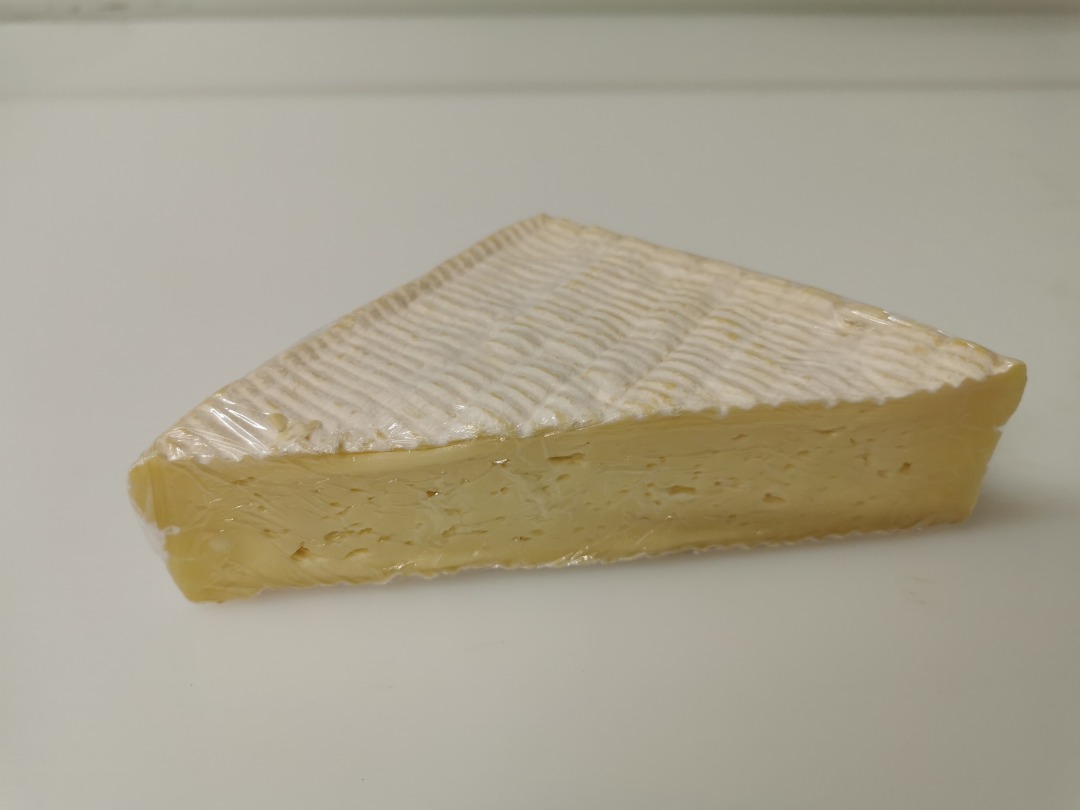
France – PONT L’EVEQUE AOP – E.coli

Gov france

Identification information of the recalled product

  • Product category Feed
  • Product subcategory Milk and dairy products
  • Product brand name Unbranded
  • Model names or references400G
  • Identification of products
    GTIN Lot Date
    3252950041603 250422LI3 Date of minimum durability 07/09/2022
  • Marketing start/end date From 27/05/2022 to 15/06/2022
  • Storage temperature Product to be stored in the refrigerator
  • Health markFR.14.371.001.CE
  • Geographic area of ​​sale LECLERC SAND ON SARTHE
  • Distributors LECLERC SAND ON SARTHE

Practical information regarding the recall

  • Reason for recall Presence of Escherichia coli
  • Risks incurred by the consumer Escherichia coli

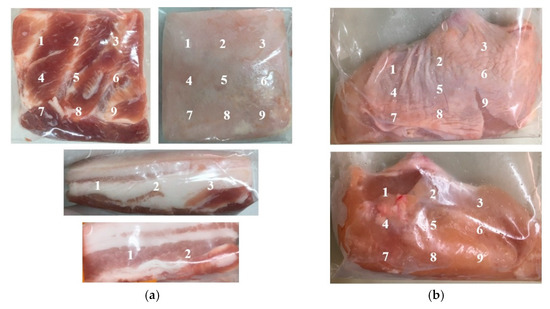
Research – Decontamination of Pathogenic and Spoilage Bacteria on Pork and Chicken Meat by Liquid Plasma Immersion

MDPI

In this research, we aimed to reduce the bacterial loads of Salmonella Enteritidis, Salmonella Typhimurium, Escherichia coliCampylobacter jejuniStaphylococcus aureus, and Pseudomonas aeruginosa in pork and chicken meat with skin by applying cold plasma in a liquid state or liquid plasma. The results showed reductions in S. Enteritidis, S. Typhimurium, E. coli, and C. jejuni on the surface of pork and chicken meat after 15 min of liquid plasma treatment on days 0, 3, 7, and 10. However, the efficacy of the reduction in S. aureus was lower after day 3 of the experiment. Moreover, P. aeruginosa could not be inactivated under the same experimental conditions. The microbial decontamination with liquid plasma did not significantly reduce the microbial load, except for C. jejuni, compared with water immersion. When compared with a control group, the pH value and water activity of pork and chicken samples treated with liquid plasma were significantly different (p ≤ 0.05), with a downward trend that was similar to those of the control and water groups. Moreover, the redness (a*) and yellowness (b*) values (CIELAB) of the meat decreased. Although the liquid plasma group resulted in an increase in the lightness (L*) values of the pork samples, these values did not significantly change in the chicken samples. This study demonstrated the efficacy of liquid plasma at reducing S. Enteritidis, S. Typhimurium, E. coliC. jejuni, and S. aureus on the surface of pork and chicken meat during three days of storage at 4–6 °C with minimal undesirable meat characteristics. View Full-Text