Category Archives: E.coli

Research – Microbiological Profile, Prevalence and Characterization of Salmonella enterica in Peanuts, Pecans, Raisins, Sun-dried Tomatoes, and Chocolate Sprinkles Sold in Bulk in Markets of Queretaro, Mexico 

Journal of Food Protection

In Mexico, the prevalence of Salmonella enterica in low water activity foods and their link to outbreaks is unknown. The aim of this study was to determine the microbiological profile and the prevalence of S. enterica in low water activity foods (peanuts, pecans, raisins, sun-dried tomatoes, and chocolate sprinkles) purchased in retail establishments in Queretaro, Mexico. Seventy samples of each food item sold in bulk were purchased. Aerobic plate count (APC), molds, yeasts, total coliforms, Escherichia coli, and Staphylococcus aureus were quantified in 10-g samples. The prevalence of S. enterica in 25 g samples was determined. From positive samples, S. enterica  isolates (60) were characterized based on their antimicrobial susceptibility to 14 antibiotics, the presence/absence of 13 virulence genes and serotype. The concentration of APC, molds, yeast, total coliforms, and E. coli ranged from 3.1-5.2 Log CFU g-1, 2.0-2.4 Log CFU g-1, 2.0-3.0 Log CFU g-1, 0.6-1.1 Log MPN g -1, and 0.5-0.9 Log MPN g -1, respectively. S. aureus  was not detected in any sample (<10 CFU g -1). The prevalence of  S. enterica in chocolate sprinkles, raisins, peanuts, pecans, and sun-dried tomatoes was 26%, 29%, 31%, 40%, and 52%, respectively. Most isolates (68.3%) were resistant to at least one antibiotic. The chromosome-associated virulence genes were found in all isolates and only one strain had sopE, and 98.3% of the isolates were grouped in the same virulotype. Among the isolates, the most frequent serotype was Tennessee (51/60). According to the characteristics evaluated, the isolates were grouped in 24 clusters. The elevated prevalence of S. enterica highlight the role of low water activity food items sold in bulk at markets as a potential vehicle for pathogens transmission. Regardless of the low variability among S. enterica isolates, their characterization could be helpful to elucidate which strains are circulating in these foods for improving epidemiological surveillance.
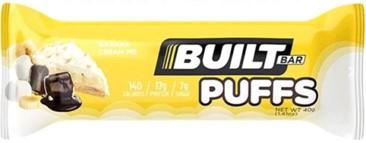
USA – Built Brands Voluntarily Recalls “Banana Cream Pie Puffs” Protein Bar Because of a Possible Health Risk – E.coli

FDA

“Built Bar Puffs”

Summary

Company Announcement Date:
FDA Publish Date:
Product Type:
Food & Beverages
Reason for Announcement:
Potential Pathogenic E. Coli
Company Name:
Built Brands, LLC
Brand Name:
Built
Product Description:
Protein Bar – Banana Cream Pie Puffs

Company Announcement

Built Brands, LLC. of American Fork, UT, is recalling 4,196 individual bars of its “Banana Cream Pie Puffs” protein bar because they have the potential to be contaminated with pathogenic Escherichia coli. Although the exact strain has yet to be determined customers must not eat this product as it may pose a serious health risk. Pathogenic Escherichia coli can cause diarrhea, severe stomach cramps and vomiting. Most people recover within a week, but some illnesses can last longer and can be more severe.

The recalled product was distributed nationwide to 1,049 potential customers through mail orders, and would have been received by customers after June 6, 2022.

The product comes in a 40 gram package marked with lot # D22151011 on the outside of the wrapper.

No illnesses have been reported to date in connection with this recall.

The potential for contamination was noted after routine testing conducted by an accredited third-party laboratory at the request of Built Brands detected the presence of Escherichia coli.

Testing results for additional products made by Built Brands indicate other similar products are not affected and the contamination was an isolated incident, likely resulting from a failure to follow GMP practices.

Consumers who have purchased the product in question are urged to contact the company at questions@built.com for a full refund or replacement. Consumers with questions may also contact the company at questions@built.com or by phone at 1-801- 845-2991 between 8:00 am – 5:00 pm, Monday-Friday, MST.


Company Contact Information

Consumers:
Built Brands, LLC
 1-801-845-2991
 questions@built.com

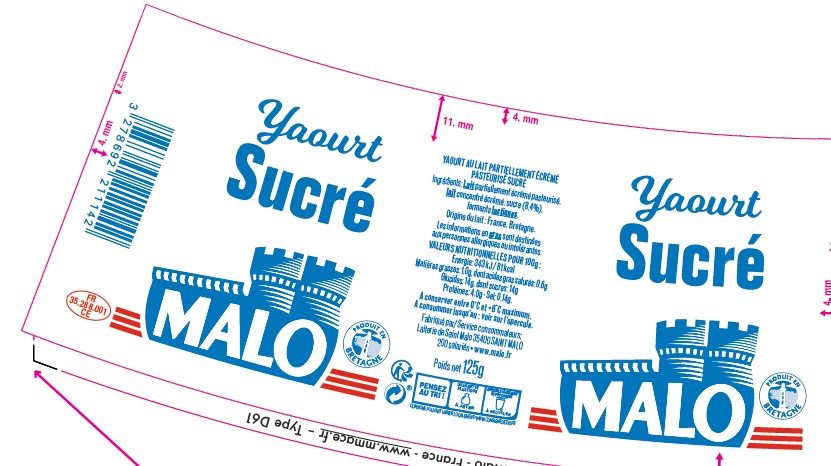
France – Sweetened Yogurt – Enterobacteriaceae – E.coli

Gov france

Identification information of the recalled product

  • Product category Feed
  • Product subcategory Milk and dairy products
  • Product brand name LOCATION
  • Model names or references sweetened yogurt brand MALO packaging cardboard pot
  • Identification of products
    GTIN Lot Date
    3278692211142 DLC 11/07/2022 Use-by date 07/11/2022
  • Packaging Packaging UVC cardboard jar 4x125g
  • Marketing start/end date From 08/06/2022 to 11/07/2022
  • Storage temperature Product to be stored in the refrigerator
  • Health mark FR 35.288.001 CE
  • Geographic area of ​​sale Whole France
  • Distributors INTERMARCHE-LOGIDIS-MONOPRIX-LECLERC-SYSTEM U-CARREFOUR-TEAM OUEST-AUCHAN-CASINO-MY GOURMET GARDEN-METRO-PRO A PRO
  • List of points of saleTraceability_Yoghurt_pot_carton_sucré_Malo_DLC_11_07_2022.pdf

Practical information regarding the recall

  • Reason for recall Suspicion of Enterobacteriaceae germ contamination
  • Risks incurred by the consumer Escherichia coli

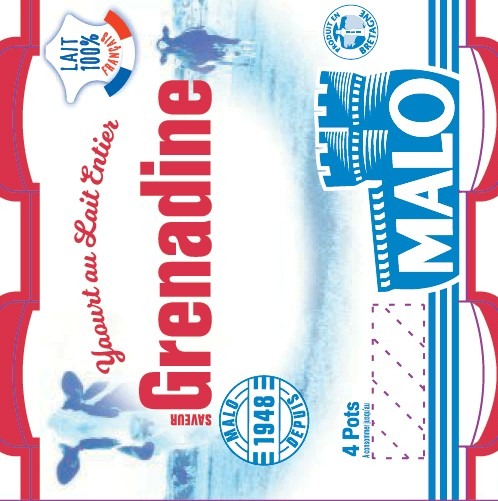
France- Grenadine Flavored Whole Milk Yogurt – Enterobacteriaceae – E.coli

Gov france

Identification information of the recalled product

  • Product category Feed
  • Product subcategory Milk and dairy products
  • Product brand name LOCATION
  • Model names or references whole milk yogurt with grenadine flavor MALO brand packaging glass jar
  • Identification of products
    GTIN Lot Date
    3278692363339 DLC 22/07/2022 Use-by date 07/22/2022
  • Packaging UVC packaging 4x125g glass jar
  • Marketing start/end date From 09/06/2022 to 22/07/2022
  • Storage temperature Product to be stored in the refrigerator
  • Health mark FR 35.288.001 CE
  • Geographic area of ​​sale Whole France
  • Distributors Auchan- Leclerc- Euromarché-Cora- Wholesaler SCPL Rungis
  • List of points of saleTraceability_PV_saveur_grenadine_MALO_DLC_22_07_2022.pdf

Practical information regarding the recall

  • Reason for recall Suspicion of Enterobacteriaceae germ contamination
  • Risks incurred by the consumer Escherichia coli

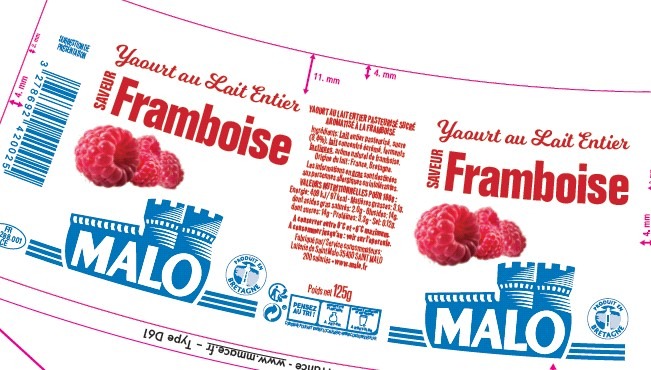
France – Raspberry Flavored Whole Milk Yogurt – Enterobacteriaceae – E.coli

Gov france

Identification information of the recalled product

  • Product category Feed
  • Product subcategory Milk and dairy products
  • Product brand name LOCATION
  • Model names or references MALO brand raspberry flavored whole milk yogurt packaging cardboard pot
  • Identification of products
    GTIN Lot Date
    3278692420025 DLC 12/07/2022 Use-by date 07/12/2022
  • Products ListTraceability_YPC_saveur_raspberry_DLC_12_07_2022.pdfAttachment
  • Packaging Packaging UVC cardboard jar 4x125g
  • Marketing start/end date From 06/10/2022 to 07/12/2022
  • Storage temperature Product to be stored in the refrigerator
  • Health mark FR 35.288.001 CE
  • Geographic area of ​​sale Whole France
  • Distributors ATAC-CASINO-INTERMARCHE-LECLERC-U-LOGIDIS SYSTEM
  • List of points of saleTraceability_YPC_saveur_raspberry_DLC_12_07_2022.pdf

Practical information regarding the recall

  • Reason for recall Suspicion of Enterobacteriaceae germ contamination
  • Risks incurred by the consumer Escherichia coli

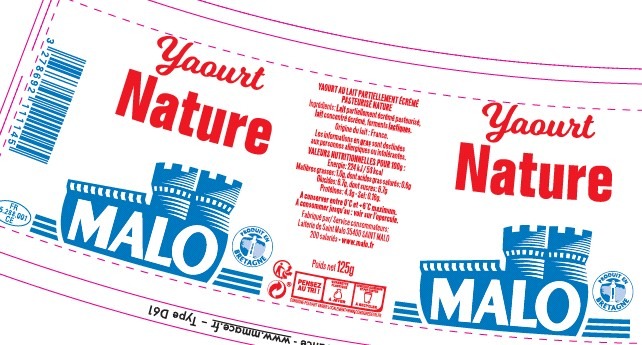
France – Natural Yogurt – Enterobacteriaceae – E.coli

Gov france

Identification information of the recalled product

  • Product category Feed
  • Product subcategory Milk and dairy products
  • Product brand name LOCATION
  • Model names or references natural yogurt brand MALO packaging cardboard pot
  • Identification of products
    GTIN Lot Date
    3278692111145 DLC 11/07/2022 Use-by date 07/11/2022
  • Packaging Packaging UVC cardboard jar 4x125g
  • Marketing start/end date From 09/06/2022 to 11/07/2022
  • Storage temperature Product to be stored in the refrigerator
  • Health mark FR 35.288.001 CE
  • Geographic area of ​​sale Whole France
  • Distributors LECLERC-LOGIDIS-SYSTEM U-AUCHAN-CASINO-TRANSGOURMET-ATAC-INTERMARCHE-MONOPRIX-EURODISNEY-LA GRANDE EPICERIE-AFINEUR DES HALLES
  • List of points of saleTraceability_Yoghurt_pot_carton_nature_Malo.pdf

Practical information regarding the recall

  • Reason for recall Suspicion of Enterobacteriaceae germ contamination
  • Risks incurred by the consumer Escherichia coli

Research – A bacteriological survey of fresh minced beef on sale at retail outlets in Scotland in 2019: three food-borne pathogens, hygiene process indicators and phenotypic antimicrobial resistance.

Journal of Food Protection

The health and economic burden of foodborne illness is high, with approximately 2.4 million cases occurring annually in the United Kingdom. A survey to understand the baseline microbial quality and prevalence of food-related hazards of fresh beef mince on retail sale could inform risk assessment, management and communication to ensure the safety of this commodity. In such a survey, a two-stage sampling design was used to reflect variations in population density and the market share of five categories of retail outlets in Scotland.  From January to December 2019, 1009 fresh minced beef samples were collected from 15 Geographic Areas. The microbial quality of each sample was assessed using Aerobic Colony Count (ACC) and generic E. coli count. Samples were cultured for Campylobacter and Salmonella and PCR was used to detect target genes (stx1 all variants, stx2 a-g, and rfbO157) for Shiga toxin-producing Escherichia coli (STEC). The presence of viable E. coli O157 and STEC in samples with a positive PCR signal was confirmed via culture and isolation. Phenotypic antimicrobial sensitivity patterns of cultured pathogens and 100 generic E. coli isolates were determined, mostly via disc diffusion. The median ACC and generic E. coli counts were 6.4 x 10⁵ (Inter-quartile range (IQR):6.9 x 10⁴ to 9.6 x 10⁶) and <10 cfu per gram (IQR:<10 to 10) of minced beef respectively. The prevalence was 0.1% (95% confidence interval C.I. 0 to 0.7%) for Campylobacter, 0.3% (95% C.I. 0 to 1%) for Salmonella, 22% (95% C.I. 20% to 25%) for PCR positive STEC and 4% (95% C.I. 2 to 5%) for culture positive STEC. The evidence for phenotypic antimicrobial resistance (AMR) detected did not give cause for concern, mainly occurring in a few generic E. coli isolates as single non-susceptibilities to first-line active substances. The low prevalence of pathogens and phenotypic AMR is encouraging but ongoing consumer food-safety education is necessary to mitigate the residual public health risk.

USA – Mystery 2021 Pennsylvania Pool E. coli and C. difficile Outbreak Finally Explained – 15 Sickened

Food Poison Journal

On June 7, 2021, the Pennsylvania Department of Health (PADOH) received multiple complaints of gastrointestinal illness from patrons of a community swimming pool. Two patrons reported positive Shiga toxin-producing Escherichia coli (STEC) and Clostridioides difficile from stool specimens. PADOH issued pool closure orders and initiated an outbreak response to identify a source and prevent additional illnesses.

Confirmed cases were defined as isolation of E. coli O157:H7 or detection of Shiga toxin or Shiga toxin genes from stool specimens of persons who visited the pool during May 31–June 7, 2021. Probable cases were defined as three or more loose stools in 24 hours with nausea, vomiting, fever, or cramps in persons who visited the pool during the same time frame. C. difficile results were deemed incidental upon consultation with experts (LC McDonald, MD, CDC, personal communication, June 2021) and were not included in the case definition.

Fifteen cases (nine confirmed, six probable) in persons aged 4–14 years were identified; 10 patients were male. All persons reported swimming at the pool on May 31, 2021, the seasonal opening date, and had no other common exposures. The total number of pool visitors on this date is unknown. Symptom onsets occurred during June 2–June 4, 2021. Thirteen patients sought medical evaluation, and six were hospitalized. Four received antibiotics for C. difficile. None developed hemolytic uremic syndrome.

Early findings suggested an unusual association between exposure to a chlorinated swimming pool and infections caused by two pathogens susceptible to chlorine. Pool inspection revealed an automatic chlorinator malfunction. Record-keeping was inconsistent with local requirements, and the few available records demonstrated at least one instance of no detectable chlorine. The pool reopened following chlorinator repair, after which no additional cases were identified.

RASFF Alert – E.coli – Young Sweetcorn

RASFF

E. Coli in young sweetcorn from Thailand in Norway and the Netherlands

Research – Clinical Escherichia coli: From Biofilm Formation to New Antibiofilm Strategies

MDPI

Escherichia coli is one of the species most frequently involved in biofilm-related diseases, being especially important in urinary tract infections, causing relapses or chronic infections. Compared to their planktonic analogues, biofilms confer to the bacteria the capacity to be up to 1000-fold more resistant to antibiotics and to evade the action of the host’s immune system. For this reason, biofilm-related infections are very difficult to treat. To develop new strategies against biofilms, it is important to know the mechanisms involved in their formation. In this review, the different steps of biofilm formation in E. coli, the mechanisms of tolerance to antimicrobials and new compounds and strategies to combat biofilms are discussed. View Full-Text