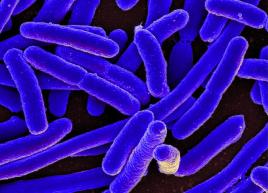
Category Archives: E.coli

Scotland – Food Standards Scotland issues warning over Shiga-toxi E.coli bug

Herald Scotland

FOOD safety inspectors have warned that even trace amounts of an E. coli bacteria can post a danger to human health.

The updated guidance from Food Standards Scotland (FSS) has been published today following a joint report by the World Health Organisation and United Nations which urged vigilance in relation to Shiga Toxin-producing E. coli (STEC).

Professor Norval Strachan, Independent Chief Scientific Adviser for FSS, said: “STEC, or Shiga Toxin-producing E. coli, are a group of different types of E. coli bacteria found in the guts of animals such as cattle and sheep, which can make their way into the food chain via the animals’ faeces.

Research – Microbial quality of edible grasshoppers Ruspolia differens (Orthoptera: Tettigoniidae): From wild harvesting to fork in the Kagera Region, Tanzania

Wiley Online Library

Abstract

In Tanzania, edible Ruspolia differens are still harvested from the natural environments. In this perspective, little is known about the microbiological quality of wild harvested R. differens. This study was conducted to assess the microbiological quality of wild harvested R. differens and evaluate the efficacy of conventional processing methods in reducing microbial load. Two districts (Bukoba rural and Muleba) within the Kagera region were purposively selected for the study. Sampling was done from the same batches along the R. differens food chain as follows: (a) at harvest points in the villages, (b) after transportation to the market and plucking of wings and legs, (c) after rinsing with potable tap water, and (d) after processing using conventional methods. Generally, high microbial counts, that is, total viable aerobic count (TVC), Enterobacteriaceae, lactic acid bacteria, bacterial endospores, and yeasts and molds were observed in raw R. differenssamples. A significant increase in microbial counts after transportation and plucking was only observed for TVC, bacterial endospores, and yeasts and molds. A statistically significant reduction in all types of counts, with the exception of bacterial endospores, was observed after processing. All processed samples analyzed were devoid of salmonellae, Listeria monocytogenes, and Escherichia coli.

Practical applications

Although commonly used processing methods of Ruspolia differens were effective in reducing microbial load, bacterial endospores were hardly eliminated and could pose a health hazard to consumers; thus, improved handling of R. differens along the food chain could reduce such risks.

Research – Assessing the microbiological safety status of most commonly consumed food items sold at local and branded restaurants of Faisalabad, Pakistan

Wiley Online Library

Abstract

The current study was designed to assess the microbial safety status of rice and chicken dishes offered for sale at various local and branded restaurants. Purposely, 24 samples of rice and chicken dishes were collected from eight local and branded restaurants of Faisalabad city. All the collected samples were subjected to microbiological examination to determine the prevalence and comparative enumeration of Bacillus cereus, Escherichia coli (rice), Salmonella and Campylobacter (chicken). Results pertaining to the enumeration of B. cereus and E. coli exhibited highest count of 2.12 × 108 and 2.59 × 107 cfu/g, respectively. Both strains were found to be higher among the samples collected from branded restaurants. Likewise for chicken dishes, the highest count observed for Salmonella and Campylobacter were 2.50 × 107 and 1.87 × 108 cfu/g, respectively. Further, the results of current study revealed that 38% of rice samples collected from local restaurants and 63% from branded restaurants have unsatisfactory safety status for B. cereus. Similarly, for E. coli, 63 and 42% samples were found unsatisfactory from local and branded restaurants, respectively. On the other hand, the percentage of chicken samples with unacceptable safety status according to Salmonella and Campylobacter standards were 46 & 58% and 54 & 46% for local and branded restaurants, respectively.

Practical applications

Safe handling of food during preparation and adherence to the food safety principles are key factors in determining the safety of food served at any restaurant. The study focused on previously unreported microbial safety status of some commonly sold food items at local and branded restaurants. The results and suggestions of this study will help the food handlers and regulatory bodies to map out the potential gaps in food supply chain to reduce the incidence of microbial contamination in cooked food items. The study will provide guidance for the restaurant industry to improve the overall safety of cooked foods by taking the corrective measures in the light of results presented in this article.

Research – Prevalence of Shiga‐like toxin producing Escherichia coli strain (E. coli O157) in freshly consumed vegetables and its characterization

Wiley Online Library

Abstract

Escherichia coli is a vast genus with various beneficial to harmful species. O157:H7 is a shiga‐like toxin (stx) producing E. coli that cause’s major health threats in humans, through oral route. However, the presence of E. coli O157:H7 in vegetables is not yet reported in India. Hence, we surveyed the vegetables markets and enumerated the presence of E. coli O157 in freshly consumed vegetables namely, cucumber, radish, lettuce, cabbage, and menthos. Three consecutive surveys from three different market areas were done with 1 month interval. A total of 603 E. coli colonies were isolated. Presence of shiga toxin genes (Stx) were confirmed by colony polymerase chain reaction (PCR) using Stx1 and Stx2 markers that showed 25 and 12 positive colonies, respectively. Among the five vegetables, cabbage had the highest Stx positive colonies (16%). Compared to supermarkets, vegetables from the farmers market did not have much load of E. coli O157. Further, characterization of isolated E. coli colonies were performed using PCR techniques with gene specific markers namely, E. coli uidA, E. coli O157 specific uidA and intimin gene markers. Our analysis showed 6% of E. coli O157 population in the freshly consumed vegetables much above than 2% threshold level, thus providing a warning foresight related to disease outbreak.

Practical applications

Molecular survey using a number of Escherichia coli O157 specific genes through PCR is an easy, rapid, and a reliable method for pathogenic bacteria identification and characterization amidst other indigenous microbial load. Additionally, polymerase chain reaction (PCR)‐based enumeration of E. coli O157 in vegetables assist us in determining the threshold level for forewarning of pathogenic disease outbreaks. Further, the severity of outbreak could be predicted using E. coli O157 specific shiga toxin (stx) and receptor genes (intimin). The presence of E. coli O157 specific shiga toxins and intimins in a pathogen signifies severity and virulence of strains in causing potential outbreaks. PCR‐based studies enables rapid identification of inoculums source (E. coli O157 spread) from farmers field/cattle shed. Thus, it could be reliably used to stop the further spread of disease from the source inoculums during the outbreaks.

USA – FDA Report on E. Coli O157 Outbreak in Romaine Lettuce Points to “Significant” Finding of Strain in Sediment of Water Reservoir

Food Safety Tech 

The November 2018 outbreak of E.coli O157:H7 infections linked to romaine lettuce caused 62 illnesses across 16 states. The FDA zeroed in on the Central Coast growing regions of northern and Central California as being responsible for the contamination. The outbreak was declared over on January 9 and yesterday FDA released the report, “Factors Potentially Contributing to the Contamination of Romaine Lettuce Implicated in the Fall 2018 Multi-State Outbreak of E.Coli O157:H7”, which provides an overview of the investigation.

The report states that a sediment sample coming from an on-farm water reservoir in Santa Maria (Santa Barbara County, California) tested positive for the outbreak strain of E. coli O157:H7. Although this particular farm was identified in several legs of the Fall 2018 traceback investigations that occurred in the United States and Canada, as well as being a possible supplier of romaine lettuce in the 2017 traceback investigations, the FDA said that the farm is not the single source of the outbreak, as there is “insufficient evidence”. The traceback suggests that the contaminated lettuce could have come from several farms, because not all tracebacks led to the farm on which the contaminated sediment was found.


Information – How Is HUS Diagnosed After an E. coli Infection?

Food Poisoning Bulletin

CDC E.coli

Image CDC

Hemolytic uremic syndrome, or HUS, is one of the most serious complications of any foodborne illness infection. It is caused by misshapen red blood cells that are created when Shiga toxins produced by E. coli bacteria travel through the bloodstream to the kidneys.

The destroyed blood cells clog the glomeruli, which are tiny tubes in the kidneys. The kidneys can shut down, and some patients experience kidney failure.

One of the worst things about this complication is that most patients are children under the age of 5, who have no choice in what they are given to eat or drink.

Symptoms of HUS include little to no urine output (oligoanuria), lethargy, pale skin, a skin rash, and bleeding from the nose or mouth. If someone is experiencing these symptoms, it’s critical that they are taken to a doctor immediately. Many of these patients are hospitalized for palliative and supportive care.

Hemolytic uremic syndrome is often diagnosed by these symptoms and the timing of symptoms. An E. coli infection usually starts three to four days after exposure to the pathogen. HUS symptoms usually begin about four days after E. coli infection symptom onset.

Africa – A look at how Africa is tackling foodborne illness

DW.COM

CDC E.coli

Image CDC


Contaminated food poses a major health and economic threat to sub-Saharan Africa. While efforts are taken to provide safe food for exports, governments are reijigging the system to do more for domestic markets.

Small flies can be seen buzzing around many food markets. But the threat they bring is not visible to the naked eye.

Houseflies, infected with salmonella, E. coli and other bacteria, can contaminate food and cause serious gastro-intestinal illnesses. In Uganda’s popular pork snack bars, for example, one-third of raw pork sampled for a study by the International Livestock Research Institute tested positive for salmonella.

Foodborne diseases, either caused by pests, pesticides or improper storage, pose a major health threat to sub-Saharan Africa, which suffers the highest levels of foodborne illness anywhere in the world.

More than 91 million people in the region fall ill every year from eating contaminated food and 137,000 die as a result, according to the World Health Organization.


Australia -Maleny Herb and Garlic Feta – E.coli

FSANZ

Maleny Cheese is conducting a recall of the above product. The product has been available for sale at Market Stall, IGA, Fruit and Veg Stores and Dairy Stores in QLD.

Problem: The recall is due to microbial (E.coli) contamination.

Food safety hazard: Food products contaminated with E.coli may cause illness if consumed.

Country of origin: Australia

What to do: Any consumers concerned about their health should seek medical advice and should return the product to the place of purchase for a full refund. For further information please contact:

Maleny Cheese
07 5494 2207

Research – Occurrence and Antimicrobial Profile of Bacterial Pathogens in Former Foodstuff Meat Products Used for Pet Diets

Journal of Protection

European legislation stipulates that food no longer intended for human consumption, due to commercial reasons, manufacturing problems, or some defect, can be used in pet feed. However, the presence of former foodstuffs in pet diets could constitute a public health issue because pets can act as reservoirs of antimicrobial resistance genes. In this study, for the first time, biological hazards due to the presence of Escherichia coli and Salmonella in former foodstuff meat products were evaluated. Among the 112 samples of packaged fresh meat (poultry, pork, and beef) collected from cold storage warehouses of a mass market retailer, the overall prevalence of E. coli and Salmonella, the prevalence of strains with multidrug resistance, the phenotypic and genotypic characteristics of strains that produce extended-spectrum β-lactamase, and the presence of biofilm producers were assessed. A high prevalence of E. coli was observed in former foodstuffs of poultry (100%), pork (100%), and beef (93.3%). Salmonella Derby and Salmonella Typhimurium were found in 11.5% of the poultry samples, and Salmonella Typhimurium was found in 13.3% of the pork samples. Salmonella was not recovered from the beef samples. Multidrug resistance was found in E. coli and Salmonella isolates from poultry, pork, and beef. Overall, 18.2% of E. coli isolates and 20% of Salmonella isolates were resistant to various types of antibiotics with various mechanisms of action. Salmonella isolates from pork are an important source of extended-spectrum β-lactamase production. Both E. coli and Salmonella were carriers of antibiotic resistance marker genes (blaTEMblaSHV, and blaCTX-M) associated with β-lactamase production in poultry and pork. Approximately 30% of the E. coli isolates from the various types of meat were phenotypically biofilm producers, and all carried the fimH gene. These findings indicate that the use of former foodstuff meat products in pet diets can represent a risk for public health.

Australia – Mungalli Creek Kefir 1 Litre BB Date 22/2/2019 No other products affected – E.coli

FSAU

Mungalli Creek Dairy would like to alert their Cairns and Townsville customers that the above item has been recalled. Please do not consume and return the product to your place of purchase for a full refund. We have already retrieved 95% of stock prior to sale and are asking for your assistance in retrieving the remaining 5% of stock.

Problem: The recall is due to testing showing the possible presence of E.coli

Food Safety Hazard: Food products contaminated with E. coli may cause illness if consumed

Country of origin: Australia

What to do: Any consumers concerned about their health should seek medical advice. Customers should return the product to the place of purchase for a full cash refund. No other products are affected and this is the only batch of Kefir affected. All new batches will have additional testing to ensure product integrity. We thank you for your assistance and apologise for any inconvenience.
For further information contact Michelle Bell-Turner on 0438 171 248​