Category Archives: E.coli

USA – Kentucky E. coli O103 Outbreak Linked to Fast Food Consumption

Food Poisoning Bulletin

An E. coli O103 outbreak in Kentucky has been linked to fast food consumption, according to a release from the Kentucky Department for Public Health. The Kentucky E. coli outbreak has sickened at least 19 people. Those illnesses have been confirmed by the Kentucky Department of Public Health. The release is intended for doctors and lab providers, so they are alert to patients who present with acute diarrheal illness

RASFF Alerts – STEC E.coli – Steak Tartare – Chilled Lamb – Cheese -Bovine Meat

RASFF-Logo

RASFF – shigatoxin-producing Escherichia coli (O111; vtx1+ /25g) in steak tartare from Poland in Slovakia

RASFF – shigatoxin-producing Escherichia coli (stx+ eae+) in chilled lamb from the Netherlands, slaughtered in Belgium in Belgium

RASFF – shigatoxin-producing Escherichia coli (O26 stx+ eae+ /25g) in cheese (Crottin de Chavignol) from France in Belgium

RASFF – shigatoxin-producing Escherichia coli (O26 stx+ eae+ /25g) in partly chilled and partly frozen bovine meat from Belgium in Belgium

RASFF Alerts – E.coli – Live Mussels

RASFF-Logo

RASFF – high count of Escherichia coli (790; 330; 790; 490; 3500 MPN/100g) in mussels (Mytilus galloprovincialis) from Italy, with raw material from Spain in Italy

RASFF – too high count of Escherichia coli (330, 490 MPN/100g) in live mussels (Mytilus galloprovincialis) from Italy, with raw material from Spain in Italy

USA – Aurora Packing Recalls Beef Products For Possible E. coli 0157

Food Poisoning Bulletin

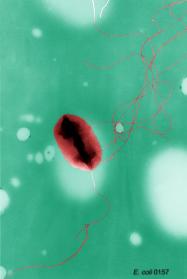
kswfoodworld E.coli O157

Image CDC


Aurora Packing Company of Illinois is recalling about 4,838 pounds of beef heel and chuck tender products because they may be contaminated with E. coli O157:H7 bacteria. No confirmed reports of illness have been received in association with this recall.

The products were produced and packed on February 27, 2019. These are the recalled products:

  • Varying catch weight cardboard box case packages containing bulk pieces of “AURORA ANGUS BEEF BONELESS BEEF – CHUCK TENDER” and case code 61150 marked on the label.
  • Varying catch weight cardboard box case packages containing bulk pieces of “BONELESS BEEF – HEEL MEAT” and case code 29970 on the label.
  • Varying catch weight cardboard box case packages containing bulk pieces of “BONELESS BEEF – HEEL MEAT” and case code 49970 stamped on the label.

These products have the establishment number “EST. 788” inside the USDA mark of inspection. They were shipped for institutional use in Illinois, Iowa, and Wisconsin. The problem was discovered during FSIS traceback activities after routine testing.

USA – Beef heel and chuck tender recalled over E. coli O157:H7 fears

Food Safety News

Aurora Packing Company, Inc.,  located in North Aurora, IL  is recalling approximately 4,838 pounds of beef heel and chuck tender products that may be contaminated with E. coli O157: H7, according to the U.S. Department of Agriculture’s Food Safety and Inspection Service (FSIS).

The bulk beef products were produced and packed on Feb. 27, 2019. The following products are subject to recall:

  • Varying catch weight cardboard box case packages containing bulk pieces of “AURORA ANGUS BEEF BONELESS BEEF – CHUCK TENDER” and case code 61150 represented on the label.
  • Varying catch weight cardboard box case packages containing bulk pieces of “BONELESS BEEF – HEEL MEAT” and case code 29970 represented on the label.
  • Varying catch weight cardboard box case packages containing bulk pieces of “BONELESS BEEF – HEEL MEAT” and case code 49970 represented on the label.

The products subject to recall bear establishment number “EST. 788” inside the USDA mark of inspection. These items were shipped for institutional use in Illinois, Iowa, and Wisconsin.

The problem was discovered during traceback activities following routine FSIS testing. There have been no confirmed reports of adverse reactions due to consumption of these products.

Research – Estimate of the annual burden of foodborne illness in nondeployed active duty US Army Service Members: five major pathogens, 2010–2015

Cambridge.org

In this study, we estimate the burden of foodborne illness (FBI) caused by five major pathogens among nondeployed US Army service members. The US Army is a unique population that is globally distributed, has its own food procurement system and a food protection system dedicated to the prevention of both unintentional and intentional contamination of food. To our knowledge, the burden of FBI caused by specific pathogens among the US Army population has not been determined. We used data from a 2015 US Army population survey, a 2015 US Army laboratory survey and data from FoodNet to create inputs for two model structures. Model type 1 scaled up case counts of Campylobacter jejuniShigella spp., Salmonella enterica non-typhoidal and STEC non-O157 ascertained from the Disease Reporting System internet database from 2010 to 2015. Model type 2 scaled down cases of self-reported acute gastrointestinal illness (AGI) to estimate the annual burden of Norovirus illness. We estimate that these five pathogens caused 45 600 (5%–95% range, 30 300–64 000) annual illnesses among nondeployed active duty US Army Service members. Of these pathogens, Norovirus, Campylobacter jejuni and Salmonella enterica non-typhoidal were responsible for the most illness. There is a tremendous burden of AGI and FBI caused by five major pathogens among US Army Soldiers, which can have a tremendous impact on readiness of the force. The US Army has a robust food protection program in place, but without a specific active FBI surveillance system across the Department of Defence, we will never have the ability to measure the effectiveness of modern, targeted, interventions aimed at the reduction of specific foodborne pathogens.

USA – Molida de Res Ground Beef Recalled For Possible E. coli O157:H7

Food Poisoning Bulletin

La Rosita Fresh Market of  Mount Prospect, Illinois, is recalling about 54 pounds of raw ground beef that may be contaminated with E. coli O157:H7 bacteria. No illnesses have been reported to date in association with this problem. That pathogen can cause serious illness and possibly hemolytic uremic syndrome (HUS) if ingested.

The beef was only sold at the La Rosita Fresh Market Inc. retail store. That facility is located at 1805 West Algonquin Road in Mount Prospect, Illinois.

The recalled products is Molida De Red Ground Beef in various weights. The product is packed in white trays covered with plastic wrap. The dates on the product are “Packed On 3/13/19 Sell By 3/20/19” and “Packed On 3/14/19 Sell By 3/21/19.”

RASFF Alert – E.coli – Live Mussels

RASFF-Logo

RASFF – too high count of Escherichia coli (330; 490 MPN/100g) in live mussels (Mytilus galloprovincialis) from Spain in Italy

RASFF – too high count of Escherichia coli (330, 490 MPN/100g) in live mussels (Mytilus galloprovincialis) from Spain in Italy

RASFF Alerts – STEC E.coli – Raw Milk Cheese

RASFF-Logo

RASFF -shigatoxin-producing Escherichia coli (presence /25g) in raw milk cheese from France in Germany

Research – Microbiological and chemical quality of ice used to preserve fish in Lisbon marketplaces

Wiley Online

Abstract

Ice is widely used to preserve fish on markets, playing a major role in the food industry. If manufactured, stored or distributed in inadequate sanitary conditions, it can represent a considerable health risk for both consumers and professionals. The present study characterizes ice used in marketplaces, on microbiological and chemical parameters. The aim was to assess potential risks on occupational exposure and consumer safety and therewith plan orientation guidelines. Sampling took place in 18 marketplaces in Lisbon, with ice samples collected at three different stages—production (n = 29), storage (n = 30), and product‐contact (n = 29). No significant contamination was found in production and storage stages, demonstrating that ice production and storage procedures are adequate regarding sanitary conditions. With exception for Salmonella, significantly higher concentrations of microbial parameters were identified in product‐contact stages, specifically Total Coliforms (548 MPN/100 mL), Escherichia coli (1 MPN/100 mL), Enterococci (29 MPN/100 mL), Staphylococcus aureus (271 CFU/100 mL), HPC at 5°, 22°, and 37° (>301 CFU/mL). Our study also shows that the majority of samples from ice production and storage comply with national regulations regarding drinking water quality. Yet, occupational health and consumer risks may still exist at the final product‐contact stage, as significant contamination was detected..

Practical applications

The present study can be used as a model for ice quality monitoring in fish preservation, serving as a tool for quality control and fast contamination detection during the several process stages.

This monitoring model is an important contribution for assuring the safety of the preserved products, as well as, occupational health improvement and consumer risk protection.