Category Archives: Decontamination Microbial

Australia – Salmonellosis in Australia 2020

Health Au

kswfoodworld salmonella

Abstract

Background

More than seventy per cent of salmonellosis in Australia is thought to be due to contaminated food. Rates of salmonellosis vary across the Australian states and territories, with the highest rates in the Northern Territory. In 2020, to control coronavirus disease 2019 (COVID-19), Australia implemented public health measures including border closures, physical distancing and hygiene advice. This study analyses salmonellosis notification rates in 2020 and considers possible impacts of COVID-19 measures.

Methods

Monthly and annual salmonellosis notifications per 100,000 population, for each of Australia’s eight states and territories for the years 2015 to 2020, were extracted from Australia’s publicly accessible National Notifiable Diseases Surveillance System. For each jurisdiction, the salmonellosis rate each month in 2020 was compared with the previous 5-year median rate for that calendar month. The possible impacts of COVID-19 public health measures on salmonellosis notifications in the respective states and territories were examined.

Results

The annual Australian salmonellosis notification rate was 27% lower in 2020 than the previous 5-year median. The reduction in salmonellosis rate varied throughout Australia. States and territories with more stringent, more frequent or longer COVID-19 public health measures had generally greater salmonellosis rate reductions. However, Tasmania had a 50% deeper reduction in salmonellosis rate than did the Northern Territory, despite similar restriction levels.

Conclusions

Salmonellosis notifications decreased in Australia during the global COVID-19 pandemic. The reduction in notifications corresponded with the implementation of public health measures. Persistence of high rates in the Northern Territory could indicate the overarching importance of demographic and environmental factors.

Research – Legionellosis: Diagnosis and Control in the Genomic Era

CDC

CDC legionella

Hundreds of books and textbook chapters, and thousands of journal review articles, have been published on Legionnaires’ disease and Legionella spp. bacteria over the past 45 years, making it important to decide whether this new and quite expensive compilation of reviews is worth acquiring (Figure). The field has become so specialized that even those who know one aspect of it may need a good review of other aspects to easily catch up on recent trends. The book contains chapters on the freshwater ecology of the bacterium; molecular and pathogenic aspects of virulence-associated bacterial secretion systems; very selected aspects of epidemiology; clinical aspects and treatment; laboratory diagnosis; and strain typing methods from serologic to whole-genome sequencing. Some chapters are more current than others. The most recent references for several chapters were published in 2016, and only 1 chapter cites references published in 2020. The book is lightly edited; some of the chapters contain overlapping material, but overall it has few typographical or spelling errors. Not all of the figures are properly labeled; for example, the figure legends in chapter 6 are reversed, and not all of the figure legends in chapter 3 fully explain the meanings of different colors and abbreviations.

I found that several of the chapters contained quite useful information that would be hard to find elsewhere, including a thorough review of L. pneumophila virulence secretory systems, as well as a review of the freshwater ecology of the bacterium, the clinical microbiology and clinical significance of Legionella spp. other than L. pneumophila, and regulatory and risk management strategies for control of the disease. Other readers, depending on their fields of interest and expertise, will find other chapters of particular interest. The chapter on non–whole-genome sequencing methods for strain typing for epidemiologic investigation is well done and could be of interest for those trying to dissect the older literature. Missing from the book, presumably by design, are a chapter reviewing in detail the ecology of the bacterium in the built environment, practical guidance on outbreak investigation, advanced techniques in epidemiologic source investigation, molecular and cellular pathogenesis other than secretion systems, and the molecular evolution of the bacterium, all of which can be found in other sources.

Is this book good value for money? Perhaps not for those who have a narrow interest in a specific field, because there are more up-to-date reviews on many of the topics in journal articles and some textbooks. For those who want to gain an overview of the topics covered in the book, some of which are more comprehensive than those found in textbooks or recent reviews, this may be a useful addition to their libraries.

Research – An Observational Study of the Impact of a Food Safety Intervention on Consumer Poultry Washing

Journal of Food Protection

Campylobacter kswfoodworld

This study tested the effectiveness of an educational intervention on consumer poultry washing using video observation of meal preparation with participants who self-reported washing poultry. Treatment group participants received three emails containing messages the U.S. Department of Agriculture has used on social media (video and infographics) related to poultry preparation, including advising against washing it. Participants were observed cooking chicken thighs (inoculated with traceable nonpathogenic Escherichia coli strain DH-5 alpha) and preparing a salad to determine whether they washed the chicken and the extent of cross-contamination to the salad and areas of the kitchen. After meal preparation, participants responded to an interview about food handling behaviors, including questions about the intervention for treatment group participants. Three hundred people participated in the study (158 control, 142 treatment). The intervention effectively encouraged participants not to wash chicken before cooking; 93% of treatment group participants did not wash the chicken compared to 39% of control group participants (P<0.0001). High levels of the tracer detected in the sink and on the salad lettuce suggest that microbes transferred to the sink from the chicken, packaging, or contaminated hands are a larger cause for concern than splashing contaminated chicken fluids onto the counter. Among chicken washers, lettuce from the prepared salad was contaminated at 26% for the control group and 30% for the treatment group. For nonwashers, lettuce was contaminated at 31% for the control group and 15% for the treatment group. Hand-facilitated cross-contamination is suspected to be a factor in explaining this cross-contamination. This study demonstrates the need to change the frame of “don’t wash your poultry” messaging to instead focus on preventing contamination of sinks and continuing to emphasize the importance of handwashing and cleaning and sanitizing surfaces.

Research – Novel Biocomposite Films Based on High Methoxyl Pectin Reinforced with Zeolite Y for Food Packaging Applications

MDPI

Pectin is a natural biopolymer with broad applications in the food industry and it is suitable to prepare edible films to prolong food shelf-life. However, the main limitation of pectin-based films is their poor mechanical and barrier properties. Zeolite Y is a hydrophobic clay that can be used as film reinforcement material to improve its physicochemical and mechanical properties. In this work, the influence of high methoxyl citrus and apple pectin on physicochemical properties of biopolymer films modified with zeolite Y (0.05–0.2 wt%) was investigated. The films were characterized by FTIR, TGA, WAXD, mechanical analysis, and water vapor permeability analysis, and a potential film application is presented. The WAXD and FTIR analysis demonstrated that the strongest interaction between pectin chains and zeolite Y occurred when citrus high methylated pectin was used. Adding 0.2 wt% of zeolite Y into citrus high methylated pectin matrix enhanced the tensile strength by 66%, thermal stability by 13%, and water vapor barrier by 54%. In addition, fruit shelf-life test was performed, where strawberries were sealed in film. It was shown that sealed strawberries maintained a better color and healthy appearance than the control treatment after 7 days at 10 °C. This study enabled the development of biocomposite films with improved properties for potential application in food packaging. View Full-Text

Research – Comparing the effectiveness of Cinnamomum zeylanicum essential oil and two common household sanitizers to reduce lettuce microbiota and prevent Salmonella enterica recontamination

Wiley Online

Vegetable Bacteria Danger

The washing step is necessary to remove biological and physical hazards from minimally processed vegetables. Nevertheless, the risk of foodborne diseases could persist even after washing due to postsanitizing contamination, and little is known about the antimicrobial effect of residual sanitizers. This study was conducted to compare the effectiveness of sodium hypochlorite (SH), sodium bicarbonate, and Cinnamomum zeylanicum essential oil (CEO) as sanitizers on lettuce (8°C, 48 h). First, the effect of sanitizers in reducing total aerobic mesophilic and psychrotrophic bacteria, yeast and molds, lactic acid bacteria, and Enterobacteriaceae on lettuce was evaluated with some insights on lettuce quality attributes (pH, color, and sensory analysis). Then, the capability of the treatments in preventing postwashing Salmonella adhesion on lettuce surface was investigated. Commercial SH disinfectant (solution at 2%) and CEO (0.5%) reduced microbial contamination in lettuce, without affecting the overall acceptability after 48 h at 8°C. SH reduced postsanitizing Salmonella adhesion of about 2.7 Log colony forming unit (CFU)/g. The microbial reduction was confirmed by confocal laser scanning microscopy, which also evidenced Salmonella internalization within stomata. Interestingly, CEO as well reduced Salmonella adhesion but with lower efficacy (0.44–1.00 Log CFU/g reduction), while sodium bicarbonate (15 mg/ml) was not effective. In conclusion, SH and CEO seem to be effective sanitizing agents, capable of improving the microbiological profile of fresh produce. In addition, the residual sanitizers, that remain on lettuce after washing, play a role in reducing Salmonella adhesion.

Research – Keep food fresh with this bacteria-killing packaging

NTU Singapore

Hepatitis A kswfoodworld

A team of scientists from NTU Singapore and Harvard T.H. Chan School of Public Health, US, has developed a ‘smart’ food packaging material that is biodegradable, sustainable and kills microbes that are harmful to humans. It could also extend the shelf-life of fresh fruit by two to three days.

The natural food packaging is made from a type of corn protein called zein, starch and other naturally derived biopolymers, infused with a cocktail of natural antimicrobial compounds (see video at the link above). These include oil from thyme, a common herb used in cooking, and citric acid, which is commonly found in citrus fruits.

In lab experiments, when exposed to an increase in humidity or enzymes from harmful bacteria, the fibres in the packaging have been shown to release the natural antimicrobial compounds, killing common dangerous bacteria that contaminate food, such as E. coli and Listeria, as well as fungi.

The packaging is designed to release the necessary miniscule amounts of antimicrobial compounds only in response to the presence of additional humidity or bacteria. This ensures that the packaging can endure several exposures, and last for months.

As the compounds combat any bacteria that grow on the surface of the packaging as well as on the food product itself, it has the potential to be used for a large variety of products, including ready-to-eat foods, raw meat, fruits, and vegetables.

In an experiment, strawberries that were wrapped in the packaging stayed fresh for seven days before developing mould, compared to counterparts that were kept in mainstream fruit plastic boxes, which only stayed fresh for four days.

The invention is the result of the collaboration by scientists from the NTU-Harvard T. H. Chan School of Public Health Initiative for Sustainable Nanotechnology (NTU-Harvard SusNano), which brings together NTU and Harvard Chan School researchers to work on cutting edge applications in agriculture and food, with an emphasis on developing non-toxic and environmentally safe nanomaterials.

The development of this advanced food packaging material is part of the University’s efforts to promote sustainable food tech solutions, that is aligned with the NTU 2025 strategic plan, which aims to develop sustainable solutions to address some of humanity’s pressing grand challenges.

Research – Role of climate change in increased mycotoxin levels

All About Feed

Climate change is likely to be part of the reason for the increase in mycotoxin issues for the global animal feed business. And the trend is expected to continue and even accelerate over the next 5 years.

7 out of 10 analyses run last year found raw ingredients contaminated with mycotoxins, according to Cargill’s annual review. But reassuringly, just 35% of these reached performance risk thresholds, showing that positive analyses are not always concerning.

Last year’s study analysed more than 328,000 samples across more than 150 global feed plants, on-farm samplings and storage locations in 54 countries. The majority of these were corn (212,254), cereals (85,478), oilseeds (27,602) or others (3,632). It found 72% of analyses were contaminated with at least one mycotoxin showing that contamination is more likely than not across all ingredients.

Since mycotoxins are produced by moulds as a natural defence response to environmental factors, their occurrence is linked to climate conditions.

Research – Publisher’s Platform: The World’s Largest and Deadliest Listeria Outbreak is turning 4 in March

Food Safety News

In March of this year it will be 4 years since I boarded a flight from Seattle to Johannesburg (20 plus hour flight) to speak at a food safety conference just days after the South African health authorities announced that a Listeria outbreak had been linked to a product named polony manufactured by the largest food manufacturer in Africa.

I recall how similar it felt to the early days of the Jack-in-the-Box E. coli outbreak of 1993– how everyone seemed honestly shocked that such a tragedy could happen.

I have spent the last 4 years working (being 10 hours behind has required far too many late nights and early morning calls) with a cadre of amazing lawyers and more amazing staff moving forward in the first foodborne illness class action in Africa.  We have much to do to find justice to the more than 1,000 sickened and their families.  I am saddened by the pace of the litigation, but determined to take care of our class members – we have to work harder.

Canada – Absence of information necessary for the safe consumption of smoked salmon sold by the company To each his own beer

MAPAQ

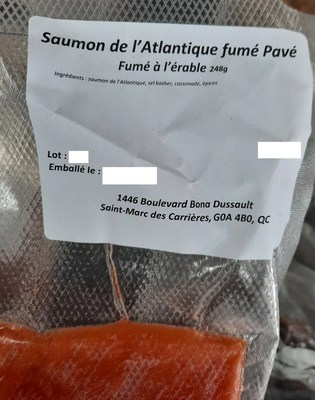
QUEBEC CITY, Jan. 25, 2022 /CNW Telbec/ – The Ministère de l’Agriculture, des Pêcheries et de l’Alimentation (MAPAQ), in collaboration with the company À each his beer, located at 1446, boulevard Bona-Dussault, in Saint-Marc- des-Carrières, warns the population not to consume the product indicated in the table below if it has not been kept in the freezer at all times since the time of purchase. Indeed, the product label does not include the information necessary for its safe consumption, namely the statement “Keep frozen until use” which is required.

Product name

Format

Affected lot

“MAPLE-SMOKED PAVÉ-SMOKED ATLANTIC SALMON”

248g

Units sold until
January 25, 2022

The product that is the subject of this warning was offered for sale until January 25, 2022 inclusively, and only at the establishment designated above. It was packaged in a clear plastic bag and sold frozen. The product label includes, in addition to its name and list of ingredients, the address of the establishment.

The operator is voluntarily recalling the product. It has agreed with MAPAQ to issue this warning as a precautionary measure. Persons who have this product in their possession and have not kept it in the freezer at all times since the time of purchase are advised not to consume it. They must either return it to the establishment where they bought it or throw it away. Even if the affected product shows no signs of tampering or suspicious odors, consuming it may pose a health risk. It should be noted that no case of illness associated with the consumption of this food has been reported to MAPAQ to date.

Atlantic Salmon Pavé (CNW Group/Ministry of Agriculture, Fisheries and Food) 

Hazard Classification:  Class 1
Reference Number:  4477

Source:
Media relations
Direction des communications
Ministry of Agriculture, Fisheries
and Food
Tel. : 418 380-2100, extension 3512
www.mapaq.gouv.qc.ca

QuoteView original content to download multimedia: http://www.newswire.ca/en/releases/archive/January2022/25/c7508.html

Hong Kong – CFS urges public not to consume one kind of butter product from Australia with potential microbial contamination

CFS

Issue Date 25.1.2022
Source of Information The Department of Agriculture, Water and the Environment of Australia
Food Product One kind of butter product imported from Australia
Product Name and Description Product name: MG Brand Butter, Unsalted 25KG
Brand: MG
Place of origin: Australia
Net weight: 25 kilograms
Date of manufacture: April 21, 2021
Shelf life: Two years
Importer: Foodgears Industrial International Ltd
Reason For Issuing Alert
  • The Centre for Food Safety (CFS) received a notification from the Department of Agriculture, Water and the Environment of Australia that the above-mentioned product might have been microbiologically contaminated and is being recalled.
Action Taken by the Centre for Food Safety
  • l   According to the information provided by the Department of Agriculture, Water and the Environment of Australia, the affected batch of the product has been imported into Hong Kong. Upon learning of the incident, the CFS immediately contacted the local importer concerned for follow-up.
  • A preliminary investigation found that the local importer, Foodgears Industrial International Ltd, had imported the affected batch of the product into Hong Kong. The importer concerned has initiated a recall according to the CFS’ instructions.
Advice to the Trade
  • Stop using or selling the product concerned immediately if they possess it.
Advice to Consumers
  • Not to consume the affected batch of the product if they have bought any.
Further Information The CFS press release

Enquiries about the recall can be made to the hotline at 3999 5706 during office hours.

Centre for Food Safety
Food and Environmental Hygiene Department
2022-1-25