Strawberries are an important fruit in Belgium both in production and consumption, but little
information is available about the presence of Salmonella and STEC in these berries, the risk
factor in agricultural production and possible specific mitigation options. In 2012, a survey
was undertaken of three soil and three soilless cultivation systems in Belgium.
No Salmonella spp. was isolated. No STEC was detected in the strawberry samples (0 out of 72), but STEC
was detected by qPCR in 11 out of 78 irrigation water and 2 out of 24 substrate samples.
Culture isolates were obtained for 2 out of 11 qPCR positive irrigation water samples and 2
out of 2 substrate samples. Multivariable logistic regression analysis revealed elevated generic E. coli
numbers (odds ratio (OR) for 1 log increase being 4.6) as the most important risk factor for STEC, together with the berry picking season (elevated risk in summer). Presence of generic E. coli in the irrigation water (≥ 1 cfu per 100 ml) was mainly influenced by the type of irrigation water (collected rainfall water stored in ponds was more often contaminated than ground water pumped from boreholes (OR = 5.8)) and the lack of prior treatment (untreated water versus water subjected to sand filtration prior to use (OR = 19.2)). The follow-up study in 2013 at one of the producers indicated cattle as the most likely source of
After studies with powdered infant formula indicated that the enhancement of thermal inactivation of Cronobacter sakazakii by butyl para-hydroxybenzoate (BPB) was blocked by the presence of high protein levels, we hypothesized that BPB would retain its synergistic activity in foods with a limited protein content and lipid content. This hypothesis was explored by examining the ability of BPB to enhance the thermal inactivation of Cronobacter sakazakii 607 at 58 °C in commercial apple juice, including examining the effects of pH and the possible synergistic effects with malic acid. Apple juice was adjusted to designated pH values between 3.2 and 9.0, supplemented with selected levels of BPB (≤125 ppm), inoculated with early stationary phase C. sakazakii 607, and thermally treated (58 °C) for 15 min using submerged coil apparatus. The same methods were used to study the enhancement of thermal inactivation by malic acid. Samples were plated on Tryptic Soy Agar for recovery and enumeration. Survival curves were plotted, and D-values were calculated and compared using ANOVA. Our results indicated BPB significantly enhanced thermal inactivation in a concentration dependent manner, with D-values of a few seconds at the original pH (3.8). The enhancement of thermal inactivation was pH dependent over the range of pH 3.4 to 9.0. Malic acid enhanced thermal inactivation as the pH was decreased from 3.8 to 3.2. The study supports the hypothesis that BPB can enhance the thermal inactivation of C. sakazakii in low protein foods.
Retailers are requested to remove the implicated batches from sale and to display a point-of-sale recall notice in stores where the affected batches were sold.
Consumers:
Consumers are advised not to feed the implicated batches to infants.
Asda is taking the precautionary action of recalling Asda White Lasagne Sauce because of a possible microbiological contamination risk due to a production fault. The issue only affects products sold at Asda stores in the North West of England, North Midlands and North Wales.
Product details
Asda White Lasagne Sauce
Pack size
480g
Best before
03 February 2024
Risk statement
This product may contain microbiological contamination and could be unsafe to eat.
Action taken by the company
Asda is recalling the above product from affected stores only. Point of sale notices will only be displayed in affected Asda stores. These notices explain to customers why the product is being recalled and tells them what to do if they have bought the product. Please see the point of sale notice for a full list of affected stores.
If you have bought the above product do not eat it. Instead, return it to the Asda store from where it was bought for a full refund, no receipt required. If you would like any further information, please contact Asda Customer Relations on 0800 952 0101.
Due to the potential for microbial contamination, including Cronobacter sakazakii and Clostridium botulinum
Company Name:
Lyons Magnus LLC
Brand Name:
Lyons, Barista, Ready Care, various
Product Description:
Nutritional and beverage products
Company Announcement
FRESNO, Calif. – August 10, 2022 – Lyons Magnus LLC (“Lyons Magnus” or the “Company”) today announced that following continued collaboration and consultation with the U.S. Food and Drug Administration (“FDA”) and in furtherance of its longstanding commitment to food safety, the Company is expanding its July 28, 2022, voluntary recall of nutritional and beverage products to include additional brands and code dates. A complete list of the recalled products is in the table below. Consumers also are advised not to consume any products that are beyond their Best By Date.
This recall is being conducted due to the potential for microbial contamination, including from the organisms Cronobacter sakazakii and Clostridium botulinum. Although Clostridium botulinum has not been found in products, consumers are warned not to consume any of the recalled products even if they do not look or smell spoiled. The list of recalled products does not include products intended for infants (i.e., under the age of one).
While infection related to Cronobacter sakazakii is rare, the common symptoms of illness could include fever, vomiting and urinary tract infection. However, vulnerable and immunocompromised populations may be more susceptible to infection.
Clostridium botulinum may cause a severe form of food poisoning. It can begin from six hours to two weeks after eating food that contains the toxin. Symptoms may include double vision, blurred vision, drooping eyelids, slurred speech, difficulty swallowing, and muscle weakness. Botulism poisoning can cause respiratory paralysis, resulting in death, unless assistance with breathing (mechanical ventilation) is provided.
Root cause analysis indicates that the products did not meet commercial sterility specifications.
The products are packed in various formats under many different brand names, which are listed in the table below. To identify the Lot Code and Best By Date refer to the top of the carton for individual cartons or the side of the case for multi-carton cases. Some products were distributed nationally, while some products were limited in scope. Products included in the recall were distributed starting in April 2021.
Anyone who has a recalled product in his or her possession should dispose of it immediately or return it to the place of purchase for a refund. Consumers in all time zones with questions may contact the Lyons Recall Support Center 24/7 at 1-800-627-0557, or visit its website at www.lyonsmagnus.com. This recall is being conducted in cooperation with the FDA.
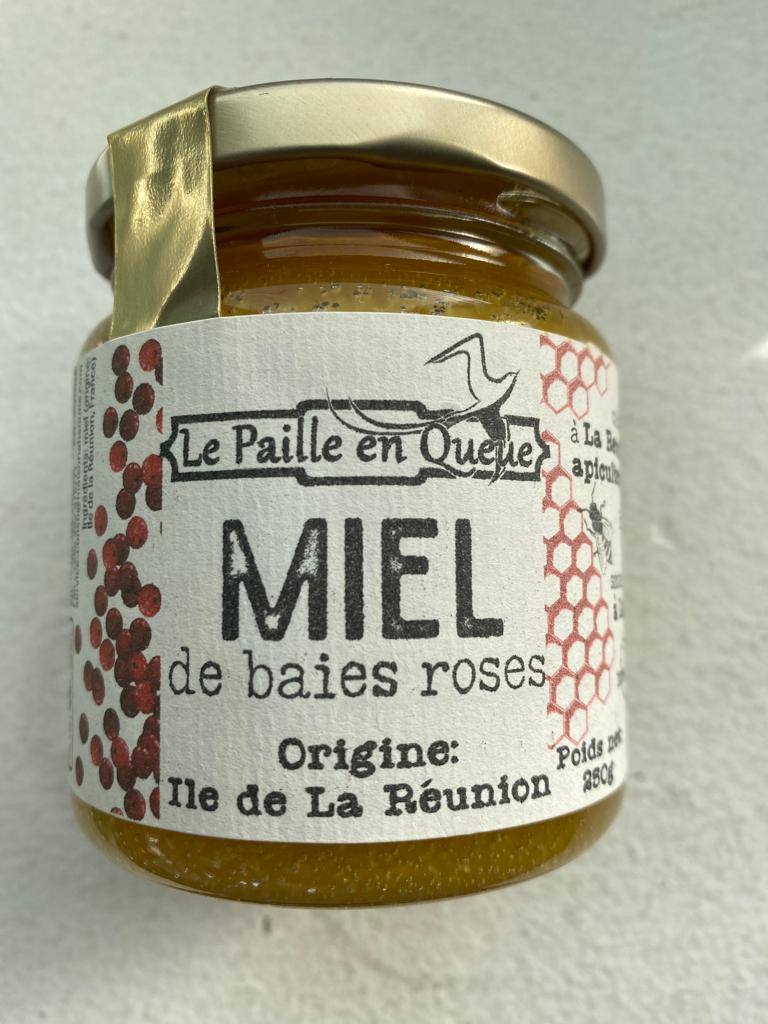
Identification information of the recalled product
Product category Feed
Product subcategory honey and royal jelly
Product brand name THE STRAW IN TAIL
Model names or references PINK BERRY HONEY
Identification of products
Batch
Date
LOT NO. 21258
Use-by date 09/01/2024
Packaging GLASS JAR 250G
Marketing start/end date From 26/11/2021 to 11/07/2022
Storage temperature Product to be stored at room temperature
Geographic area of sale Departments: REUNION (974)
Distributors CARREFOUR CANABADY CARREFOUR GRAND LARGE U CHATOIRE LECLERC PORTAL CARREFOUR ST BENOIT CARREFOUR STE CLOTILDE LECLERC LA RAVINE AUCHAN U 14th Meeting Market St-André RUN MARKET ST ANDRE
Practical information regarding the recall
Reason for recall Presence of germ
Risks incurred by the consumer Other biological contaminants
Additional description of the riskPresence of germ
For the Cyclospora outbreak in an unidentified vehicle (ref# 1084), the number of cases has increased from 51 to 60 and sample collection and analysis has been initiated.
A new outbreak has been added to the table: Cyclospora in a not yet identified food (ref #1080). Traceback has been initiated.
For the Salmonella Paratyphi B var. L(+) tartrate+ outbreak (ref# 1072) in a not identified food, FDA’s investigation status is now closed.
For the Listeria monocytogenes outbreak (ref# 1070) in a not identified food, the outbreak status has ended and FDA’s investigation status is now closed.
For the Salmonella Braenderup outbreak (ref #1075), the number of cases has increased from 70 to 74.
Lyons Magnus LLC (“Lyons Magnus” or the “Company”) today announced that it is voluntarily recalling nutritional and beverage products due to the potential for microbial contamination, including from the organism Cronobacter sakazakii. The list of recalled products does not include products intended for infants (i.e. under the age of one). While infection related to Cronobacter sakazakii is rare, the common symptoms of illness could include fever, vomiting and urinary tract infection. However, vulnerable and immunocompromised populations may be more susceptible to infection. To date, no illnesses or complaints related to these products have been reported. The recalled products should not be consumed.
Preliminary root cause analysis shows that the products did not meet commercial sterility specifications.
The products are packed in various formats under many different brand names, which are listed in the table below. To identify the Lot Code and Best By Date refer to the top of the carton for individual cartons or the side of the case for multi-carton cases. The 53 products were distributed nationally, while some products were limited in scope.
Anyone who has a recalled product in his or her possession should dispose of it immediately or return it to the place of purchase for a refund. Consumers in all time zones with questions may contact the Lyons Recall Support Center 24/7 at 1-800-627-0557, or visit its website at www.lyonsmagnus.com. This recall is being conducted in cooperation with the U.S. Food and Drug Administration.





 FoodWorld