Category Archives: Biotoxin

New Zealand – Shellfish biotoxin alert – Taranaki and Waikato region

MPI

The Ministry for Primary Industries (MPI) today issued a public health warning against collecting shellfish on the west coast of the North Island in the Taranaki and Waikato region. The warning extends from Raglan, including Raglan Harbour, southward to Urenui. The alert also includes Aotea and Kawhia Harbours.

Routine tests on shellfish samples taken from sites in this region have shown levels of Paralytic Shellfish Poisoning (PSP) toxins above the safe limit of 0.8 mg/kg set by MPI. Anyone eating shellfish from this area is potentially at risk of illness.

Warnings remain in place for the Pelorus Sounds and Akaroa Harbour.

Mussels, oysters, tuatua, pipi, toheroa, cockles, scallops, catseyes, kina (sea urchin) and all other bivalve shellfish should not be eaten.

Note: cooking shellfish does not remove the toxin.

Pāua, crab and crayfish may still be eaten if the gut has been completely removed prior to cooking, as toxins accumulate in the gut. If the gut is not removed its contents could contaminate the meat during the cooking process.

Symptoms typically appear between 10 minutes and 3 hours after ingestion and may include:

  • numbness and a tingling (prickly feeling) around the mouth, face, and extremities (hands and feet)
  • difficulty swallowing or breathing
  • dizziness
  • headache
  • nausea
  • vomiting
  • diarrhoea
  • paralysis and respiratory failure and in severe cases, death.

If anyone becomes ill after eating shellfish from an area where a public health warning has been issued, phone Healthline for advice on 0800 61 11 16, or seek medical attention immediately. You are also advised to contact your nearest public health unit and keep any leftover shellfish in case it can be tested.

Monitoring of toxin levels will continue and any changes will be communicated accordingly. Commercially harvested shellfish – sold in shops and supermarkets, or exported – is subject to strict water and flesh monitoring programmes by MPI to ensure they are safe to eat.

New Zealand – Do not eat or collect shellfish from Akaroa Harbour – DSP

MPI

The Ministry for Primary Industries (MPI) today issued a public health warning advising the public not to collect or consume shellfish harvested for the entire Akaroa Harbour in Canterbury.

Routine tests on shellfish samples taken from Akaroa Harbour have shown levels of diarrhetic shellfish toxins above the safe limit of 0.16 mg/kg set by MPI.  Anyone eating shellfish from this area is potentially at risk of illness.

Ongoing testing will continue and we’ll let you know if the situation changes.

Mussels, oysters, tuatua, pipi, toheroa, cockles, scallops, catseyes, kina (sea urchin) and all other bivalve shellfish should not be eaten.

Note, cooking shellfish does not remove the toxin.

Pāua, crab and crayfish may still be eaten if the gut has been completely removed prior to cooking, as toxins accumulate in the gut. If the gut is not removed its contents could contaminate the meat during the cooking process.

Symptoms typically appear within half an hour of ingestion and last for about 24 hours. Symptoms may include:

  • diarrhoea
  • vomiting
  • nausea
  • abdominal cramps

If anyone becomes ill after eating shellfish from an area where a public health warning has been issued phone Healthline for advice on 0800 61 11 16, or seek medical attention immediately. You are also advised to contact your nearest public health unit and keep any leftover shellfish in case it can be tested.

Note, commercially harvested shellfish – sold in shops and supermarkets, or exported – is subject to strict water and flesh monitoring programmes by MPI to ensure they are safe to eat.

Find out more

USA – FDA Investigating Multistate Outbreak of E. coli O157:H7 Infections Linked to Romaine Lettuce from Yuma Growing Region

FDA Eurofins Food Testing UK

Update

The FDA, along with CDC and state partners, initiated an environmental assessment in the Yuma growing region to further investigate potential sources of contamination linked to this outbreak.

Samples have been collected from environmental sources in the region, including water, soil, and cow manure. Evaluation of these samples is ongoing.

To date, CDC analysis of samples taken from canal water in the region has identified the presence of E. coli 0157:H7 with the same genetic finger print as the outbreak strain. We have identified additional strains of Shiga-toxin producing E. coli in water and soil samples, but at this time, the samples from the canal water are the only matches to the outbreak strain.

Analysis of additional samples is still ongoing, and any new matches to the outbreak strain will be communicated publicly and with industry in the region.

Identification of the outbreak strain in the environment should prove valuable in our analysis of potential routes of contamination, and we are continuing our investigation in an effort to learn more about how the outbreak strain could have entered the water and ways that this water could have come into contact with and contaminated romaine lettuce in the region.

Research – A new toxin discovered in Cholera bacteria

Science Daily 


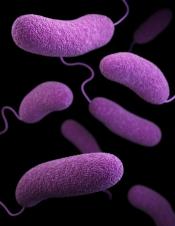
The bacterium Vibrio cholerae was discovered more than 150 years ago but remains as one of the main causes of bacterial infectious disease globally, especially in low-income nations where it occurs endemic, and outbreaks of cholera disease can lead to major epidemics.

In addition to causing cholera disease characterized by very severe watery diarrhea, different variants of V. cholerae can cause, for example, wound infections and infections in the ear canal (ear inflammation). If the infection is reaching the bloodstream, it can lead to blood poisoning. Such variants of Vibrio bacteria are common in brackish water, but can be found both in freshwater and saltwater and are also present in such environments in our country.

Scientists from Umeå University have now discovered and characterised the structure and function of a so far unknown Vibrio toxin. A team led by Professor Sun Nyunt Wai at Department of Molecular Biology and MIMS used the worm Caenorhabditis elegans as a predatory host for the bacteria and identified by molecular genetic analysis the V. cholerae genes required for production and release of the new protein toxin, now called MakA.

“In addition to the toxicity of MakA demonstrated with C. elegans, our studies revealed that upon infection of Zebrafish the toxin caused damage in particular to the intestinal system,” explains Sun Nyunt Wai.

Sun Nyunt Wai lrSun Nyunt Wai and her colleagues were also curious about the details of the bacterial release mechanism of the newly discovered toxin from V. cholerae.

Research- Occurrence of Toxigenic Fungi and Mycotoxins on Root Herbs from Chinese Markets

Journal of Food Protection Aspergillus

Herbs derived from roots, leaves, flowers, or fruits of plants are unavoidably contaminated with fungi and mycotoxins during growth, harvest, and storage, thereby posing a health threat to humans. Especially, root herbs (RHs) are more easily contaminated with fungi and mycotoxins because the roots are in direct contact with the soil. Here, we investigated the occurrence of fungi, aflatoxins (AFs), and ochratoxin A (OTA) in eight RHs that are used as medicines, beverages, dietary supplements, and functional foods in China and other countries. Morphological observation and MultiGeneBlast (β-tubulin and calmodulin) were used to identify the potentially toxigenic fungi. Of the 48 samples tested, all were contaminated by fungi, and 1,844 isolates belonging to 25 genera were detected. The genera Aspergillus and Penicillium, which contain potentially toxigenic fungal species, represented a frequency of 10 and 25%, respectively. Thirty-three isolates of Aspergillus flavus, Aspergillus parasiticus, Aspergillus niger, and Penicillium polonicum were arbitrarily selected for analysis of their toxigenic potential. Five of 13 isolates of A. flavus and 1 isolate of A. parasiticus produced AFs, whereas OTA production was not detected for any of the isolates of A. niger and P. polonicum. The occurrence of AFs and OTA in the 48 samples of eight RHs was tested by ultraperformance liquid chromatography–tandem mass spectrometry; 37.50% of samples from six RHs were contaminated with AFs and 16.67% of samples from four RHs were contaminated with OTA. Seven (14.58%) and four (8.33%) samples of ginseng, polygala, and liquorice exceeded the permissible limits of aflatoxin B1 and AFs, respectively. Because ginseng, polygala, and liquorice are widely used as herbs, dietary supplements, and functional foods, the high frequency of AF contamination of these herbs indicated by our current study warrant attention to raise public awareness.

New Zealand – Updated – Shellfish biotoxin alert issued for parts of Bay of Islands

Map of Cape Wiwiki to Cape Brett shellfish warning.

MPI 

The Ministry for Primary Industries today issued a public health warning against collecting shellfish in the Bay of Islands, extending to the outer heads between Cape Wiwiki and Cape Brett.

Routine tests on shellfish samples taken from the Bay of Islands region have shown levels of Paralytic Shellfish Poisoning (PSP) toxins above the safe limit of 0.8 mg/kg set by MPI. Anyone eating shellfish from this area is potentially at risk of illness.

MPI also strongly advises the public against collecting shellfish in the Hawke’s Bay region due to concerning levels of toxins being detected in shellfish. A warning is also in place for the Kenepuru and Pelorus Sounds.

Mussels, oysters, tuatua, pipi, toheroa, cockles, scallops, cat’s eyes, kina (sea urchin) and all other bivalve shellfish should not be eaten.

Note, cooking shellfish does not remove the toxin.

Pāua, crab and crayfish may still be eaten if the gut has been completely removed prior to cooking, as toxins accumulate in the gut. If the gut is not removed its contents could contaminate the meat during the cooking process.

Symptoms typically appear between 10 minutes and 3 hours after ingestion and may include:

  • numbness and a tingling (prickly feeling) around the mouth, face, and extremities (hands and feet)
  • difficulty swallowing or breathing
  • dizziness
  • headache
  • nausea
  • vomiting
  • diarrhoea
  • paralysis and respiratory failure and in severe cases, death.

If anyone becomes ill after eating shellfish from an area where a public health warning has been issued, phone Healthline for advice on 0800 61 11 16, or seek medical attention immediately. You are also advised to contact your nearest public health unit and keep any leftover shellfish in case it can be tested.

Monitoring of toxin levels will continue and any changes will be communicated accordingly. Commercially harvested shellfish – sold in shops and supermarkets, or exported – is subject to strict water and flesh monitoring programmes by MPI to ensure they are safe to eat.

Find out more

Signs will be erected in the affected areas.