Category Archives: Bacterial Toxin

Research – Botulism breakthrough? Taming botulinum toxin to deliver therapeutics

Boston Childrens Hospital

kswfoodworld

CDC Image

While rare, botulism can cause paralysis and is potentially fatal. It is caused by nerve-damaging toxins produced by Clostridium botulinum — the most potent toxins known. These toxins often lurk in contaminated food (home canning being a major culprit). Infants can also develop botulism from ingesting C. botulinum spores in honey, soil, or dust; the bacterium then colonizes their intestines and produces the toxin.

Once paralysis develops, there is no way to reverse it, other than waiting for the toxins to wear off. People with serious cases may need to go on ventilators for weeks or months. But a new botulism treatment and delivery vehicle, described today in Science Translational Medicine, could change that.

“Currently, there are anti-toxins, but these only work before the toxins enter the motor neurons,” says Min Dong, PhD, a researcher in the Boston Children’s Hospital Department of Urology and corresponding author on the paper. “What we have developed is the first therapy that can eliminate toxins after they get inside neurons.”

If proven in humans, the approach would represent a breakthrough in treating botulism. In mice, the treatment successfully got inside neurons and reversed muscle paralysis within hours. It also enabled mice to withstand doses of botulinum toxin that would otherwise be lethal.

Research – Botulism breakthrough? Taming botulinum toxin to deliver therapeutics

Science Daily

kswfoodworld

While rare, botulism can cause paralysis and is potentially fatal. It is caused by nerve-damaging toxins produced by Clostridium botulinum — the most potent toxins known. These toxins are often found in contaminated food (home canning being a major culprit). Infants can also develop botulism from ingesting C. botulinum spores in honey, soil, or dust; the bacterium then colonizes their intestines and produces the toxin.

Once paralysis develops, there is no way to reverse it, other than waiting for the toxins to wear off. People with serious cases of botulism may need to be maintained on ventilators for weeks or months. But a new treatment approach and delivery vehicle, described today in Science Translational Medicine, could change that.

“There are anti-toxins, but these only work before the toxins enter the motor neurons,” says Min Dong, PhD, a researcher in Boston Children’s Hospital’s Department of Urology and corresponding author on the paper. “What we have developed is the first therapy that can eliminate toxins after they get inside neurons.”

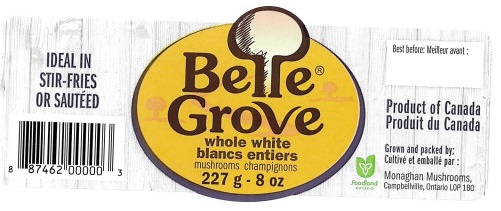
Canada – Food Recall Warning – Belle Grove brand Whole White Mushrooms recalled due to potential presence of dangerous bacteria – Clostridia botulinum

CFIA

Recall details

Ottawa, January 9, 2021 – Monaghan Mushrooms Ltd. is recalling Belle Grove brand Whole White Mushrooms from the marketplace because they may permit the growth of Clostridium botulinum. Consumers should not consume the recalled product described below.

Recalled product

Brand Product Size UPC Codes
Belle Grove Whole White Mushrooms 227 g 8 87462 00000 3 Best Before 15 Jan

What you should do

If you think you became sick from consuming a recalled product, call your doctor.

Check to see if you have the recalled product in your home. Recalled products should be thrown out or returned to the store where they were purchased.

Food contaminated with Clostridium botulinum toxin may not look or smell spoiled but can still make you sick.

Symptoms in adults can include facial paralysis or loss of facial expression, unreactive or fixed pupils, difficulty swallowing, drooping eyelids, blurred or double vision, difficulty speaking, including slurred speech, and a change in sound of voice, including hoarseness.

Symptoms of foodborne botulism in children can include difficulty swallowing, slurred speech, generalized weakness and paralysis. In all cases, botulism does not cause a fever. In severe cases of illness, people may die.

Background

This recall was triggered by the company. The Canadian Food Inspection Agency (CFIA) is conducting a food safety investigation, which may lead to the recall of other products. If other high-risk products are recalled, the CFIA will notify the public through updated Food Recall Warnings.

The CFIA is verifying that industry is removing the recalled product from the marketplace.

Illnesses

There have been no reported illnesses associated with the consumption of this product.

Product photos

Printer ready version of photos

  • Belle Grove - Whole White Mushrooms

Public enquiries and media

Public enquiries
Toll-free: 1-800-442-2342 (Canada and U.S.)
Telephone: 1-613-773-2342 (local or international)
Email: cfia.enquiries-demandederenseignements.acia@canada.ca
Media relations
Telephone: 613-773-6600
Email: cfia.media.acia@canada.ca

New Zealand – Clean, cook and chill to decrease risk of food poisoning

RNZ

As the festive season kicks off, people are being reminded of the increased risk of food poisoning at home.

The Ministry for Primary Industries has launched a food safety campaign reminding everyone to “Clean Cook, and Chill”.

Food Safety Minister Dr Ayesha Verrall said with rising summer temperatures, the risk of food poisoning increased.

“Food poisoning is a significant issue in New Zealand with an estimated 100,000 people getting sick from unsafe food handling practices at home.

“That’s why the Ministry for Primary Industries is launching an awareness campaign, reminding consumers to follow the 3 C’s: clean, cook and chill, when handling, cooking and storing raw meats such as poultry, to avoid getting sick and paying the price,” she said.

MPI has also teamed up with MasterChef winning sisters Karena and Kasey Bird to offer additional advice and helpful cooking tips on social media this summer.

Verrall said a recent study found that most New Zealanders don’t believe that food poisoning can be deadly or create long-term health consequences.

She said while for many, food poisoning will just mean a few days of an upset stomach, for others it can be more serious.

“Some people can and do experience more severe forms of foodborne illnesses as a result of picking up harmful bacteria and viruses like Campylobacter, Norovirus, Salmonella, Listeria, Escherichia coli (E. coli) and Bacillus cereus.

“This is especially true for young tamariki, our elderly community, pregnant mothers and Kiwis who suffer from other health issues,” she said.

USA – Cozy Vale Raw Milk again linked to E. coli

Food Poison Journal

Cozy Vale Creamery of Tenino, WA, is advising consumers to throw out or return any of the dairy’s retail raw milk and cream products with the best by dates of Dec. 12-14 through 12-23 because state tests showed E. coli contamination.

The unpasteurized dairy products were bottled in a gallon, half-gallon, quart, and pint containers, were sold to customers, including retail stores, in Western Washington. The dairy had pathogen problems at least twice in 2017.

Germany – German authorities investigate E. coli infections involving daycare centers

Food Safety News

More than 20 E. coli infections are being investigated in a German municipality.

Four day care centers in the Lützow-Lübstorf district are affected by the outbreak of E. coli O26. Lützow-Lübstorf is in Nordwestmecklenburg, in Mecklenburg-Vorpommern, Germany.

Enterohaemorrhagic E. coli (EHEC) are often referred to as Shiga toxin-producing E. coli (STEC).

Authorities initially reported 18 patients but that had risen to 25 by the end of this past week. They warned further testing is ongoing so more cases are expected. Those sick include children and their relatives as well as a couple of day care center employees.

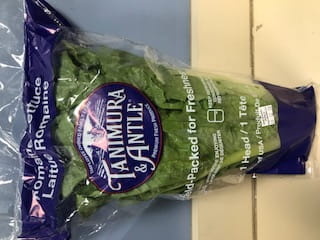
USA – Consumer Advisory: Romaine lettuce grown by Tanimura & Antle tests positive for E. coli

MDARD

Romaine lettuce

LANSING, Mich. – The Michigan Department of Agriculture and Rural Development (MDARD) is advising consumers not to eat Tanimura & Antle brand romaine lettuce packed as single heads due to food safety concerns.

A routine sample of the lettuce collected at a Walmart in Comstock Park, MI, and tested by MDARD’s Laboratory Division confirmed positive for E. coli 0157:H7. Further analysis conducted by the Michigan Department of Health and Human Services laboratory determined that the strain of E. coli recovered from the product sample is highly related genetically to E. coli causing two recent illnesses in Michigan.

The lettuce was sold in a zip-top clear plastic bag with a blue label and white lettering.  It has the UPC number 0-27918-20314-9 and a white sticker indicating it was packed in Salinas, California on October 15, 2020.

Consumers should discard this product or return it to the place of purchase. If you think you or a family member have become ill from consuming any of these products, please seek immediate medical attention.

E. coli can cause serious or life-threatening illness in some individuals. Symptoms of Shiga toxin-producing E. coli (STEC) infection vary for each person, but often include severe stomach cramps, diarrhea (often bloody), and vomiting. Some people may have a fever, which usually is not very high (less than 101˚F/38.5˚C). Most people get better within 5 to 7 days. Some infections are very mild, but others are severe or even life-threatening. People usually get sick from Shiga toxin-producing E. coli (STEC) 2 to 8 days (average of 3 to 4 days) after ingesting the bacteria. Some people with a STEC infection may get a type of kidney failure called hemolytic uremic syndrome (HUS). E. coli infection is usually diagnosed by testing a stool sample.

Denmark – Risk of vero-toxin-producing E. coli in French white mold cheese

DVFA

Lidl Danmark K / S recalls Milbona French white mold cheese due to risk of vero-toxin-forming E. coli in the product

Recalled Foods , Published: October 29, 2020

What food:
Milbona French white mold cheese 
Shelf life: 31.10.2020 
Net content: approx. 100 g
Sold in:
Lidl Denmark’s stores across the country.
Producer:
Jermi Käsewerk GmbH, Ritter-Heinrich-Straße 2, 88471 Laupheim, Germany
Company recalling:
Lidl Danmark K / S
Cause:
Vero-toxin-producing E. coli has been detected in the product
Risk:
Infection with E.coli can cause acute stomach infection with diarrhea, severe abdominal pain and vomiting
Advice for consumers:
The Danish Veterinary and Food Administration advises consumers to deliver the product back to the store where it was purchased or to discard it.

Research – The growth characteristics of Bacillus cereus in sake and during its manufacture.

Journal of Food Protection

Sake (Japanese rice wine) has been recognized as being low-risk in terms of its microbiological safety. However, a confirmation of the food safety aspects of sake based on scientific evidence is important for establishing consumer confidence, in part because consumer concerns regarding food safety have increased. The presence of Bacillus cereus spores in refined rice wine has been reported, and in light of consumers’ growing concern over food safety, the establishment of food and beverage safety is important for consumers’ reassurance. Herein, to confirm the microbiological safety of sake, we investigated the content and growth of B. cereus. We conducted a spore addition test to determine whether B. cereus spores grow during sake production, and we observed no growth or germination of B. cereus spores during the manufacturing process. We also observed that processes such as solid-liquid separation and filtration help remove the risk posed by B. cereus. We then conducted a survey to assess the density of B. cereus in various commercial sake products. We analyzed 162 samples of commercial sake and observed that 11 of the products had ≥1 CFU of living cells in 1 mL of sake (detection rate: 6.8%). There was no product in which ≥100 CFU/mL-sake of living cells was detected. Our findings confirmed that the density of these bacteria in sake is lower than that in other foods, and the probability of infection is very low. The emetic toxin produced by B. cereus was not detected in any of the sake samples. This is the first study based on experimental data demonstrating that B. cereus is not able to grow in sake or during the sake manufacturing process. We thus conclude that the safety risk of B. cereus in sake is negligible. Our findings indicate that Bacillus cereus is not a significant hazard in the sake brewing process, and they will contribute to the food hygiene management based on scientific evidence in sake breweries.

Research – Recovery Rate of Cells of the Seven Regulated Serogroups of Shiga Toxin-Producing Escherichia coli from Raw Veal Cutlets, Ground Veal, and Ground Beef from Retail Stores in the Mid-Atlantic Region of the United States

Journal of Food Protection

A total of 482 veal cutlet, 555 ground veal, and 540 ground beef samples were purchased from retail establishments in the Mid-Atlantic region of the U.S. over a non-contiguous, two-year period between 2014 and 2017. Samples (325 g each) were individually enriched and screened via real-time PCR for all seven regulated serogroups of Shiga toxin-producing Escherichia coli (STEC). Presumptive STEC positive samples were subjected to serogroup-specific immunomagnetic separation and plated onto selective media. Up to five isolates typical for STEC from each sample were analyzed via multiplex PCR for both the virulence genes (i.e., eae , stx 1 and/or stx 2 , and ehxA ) and serogroup-specific gene(s) for the seven regulated STEC serogroups. The recovery rates of non-O157 STEC from veal cutlets (3.94%, 19 of 482 samples) and ground veal (7.03%, 39 of 555 samples) were significantly higher (P < 0.05) than that from ground beef (0.93%, 5 of 540 samples). In contrast, only a single isolate of STEC O157:H7 was recovered; this isolate originated from one (0.18%) of 555 samples of ground veal. Recovery rates for STEC were not associated with state, season, packaging type, or store type (P > 0.05), but were associated with brand and fat content (P < 0.05). Pulsed-field subtyping of the 270 viable/confirmed STEC isolates from the 64 total samples testing positive revealed 78 pulsotypes (50 to 80% similarity) belonging to 39 pulsogroups, with ≥90% similarity among pulsotypes within pulsogroups. Also, multiple isolates from the same sample displayed an indistinguishable pulsotype for 43 of 64 (67.7%) samples testing positive.  These findings support related data from regulatory sampling exercises over the past decade and confirm that recovery rates for the regulated STEC serogroups are appreciably higher for raw veal compared to raw beef samples as was also observed herein for meat purchased at food retailers in the Mid-Atlantic region of the U.S.