Category Archives: Aspergillus

Research – Aspergillus flavus and Aflatoxins

ACSA

Israel -Notice to consumers about the removal from the shelves of the products “Ground Nutmeg”, “Mixed Seasoning Mix”, “Rice Seasoning Mix”, “White Rice Seasoning Mix” – Aflatoxins

Gov IL

Recall Notice

Due to an inspection by the food service at the Ministry of Health, higher than permitted levels of aflatoxins (mold toxins) were found in the product “Ground Nutmeg”

Research – Food Safety Aspects of Breeding Maize to Multi-Resistance against the Major (Fusarium graminearum, F. verticillioides, Aspergillus flavus) and Minor Toxigenic Fungi (Fusarium spp.) as Well as to Toxin Accumulation, Trends, and Solutions—A Review

MDPI

Abstract

Maize is the crop which is most commonly exposed to toxigenic fungi that produce many toxins that are harmful to humans and animals alike. Preharvest grain yield loss, preharvest toxin contamination (at harvest), and storage loss are estimated to be between 220 and 265 million metric tons. In the past ten years, the preharvest mycotoxin damage was stable or increased mainly in aflatoxin and fumonisins. The presence of multiple toxins is characteristic. The few breeding programs concentrate on one of the three main toxigenic fungi. About 90% of the experiments except AFB1 rarely test toxin contamination. As disease resistance and resistance to toxin contamination often differ in regard to F. graminearumF. verticillioides, and A. flavus and their toxins, it is not possible to make a food safety evaluation according to symptom severity alone. The inheritance of the resistance is polygenic, often mixed with epistatic and additive effects, but only a minor part of their phenotypic variation can be explained. All tests are made by a single inoculum (pure isolate or mixture). Genotype ranking differs between isolates and according to aggressiveness level; therefore, the reliability of such resistance data is often problematic. Silk channel inoculation often causes lower ear rot severity than we find in kernel resistance tests. These explain the slow progress and raise skepticism towards resistance breeding. On the other hand, during genetic research, several effective putative resistance genes were identified, and some overlapped with known QTLs. QTLs were identified as securing specific or general resistance to different toxicogenic species. Hybrids were identified with good disease and toxin resistance to the three toxigenic species. Resistance and toxin differences were often tenfold or higher, allowing for the introduction of the resistance and resistance to toxin accumulation tests in the variety testing and the evaluation of the food safety risks of the hybrids within 2–3 years. Beyond this, resistance breeding programs and genetic investigations (QTL-analyses, GWAM tests, etc.) can be improved. All other research may use it with success, where artificial inoculation is necessary. The multi-toxin data reveal more toxins than we can treat now. Their control is not solved. As limits for nonregulated toxins can be introduced, or the existing regulations can be made to be stricter, the research should start. We should mention that a higher resistance to F. verticillioides and A. flavus can be very useful to balance the detrimental effect of hotter and dryer seasons on aflatoxin and fumonisin contamination. This is a new aspect to secure food and feed safety under otherwise damaging climatic conditions. The more resistant hybrids are to the three main agents, the more likely we are to reduce the toxin losses mentioned by about 50% or higher.

Research – Fungal and Toxin Contaminants in Cereal Grains and Flours: Systematic Review and Meta-Analysis

MDPI

Abstract

Cereal grains serve as the cornerstone of global nutrition, providing a significant portion of humanity’s caloric requirements. However, the presence of fungal genera, such FusariumPenicilliumAspergillus, and Alternaria, known for their mycotoxin-producing abilities, presents a significant threat to human health due to the adverse effects of these toxins. The primary objective of this study was to identify the predominant fungal contaminants in cereal grains utilized in breadmaking, as well as in flour and bread. Moreover, a systematic review, including meta-analysis, was conducted on the occurrence and levels of mycotoxins in wheat flour from the years 2013 to 2023. The genera most frequently reported were Fusarium, followed by PenicilliumAspergillus, and Alternaria. Among the published reports, the majority focused on the analysis of Deoxynivalenol (DON), which garnered twice as many reports compared to those focusing on Aflatoxins, Zearalenone, and Ochratoxin A. The concentration of these toxins, in most cases determined by HPLC-MS/MS or HPLC coupled with a fluorescence detector (FLD), was occasionally observed to exceed the maximum limits established by national and/or international authorities. The prevalence of mycotoxins in flour samples from the European Union (EU) and China, as well as in foods intended for infants, exhibited a significant reduction compared to other commercial flours assessed by a meta-analysis investigation.

Biocontrol training in Pakistan helps farmers prevent harmful aflatoxins in chillies

KRISHAK JAGAT

Pakistan is the world’s fourth-largest producer of chillies. The country accounts for around 4-5% of global chilli production. Sindh province is where 85% of Pakistan’s chillies are grown, making it one of the biggest chilli-producing regions worldwide. The province is well-known for the town of Kunri, home of the world-famous Dundicut red chillies.

But here, chilli growers face significant agricultural challenges that threaten their livelihoods. One of the biggest problems they face is aflatoxin contamination of their crops.

CABI has teamed up with several organizations to address the issue including:

Pakistan Agricultural Research Council (PARC)
United States Agency for International Development (USAID)
United States Department of Agriculture (USDA)
Rafhan Maize Products Co. Ltd
The organizations are working together on an important project in Pakistan on regulatory harmonization for maximum residue limits and biopesticides. What sets this project apart is its focus on addressing aflatoxins. Uniquely, it explores the use of a unique biocontrol technology at farm level to reduce aflatoxins in red chillies.

RASFF Alert – Mould/Mold- Aspergillus niger- Almonds

RASFF

Aspergillus niger mold in almonds from USA in Italy

RASFF

Aspergillus niger mold in almonds from USA in Italy

RASFF

Aspergillus niger mold in almonds from USA in Italy

Research – Cooked rice safety: A review of status and potential of radiative pasteurization

Wiley Online

Abstract

Microbial contamination in cooked rice-based foods poses a global concern due to rice’s widespread consumption. This review aims to consolidate information on harmful microorganisms associated with such foods from various countries and their adverse effects on consumers. Additionally, it explores the reported causes of microbial contamination in cooked rice-based dishes and proposes an intervention strategy for safer consumption. The findings highlight that ready-to-eat cooked rice-based foods may harbor unsafe levels of microorganisms like Bacillus cereus, Staphylococcus aureus, and Aspergillus spp. A recommended solution is the application of microwave pasteurization. This method involves cooking rice in pasteurized packaging, minimizing human contact, and effectively controlling harmful microorganisms. Microwave pasteurization emerges as a promising approach to ensure the safe consumption of cooked rice-based foods by reducing microbial contamination levels.

RASFF Alert- Animal Feed – Aflatoxin – White Sunflower Seeds

RASFF

Aflatoxin B1 in white sunflowers seeds from Egypt, via the Netherlands in France and Belgium

Research – Microbial Diversity of Anaerobic-Fermented Coffee and Potential for Inhibiting Ochratoxin-Produced Aspergillus niger

MDPI

Abstract

Coffee flavor considerably depends on the fermentation process, with contributing factors including fermentation temperature, oxygen concentration, and microbial diversity. Efficient controlling of the fermentation can improve the quality of coffee beverages. Therefore, several studies on coffee fermentation processes have been conducted in various regions. The objective of this study was to assess the microbial diversity of coffee beans undergoing anaerobic fermentation at various temperatures (4 °C or 37 °C) and fermentation durations (12 h or 36 h) using full-length 16S rRNA sequencing. This analysis aimed to evaluate the inhibitory effects of the fermented metabolites against ochratoxin-producing Aspergillus niger. From our results, Acetobacter was identified as the dominant microbial community at higher fermentation temperatures, whereas Leuconostoc and Gluconobacter were the dominant genera at lower temperatures. However, at lower temperatures, changes in microbial communities were relatively slow. This study expands our knowledge of the microbial diversity involved in the anaerobic fermentation of coffee beans in Taiwan. The findings of this study can be used in future research to cultivate microorganisms linked to the quality and improve the quality of coffee beverages through fermentation.

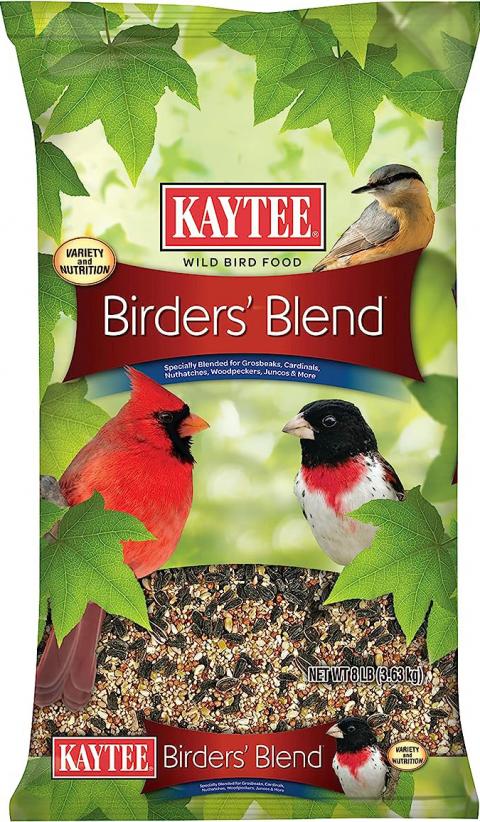
USA – Voluntary Recall of One Lot of Kaytee® Wild Bird Food Birders Blend, 8 Lb Bag, Due to Elevated Levels of Aflatoxin

FDA

Front Label, Kaytee Wild Bird Birders Blend

CHILTON, WI – March 18, 2023 – Kaytee Products Inc. is voluntarily recalling one lot of Kaytee® Wild Bird Food Birders’ Blend, 8 lb. bag, UPC 0 71859 02711 1, Lot Number PennPak1 102022 933, best buy date of 041224, due to potentially elevated levels of Aflatoxin above the acceptable limit. Aflatoxin is a naturally occurring by-product from the growth of Aspergillus flavus and can be harmful to wild birds if consumed in significant quantities. No illnesses have been reported in association with this product to date and no other Kaytee products are affected.

On March 13, 2023, the Georgia Department of Agriculture notified Kaytee Products Inc. that after conducting a routine laboratory analysis of the product, Lot PennPak1 102022 933 located on the bottom right corner of the front of the 8 lb. bags of Kaytee® Wild Bird Food Birder’s Blend was found to contain elevated levels of Aflatoxin.

The products affected by this announcement are:

Product

Size

UPC

Lot No.

Best by

Kaytee® Wild Bird Food Birders’ Blend 8 lb 0 71859 02711 1 PennPak1
102022
933
041224