The number of outbreaks in France went up in 2021 but was still below 2018 and 2019 levels.
Figures from Santé publique France show there were 1,309 outbreaks affecting 11,056 people in 2021. A total of 512 people went to hospitals and 16 died.
Reported outbreaks rose from 1,010 in 2020 when figures were strongly impacted by the COVID-19 pandemic, according to officials.
For 327 incidents in 2021, a pathogen could be microbiologically confirmed in food or in at least one sick person per outbreak. A pathogen was suspected without microbiological confirmation for 734 outbreaks.
16 deaths in outbreaks
The most frequently microbiologically confirmed pathogen was Salmonella 147 times. It was mostly Salmonella Enteritidis, followed by monophasic Salmonella Typhimurium but the type was not known in 92 incidents. Confirmed Salmonella outbreaks were responsible for 935 patients and 166 hospitalizations.
Campylobacter caused 52 outbreaks with 178 patients and Bacillus cereus had 46 with 665 patients. Nineteen norovirus outbreaks sickened 493 and 11 histamine outbreaks affected 35 people.
Seven outbreaks were due to E. coli, six to Yersinia enterocolitica, four to Shiga toxin-producing E. coli (STEC), and one each because of Listeria monocytogenes, Clostridium botulinum, and Shigella.
The pathogen was identified in patients for 208 outbreaks, of which 143 were confirmed with Salmonella. Identification of the agent took place in food samples for 89 epidemics with 67 confirmed as Bacillus cereus, Staphylococcus aureus and Clostridium perfringens.
The top suspected pathogens based on epidemiological and clinical information, but not microbiologically confirmed, were the toxins Bacillus cereus, Staphylococcus aureus and Clostridium perfringens. For these three pathogens, 3,787 patients and 169 hospital trips were recorded.
The Hawai‘i Department of Health (DOH) Food Safety Branch is issuing an alert regarding raw oysters exported from Dai One Food Co., Ltd., Republic of Korea (ROK), which may be potentially contaminated with norovirus.
DOH notified the United States Food and Drug Administration (FDA) of five illnesses from individuals who consumed raw oyster shooters at a restaurant in Hawai‘i on May 10, 2023. Trace-back information revealed the source for the implicated raw oysters was from a shipment by Dai One Food Co., Ltd., ROK. Samples collected were sent to the FDA to be tested for the presence of norovirus. The FDA released its findings on June 12, 2023, confirming that norovirus GII was detected in one of the two samples collected.
Dai One Food Co. Ltd. has voluntarily recalled Individual Quick Freezing (IQF) raw oysters, harvested between February 2 and 4, 2022 and April 13 and 14, 2022, that were shipped from the ROK and distributed to restaurants and retailers in Hawai‘i, Georgia and Minnesota. The lot numbers affected are: D021031, D021041, and D020481.
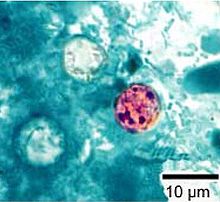
The Alabama Department of Public Health is investigating multiple reports of Cyclospora infection statewide.
The state’s health department has logged more infections from this parasite since April, and there are more than twice as many cases so far this year as were reported in Alabama in all of 2022.
Cyclosporiasis is a gastrointestinal illness caused by a microscopic parasite. People can get sick with cyclosporiasis by eating fresh produce contaminated with Cyclospora. However, Alabama officials have not yet determined a specific source of the parasites in this year’s outbreak.
CDC, public health and regulatory officials in several states, and the U.S. Food and Drug Administration (FDA) investigated a multistate outbreak of Listeria monocytogenes infections. Epidemiologic data showed that leafy greens were a likely source of the outbreak. However, there was not enough other data to identify a specific type or producer of leafy greens.
As of June 13, 2023, a total of 19 people infected with the outbreak strain of Listeria were reported from 16 states. Sick people’s samples were collected from July 3, 2018, to March 31, 2023.
Public health officials collected many different types of information from sick people, including their age, race, ethnicity, other demographics, and the foods they ate in the month before they got sick. This information provided clues to help investigators identify the source of the outbreak.
Sick people ranged in age from less than 1 to 96 years, with a median age of 72, and 63% were female. Among 19 people with race information available, 17 people were White, 1 was African American/Black, and 1 reported “Other” race. Among 19 people with ethnicity information available, two people were Hispanic. Eighteen people were hospitalized, and no deaths were reported.
Do not consume, use, sell, serve, or distribute recalled products
Affected products
Filter items
Showing 1 to 2 of 2 entries
Show
10
25
50
100
entries
Brand
Product
Size
UPC
Codes
Sélection du Pâtissier
Framboisier Cake
1.6 kg (14 pre-cut servings)
6 22267 00901 7
Lot:
3114
3128
WOW! Factor Desserts
Berry Burst Slab Cake
3.7 kg
7 78463 08537 6
Lot:
3101
3114
3121
3124
Issue
The affected products are being recalled from the marketplace due to possible norovirus contamination of the raspberries used in these products.
The recalled products have been sold nationally.
What you should do
If you think you became sick from consuming a recalled product, contact your healthcare provider
Check to see if you have recalled products
Do not consume, serve, use, sell, or distribute recalled products
Recalled products should be thrown out or returned to the location where they were purchased
People with norovirus illness usually develop symptoms of gastroenteritis within 24 to 48 hours, but symptoms can start as early as 12 hours after exposure. The illness often begins suddenly. Even after having the illness, you can still become re-infected by norovirus. The main symptoms of norovirus illness are diarrhea, vomiting (children usually experience more vomiting than adults), nausea and stomach cramps. Other symptoms may include low-grade fever, headache, chills, muscle aches and fatigue (a general sense of tiredness). Most people feel better within one or two days, with symptoms resolving on their own, and experience no long-term health effects. As with any illness causing diarrhea or vomiting, people who are ill should drink plenty of liquids to replace lost body fluids and prevent dehydration. In severe cases, patients may need to be hospitalized and given fluids intravenously.
Potential contamination with Listeria monocytogenes
Company Name:
Cricket Creek Farm, LLC
Brand Name:
Cricket Creek Farm
Product Description:
Sophelise, Tobasi, and Berkshire Bloom Cheeses
Company Announcement
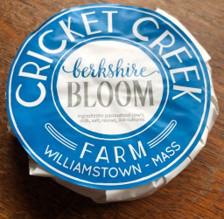
Cricket Creek Farm of Williamstown, MA is expanding their recall of Sophelise and Tobasi cheeses due to potential contamination with Listeria monocytogenes to include one lot of Berkshire Bloom and one lot of Feta cheese because pasteurization records did not illustrate the heating element reached required temperature.
Listeria monocytogenes is an organism which can cause serious and sometimes fatal infections in young children, frail or elderly people, and others with weakened immune systems. Although healthy individuals may suffer only short-term symptoms such as high fever, severe headache, stiffness, nausea, abdominal pain and diarrhea, Listeria infection can cause miscarriages and stillbirths among pregnant women.
Sophelise, Tobasi, Feta and Berkshire Bloom cheeses were distributed in Massachusetts and New York through Wild Oats, Williamstown, MA; Provisions Williamstown, Williamstown, MA; Wells Provisions, Charlemont, MA; McEnroe Organic Farm Market, Millerton, NY; New Lebanon Farmers Market; New Lebanon, NY, at restaurants, and at farmers markets.
Sophelise cheese product code: 087055 is a washed, pasteurized milk cheese with a soft rind and pinkish hue; the circular cheese measures 4 inches in diameter and roughly 1 inch tall. It is sold in semi-transparent packaging with a round blue label. Sophelise was distributed between March 29, 2023 and May 26, 2023.
Tobasi cheese with a product label of 315, 341, 048 is a washed raw-milk cheese with an orange rind and creamy interior. When sold retail by Cricket Creek Farm, it is wrapped in clear packaging with a gray and orange label. When sold at retail stores, it is sold in small rectangular cuts. When sold wholesale, the cheese is a square format roughly 8”x8” and 1.25 inches tall. These batches of Tobasi were distributed between March 26, 2023 and May 26, 2023.
Berkshire Bloom cheese with a product label of 076 is a camembert style, bloomy rind cheese. The circular cheese measures 4 inches in diameter and roughly 1.25 inches tall. It’s sold in a white cheese paper with blue label. This batch of cheese was distributed between April 20, 2023 and May 12, 2023.
Feta cheese with a product label of 101097 is pasteurized feta in 8 oz or 16 oz square tubs of brine with an orange label. Cheese is also sold to restaurants in vacuum sealed packaging. This batch of cheese was distributed between April 12 and April 25, 2023.
One hospitalization due to Listeria monocytogenes has been reported to date associated with the Sophelise cheese. Following this customer notification of illness, products purchased by this individual were tested by Biotrax Testing Laboratory and the current batch of Sophelise cheese was determined to be positive for Listeria monocytogenes. These three batches of Tobasi cheese were also determined to be positive for Listeria monocytogenes.
The production records for the Berkshire Bloom and Feta cheeses did not illustrate fully compliant temperatures for the heating element.
Consumers who have purchased Sophelise cheese, with product code 087055, Tobasi cheese 315, 341, 048, or after March 26; Berkshire Bloom cheese between April 20 and May 12; or Feta 101097 between April 12 and 25 should not consume or distribute the product, and they are urged to return any remaining product to the place of purchase for a full refund. Consumers with questions may contact the company 8:00am – 5:00pm EST Monday – Friday at info@cricketcreekfarm.comor 413-458-5888.
Self-service items for cold cuts: – Salami 90 g Best before between 27.06.23 – 29.06.23 – Cooked ham cold cuts Best before between 21.06.23 – 23.06.23 – Kaiserfleisch Best before between 22.06.23 – 24.06.23 – Barbarossa ham Best before between 22.06.23 – 24.06.23
Manufacturer (distributor):
Thomas Kurz eK Service around meat and sausage, 73605 Schorndorf Sales in BW
Reason for warning:
The bacterium Listeria monocytogenes was detected in the above products during a routine quality control.
Durability:
see attached customer information
Additional Information:
Reference is made to the company’s attached customer information.