Monthly Archives: February 2023

Research – Foodborne Pathogen Biofilms: Development, Detection, Control, and Antimicrobial Resistance

MDPI

Bacteria can grow either as planktonic cells or as communities within biofilms. The biofilm growth mode is the dominant lifestyle of most bacterial species and 40–80% of microorganisms are associated with biofilms [1]. Biofilm is a sessile community that is irreversibly attached to a substratum or interface or to other members of the community [2]. It is surrounded by extracellular polymeric substances (EPS) that include extracellular polysaccharides, extracellular DNA, lipids, proteins, and other elements [3]. Biofilm formation is a complex but well-regulated process that can be classified into five distinct stages [4]. In the first stage, planktonic bacteria attach to a surface. Salmonella species, Listeria monocytogenesCampylobacter jejuni, or Escherichia coli have specific structures on the surface of the bacteria, such as flagella, curli, fimbriae, and pili, which help the bacteria attach [5].
The second stage is the adhesion step, which includes an initial reversible adhesion resulting in loose adhesion and a subsequent irreversible adhesion resulting in more stable adhesion. The third stage is to secrete EPS and form microcolonies. This is followed by biofilm maturation, which produces large amounts of EPS to grow in size and build three-dimensional structures. The final stage is the stage in which the biofilm is dispersed, releasing the planktonic cells and initiating the formation of a new biofilm at another location.
Microbial cells living within biofilms are protected from various environmental stresses such as desiccation, osmotic changes, oxidative stress, metal toxicity, radiation, antibiotics, disinfectants, and the host immune system [6]. Biofilms are much less sensitive to antimicrobial agents than planktonic cells, and several mechanisms contribute to their resistance to antimicrobials [7]. The exopolysaccharide matrix prevents the entry of antimicrobial agents by reducing diffusion and acting as a primary barrier [8]. Most antimicrobial agents kill rapidly dividing cells more effectively, but slow growth of biofilms leads to resistance [9]. Changes in metabolic activity within biofilms, genetic changes of antimicrobial resistant determinants in target cells, extrusion of antimicrobial agents using efflux pumps, and the presence of persistent cells also contribute to antimicrobial resistance [10].

Research – Recent insights into green antimicrobial packaging towards food safety reinforcement: A review

Wiley Online

Abstract

Food packaging is widely used method of food preservation around the world. It is an element that enhances the quality and food product safety. The primary function of packaging is to protect food from contamination, undesirable chemical reactions and to provide physical protection. Food spoilage caused by food-borne pathogens and microbes is increasing tremendously posing an enormous threat. In the field of food packaging, new biodegradable and natural antimicrobial agents from plants and animals are gaining popularity. Recent foodborne outbreaks have prompted more creative and safe ways to initiate efficient packaging systems in food industries. However, as consumer demand for natural food ingredients has grown as a result of increasing safety and availability, natural substances are thought to be safer. Antimicrobial packaging that incorporates natural antimicrobials is thus a viable active packaging innovation. One possibility for increasing the safety and quality of foods while prolonging their shelf life is to employ natural antibacterial packaging. This article focuses on environmentally friendly bio-based polymers that can be utilized in food packaging to enhance mechanical strength, gas permeability, and water resistance, among other features. It also includes useful information about natural antimicrobial agents found in fruits and vegetables, as well as animal by-products, their properties, safety laws, and uses aimed at improving and increasing food quality and safety.

Research – The Anti-Listeria Activity of Pseudomonas fluorescens Isolated from the Horticultural Environment in New Zealand

MDPI

Abstract

Beneficial bacteria with antibacterial properties are attractive alternatives to chemical-based antibacterial or bactericidal agents. Our study sourced such bacteria from horticultural produce and environments to explore the mechanisms of their antimicrobial properties. Five strains of Pseudomonas fluorescens were studied that possessed antibacterial activity against the pathogen Listeria monocytogenes. The vegetative culture of these strains (Pseudomonas fluorescens-PFR46I06, Pseudomonas fluorescens-PFR46H06, Pseudomonas fluorescens-PFR46H07, Pseudomonas fluorescens-PFR46H08 and Pseudomonas fluorescens-PFR46H09) were tested against Listeria monocytogenes (n = 31), Listeria seeligeri (n = 1) and Listeria innocua (n = 1) isolated from seafood and horticultural sources and from clinical cases (n = 2) using solid media coculture and liquid media coculture. All Listeria strains were inhibited by all strains of P. fluorescens; however, P. fluorescens-PFR46H07, P. fluorescens-PFR46H08 and P. fluorescens-PFR46H09 on solid media showed good inhibition, with average zones of inhibition of 14.8 mm, 15.1 mm and 18.2 mm, respectively, and the other two strains and P. fluorescens-PFR46H09 had a significantly greater zone of inhibition than the others (p < 0.05). There was no inhibition observed in liquid media coculture or in P. fluorescens culture supernatants against Listeria spp. by any of the P. fluorescens strains. Therefore, we hypothesized that the structural apparatus that causes cell-to-cell contact may play a role in the ejection of ant-listeria molecules on solid media to inhibit Listeria isolates, and we investigated the structural protein differences using whole-cell lysate proteomics. We paid special attention to the type VI secretion system (TSS-T6SS) for the transfer of effector proteins or bacteriocins. We found significant differences in the peptide profiles and protein summaries between these isolates’ lysates, and PFR46H06 and PFR46H07 possessed the fewest secretion system structural proteins (12 and 11, respectively), while PFR46H08 and PFR46H09 had 18 each. P. fluorescens-PFR46H09, which showed the highest antimicrobial effect, had nine tss-T6SS structural proteins compared to only four in the other three strains.

India – Bengaluru: 21 school kids fall sick, parents suspect chicken served for lunch behind food poisoning

Times Now News

Bengaluru: In a suspected case food of poisoning, 21 students of Class 2 of an international school in the city fell sick. However, the exact reason is yet to be ascertained. Several kids suffered from vomiting and diarrhoea.
Officials of Indus International School on Sarjapur Road in Bengaluru said that the exact reason behind the students suddenly falling sick is yet to be identified.

Finland – Mold toxin found in pistachios – Ochratoxin A

Epressi

Lidl has announced that it is recalling Alesto brand shelled pistachios; Alesto roasted and peeled pistachio nut and Alesto roasted, peeled and salted pistachio nut . The weight of both products is 70 g/bag. The recall applies to products with a best before date of 12.08.2023, 13.10.2023 and 14.10.2023.

In control samples taken in another country, ochratoxin A has been found in the products above the permitted limit. According to Lidl, the amount found does not pose an acute health risk, but prolonged exposure to high concentrations of ochratoxin A may cause adverse effects.

On its website, Lidl asks its customers to return the products in question to a Lidl store, where the price of the product will be refunded.

Consumer contacts: Lidl’s customer service website, phone 09 424 52 111

The matter is handled at the Food Agency by special expert Mika Varjonen, tel. 050 38 68 416, firstname.surname@ruokavirasto.fi .

Pictures of the products

(Photo: Lidl)

pistachio nuts-1.jpg

Ireland – Recall of a batch of Iceland Creamy Garlic Chicken Breasts in Blankets due to the presence of Salmonella

FSAI

Summary
Category 1: For Action
Alert Notification: 2023.03
Product: Iceland Cook from Frozen Creamy Garlic Chicken Breasts in Blankets; pack size: 410g; approval number: PL 22040305 WE
Batch Code: best before: 15/8/2023
Country Of Origin: Poland

Message:

The above batch of Iceland Cook from Frozen Creamy Garlic Chicken Breasts in Blankets is being recalled due to the presence of Salmonella.

Recall notices will be displayed at point-of-sale.

Nature Of Danger:

People infected with Salmonella typically develop symptoms between 12 and 36 hours after infection, but this can range between 6 and 72 hours.  The most common symptom is diarrhoea, which can sometimes be bloody.  Other symptoms may include fever, headache and abdominal cramps.  The illness usually lasts 4 to 7 days. Diarrhoea can occasionally be severe enough to require hospital admission. The elderly, infants, and those with impaired immune systems are more likely to have a severe illness.

Action Required:

Manufacturers, wholesalers, distributors, caterers & retailers:

Retailers are requested to remove the implicated batch from sale and display recall notices at point of sale.

Consumers:

Consumers are advised not to eat the implicated batch. If the chicken has already been consumed, cooking should remove the risk. Raw chicken should always be handled hygienically when defrosting and preparing it, and also cooked thoroughly before eating it.

Iceland Creamy Garlic Chicken Breasts

 Belgium – Pistachios – “Pistazienkerne gerostet” (Roasted pistachios) and “Pistazienkerne gerostet & gesalzen” (Roasted and salted pistachios) – from Alesto brand – Ochratoxin A

AFSCA

Recall of Carl Wilhelm Clasen GmbH
Products: Pistachios – “Pistazienkerne gerostet” (Roasted pistachios) and “Pistazienkerne gerostet & gesalzen” (Roasted and salted pistachios) – from Alesto brand.
Problem: too high content of ochratoxin A.
In agreement with the FASFC, Carl Wilhelm Clasen GmbH withdraws pistachios – “Pistazienkerne gerostet” (Roasted pistachios) and “Pistazienkerne gerostet & gesalzen” (Roasted and salted pistachios) – from the Alesto brand from sale and recalls them from consumers due to an excessively high content of ochratoxin A.

Lidl Belgium asks its customers not to consume these products and to return them to the point of sale where they were purchased. You will be reimbursed even without presenting the receipt.

Description of the products:
– Product name: “Pistazienkerne gerostet” and “Pistazienkerne gerostet & gesalzen”
– Brand: Alesto
– Use-by dates (BDD) and sales periods:
           o “Pistazienkerne gerostet”:
               25/03/2023: from 5/07/2022 to 10/11/2022 inclusive
12/08/2023 and 15/10/2023: from 20/12/2022 to 24/02/2023 inclusive
           o “Pistazienkerne gerostet & gesalzen”:
               23/03/2023: from 5/07/2022 to 10/11/2022 inclusive
09/09/2023 and 16/10/2023: from 20/12/2022 to 24/02/ 2023 included
– Weight: 70g
– Type of packaging: plastic bag

The products were sold through Lidl stores in Belgium.

For any further information , contact Lidl customer service (+32 (0)2 320 6000)

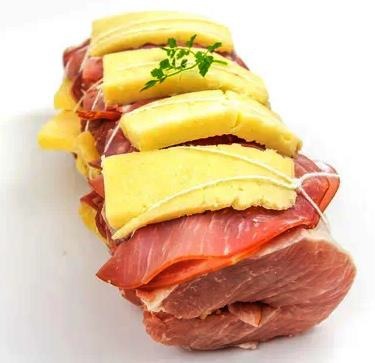
France – ROAST PORK ORLOFF – Salmonella

Gov france

Identification information of the recalled product

  • Product category Feed
  • Product subcategory Meats
  • Product brand name AUCHAN
  • Model names or references ROAST PORK ORLOFF
  • Identification of products
    Batch
    All lots
  • Products List Reminder_poster.pdfAttachment
  • Marketing start/end date From 02/16/2023 to 02/23/2023
  • Storage temperature Product to be stored in the refrigerator
  • Further information The product (orloff roast pork) was sold in the ”traditional” section of the AUCHAN LEERS store between 02/16/2023 and 02/23/2023.
  • Geographic area of ​​sale AUCHAN LEERS STORE
  • Distributors AUCHAN LEERS STORE

Practical information regarding the recall

  • Reason for recall Presence of salmonella
  • Risks incurred by the consumer Salmonella spp (causative agent of salmonellosis)

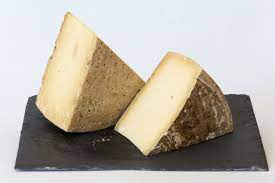
France – Rochefort Montagne farmhouse ovens Cheese – Listeria monocytogenes

Gov france

Identification information of the recalled product

  • Product category Feed
  • Product subcategory Milk and dairy products
  • Product brand name Rochefort Montagne farmhouse ovens
  • Model names or references Batch of December 16, 2022
  • Identification of products
    Lot Date
    16/12/2022 Date of minimum durability 03/16/2023
  • Packaging All forms of packaging
  • Marketing start/end date From 01/24/2023 to 02/23/2023
  • Storage temperature Product to be stored in the refrigerator
  • Health mark 6327406
  • Geographic area of ​​sale Whole France
  • Distributors– France Fresh Auvergne – Center E-Leclerc SA Sodicler Le Brezet

Practical information regarding the recall

  • Reason for recall Listeria
  • Risks incurred by the consumer Listeria monocytogenes (causative agent of listeriosis)

Czech Republic – CZECH CHEESE BUNS 50% filling 360 g – Mold/Mould

Potravinynapranyri

Illustrative photo #1

Place of inspection:
Prostějov ( JB Pecky 3589/13, 79601 Prostějov )
ID: 46967851
Food group: Bakery products Delicate pastries

CZECH CHEESE BUNS 50% filling 360 g
Category: Dangerous foods
Invalid parameter:

molds visible to the naked eye

At the end of the shelf life, molds visible to the naked eye appeared on the surface of the food. Food is not considered safe if it shows signs of spoilage.

Batch: 23.01./PR 2 GN
Best before date: 23.01.
Packaging: PP bag
Quantity of the product in the package: 360 g
Manufacturer: Penam, as
Country of origin:  Czechia
Date of sample collection: 1/18/2023
Reference number: 23-000081-SZPI-CZ
The sample was detected by the official control of the State Agricultural and Food Inspection.