Monthly Archives: February 2023

Research – Avoiding a global chocolate disaster – how tracing and recalls avoided a worldwide Salmonella outbreak

Eurekalert

Largest ever recall of chocolate products in global history, just before Easter 2022, prevented thousands of extra cases; a total of 455 cases of Salmonella Typhimurium found in 17 countries; UK had most cases with 128.

Like any other manufactured food product, chocolate can be contaminated if key ingredients or processes break down. In a presentation in a pre-ECCMID day for this year’s European Congress of Clinical Microbiology & Infectious Diseases (ECCMID 2023, Copenhagen, 15-19 April), Dr Johanna Takkinen, Principal Expert for Food- and Waterborne Diseases at the European Centres for Disease Control and Prevention (ECDC), Stockholm, Sweden, will discuss the drama as the story unfolded, and the lessons learned from an outbreak of Salmonella Typhimurium in Kinder Chocolate Eggs traced to a Belgian chocolate factory.

”If not for clear and co-ordinated action across Europe and beyond, there may have been many thousands more children falling ill, and potentially many deaths,” says Dr Takkinen.

Authorities in the UK (the UK Health Security Agency [UKHSA]) first raised the alarm in ECDC-hosted alert platform EpiPulse on 17 February 2022, reporting a cluster of 18 children reported ill with monophasic Salmonella Typhimurium infections since January 2022. Of these, seven were hospitalised and five of the seven had bloody diarrhoea, a serious symptom. “Preliminary interviews of first cases indicated Kinder chocolate products as a possible vehicle of infection. Several countries then began reporting an increasing number of infections with strains the same as the UK outbreak,” explains Dr Takkinen. By 18 February, France had reported its first 2 cases, and by 18 March 59 cases were reported in five countries.

Late in March 2022, ECDC coordinated a teleconference with affected countries when four non-human monophasic S. Typhimurium isolates, genetically close to the human isolates, were identified in a public database. Within a week, these isolates were confirmed originating from one particular Belgian chocolate factory. Prior to this, identifying which factory or factories were involved was difficult since there are four factories within the European Union that produce Kinder chocolate in large quantities. This new microbiological evidence allowed the various agencies to focus their investigations on one factory.

Meanwhile, the Food Standards Agency (FSA) in the UK* and the Food Safety Authority (FSA) in Ireland and the UK FSA decided to recall, on April 2**, certain Kinder Chocolate products (including Kinder Surprise Eggs).  On April 8 authorities, now confident the factory was identified, ordered that chocolate factory (Ferrero) closed, and two days later had issued a global recall of products from the factory. The alert reached 130 countries, and in addition to the 401 cases* identified in the EU and UK combined (the UK had the most cases, with 128), further cases were identified in Switzerland (49) and Canada (4) and the USA (1) – giving a global total of 455 cases in 17 countries.  The ECDC and EFSA also published Rapid Outbreak Assessments to keep the public updated.

For link to Dr Takkinen’s slides, click here

*For the ECDC update showing case numbers from different countries, click here

**For the Food Standards Agency (UK) notice on this, original published April 2, 2022, click here

France – 6 SUPERIOR CHIPOLATAS -25% SALT – Salmonella

Gov france

Identification information of the recalled product

  • Product category Feed
  • Product subcategory Meats
  • Product brand name JOHN ROZE
  • Model names or references 6 SUPERIOR CHIPOLATAS -25% SALT 300g
  • Identification of products
    GTIN Batch Date
    3250392334710 J30370568 Use-by date 02/20/2023
  • Packaging 300g
  • Marketing start/end date From 02/09/2023 to 02/13/2023
  • Storage temperature Product to be stored in the refrigerator
  • Health mark FR-35-136-002-CE
  • Geographic area of ​​sale Whole France
  • Distributors ITM POS

Practical information regarding the recall

  • Reason for recall Presence of Salmonella
  • Risks incurred by the consumer Salmonella spp (causative agent of salmonellosis)

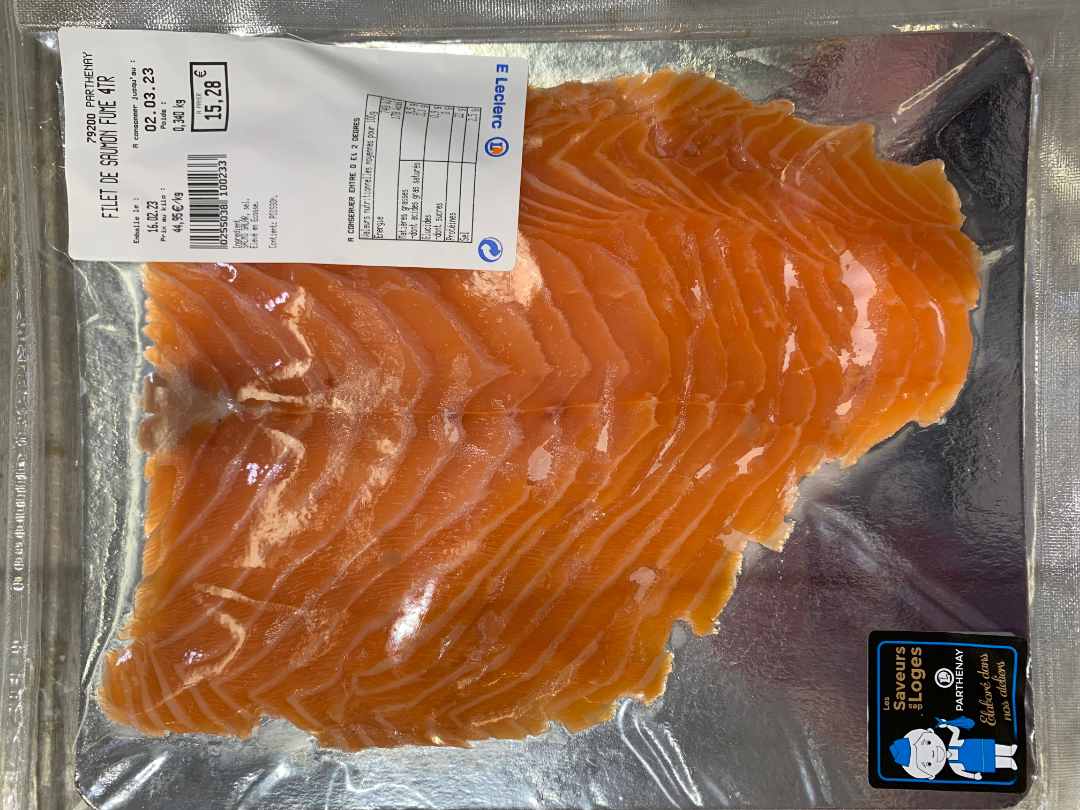
France – Smoked salmon fillet – Listeria monocytogenes

Gov france

Identification information of the recalled product

  • Product category Feed
  • Product subcategory Fishery and aquaculture products
  • Product brand name Unbranded
  • Model names or references Smoked salmon fillet 2 slices Smoked salmon fillet 4 slices Smoked salmon scraps
  • Identification of products
    GTIN Batch Date
    0255186000000 260123 Use-by date 07/02/2023
    0255038000000 260123 Use-by date 07/02/2023
    0255367000000 260123 Use-by date 07/02/2023
  • Marketing start/end date From 01/26/2023 to 02/07/2023
  • Storage temperature Product to be stored in the refrigerator
  • Geographic area of ​​sale Parthenay
  • Distributors E.LECLERC Parthenay

Practical information regarding the recall

  • Reason for recall Presence of Listeria monocytogenes

USA – Legionnaire’s Disease Outbreak Linked to American Cruise Lines

Daily Hornet

The U.S. Food and Drug Administration (FDA) sent a warning letter to American Cruise Lines after 3 passengers got Legionnaire’s disease and the company failed to adequately treat the ships’ drinking water.

The first confirmed case of Legionnaire’s disease was reported in April 2021, with two more cases reported in September and October 2021.

Between April and August 2022, FDA inspectors tested the drinking water on the American Star and American Heritage and found ongoing evidence of Legionella bacteria.

Shockingly, 93% of water samples on the American Star tested positive for Legionella bacteria in April 2022, including samples taken from showerheads in the rooms for passengers and crew.

In June 2022, multiple samples of drinking water from showerheads and faucets on the American Heritage also tested positive for Legionella, according to the FDA.

Despite problems with Legionella contamination and illnesses, the FDA said that American Cruise Lines failed to take adequate stops to treat the ships’ water supply.

Scotland -Gastrointestinal & Zoonoses Biennial Report 2020/2021

PHS

This report presents provisional information on laboratory reports of gastrointestinal and zoonotic pathogens in Scotland up to the end of 2021. In previous years, PHS produced separate annual reports for each organism.
This year, we have integrated these separate reports into a single document. Routine reporting was suspended during the pandemic due to significant service disruption, as almost all resources were redirected to the response. This report represents the return of annual Gastrointestinal and Zoonotic (GIZ) reporting and includes the first presentation of data from the period of suspended reporting. This report is also the first annual GIZ report published by Public Health Scotland (PHS) since it was established in April 2020 during the COVID-19 pandemic.
This report provides an overview of data trends and presents data observed during the height of the COVID-19 pandemic when strict non-pharmaceutical interventions were in place. Such interventions affected not only the epidemiology of COVID-19, but also that of other pathogens, including GIZ. Data presented in this report are based on laboratory confirmed reports from clinical diagnosticand reference laboratories in Scotland which are provided to PHS via Electronic Communication of Surveillance in Scotland (ECOSS). ECOSS is a national tool for monitoring organisms, infections and microbial intoxications that are of clinical or public health importance.
Most samples are taken for clinical reasons and are not designed to inform surveillance. Data arising from these results represents therefore only a proportion of the true underlying infection burden and may be biased towards certain groups who are more likely to be tested such as the very young and the old, or those who have travelled. Different pathogens may be subject to different biases. Because of these inevitable limitations, interpretation of surveillance data can be difficult.The laboratory reports arise from samples from both community and healthcare settings.
Laboratory reports represent a small proportion of the true incidence in the population. The second study of infectious intestinal disease in the community (IID 2 study) estimated the overall rate of IID in the UK in 2009 to determine the extent of under-reporting.

The extent of underreporting may have been exacerbated during 2020 and 2021 due to restrictions in place, and changes in healthcare seeking behaviours. This underrepresentation is also recognised to apply to many other pathogens, including non-foodborne zoonoses.In summary, unprecedented behavioural changes during the pandemic such as travel, diet and time spent outside will have impacted on the epidemiology of many GIZ pathogens. In addition, changes in healthcare seeking behaviour during the same time frame will have affected diagnosis of disease arising from these pathogens. Therefore, interpretation of the data must be heavily caveated with the uncertainty that arises from these factors.Any changes in data previously published are a result of PHS data validation.

Jordan – 120 food poisoning cases reported in Jerash

Roya News

Approximately 120 food poisoning cases have been reported in Jerash, including two children, according to Roya’s correspondent Wednesday.

The Jodan Food and Drug Administration (JFDA) had shut down a fast food restaurant in Jerash Tuesday, as a precaution, after a significant number of people reported feeling ill after eating from that restaurant.

Sweden – The number of sick in the Swedish egg Salmonella outbreak continues to increase

Food Safety News

hazegg.jpg

The number of people sick in a Salmonella outbreak in Sweden traced to eggs has gone up again to nearly 80.

The Public Health Agency of Sweden (Folkhälsomyndigheten) said 76 people were sick, which is up from 48 in a previous update.

Patients from 16 different regions have been confirmed as infected with the outbreak strain of Salmonella Enteritidis.

Sick people include 36 women and 40 men who fell ill between early December 2022 and the end of January 2023. They are one to 91 years old with a median age of 35.

Quebec- Notice not to consume trout gravlax prepared and sold by Poissonnerie Ô inc – Listeria monocytogenes

Quebec

The Ministry of Agriculture, Fisheries and Food (MAPAQ), in collaboration with the Food Inspection Division of the City of Montreal and the company Poissonnerie Ô inc., located at 3414, rue Ontario Est, in Montreal, warns the public not to consume the product indicated in the table below, because this food is likely to contain the bacterium Listeria  monocytogenes . Even if the expiration date of the product has passed, some consumers may have it in their possession.

Product name

Format

Affected lot

“Trout gravlax with Rosemont rum and its aromas”

150 g

Best before

2023.FE.14

The product that is the subject of this warning has been offered for sale at the establishment named above only. The product was placed on a golden cardboard and vacuum-packed. It was sold chilled. The product label included, in addition to its name, the words “Poissonnerie O”.

The operator is voluntarily recalling the product in question. It has agreed with MAPAQ and the Food Inspection Division of the City of Montreal to distribute this warning as a precautionary measure. In addition, people who have this product in their possession are advised not to consume it. They must return it to the establishment where they bought it or throw it away.

Hong Kong – Beware of the Inherent Risks of Raw Oysters

CFS

Oysters for raw consumption are a high-risk food as there is no heat treatment to kill pathogens before eating. Besides those sold alive, raw oysters available in the local market are often pre-shucked in either frozen or chilled forms. If not handled properly, it can lead to bacterial contamination and deterioration of the shellfish.

Frozen raw oysters have to be defrosted in the refrigerator to avoid exposure to dangerous temperatures. Defrosting in the fridge can take a long time, usually overnight. During defrosting, raw oysters should be stored in containers to avoid cross-contamination. Avoid eating chilled raw oysters pre-shucked at the exporting countries without cooking, as they were killed and susceptibie to temperature abuse and cross-contamination during production and transportation.

Pregnant women, infants and young children, the elderly and people with weakened immunity should avoid consuming raw or undercooked oysters.

Italy – Movida catering -Shelled Almonds -Aflatoxin

Salute

Brand : Movida catering

Name : shelled almonds

Reason for reporting : Chemical risk recall

Publication date : February 14, 2023

Documentation

Documentation