Monthly Archives: June 2021

Research – Feedborne Salmonella enterica Serovar Jerusalem Outbreak in Different Organic Poultry Flocks in Switzerland and Italy Linked to Soya Expeller

MDPI

Poultry feed is a leading source of Salmonella infection in poultry. In Switzerland, heat-treated feed is used to reduce Salmonella incursions into flocks in conventional poultry production. By contrast, organic feed is only treated with organic acids. In 2019, the Swiss National Reference Center for Enteropathogenic Bacteria identified the rare serovar S. Jerusalem from samples of organic soya feed. Further, in July 2020, the European Union’s Rapid Alert System for Food and Feed published a notification of the detection of S. Jerusalem in soya expeller from Italy. During 2020, seven S. Jerusalem isolates from seven different poultry productions distributed over six cantons in Switzerland were reported, providing further evidence of a possible outbreak. Using whole-genome sequencing (WGS), S. Jerusalem isolates from feed and from animals in Switzerland were further characterized and compared to S. Jerusalem from organic poultry farm environments in Italy. WGS results showed that feed isolates and isolates from Swiss and Italian poultry flocks belonged to the sequence type (ST)1028, grouped in a very tight cluster, and were closely related. This outbreak highlights the risk of spreading Salmonella by feed and emphasizes the need for a heat-treatment process for feed, also in organic poultry production.
USA – 2021 E. Coli Outbreak Linked to Pasteurized Yogurt – Update

Washington State DOH

On May 12, 2021, The Washington State Department of Health (DOH) announced a multi-county outbreak of E. coli O157:H7 that began as a Public Health-Seattle & King County investigation involving several children with E. coli. The outbreak is linked to Pure Eire Dairy  yogurt also sold as PCC Community Market brand yogurt.

Update 6/23/21: One new case from Arizona has been identified who was infected with the outbreak strain of E. coli O157:H7. This brings the total number of outbreak-associated cases to 17. All three of the Arizona cases are considered secondary infections.

Update 6/17/21: One new child case has been identified who was infected with the outbreak strain of E. coli O157:H7 and was hospitalized for their illness. This brings the total number of outbreak-associated cases to 16.

The two Arizona cases infected by the outbreak strain of E. coli O157 did not consume PCC or Pure Eire brand yogurt.

  • The first Arizona case is considered a secondary infection. This person was infected after having close contact with a Washington state resident who regularly ate Pure Eire yogurt and developed diarrhea (but was not tested) shortly before traveling to Arizona.
  • The newest Arizona case added on 6/17/2021 is also considered a secondary infection.

 Public health message

  • If you have PCC Community Market brand yogurt or Pure Eire yogurt at home, do not eat it and throw it away.
  • E. coli infections can cause serious complications. Symptoms include diarrhea, stomach cramps and blood in the stool.
  • If you notice symptoms, especially bloody diarrhea, contact your health care provider right away.

Case information

DOH is reporting confirmed cases infected with bacteria that have been genetically linked. Local health jurisdictions may report higher numbers for their counties that include cases still under investigation and may provide additional detail on their cases.

Case information will be updated twice a week, as new information is available.

Last updated 6/23/21 at 7:07 p.m.

Summary

Statewide total

Cases

Confirmed cases – updated 6/23/21

17

Hospitalized – updated 6/17/21

10

Developed hemolytic uremic syndrome (HUS)

4

Died

0

USA – How to Report Seafood-Related Natural Toxin Illness

FDA

To help FDA effectively investigate, remove unsafe seafood products from the market, and develop new prevention strategies, the FDA relies on illness reporting from public health officials and healthcare providers. While most foodborne outbreaks are tracked through the FDA’s Coordinated Outbreak Response and Evaluation (CORE) network, seafood-related illnesses caused by natural toxins have a unique reporting mechanism. This web page provides information on commonly occurring seafood-related illnesses and how to report them to the FDA.  To report an illness from raw bivalve molluscan shellfish, email the FDA at shellfishepi@fda.hhs.gov.

The FDA receives reports of illnesses associated with the consumption of specific types of fish. These illnesses may originate from the activity of certain bacteria, toxins produced by marine algae, or hazards inherent in the fish.

Commonly occurring illness:

Illness and reporting information for the commonly occurring illnesses are provided in each section. Contact the FDA with any questions or need for clarification of the illness or reporting.

In addition to the illnesses listed above, reporting of other less frequently occurring illnesses from natural toxins may be accomplished by emailing the FDA at Seafood.Illness@fda.hhs.gov.  Refer to Chapter 6 of the “Fish and Fishery Products Hazards and Controls Guidance” for a comprehensive list of natural toxin illnesses. To report illnesses related to miscellaneous natural toxin illnesses, please email FDA at Seafood.Illness@fda.hhs.gov.

The FDA works with first responders, physicians, and state and local health departments to investigate illnesses and outbreaks, manage them, and learn how to lessen future occurrences.

Research – Evaluation of Lactose Oxidase as an Enzyme-Based Antimicrobial for Control of L. monocytogenes in Fresh Cheese

MDPI

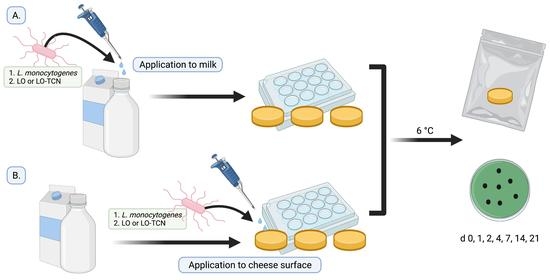
Listeria monocytogenes is a ubiquitous pathogen that can cause morbidity and mortality in the elderly, immune compromised, and the fetuses of pregnant women. The intrinsic properties of fresh cheese—high water activity (aW), low salt content, and near-neutral pH—make it susceptible to L. monocytogenes contamination and growth at various points in the production process. The aim of this study was to investigate the ability of lactose oxidase (LO), a naturally derived enzyme, to inhibit the growth of L. monocytogenes in fresh cheese during various points of the production process. Lab-scale queso fresco was produced and inoculated with L. monocytogenes at final concentrations of 1 log CFU/mL and 1 CFU/100 mL. LO and LO sodium thiocyanate (TCN) combinations were incorporated into the milk or topically applied to the finished cheese product in varying concentration levels. A positive control and negative control were included for all experiments. When L. monocytogenes was inoculated into the milk used for the cheese-making process, by day 28, the positive control grew to above 7 log CFU/g, while the 0.6 g/L treatment (LO and LO + TCN) fell below the limit of detection (LOD) of 1.3 log CFU/g. In the lower inoculum, the positive control grew to above 7 log CFU/g, and the treatment groups fell below the LOD by day 21 and continued through day 28 of storage. For surface application, outgrowth occurred with the treatments in the higher inoculum, but some inhibition was observed. In the lower inoculum, the higher LO and LO-TCN concentrations (0.6 g/L) reduced L. monocytogenes counts to below the LOD, while the control grew out to above 7 log CFU/g, which is a >5 log difference between the control and the treatment. These results suggest that LO could be leveraged as an effective control for L. monocytogenes in a fresh cheese. View Full-Text

France – Organic smoked Irish salmon – Listeria monocytogenes

Gov france

  • Product category Food
  • Product sub-category Fishery and aquaculture products
  • Product brand name Pierre Neau
  • Names of models or references2 slices 4 slices
  • Product identification
    Lot Dated
    111310026 Use-by date 06/12/2021
    111310026 Use-by date 06/15/2021
  • Packaging Vacuum plate
  • Start date / End of marketing From 05/18/2021 to 06/01/2021
  • Storage temperature Product to be stored in the refrigerator
  • Health mark FR 78.005.001 CE
  • Geographical sales area Departments: YVELINES (78)
  • Distributors La Marée Ets Neau (workshop shop)
  • List of points of sale Sales_points_list.pdf
  • Reason for recall Presence of listeria monocytogenes possible
  • Risks incurred by the consumer Listeria monocytogenes (causative agent of listeriosis)
  • Consumer behavior Return the product to the point of sale
  • Sanitary recommendation People who have consumed the “products” mentioned above and who have fever, isolated or accompanied by headaches, and muscle aches, are invited to consult their doctor, notifying him of this consumption. Serious forms with neurological complications and maternal or fetal damage in pregnant women can also sometimes occur. Pregnant women as well as immunocompromised people and the elderly should pay special attention to these symptoms. Listeriosis is a disease that can be serious and can take up to eight weeks to incubate.
  • Contact number0139110770
  • Compensation modalities Refund
  • End date of the recall procedure Sunday 20 June 2021

France – Product recall: Unbranded Merguez – Listeria monocytogenes

Oulah

ENCOUNTERED PROBLEM

Presence of Listeria monocytogenes

PROPOSED SOLUTION

People who may have this product are asked not to consume it and to return it to the point of sale where it was purchased.

People who have consumed this product and who present with fever, isolated or accompanied by headaches, are invited to consult their attending physician, notifying him of this consumption.
Pregnant women should pay special attention to these symptoms, as well as immunocompromised people and the elderly. These symptoms may suggest listeriosis, a disease that can be serious and can take up to eight weeks to incubate.

FURTHER INFORMATION

▸ Names of models or references


▸ Barcode
0203923022764


▸ Lot
1 11250207


▸ DLC – DDM
05/21/2021


▸ Packaging
sold in trays


▸ Start date / End of marketing
From 05/17/2021 to 05/20/2021


▸ Health mark


▸ Geographical area of ​​sales throughout
France


U express distributors


▸ Consumer service contact
0475220487


▸ Source
SAINT PIERRE U express Die

Czech Republic – Jitrnice – Listeria monocytogenes

Potravinynapranyri

Place of inspection:
Policka ( Palackeho nam. 20, 57201 Policka )
Company ID: 76367959
Unsatisfactory parameter:

Listeria monocytogenes

The pathogenic bacterium Listeria monocytogenes was detected in the product . This bacterium can cause a condition called listeriosis.

Expiration date: 4/27/2021
Producer: Butcher shop on Náměst, Polička 572 01
Country of origin:  Czechia
Date of sampling: 22. 4. 2021
Reference number: 21-000022-SVS-CZ
The sample was found by official inspection of the State Veterinary Administration.

France – Product recall: Naturalia brand coral lentil, raisin and buckwheat salad – Listeria monocytogenes

Oulah

ENCOUNTERED PROBLEM

Presence of Listeria monocytogenes

PROPOSED SOLUTION

People who may have this product are asked not to consume it and to return it to the point of sale where it was purchased.

People who have consumed this product and who present with fever, isolated or accompanied by headaches, are invited to consult their attending physician, notifying him of this consumption.
Pregnant women should pay special attention to these symptoms, as well as immunocompromised people and the elderly. These symptoms may suggest listeriosis, a disease that can be serious and can take up to eight weeks to incubate.

FURTHER INFORMATION

▸ Names of models or references


▸ Barcode
3700036907164


▸ Lot
A21159


▸ DLC – DDM
06/26/2021


▸ Packaging


▸ Start date / End of marketing
From 06/08/2021 to 06/23/2021


▸ Health mark
FR60.139.011


▸ Geographical area of ​​sales throughout
France


Naturalia distributors


▸ Consumer service contact
0800034035


▸ Source
NATURALIA FRANCE

France – Product recall: SUPPLIER HOMARD ATLANTIQUE brand yellowfin tuna – Histamine

Oulah

ENCOUNTERED PROBLEM

Presence of Histamine

PROPOSED SOLUTION

People who may have this product are asked not to consume it and to return it to the point of sale where it was purchased.

Histamine poisoning is manifested by allergic-type reactions triggered when histamine is absorbed in high amounts. The symptoms most often encountered are: facial-cervical redness, rash, itching, tingling of the skin. They are generally followed by neurological disorders: headache, heart palpitations, dizziness. Secondary symptoms, gastrointestinal in nature, may appear: nausea, stomach pain, vomiting, diarrhea. Symptoms appear immediately or several hours after ingestion of food. They normally disappear within a few hours, but can exceptionally last for several days. In rare cases (high doses of histamine and sensitivity of the subject), the allergic reaction can then up to histamine shock.

If you think you are having symptoms of histamine poisoning, seek medical advice immediately.

FURTHER INFORMATION

▸ Names of the models or references
ALBACORE TUNA LONG


▸ Barcode
82675312


▸ Lot
39


▸ DLC – DDM
06/12/2021


▸ Packaging


▸ Start date / End of marketing
From 06/07/2021 to 06/11/2021


▸ Health mark


▸ Geographical area of ​​sale
SALE AT THE POISSONNERIE DE PLOUARZEL


SUPER U PLOUARZEL distributors


▸ Consumer service contact
0298896822


▸ Source
ATLANTIC LOBSTER SUPPLIER


Czech Republic – Chilled chicken breast fillet – Salmonella

Potravinynapranyri

Place of inspection:
Kromeriz ( Hulinska 1799/1, 76701 Kromeriz )
Company ID: 28219783
Food group: Meat and meat products Unpacked: meat, minced meat, meat preparations

Chilled chicken breast fillet
Category: Dangerous food
Unsatisfactory parameter:

Salmonella enterica serum. Infantis

The pathogenic bacterium Salmonella enterica serum was detected in chilled chicken meat Infantis. This bacterium can cause a condition called salmonellosis.

Lots: 34210517
Expiration date: 5/22/2021
Producer: Rozbioru Drobiu EMI POLSKA, ul. Bielska 40, 43-520 Chybie, PL 24034302 WE
Country of origin:  Poland
Date of sampling: 19. 5. 2021
Reference number: 21-000021-SVS-CZ
The sample was found by official inspection of the State Veterinary Administration