Monthly Archives: November 2020

Research – ComBase models are valid for predicting fate of Listeria monocytogenes on ten whole intact raw fruits and vegetables

Journal of Food Protection

L. monocytogenes was associated with more than 60 produce recalls between 2017 and 2020 including tomato, cherry, broccoli, lemon, and lime recalls. This study describes the effects of temperature, time and food substrate as factors influencing L. monocytogenes behavior on whole intact raw fruits and vegetables. A cocktail of five L. monocytogenes strains previously associated with foodborne outbreaks were used. Ten intact whole fruit and vegetable commodities were chosen based on data gaps identified in a systematic literature review. Produce investigated belong to major commodity families: Ericaceae (blackberry, raspberry, and blueberry), Rutaceae (lemon and mandarin orange), Roseaceae (sweet cherry), Solanaceae (tomato), Brassaceae (cauliflower and broccoli) and Apiaceae (carrot). Intact inoculated whole fruit and vegetable commodities were incubated at 2, 12, 22, 30 and 35 °C with relative humidities matched to typical real-world conditions. Foods were sampled (n=6) for up to 28 days, depending on temperature. Growth and decline rates were estimated using the DMFit for Excel. Growth rates were compared with ComBase modeling predictions for L. monocytogenes. Almost every experiment showed initial growth, followed by subsequent decline. L. monocytogenes was able to grow on whole intact surface of all produce tested, except for carrot. The 10 produce commodities supported growth of L. monocytogenes at 22 and 35°C. Growth and survival at 2 and 12°C varied by produce commodity. The standard deviation of the square root growth and decline rates showed significantly larger variability in both growth and decline rates within replicates as temperature increased. When L. monocytogenes growth occurred, it was conservatively modeled by ComBase Predictor, and growth was generally followed by decreases in concentration. This research will assist in understanding the risks of foodborne disease outbreaks and recalls associated with L. monocytogenes on fresh whole produce.
Norway – Microbiological control of pasteurised and unpasteurised dairy products, 2018

Mattilsynet

The microbiological quality was generally good for the 189 dairy products on the Norwegian market that the Norwegian Food Safety Authority examined in 2018. Nevertheless, we see that there are microbiological challenges in connection with unpasteurised dairy products.

What did we investigate? 189 samples of unpasteurised and pasteurised cheeses and other dairy products produced in Norway and in the EU.
Period: 2018
What were we looking for?

The four categories have been analysed for various disease-causing bacteria (pathogens). These choices are made in order to get the most information for each category.

The different categories are:

PN = pasteurised milk product produced in Norway.

P EU = pasteurised milk product produced outside Norway.

UN = unpasteurised milk product produced in Norway.

U EU = unpasteurised milk product produced outside Norway.
 

The various disease-causing infectious agents we analysed for:

Listeria monocytogenes (pathogen): PN, P EU, UN, U EU, number 189 pcs.

Shigatoxin-producing Escherichia coli (STEC) (pathogen): UN, U EU, number 96 pcs.

E. coli (hygiene parameter): PN, UN, U EU, 169 st.

S. aureus (hygiene parameter): UN, number 71 st.

Toxins (enterotoxin) from S. aureus (pathogen): UN, U EU, number 96 pcs.

Salmonella (pathogen): U EU, number 25 st.

What did we find?

Listeria monocytogenes : No detection in 189 samples of dairy product.

Shigatoxin-producing Escherichia coli (STEC):
One finding in French red cow cheese of cow’s milk ( E. coli O-, stx2 and eae ). A total of 25 unpasteurised milk products produced outside Norway were examined. No findings in 71 unpasteurised milk products from Norway.

Escherichia coli (hygiene parameter):
In 73 pasteurised milk products from Norway, there was a detection and this was above the lower limit value (100 cfu / g) but below the upper limit value (1,000 cfu / g). No E. coli was detected above the detection limit of 10 colony forming units / g sample (cfu / g) in the other samples.

In 61 of the 71 unpasteurised milk products produced in Norway, E. coli was not detected above the detection limit of 10 colony-forming units / g sample (cfu / g). 3 st. (4.2%) was above 100 cfu / g.

In unpasteurised dairy products from the EU (25), 5 (20%) of the products had more than 100 cfu/ g E. coli. There is no microbiological criterion for E. coli in the regulations for unpasteurised cheeses.

Staphylococcus aureus:
Of 71 samples, none exceeded the regulatory limit of 10,000 cfu/ g.

Of the 96 unpasteurised dairy products examined, the enterotoxins AE Toxins (enterotoxins), which some S. aureus can produce , were not detected .

Salmonella was not detected in the 25 samples of unpasteurised milk products produced outside Norway.

Report Link

Research – New Zealand – 75% Of Pregnant Women Aren’t Aware Of Dangerous Foods

Babygaga

Many moms-to-be don’t know all the foods that could potentially be fatal for their unborn child.

Some foods are dangerous during pregnancy and new research from New Zealand has found that 75% of pregnant women aren’t even aware of what they are. This shocking study found that many moms-to-be don’t know all the foods that could potentially be fatal for their unborn child.

Kyrgyzstan – reports 28 botulism cases in first 10 months of 2020

Outbreak News Today

kswfoodworld

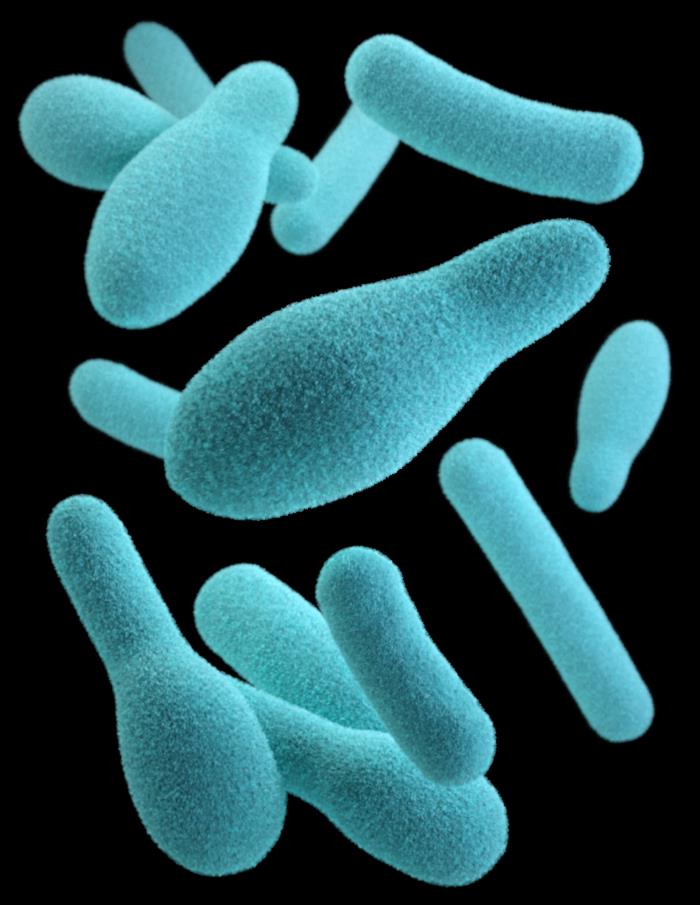
Image CDC

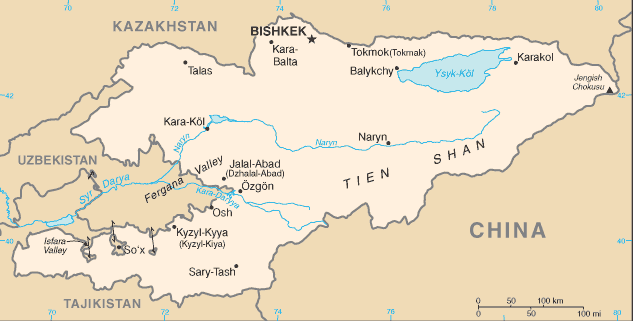
Health officials in Kyrgyzstan are reporting 28 foodborne botulism cases through Oct. 2020, prompting a warning for the public.

Of the 28 cases, 19 were reported in the Osh region.

In most cases, botulism begins acutely. It can manifest itself in people who ate canned salads or cucumbers, mushrooms, eggplants, other vegetables and meat products the day before.

USA/Canada – Cyclospora sucks: 1060 North Americans sickened in summer Fresh Express outbreak

220px-Cyclospora_cayetanensis_stained

Barf Blog

The parasite, Cyclospora, continues to provide illness and intrigue.

Florida-based Southeastern Grocers has issued a voluntary recall for its “SE Grocers Naturally Better Organic Fresh Cut Basil” following the detection of Cyclospora.

The company says the product was delivered through all of its distribution centers and sold in all its stores, including Winn-Dixie, BI-LO, Fresco y Más and Harveys Supermarkets. The basil comes in a 0.5-ounce container with UPC code 6-07880-20230-4.

The latest recall follows a summer outbreak of Cyclospora in the U.S. linked to Fresh Express and private label brand salad products produced at its Streamwood, IL facility that contain iceberg lettuce, red cabbage, and/or carrots.

690 people with laboratory-confirmed Cyclospora infections and who reported eating bagged salad mix before getting sick weren reported from 13 states (Georgia, Illinois, Iowa, Kansas, Massachusetts, Minnesota, Missouri, Nebraska, North Dakota, Ohio, Pennsylvania, South Dakota, and Wisconsin).

Illnesses started on dates ranging from May 11, 2020 to July 20, 2020.

37 people were hospitalized. No deaths were reported.

Canadians in several provinces were also sickened.

Canada – Updated Food Recall Warning – Eggs from Les Œufs Richard Eggs Inc. recalled due to Salmonella

CFIA

Recall details

Ottawa, November 24, 2020 – The food recall warning issued on November 21, 2020 has been updated to include additional distribution information. This additional information was identified during the Canadian Food Inspection Agency’s (CFIA) food safety investigation.

Les Œufs Richard Eggs Inc. is recalling eggs from the marketplace due to possible Salmonella contamination. Consumers should not consume and distributors, retailers and food service establishments such as hotels, restaurants, cafeterias, hospitals, and nursing homes should not serve, sell, or use the recalled products described below.

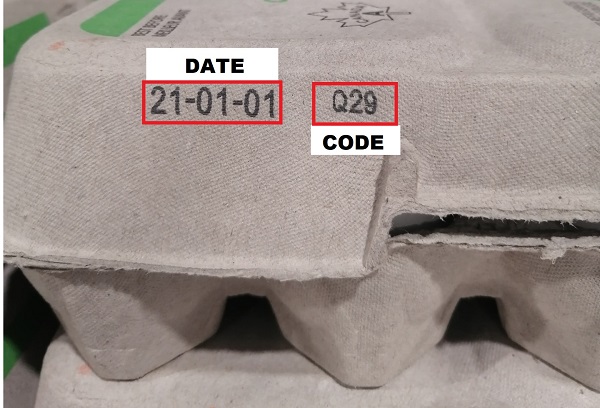
Only eggs from Les Œufs Richard Eggs Inc. with best before dates indicated in the table below where the lot code contains “Q29” or where there is no lot code on the package are implicated by the recall.

Recalled products

Brand Product Size UPC Codes
Les Œufs Richard Eggs Inc. Large Size Eggs 12 eggs 0 57711 01056 9 20-12-26 Q29
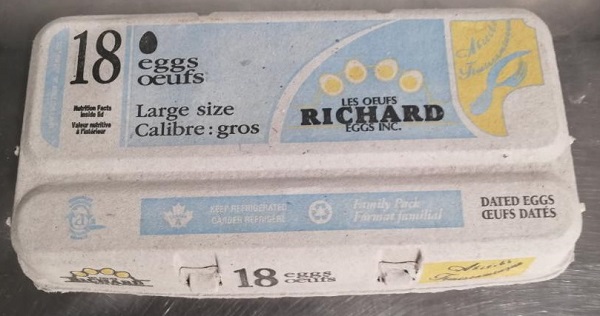
Les Œufs Richard Eggs Inc. Large Size Eggs, Family Pack 18 eggs 0 57711 01018 7 20-12-22 Q29
20-12-26 Q29
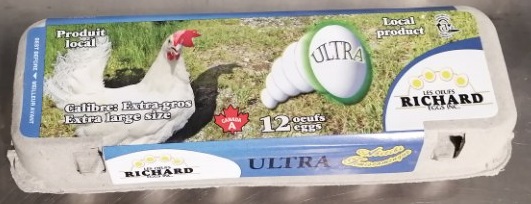
Les Œufs Richard Eggs Inc. Extra Large Size Eggs 12 eggs 0 57711 01064 4 20-12-26 Q29
Les Œufs Richard Eggs Inc. Extra Large Size Ultra Eggs 12 eggs 0 57711 01070 5 20-12-18 Q29
20-12-22 Q29
20-12-24 Q29
Les Œufs Richard Eggs Inc. Large Size Brown Eggs 12 eggs 0 57711 08056 2 20-12-24 Q29
20-12-30 Q29
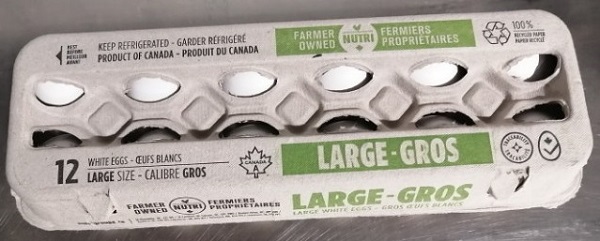
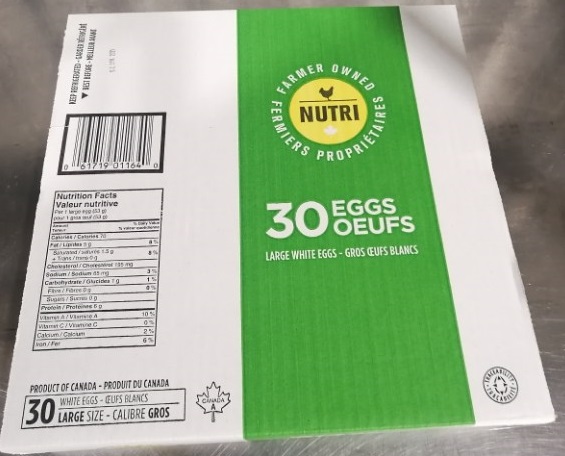
Nutri Large White Eggs 12 eggs 0 61719 01121 3 20-12-22 Q29
20-12-24 Q29
Nutri Large White Eggs 18 eggs 0 61719 01155 8 20-12-22 Q29
21-01-01 Q29
Nutri Large White Eggs 30 eggs 0 61719 01164 0 20-12-22 Q29
20-12-24 Q29
no name Medium size eggs 12 eggs 0 60383 66415 2 20-12-26 Q29

What you should do

If you think you became sick from consuming a recalled product, call your doctor.

Check to see if you have the recalled products in your home or establishment. Recalled products should be thrown out or returned to the location where they were purchased.

Food contaminated with Salmonella may not look or smell spoiled but can still make you sick. Young children, pregnant women, the elderly and people with weakened immune systems may contract serious and sometimes deadly infections. Healthy people may experience short-term symptoms such as fever, headache, vomiting, nausea, abdominal cramps and diarrhea. Long-term complications may include severe arthritis.

Background

This recall was triggered by test results. The CFIA is conducting a food safety investigation, which may lead to the recall of other products. If other high-risk products are recalled, the CFIA will notify the public through updated Food Recall Warnings.

The CFIA is verifying that industry is removing the recalled products from the marketplace.

Illnesses

There have been no reported illnesses associated with the consumption of these products.

Product photos

Printer ready version of photos

  • Example (best before date and lot code)
  • Les Oeufs Richard Eggs Inc. – Brown eggs, large size – 12 eggs
  • Les Oeufs Richard Eggs Inc. – Extra large size eggs – 12 eggs
  • Les Oeufs Richard Eggs Inc. – Extra large size Ultra Eggs – 12 eggs
  • Les Oeufs Richard Eggs Inc. – Large size eggs – 12 eggs
  • Les Oeufs Richard Eggs Inc. – Large size eggs – 12 eggs
  • No name – Medium size eggs – 12 eggs
  • Nutri – Large white eggs – 12 eggs
  • Nutri – Large white eggs – 18 eggs
  • Nutri – Large white eggs – 30 eggs

Public enquiries and media

Public enquiries
Toll-free: 1-800-442-2342 (Canada and U.S.)
Telephone: 1-613-773-2342 (local or international)
Email: cfia.enquiries-demandederenseignements.acia@canada.ca

Research – Anti‐adhesive effects of sialic acid and Lactobacillus plantarum on Staphylococcus aureus in vitro

Journal of Food Safety

Staphylococcus aureus (S. aureus) is a common food‐borne pathogen that causes severe diseases after adhesion to epithelial cells. Lactobacillus inhibits pathogenic bacterial adhesion and infection. In addition, sialic acid (SA) is widely known for its beneficial biological functions. A new way of reducing the occurrence of diseases and curbing the overuse of antibiotics is ingesting prebiotics and probiotics that regulate the intestinal flora. In this study, we first evaluated the anti‐adhesive effects of several strains of Lactobacillus on S. aureus. The study revealed that the S. aureus adhesion was inhibited by all the strains of Lactobacillus. Besides, the rate of inhibition by L. plantarum Z‐4 was significantly higher than other Lactobacillus species. We then investigated the effects of different SA concentrations (40, 100, 150, 200, and 260 μg/ml) on the growth and adhesion characteristics of L. plantarum and S. aureus. The results showed that SA influences bacterial adhesion by regulating the bacteria’s growth characteristics. Finally, the effects of SA combined with Lactobacillus on the adhesion of S. aureus were assessed by competition, exclusion and displacement methods. SA with a concentration of 260 μg/mL combined with L. plantarum had the highest inhibition effect on the competition assays. In addition, the expression of S. aureus adhesion‐related genes was reduced. This provides a new perspective on the application of SA and/or L. plantarum and its potential to resist adhesion of S. aureus.

USA – Outbreak of E. coli Infections – Unknown Source 2 – Update

CDC

CDC E.coli

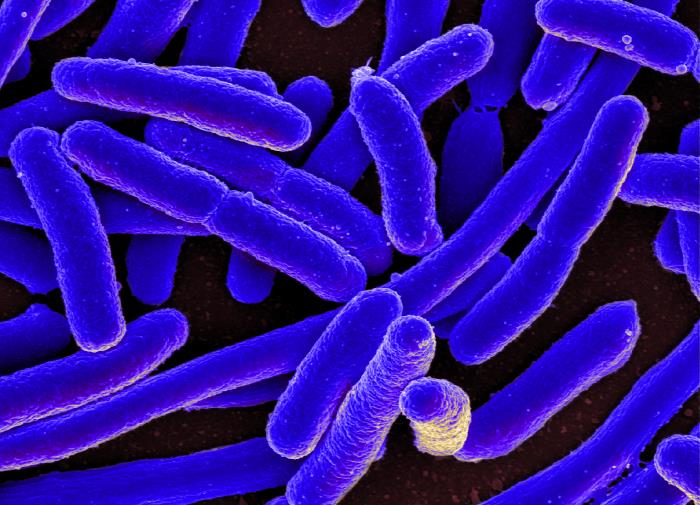
CDC, public health and regulatory officials in several states, and the U.S. Food and Drug Administration (FDA) are investigating several multistate outbreaks of E. coli O157:H7 infections. This outbreak is different from two other E. coli O157:H7 outbreaks CDC is currently investigating (E. coli outbreak with unknown source 1 and E. coli outbreak with unknown source 3).

At A Glance
  • Since the last update on October 28, 2020, 16 ill people were added to this investigation.
  • CDC is not advising people avoid any particular food at this time.
  • Investigators are working to collect different types of data to identify the source of this outbreak.
  • CDC will provide updates as they become available.

Take action if you have symptoms of an E. coli infection:

  • Talk to your healthcare provider.
  • Write down what you ate in the week before you got sick.
  • Report your illness to your local or state health department.
  • Help us solve the outbreak by answering public health officials’ questions about your illness.

Follow these general ways to prevent getting sick from E. coli:

  • Wash your hands after using the restroom or changing diapers, before and after preparing or eating food, and after contact with animals.
  • Cook meats thoroughly. Use a food thermometer to check that the meat has reached a safe internal temperatureexternal icon.
  • Don’t cross-contaminate food preparation areas. Thoroughly wash hands, counters, cutting boards, and utensils after touching raw meat.
  • Wash fruits and vegetables before eating, unless the package says the contents have been washed.
  • Avoid raw milk, other unpasteurized dairy products, and unpasteurized juices.
  • People usually get sick from Shiga toxin-producing E. coli (STEC) 2 to 8 days (average of 3 to 4 days) after swallowing the germ.
  • Symptoms often include severe stomach cramps, diarrhea (often bloody), and vomiting. Some people may have a fever, which usually is not very high (less than 101˚F/38.5˚C).
  • Some people with a STEC infection may get a type of kidney failure called hemolytic uremic syndrome (HUS).
  • Antibiotics are not recommended for patients with suspected E. coli infections until diagnostic testing can be performed and E. coli infection is ruled out. Some studies have shown that administering antibiotics to patients with E. coli infections might increase their risk of developing HUS, and a benefit of treatment has not been clearly demonstrated.
  • For more information, see Symptoms of E. coli Infection.
Investigation Details

November 23, 2020

Since the last update on October 28, 2020, 16 ill people were added to this investigation.

As of November 19, 2020, a total of 39 people infected with the outbreak strain of E. coli O157:H7 have been reported from 18 states. A list of the states and the number of cases in each can be found on the Map of Reported Cases page.

Illnesses started on dates ranging from August 10, 2020, to October 23, 2020. Ill people range in age from 1 to 85 years, with a median age of 38 years, and 62% are female. Of 30 ill people with information available, 19 people were hospitalized and 4 people developed hemolytic uremic syndrome (HUS), a type of kidney failure. No deaths have been reported.

Illnesses might not yet be reported due to the time it takes between when a person becomes ill and when the illness is reported. This takes an average of 2 to 4 weeks. Please see the Timeline for Reporting Cases of E. coli O157 Infection for more details.

Investigation of the Outbreak

Investigators are continuing to collect different types of data to identify the source of this outbreak.

State and local public health officials are interviewing ill people to determine what they ate and other exposures in the week before they got sick. Of the 22 ill people interviewed to date, all reported eating a variety of leafy greens, like spinach (16), romaine lettuce (15), iceberg lettuce (12), and mixed bag lettuce (8). No single type or brand of leafy greens or other food item has been identified as the source of this outbreak. CDC is not advising people avoid any particular food at this time.

This investigation is ongoing, and CDC will provide more information as it becomes available.

USA – Dole Fresh Vegetables Announces Limited Recall of Organic Romaine Hearts – STEC E.coli

FDA

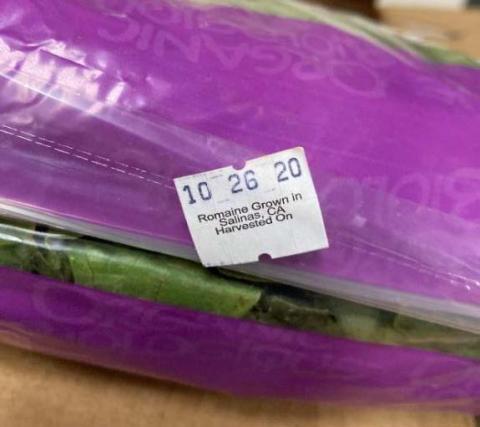
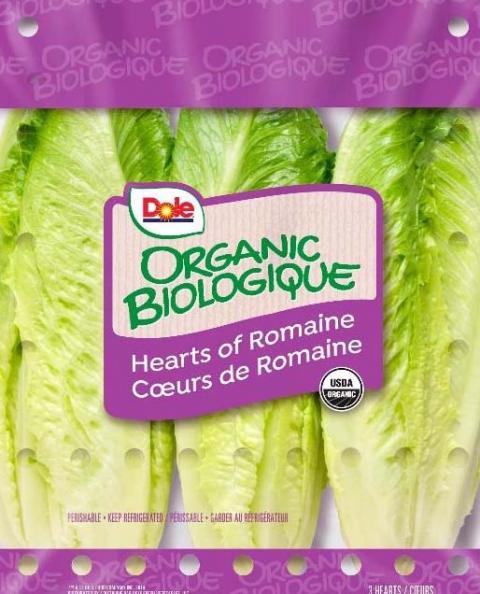
Dole Fresh Vegetables, Inc. is voluntarily recalling a limited number of cases of organic romaine hearts. The products being recalled are Dole™ Organic Romaine Hearts 3pk (UPC 0-71430-90061-1), combined English/French packaging, with Harvested-On dates of 10-23-20 and 10-26-20, and Wild Harvest Organic Romaine Hearts (UPC 7-11535-50201-2), with Harvested-On dates of 10-23-20 and 10-26-20.  The recall is being conducted due to a possible health risk from E. coli in the two products.  Dole Fresh Vegetables is coordinating closely with regulatory officials. No illnesses have been reported to date in association with the recall.

Pathogenic E. coli can cause diarrhea, severe stomach cramps and vomiting.  Most people recover within a week, but some illnesses can last longer and can be more severe.

The Harvested-On sticker is located on the upper right corner of each bag and the UPC code is located on the bottom right corner of the back of each bag. The Dole package contains three organic romaine hearts and the Wild Harvest product is packaged in a 12oz bag. The impacted products were distributed in AZ, HI, IA, IL, IN, KS, MD, MI, MN, MO, MS, MT, NC, ND and VA. These products were harvested and packed nearly 4 weeks ago and should no longer be in commerce.  Consumers are advised to check product they have in their homes and discard any product matching the production description, UPC codes and Harvested-On dates listed above.

This precautionary recall notification is being issued due to an isolated instance in which a package of Dole™ Organic Romaine Hearts – 3pk yielded a positive result for pathogenic non-O157 E.coli STEC in a routine sample collected at a retail store by the Michigan Department of Agriculture and Rural Development. There is no indication at this time that this positive result is related to any illnesses nor consumer complaints and it is not associated with the strains connected to the ongoing outbreaks currently under regulatory investigation.

No other Dole products are included in the recall. This voluntary recall does not apply to any bagged or clamshell salad romaine product. Only the specific Organic Romaine Hearts listed, with the exact UPC codes and Harvested-On dates identified above, are included in the recall. Consumers who have any remaining product with these UPC codes and Harvested-On dates should not consume it, but rather discard it. Retailers and consumers with questions may call the Dole Consumer Center at 1-800-356-3111, which is open 24 hours a day.


Company Contact Information

Consumers:
Consumer Center
 1-800-356-3111
Media:
William Goldfield
 1-818-874-4853
 William.Goldfield@Dole.com

Product Photos

New Zealand – Auckland health officials warn of scombroid poisoning

Outbreak News Today

Auckland health officials are advising people to seek medical advice from their GP if they have severe or persistent allergic reactions from eating fish.

They have had reports of people who have eaten fish from a ready meal service becoming ill with histamine poisoning, also known as scombroid poisoning.

Medical Officer of Health Dr Jay Harrower says the symptoms are often a combination of an allergic reaction and gastroenteritis.