
Monthly Archives: January 2020

RASFF Alerts – Animal Feed – Salmonella – Fish Meal – Organic Rape Cake

RASFF-Logo

RASFF – Salmonella enterica ser. Oranienburg (in 5 out 5 samples) in fish meal from the United States in Greece

RASFF – Salmonella enterica ser. Oranienburg (presence /25g) in fishmeal from the United States in Greece
RASFF – Salmonella enterica ser. Oranienburg (present /25g) in fish meal from the United States in Greece

RASFF – Salmonella enterica ser. Senftenberg (presence /25g) in organic rape cake expeller from France in Finland

RASFF – Salmonella enterica ser. Oranienburg (presence /25g) in fishmeal from the United States in Greece

Europe -Listeriosis – Annual Epidemiological Report for 2017

ECDC

Listeriosis – Annual Epidemiological Report for 2017

Surveillance report

Publication series: Annual Epidemiological Report on Communicable Diseases in Europe
Time period covered: This report is based on data for 2017 retrieved from The European Surveillance System (TESSy) on 11 September 2018.

For 2017, 30 countries reported 2 502 confirmed listeriosis cases in the EU/EEA. The EU/EEA age-standardised notification rate was 0.42 cases per 100 000 population. The highest rate was detected among people over 64 years of age (1.7 cases per 100 000 population). The annual number of listeriosis cases in the EU/EEA shows an increasing trend.

Europe – Yersiniosis – Annual Epidemiological Report for 2017

ECDC

kswfoodworld.com

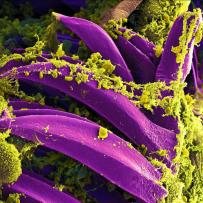
Image CDC

For 2017, 28 countries reported 6 890 confirmed yersiniosis cases in the EU/EEA. The overall notification rate was 1.8 per 100 000 population and remained stable from 2013–2017. The highest rate was detected in 0–4 year-old children (7.7 per 100 000 population). The highest rates were reported by Finland, Lithuania and the Czech Republic.

Download

Europe -Salmonellosis – Annual Epidemiological Report for 2017

ECDC

Salmonellosis is the second most commonly reported gastrointestinal infection and an important cause of foodborne outbreaks in the EU/EEA. In 2017, 92 649 laboratory-confirmed cases were reported of which 156 were fatal. The EU/EEA notification rate was 19.6 cases per 100 000 population. Salmonellosis notification rates have stabilised in the last five years after a long period marked by a declining trend. The notification rate was highest in young children 0−4 years with 94.1 cases per 100 000 population, eight times higher than in adults 25–64 years.

Download

Research -Impacts of broadband and selected infrared wavelength treatments on inactivation of microbes on rough rice.

Wiley Online

This study investigated the effects of broadband and selected infrared (IR) wavelength treatments of rough rice on microbial inactivation. Rough rice was treated at different IR wavelengths and product‐to‐emitter distances (110, 275, and 440 mm) followed by tempering at 60°C for 4 hr. The total mold and aerobic plate counts (APC) on non‐treated and treated samples were determined. Significant total mold reductions of 1.14 and 3.11 log CFU/g were obtained after IR heating using broadband and selected wavelengths, respectively (p < .05). The most significant reduction of APC using selected IR wavelength was 1.09 log CFU/g; the broadband IR wavelength had no effect on the mean APC. The IR treatments followed by tempering step resulted in greater reductions of total mold counts and APC (4.03 and 3.50 log CFU/g) in comparison to IR treatments without tempering (3.11 and 1.09 log CFU/g). Overall, bacteria showed more resistance to IR treatments than molds.

Research – Researchers find spread of bacteria in seafood likely impacted by trade

Food Safety News

A Centers for Disease Control and Prevention study has found that international trade of shellfish might be involved in the dispersal of Vibrio parahaemolyticus populations into the United States and Spain. The study found that severe weather, such as El Niño conditions in Peru, provide ideal conditions for the proliferation of Vibrio parahaemolyticus, Vibrio alginolyticus and Vibrio vulnificus.

The CDC reports that compared to other major foodborne illnesses, Vibrio parahaemolyticus infections have been steadily increasing. Vibrio parahaemolyticus is the leading cause of seafood-related bacterial infections globally. The CDC estimates that the average annual incidence of all Vibrio infections increased 54 percent during 2006–2017. Vibrio parahaemolyticus is believed to be responsible for about 35,000 human infections each year in the United States and has been the leading cause of foodborne infections in China since the 1990s.

The transition of V. parahaemolyticus disease from a regional to a global pathogen is connected to the emergence of isolates with epidemic potential.

Research – Stressed-out dust is sharing antibiotic resistance genes

Northwestern

First study to show indoor dust bacteria have transferrable antibiotic resistance genes.

A new Northwestern University study is the first to find that bacteria living in household dust can spread antibiotic resistance genes. Although most bacteria are harmless, the researchers believe these genes could potentially spread to pathogens, making infections more difficult to treat.

“This evidence, in and of itself, doesn’t mean that antibiotic resistance is getting worse,” said Northwestern’s Erica Hartmann, who led the study. “It’s just one more risk factor. It’s one more thing that we need to be careful about.”

India – 200 Children Fall Ill After Eating Sweets ‘Infected With Fungus’ Distributed During School Celebration

IBTimes

At least 200 students fell ill after eating contaminated sweets distributed during the Republic Day celebrations at a school in the southern Indian state of Telangana on Sunday,

According to local reports, several students complained of vomiting and uneasiness after consuming sweets distributed by the school authorities during the celebration. The students were immediately rushed to local hospitals for treatments.

Confirming the incident, the school authorities said, “We immediately shifted 140 students to government hospital in Makthal for treatment as they had complained of vomiting and stomach ache. While about 40 students are being treated at local primary healthcare in Karni village, others are given first aid and were sent home.”

Speaking to local media, an unidentified student said the sweets were contaminated.

“The sweets distributed were of poor quality and were infected with fungus because of which many students had fallen ill,” the student said.

Canada – Duck rillettes sold in Montreal butcher shop may be contaminated by Listeria bacteria

CTV News listeria

MONTREAL — “Homemade style” duck rillettes produced and sold at Boucherie du Marche (224 Place du Marche-du-Nord) are being recalled due to possible contamination by the bacteria Listeria monocytogenes.

Anyone who has purchased the product – sold in a 175-g container with a best-before date of Jan. 29, 2020 and containing a label that also reads “Boucherie du Marche – Depuis 1994” – is being warned not to consume it, but to either return it to the shop or throw it away, even if it does not smell or appear suspicious.

The rillettes in question were sold up to Jan. 28, 2020, inclusively.

The recall notes that no cases of listeriosis have been linked to the product being recalled.


Kenya – Police arrest Embu man over Aflatoxin-laced flour

Daily Nation

  • Acting on a tip-off, the officers raided the trader’s factory at Kianjokoma market and arrested him.
  • Officers also confiscated some flour which will be tested by the Government Chemist in Nairobi.