India – Telangana: 34 students suffer food poisoning in Warangal

Siasat

Hyderabad: 34 students, all women, in Warangal district of Telangana suffered from food poisoning on Tuesday.

21 of them have been admitted to CHC Wardhannapet, another 12 to MGM hospital. All the students are reportedly safe. One of the students found a lizard in the food, reported Newsmeter.

A girl undergoing treatment at the hospital said she noticed a dead lizard in the food and stopped eating. Though she informed the in-charge, he told her that it was not a lizard but a green chilli. Few minutes later, several students started vomiting and also complained of stomach ache and loose motions.

Education department officials have ordered an inquiry. They said strong action would be taken against those found responsible.

Luxembourg – RECALL: FLUTE CEREALS & SEEDS OF THE CHÂTEAU BLANC BRAND – Mycotoxin – Ergot Alkaloids

SAP

Deli Traiteur is recalling the following product :

Last name Cereal & seed flute
Mark White Castle
Unity 230g
Use-by date (DLC) 01/13/2023

Danger  : Presence of ergot alkaloids in rye flour

Ergots or sclerotia are formed by a fungus ( Claviceps purpurea ), a parasite of rye and other cereals. Sclerotia or ergots replace the seed and contain alkaloids, in particular lysergic acid from which LSD is derived, toxins responsible for diseases observed in humans as well as in animals (ergotism). Ergotism, more specifically linked to the ingestion of ergot from rye, is known to be responsible for the “Saint Anthony’s fires” or “mal des ardents” observed in humans. Symptoms included slow blood circulation, which caused alternating feelings of extreme heat and cold, and then gangrene in the extremities of the body. Nerve seizures could also occur.

Sale in Luxembourg by: Deli Traiteur

A sale by other operators cannot be excluded.

Information Source: Deli Traiteur Recall Notification

Luxembourg – MUSSELS FROM SPAIN – BULK SALE – Salmonella

SAP

Cora Company is recalling the following product:

ast name Mussels from Spain
Mark Unbranded – Bulk Sale
Unity 3kg
Batch 124723
Sales period from 08/30/2022 to 09/05/2022

Danger  : Presence of salmonella

Salmonella can cause symptoms such as nausea, vomiting, abdominal cramps, diarrhea, fever and headache within 6 to 72 hours after consumption. These symptoms may be aggravated in young children, immunocompromised subjects and the elderly. People who have consumed these products and have these symptoms are invited to consult a doctor and report this consumption to him.

USA – Magnolia Provision Company, Inc., Recalls Beef Jerky Products Due to Possible Listeria Contamination

FSIS USDA

FSIS Announcement

WASHINGTON, Sept. 6, 2022 – Magnolia Provision Company, Inc., a Knoxville, Tenn. establishment, is recalling approximately 497 pounds of beef jerky products that may be adulterated with Listeria monocytogenes, the U.S. Department of Agriculture’s Food Safety and Inspection Service (FSIS) announced today.

The ready-to-eat beef jerky items were produced on August 25, 2022. The following products are subject to recall [view labels]:

  • 2-oz. packages of “BEEF JERKY EXPERIENCE CHOP HOUSE STYLE PRIME RIB FLAVORED BEEF JERKY” with “EXP 8/25/23” displayed on the back of the package.
  • 8-oz. packages of “BEEF JERKY EXPERIENCE CHOP HOUSE STYLE PRIME RIB FLAVORED BEEF JERKY” with “EXP 8/25/23” displayed on the back of the package.
  • 16-oz. packages of “BEEF JERKY EXPERIENCE CHOP HOUSE STYLE PRIME RIB FLAVORED BEEF JERKY” with “EXP 8/25/23” displayed on the back of the package.

The products subject to recall bear establishment number “EST. 8091” inside the USDA mark of inspection. These items were shipped to retail locations nationwide.

The problem was discovered when the establishment reported to FSIS that it received confirmation from their third-party lab that a product contact surface sample returned as positive for Listeria monocytogenes.

There have been no confirmed reports of adverse reactions due to consumption of these products. Anyone concerned about an injury or illness should contact a healthcare provider.

Consumption of food contaminated with L. monocytogenes can cause listeriosis, a serious infection that primarily affects older adults, persons with weakened immune systems, and pregnant women and their newborns. Less commonly, persons outside these risk groups are affected.

Click to access Recall-030-2022-Labels.pdf

France – Coffee Eclair – Listeria monocytogenes

Gov france

Identification information of the recalled product

  • Product category Feed
  • Product subcategory Cereals and baked goods
  • Product brand name Saint-Nicolas Gourmet
  • Model names or references Saint-Nicolas Gourmet
  • Identification of products
    Batch Date
    220825459 Best before date 08/28/2022
  • Marketing start/end date From 08/25/2022 to 08/28/2022
  • Storage temperature Product to be stored in the refrigerator
  • Geographic area of ​​sale INTERMARCHE UNIVERSITY
  • Distributors intermarché university

Practical information regarding the recall

  • Reason for recall LISTERIA presence
  • Risks incurred by the consumer Listeria monocytogenes (causative agent of listeriosis)

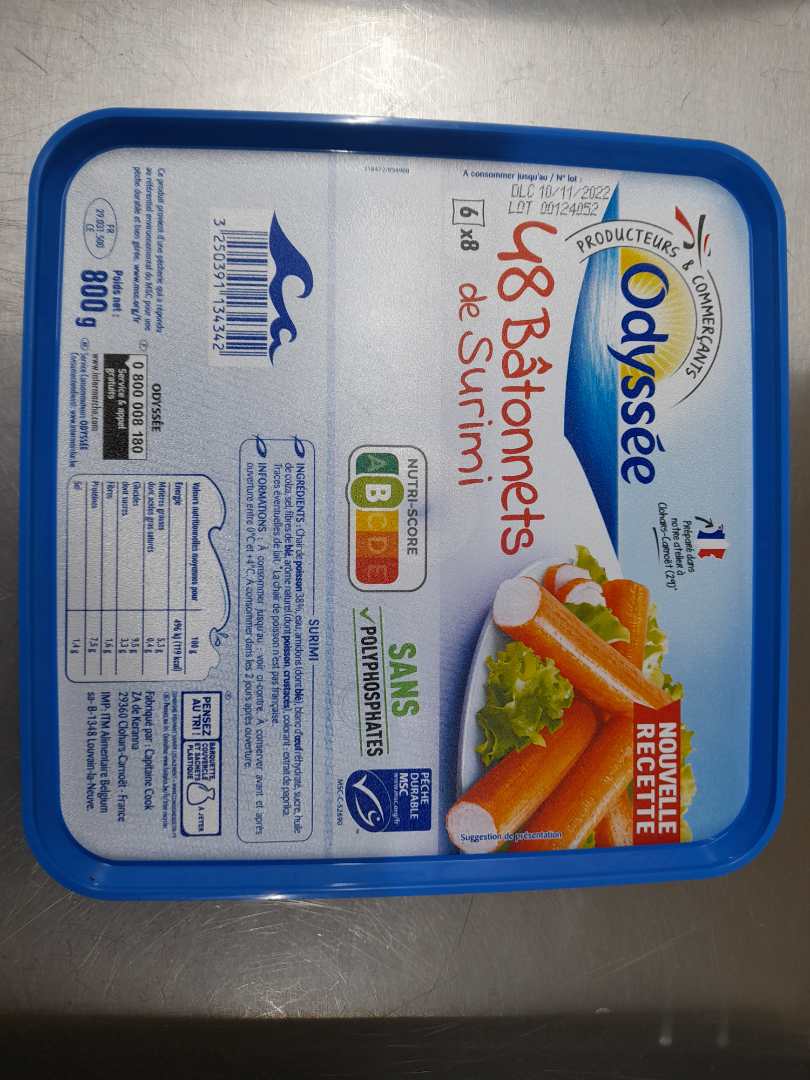
France – Surimi sticks – Microbial growth

Gov france

Identification information of the recalled product

  • Product category Feed
  • Product subcategory Prepared meals and snacks
  • Product brand name ODYSSEY
  • Model names or references30 Surimi sticks 48 Surimi sticks
  • Identification of products
    GTIN Batch Date
    3250390859963 00122366 Use-by date 09/22/2022
    3250391134342 00122368 Use-by date 09/22/2022
  • Packaging Plastic box of 500g and 800g
  • Marketing start/end date From 04/07/2022 to 02/09/2022
  • Storage temperature Product to be stored in the refrigerator
  • Health mark FR 29 031 500 EC
  • Geographic area of ​​sale Whole France
  • Distributors INTERMARCHE

Practical information regarding the recall

  • Reason for recall The products may present an organoleptic defect probably due to microbial growth
  • Risks incurred by the consumer Organoleptic changes

Austria – NÖM PRO protein drink cocoa – Microbiological Deviation

AGES

As part of the precautionary quality assurance, it was determined that a few bottles of the product NÖM PRO protein drink cocoa with the best before date 19.12.2022 had a microbiological deviation and a changed consistency.

NÖM PRO protein drink cocoa, 350 g, best before date 19.12.2022

Only some of the bottles with this best-before date are affected, which were delivered to individual BILLA, BILLA PLUS and ADEG branches in Vienna, Lower Austria and Burgenland. The trading partner has already been informed and all affected products were immediately removed from the shelves.

The changed consistency of the defective product is clear and recognizable at first sight, as the product is puncture-resistant and surrounded by a transparent whey liquid. It is not suitable for consumption in this form.

From the point of view of preventive consumer protection, NÖM AG asks you to return this product to the BILLA, BILLA PLUS or ADEG sales outlet in Vienna, Lower Austria and Burgenland if it is in a faulty condition. The returned goods will of course also be replaced without presenting a receipt.

NÖM PRO protein drinks cocoa with this best-before date, which shows the usual content, as well as other best-before dates of the NÖM PRO protein drink cocoa, all other products of the NÖM PRO and NÖM brands are not affected and can still be bought and consumed without hesitation.

NÖM AG thus fulfills its personal responsibility in accordance with the provisions of food law. If consumers have questions, the consumer service of NÖM AG is available at the following telephone number: 0800 800 500 .

original recall

Australian Food Safety Week 2022 will be held from 12 – 19 November 2022

Food Safety Council

The theme will be ‘Food safety – raw and risky’ covering the risk of food poisoning from raw or minimally cooked meat, poultry, fish, eggs and vegetables as well as possible  parasite infections. We will also be celebrating our 25th anniversary of educating the Australian community in food safety.

Our community package for AFSW2022 containing social media tiles, posters, sample media release, a quiz and event registration will be available in September subscribe to our newsletter to keep up to date.

Proudly sponsored by Fit for Food an initiative of our member ACCORD Australasia.

Thanks also to our member SA Health for sponsoring our consumer research

Promote your local event by using our sample media release

Share our Raw and Risky quiz

Reusable Food Containers and Food Safety

Food Safety Council

The Food Safety Information Council today issued advice about safely using reusable food containers, especially as they are gaining acceptance with food retailers.

Cathy Moir, Council Chair, said whether it is your coffee keep cup, refillable water bottle, or if you are taking your own container to the deli, take away or cafe we need to follow some safety tips to make sure we aren’t increasing cases of food poisoning.

‘We support the reduction of singe use plastics but not at the expense of increasing the number of cases of food poisoning. For example, we support the use of thin plastic bags to stop the contamination of ready to eat salad vegetables at the checkout or loose in supermarket trolleys.’ Ms Moir said.

‘But you need to follow these 6 simple tips to keep your food safe:

  1. Make sure the container is easy to keep clean and that you clean it thoroughly with hot water and detergent (or in the dishwasher) between uses. Some types of containers, such as plastic takeaway food containers are only meant for single use or are very difficult to clean so are not suitable to reuse as a food container.
  2. Your container must have a sealable lid that won’t leak and have removable seals for easy cleaning. This is especially important for raw meat that could drip onto other food.
  3. Stick to the rules of the retailer, for example, some retailers won’t accept glass or ceramic containers in case they are dropped and shatter.
  4. Where your retailer doesn’t offer plastic ‘barrier’ bags for fruit and vegetables, that won’t be cooked before eating, take your own washable bag and, as always, thoroughly rinse the fruit and veggies under running water before use. If you do use a plastic produce bag remember that soft plastics can be recycled at RED facilities in many major supermarkets.
  5. If you are purchasing hot food or taking a ‘doggy bag’ of leftovers home from a restaurant transport the food in an insulated bag and use or refrigerate within 2 hours. Make sure the container you use is suitable for reheating in the microwave or oven. Leftovers will last 2 to 3 days in the fridge and should be reheated to 75°C or using the microwave reheat auto function.
  6. Discard your plastic container once it shows signs of wear and tear as cracks, breaks, scores in the plastic can allow contaminants to enter or make the container difficult to clean. This may allow chemicals to migrate into the food or contaminate it with shards of plastic.

‘Finally, don’t forget to empty and wash your reusable water bottles daily after use to prevent bacteria, and even fungi, growing inside the bottle from it touching your mouth or even leaving a half-finished bottle lying about at room temperature. Use hot water and a bottle brush then allow the bottle to air dry thoroughly before refilling or put it in the dishwasher if the bottle is dishwasher safe. If you use a water bladder when jogging or cycling you can clean it with hot water and two tablespoons of baking soda or bleach, hold the bladder up and pinch the bite valve so the solutions runs into the tube, then leave for 30 minutes. Then rinse with clean water. Some brands also sell cleaning tablets to use,’ Ms Moir concluded.

Media contact: Lydia Buchtmann, Food Safety Information Council, 0407 626 688 or info@foodsafety.asn.au

Research – WHO wants help to estimate foodborne disease burden

Food Safety News

The World Health Organization (WHO) has called for help as part of work to estimate the burden of foodborne disease.

WHO is seeking support from independent consultants or groups of experts with relevant experience to undertake systematic reviews and other studies on foodborne illness. The process is part of collecting and assessing available evidence.

One call is for the review and evidence synthesis of diarrheal diseases and deaths caused by 14 pathogens commonly transmitted by food. The other covers global expert elicitation for attribution of burden of disease to foodborne transmission and to specific foods.

The WHO Foodborne Disease Burden Epidemiology Reference Group (FERG) was reconvened in May 2021 to update global estimates published in 2015. This group has already met three times in July and October 2021, and April 2022. A new report is expected in 2025.