USA – Pennsylvania recalls raw milk and cheese due to Listeria monocytogenes

Food Poison Journal

Consumers should immediately discard raw whole milk or chocolate milk sold in Dauphin County and other southcentral Pennsylvania retail stores under the BeiHollow label between October 12 and 21. BeiHollow pasteurized cheese melt and cup cheese sold between September 20 and October 21 should also be discarded due to possible contamination. Tests following a report of potential listeria contamination confirmed the presence of listeria monocytogenes bacteria.

Raw whole and chocolate milk was sold in plastic half- and three-quarter gallons at BeiHollow Farm stores in Elizabethville and Lykens, Dauphin County. Cheese melt and cup cheeses of various sizes were sold in the same stores. The producer would not supply a list of other locations where the products were sold.

FDA Works to Protect Consumers from Foodborne Illness and other Adverse Events

FDA

A Conversation with Stic Harris, Conrad Choiniere, and Michael Rogers on Foodborne Illness and other Adverse Events 

Each year, the FDA receives approximately 9,600 reports of foodborne illness or other adverse events related to FDA-regulated human food and dietary supplement products submitted by individual consumers, public health professionals, or industry.[1] In addition, the FDA’s Coordinated Outbreak Response & Evaluation (CORE) Network evaluates an average of 75 incidents annually that may potentially constitute a national, multi-state outbreak. 

The FDA takes its responsibility to safeguard the food supply very seriously and is committed to being transparent about how FDA approaches its food safety mission, particularly about how the agency responds when it receives reports of foodborne illness and other adverse events.   

That is what three foods program leaders will discuss in this conversation about challenges and opportunities they face every day in working to protect consumers from potential hazards in the complex, global food system.

Stic Harris, DVM, MPH, is the director of FDA’s Coordinated Outbreak Response & Evaluation (CORE) Network, which is on the frontline of foodborne illness outbreak investigations.

Conrad Choiniere, Ph.D., is the director of the Office of Analytics and Outreach at FDA’s Center for Food Safety and Applied Nutrition (CFSAN). His office evaluates consumer complaints and reports of potential hazards associated with FDA-regulated food, dietary supplements and cosmetic products.

Michael Rogers, MS, is the Assistant Commissioner for Human and Animal Food Operations in FDA’s Office of Regulatory Affairs (ORA), the inspection and enforcement arm of the FDA. In his role he works with ORA’s consumer complaint coordinators and investigators in the field, who are the agency’s boots on the ground in this work to keep foods safe.

These three leaders represent different aspects of the agency’s food safety work and, together, they will provide an overview of how FDA is doing its job and what it can, and will, do to continually improve in this space.

Research -Food Safety Issues Related to Eating In and Eating Out

MDPI

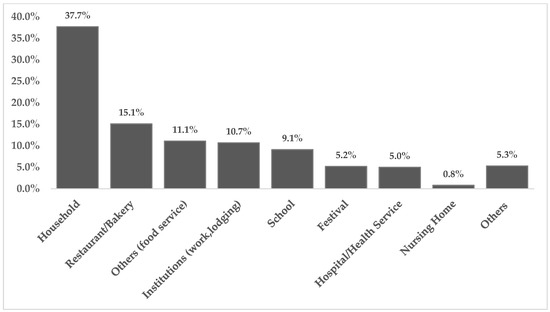
Because of growing urbanization and lack of time to prepare meals at home, eating out or getting food delivered have become common trends for many people. The consumption of food from unknown sources may impose an increased chance of contamination with microbiological hazards, especially if sanitary conditions are not met. We evaluated data from health surveillance agencies and scientific articles on foodborne diseases (FBD) reported internationally according to the exposure sites. We observed that the data are influenced by cultural, political, and socioeconomic differences. For instance, in New Zealand, Australia, United States, Denmark and India, the occurrence of FBD outbreaks was greater from foods prepared in commercial establishments and street vendors than from households. Conversely, in China, countries of the European Union and Brazil, the results are the opposite. Additionally, the pandemic imposed new eating behaviour patterns, increasing delivery services and foods prepared in so-called “Dark Kitchens”. The underreporting and heterogeneity of data among countries prevented a precise conclusion to the question of whether homemade foods are inherently safer than foods prepared out. Nevertheless, a lower level of development in a country influences its sanitation conditions, as well as the number of street food vendors, the search for cheaper foods, and insufficient knowledge of the population on good hygiene practices, which can all increase the chances of FBD cases.

France – SMOKED CHICKEN – Listeria monocytogenes

Gov france

Identification information of the recalled product

  • Product category Feed
  • Product subcategory Meats
  • Product brand name CHICKEN SMOKED WITH BEECH WOOD RONSARD OVALYS
  • Model names or referencesBEECH WOOD SMOKED CHICKEN
  • Identification of products
    Batch Date
    5412190115 Use-by date 09/11/2022
  • Packaging CHICKEN IN FILM
  • Marketing start/end date From 20/10/2022 to 21/10/2022
  • Storage temperature Product to be stored in the refrigerator
  • Health mark FR 56 017 002 EC
  • Geographic area of ​​sale Regions: Brittany
  • Distributors NETTO VITRE – 35 – INTER BRIEC DE L ODET – 29- HYPER U COMBOURG – 35- INTER CHANTEPIE – 35- C. LECLERC LANESTER – 56- NETTO SARAH BERNARDT – 35- SUPER U MUZILLAC – 56- INTER BUBRY – 56- INTER BAIN FROM BRITTANY -35- NETTO SENE – 56-

Practical information regarding the recall

  • Reason for recall SUSPICION OF LISTERIA MONOCYTOGENES
  • Risks incurred by the consumer Listeria monocytogenes (causative agent of listeriosis)

France – CABRIFRAIS Cheese- STEC E.coli O103

Gov france

Identification information of the recalled product

  • Product category Feed
  • Product subcategory Milk and dairy products
  • Product brand name Crays goatherd
  • Model names or references CABRIFRAIS with raw milk
  • Identification of products
    GTIN Batch Date
    3503961317004 255 Date of minimum durability 11/10/2022
    3503961315062 255 – 258 Date of minimum durability 11/10/2022
    3503961314126 255 Date of minimum durability 11/10/2022
    3503961321124 255 Date of minimum durability 11/10/2022
    3503965317024 256 Date of minimum durability 11/10/2022
  • Marketing start/end dateFrom 09/12/2022 to 09/20/2022
  • Storage temperature Product to be stored in the refrigerator
  • Health mark EN.71235001.CE
  • Geographic area of ​​sale Regions: Auvergne-Rhône-Alpes, Burgundy-Franche-Comté, Grand-Est
  • Distributors Fromager des Halles, Auchan, Carrefour, Intermarché, System U

Practical information regarding the recall

  • Reason for recall Presence of Escherichia coli O103:H2
  • Risks incurred by the consumer Toxigenic Shiga Escherichia coli (STEC)

France – DRY GOAT CHEESE – STEC E.coli

Gov france

Identification information of the recalled product

  • Product category Feed
  • Product subcategory Milk and dairy products
  • Product brand name CHEVRIGNY – CHEVRIER DES CRAYS
  • Model names or references Churns Mini Churns
  • Identification of products
    GTIN Batch Date
    3503965270008 272 Date of minimum durability 14/11/2022
  • Products ListList_of_dry_products.pdfAttachment
  • Packagingplastic tray or bare product in traditional network
  • Marketing start/end date From 09/12/2022 to 09/20/2022
  • Storage temperature Product to be stored in the refrigerator
  • Health mark FR-71-235-001-CE
  • Further information Dry goat cheese
  • Geographic area of ​​sale Whole France
  • Distributors CARREFOUR France GRAND FRAIS France INTERMARCHE Bourgogne Franche Comté METRO Chalon sur Saône METRO Dijon HYPER U, SUPER U Burgundy Rhône Alpes Alsace

Practical information regarding the recall

  • Reason for recall Recall information for health reasons
  • Risks incurred by the consumer Toxigenic Shiga Escherichia coli (STEC)

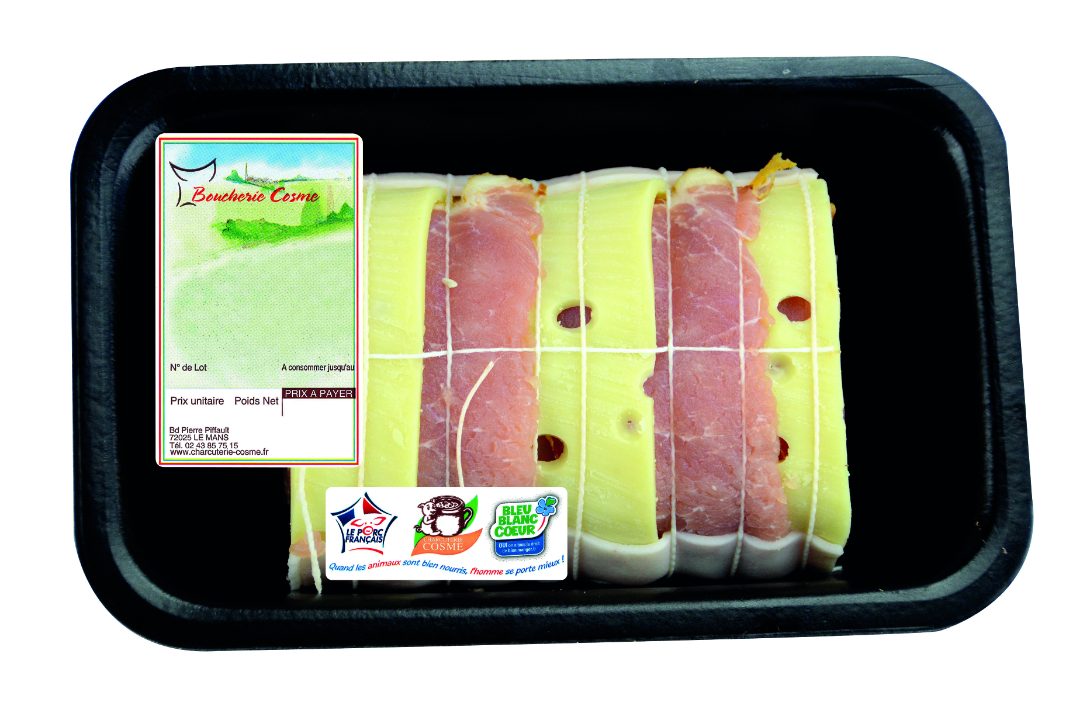
France – ORLOFF PORK ROAST- Salmonella

Gov france

Identification information of the recalled product

  • Product category Feed
  • Product subcategory Meats
  • Product brand name COSME DELICATESSEN
  • Model names or references ORLOFF PORK ROAST
  • Identification of products
    Batch Date
    224210 Use-by date 27/10/2022
  • PackagingTRAY X1
  • Storage temperature Product to be stored in the refrigerator
  • Health mark EN 72.181.005 EC
  • Geographic area of ​​sale Departments: ILLE-ET-VILAINE (35), INDRE-ET-LOIRE (37), MAYENNE (53), ORNE (61), SARTHE (72)
  • DistributorsE. LECLERC, AUCHAN, CARREFOUR CONTACT, CARREFOUR MARKET, PROXI SUPER
  • List of points of sale List_of_sales_points.pdf

Practical information regarding the recall

  • Reason for recall Presence of Salmonella spp
  • Risks incurred by the consumer Salmonella spp (causative agent of salmonellosis)

Canada – Family’s Choice Distribution brand Tahini Extra Sesame Seed Paste recalled due to Salmonella

CFIA

Summary

Product
Tahini Extra Sesame Seed Paste
Issue
Food – Microbial Contamination – Salmonella
What to do

Do not use, sell, serve or distribute the affected product

Audience
Hotels, restaurants and institutions
Affected products

Family’s Choice Distribution brand Tahini Extra Sesame Seed Paste recalled due to Salmonella.

The recalled product was sold in Ontario.

Research – Illnesses Linked to Harmful Algal Blooms

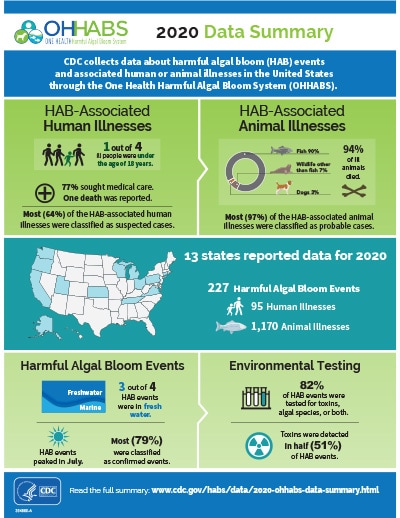
Graphic showing 2020 data about illnesses in people caused by harmful algal blooms

Highlight

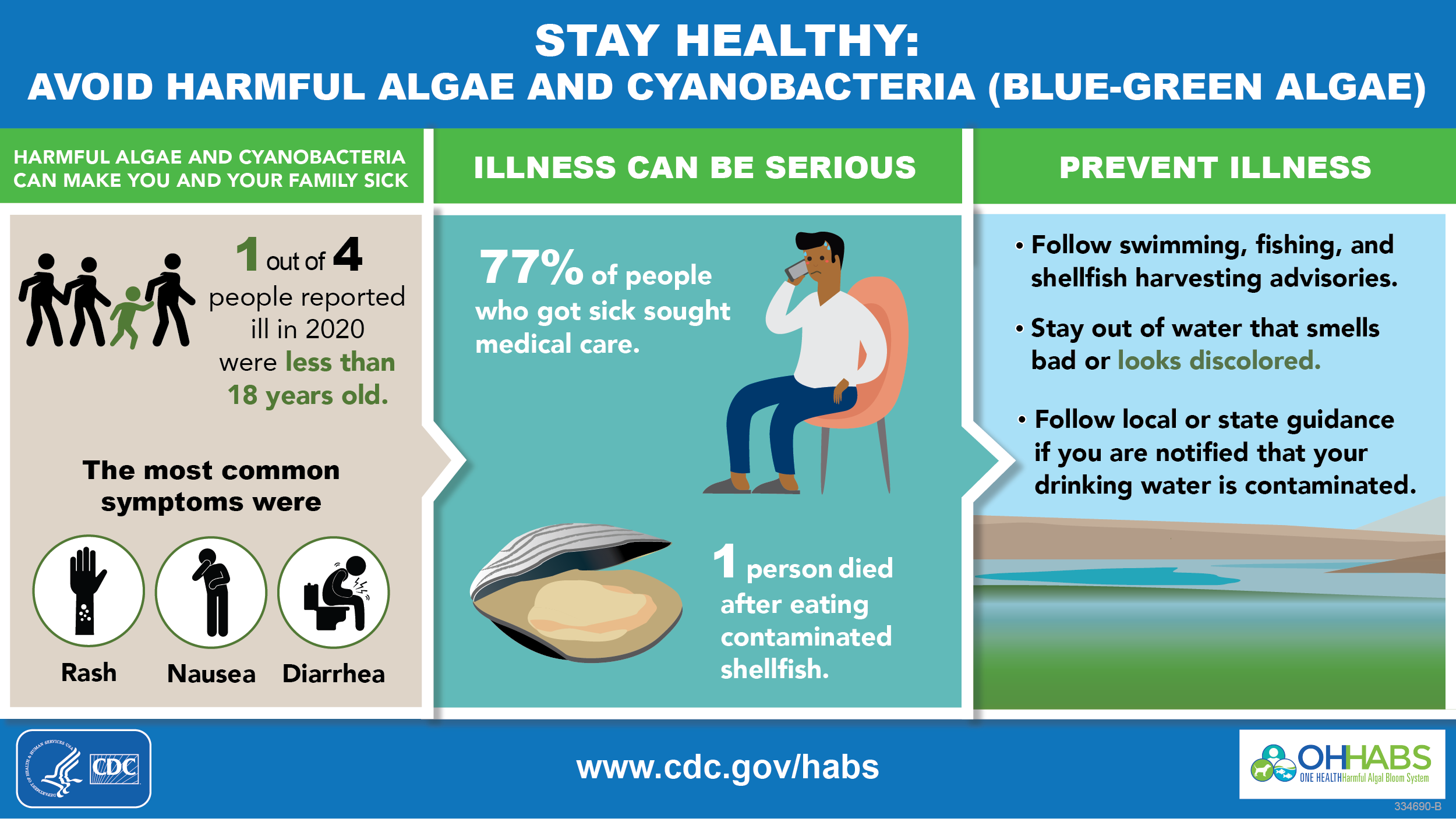
  • Thirteen states reported 227 harmful algal blooms (HABs) that resulted in a total of 95 human illnesses and at least 1,170 animal illnesses.
  • The first human death reported in OHHABS was associated with paralytic shellfish poisoning.
  • A HAB event in September killed at least 1,000 fish (carp).
  • 22 human illnesses (23%) were associated with national parks, with 21 illnesses attributed to a single HAB event.

Background

Harmful algal blooms (HABs) that result from the rapid growth of algae or cyanobacteria (sometimes referred to as blue-green algae) in natural waterbodies can harm people, animals, or the environment. HAB events of public health concern are primarily caused by microalgae called diatoms and dinoflagellates, cyanobacteria, and the toxins they can produce. HAB events, which can be intensified by factors such as nutrient pollution and warmer water temperature, can have public health, environmental, and economic impacts.

HABs are a One Health issue—they affect the health of people, animals, and our shared environment. One Health is a collaborative and multi-sectoral approach that involves engagement across disciplines including public health, animal health, and environmental health. Using a One Health approach, CDC collects data about HAB events and associated human or animal illnesses through the One Health Harmful Algal Bloom System (OHHABS) to inform public health prevention efforts.

Within the context of OHHABS, the term HAB event describes the identification of a bloom or the detection of HAB toxins in water or food (i.e., absent a visual bloom). Human illnesses are reported individually. Animal illnesses are reported as single cases of illness or in groups, such as flocks of birds. The reporting system can link HAB event data with human or animal illness data. OHHABS uses standard definitions [PDF – 3 pages] to classify HAB events as suspected or confirmed and human or animal illness as suspected, probable, or confirmed.

OHHABS is available for voluntary reporting by public health agencies and their designated environmental health or animal health partners in the United States, District of Columbia, Federated States of Micronesia, Guam, Marshall Islands, Northern Mariana Islands, Palau, Puerto Rico, and U.S. Virgin Islands. Public health agencies use standard forms to report HAB events, human cases of illness, and animal cases of illness to OHHABS. Public health agencies do not need to submit all three types of forms to participate.

Data collected for HAB events include general information (e.g., observation date), geographic information, water body characteristics (e.g., salinity), observational characteristics (e.g., water color, scum), and laboratory testing. Data collected for cases of illness include general demographic characteristics, exposure information, signs and symptoms, medical care, and health outcomes. OHHABS is a dynamic electronic reporting system; data within individual reports are subject to change over time. Data included in this report are from a specific point in time.

New Zealand – Hepatitis A Outbreak linked to frozen berries jumps to 18.

Food Poison Journal

The Ministry of Health said on Thursday afternoon that the number of confirmed cases linked to the outbreak had grown to 18 in total. Of these, nine (50%) have been hospitalized.

As of Thursday, 14 of the 18 cases have been sequenced to date – all 14 have an identical sequence profile, indicating they likely came from the same source.

Hepatitis A is spread by contact with feces of an infected person. It can be passed on through poor personal hygiene (such as when people don’t wash their hands properly), contaminated food and close personal contact.

All 18 cases reported “significant” consumption of uncooked, imported frozen berries.

Food safety officials have advised that Pams – a New Zealand division of supermarket giant Foodstuffs – was recalling various imported frozen berry products as a precaution, over a possible link to recent cases of the contagious virus in fruit from Serbia.