France – Salmon Eclair – Listeria monocytogenes

Gov france

Identification information of the recalled product

  • Product category Food
  • Product subcategory Others
  • Product brand name Unbranded
  • Model names or references Salmon eclair
  • Identification of products
    GTIN Batch
    0207559000000 Salmon eclair made on 12/16/22
  • Packaging individual
  • Storage temperature Product to be stored in the refrigerator
  • Further information Shell: Coup de pates Cream: Normandy Service Fresh Salmon: Brand Mark Sold in the Trad Catering Department
  • Geographic area of ​​saleVernon (27200)
  • Distributors E. Leclerc VERNON

Practical information regarding the recall

  • Reason for recall  Presence of Listeria Monocytogenes greater than 100 CFU/g

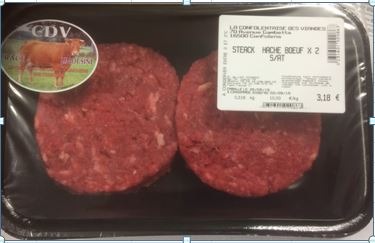
France – Chopped steak – Salmonella

Gov france

Identification information of the recalled product

  • Product category Food
  • Product subcategory Meats
  • Product brand name CDV Confolentaise of Meats
  • Model names or references Chopped Steak S/AT x2 10%MG Chopped Steak S/AT x16 10%MG Chopped Steak S/Vide x5 10%MG
  • Identification of products
    Batch Date
    H221219 Use-by date 28/12/2022
  • Packaging x2 /X16/X5
  • Marketing start/end date From 22/12/2022 to 28/12/2022
  • Storage temperature Product to be stored in the refrigerator
  • Geographic area of ​​sale Whole France
  • DistributorsLeclerc Rocadis Flavors of Antoine Limoges NosEpiceries NetN Small basket of brillac Dominique Isabelle Pressac

Practical information regarding the recall

  • Reason for recall Presence of Salmonella
  • Risks incurred by the consumer Salmonella spp (causative agent of salmonellosis)

Australia – Coles Finest Australian Washed Rind Cheese – E.coli

FSANZ

Product information

Coles Supermarkets is conducting a recall of Coles Finest Australian Washed Rind Cheese. The product has been available for sale at Coles Supermarket stores in VIC and TAS and Coles Online.

​Date markings

Best before dates of 14th Dec 2022 up to and including 1st Feb 2023

Coles Finest Australian Washed Rind Cheese

Problem

The recall is due to microbial (E. coli) contamination.

Food safety hazard

Food products contaminated with E. coli may cause illness if consumed

Country of origin

Australia

What to do​

Consumers should not eat this product and should return the product to the place of purchase for a full refund. Any consumers concerned about their health should seek medical advice.

For further information please contact:

Coles Customer Care

1800 061 562

​

Related links:

Spain – Cooked Pork Head Meat – Listeria monocytogenes

AESAN

The Spanish Agency for Food Safety and Nutrition has learned, through the Coordinated System for Rapid Information Exchange (SCIRI), of an alert notification sent by the health authorities of the Basque Country, regarding the presence of Listeria monocytogenes in beef cooked pig’s head from Spain.

The data of the product involved are:

  • Product name (on label): Cooked pig’s head
  • Brand: Susaeta
  • Lot number: all those currently on the market
  • Expiration date: all
  • Unit Weight: 100g

Available images are attached.
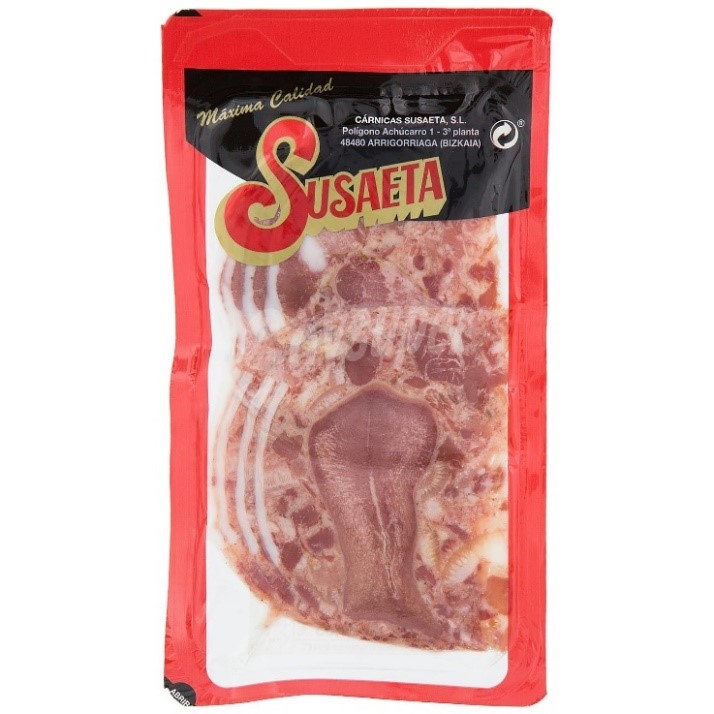

According to the information available, the initial distribution of the products has been in Andalusia and Castilla – La Mancha, although it is not ruled out that there may be distribution in other autonomous communities.

This information has been transferred to the competent authorities of the autonomous communities through the Coordinated System for Rapid Information Exchange (SCIRI) in order to verify the withdrawal of the affected products from the marketing channels.

With the information available there is NO record in Spain of any reported case associated with this alert.

People who have products affected by this alert at home are recommended to refrain from consuming them and return them to the point of purchase.

In the case of having consumed these types of products from the affected batches and presenting any symptoms compatible with listeriosis (fever, headache, vomiting or diarrhea), it is recommended to go to a health center.

In the case of being pregnant, it is recommended to consult the recommendations for consumption during pregnancy made by the AESAN regarding important food hygiene practices for pregnant women, as well as a list of foods that should be avoided during pregnancy because they are associated with to certain biological hazards (among which Listeria monocytogenes stands out ).

The importance of taking extreme hygiene measures to avoid cross-contamination with other products is recalled.

You can expand the information on listeriosis in the following link .

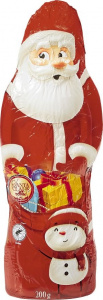
Germany – Santa Claus in town Santa made of milk chocolate, 200g – Salmonella

LMW

Alert type:

groceries

Date of first publication:

12/23/2022

Product name:

Santa Claus in town Santa made of milk chocolate, 200g

Product images:

SCIT-Santa Claus-200g-r.jpg
Manufacturer (distributor):

Hans Riegelein & Sohn GmbH & Co. KG distributed and manufactured for Netto Marken-Discount Stiftung & Co. KG

Reason for warning:

salmonella

Packaging Unit: 200 g
Durability: 07/31/2023
Lot identification: L-102293N
Additional Information:

Reference is made to the information below from the food business operator.

Italy – Cheese – Brillo di TREVISO gr. 380 – Listeria monocytogenes

Salute

Brand : ACADEMY OF CHEESE

Denomination : Brillo di TREVISO gr. 380

Reason for reporting : Recall for microbiological risk

Publication date : December 23, 2022

Documentation

Documentation

Wegmans Food Markets, Inc. Announces Voluntary Recall of Products Containing Micro Greens, Sweet Pea Leaves, and Cat Grass Because of Possible Health Risk – Salmonella

FDA

baby kale & spinach

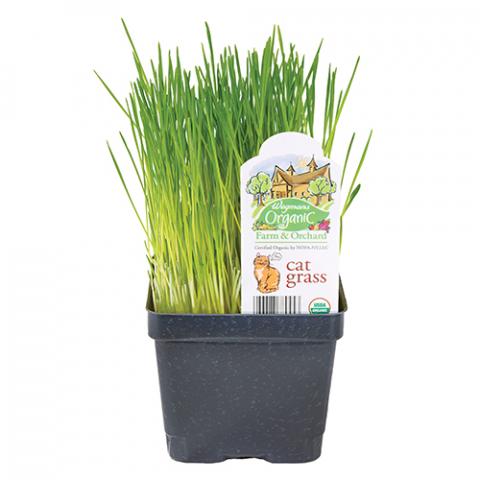
cat grass

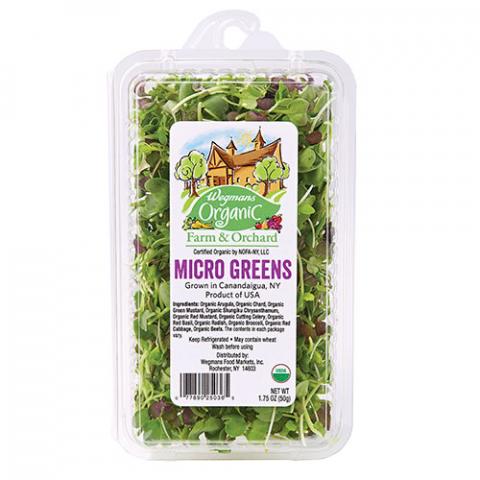
micro greens

Summary

Company Announcement Date:
FDA Publish Date:
Product Type:
Food & Beverages
Reason for Announcement:
Potential presence of Salmonella
Company Name:
Wegmans Food Markets, Inc.
Brand Name:
Wegmans Organic
Product Description:
Microgreens, sweet pea leaves, cat grass

Company Announcement

ROCHESTER, NY – Wegmans Food Markets, Inc. is issuing a voluntarily recall on its products containing micro greens, sweet pea leaves, and cat grass because they have the potential to be contaminated with Salmonella, an organism which can cause serious and sometimes fatal infections in young children, frail or elderly people, and others with weakened immune systems. Healthy persons infected with Salmonella often experience fever, diarrhea (which may be bloody), nausea, vomiting and abdominal pain. In rare circumstances, infection with Salmonella can result in the organism getting into the bloodstream and producing more severe illnesses such as arterial infections (i.e., infected aneurysms), endocarditis and arthritis.

The affected products were sold at various Wegmans stores in NY, PA, MA, NJ, VA, MD & NC. A full list of potentially affected items can be found on the recall page of Wegmans.comExternal Link Disclaimer and are highlighted below.

Product Size UPC Dates
Wegmans Organic Farm & Orchard Micro Greens 1.75 oz UPC 77890-25036 Use by dates: 12/17/22
and 12/24/22
Wegmans Organic Baby Kale & Baby Spinach with Sweet Pea Leaves 5 oz UPC 77890-52377 Use by date: 12/20/22
Wegmans Organic Farm & Orchard Cat Grass 1 EA UPC 77890-50938 Sold since: 10/25/22

We are voluntarily recalling these products because some of the soil they were grown in, supplied to Wegmans Organic Farm by bio365 of Ithaca, New York, tested positive for Salmonella by the supplier. This is out of an abundance of caution. No illnesses have been associated with this recall.

Wegmans is placing automated phone calls to alert customers who purchased these products using Shoppers Club cards.

Customers should return these products to the service desk for a full refund. Those with questions may contact Wegmans Food Markets 1-855-934-3663 Monday through Friday from 8:00 a.m. – 7:00 p.m. or Saturday and Sunday from 8:00 a.m. – 5:00 p.m. Please note that due to the holiday our Customer Care Center will close at 4:30 pm on 12/24/22 and reopen at 8:00 am on 12/26/22.

Research – Increasing the Safety and Storage of Pre-Packed Fresh-Cut Fruits and Vegetables by Supercritical CO2 Process

MDPI

Abstract

This work presents a feasibility lab-scale study for a new preservation method to inactivate microorganisms and increase the shelf life of pre-packed fresh-cut products. Experiments were conducted on coriander leaves and fresh-cut carrots and coconut.
The technology used the combination of hydrostatic pressure (<15 MPa), low temperature (≤45 °C), and CO2 modified atmosphere packaging (MAP). The inactivation was achieved for the naturally present microorganisms (total mesophilic bacteria, yeasts and molds, total coliforms) and inoculated E. coli. Yeasts and molds and coliform were under the detection limit in all the treated samples, while mesophiles were strongly reduced, but below the detection limit only in carrots.
Inoculated E. coli strains were completely inactivated (>6.0 log CFU/g) on coconut, while a reduction >4.0 log CFU/g was achieved for carrots and coriander. For all the treated products, the texture was similar to the fresh ones, while a small alteration of colour was detected. Microbiological stability was achieved for up to 14 days for both fresh-cut carrots and coconut.
Overall, the results are promising for the development of a new mild and innovative food preservation technique for fresh food.

Research – Spraying an army of bacteria-eating viruses can save us from food poisoning

Interesting Engineering

Every year more than 40 million people in the U.S. suffer from foodborne illnesses caused by bacteria, viruses, and various other types of pathogens. Food contamination is often underestimated, but it is responsible for 420,000 deaths annually. This number represents more people than the entire population of Iceland.

After being produced on a farm, food passes through a lot of channels before it makes it to our platter. Preventing it from contamination is almost impossible. However, a team of researchers from McMaster University in Ontario has figured out a way to free food from disease-causing bacteria before it goes into your stomach, according to a press release.

They have developed a food decontamination spray that employs food-safe microscopic beads containing bacteriophages (viruses that kill bacteria). The researchers claim, during the study, they were able to free lettuce and meat from E. coli 0157, a common food-borne pathogen that infects the human intestine and causes health issues such as diarrhea. 

Research – Evaluation of the Prevalence of Staphylococcus aureus in Chicken Fillets and Its Bio-Control Using Different Seaweed Extracts

MDPI

Abstract

This study aims to assess the occurrence of Staphylococcus aureus in chicken fillets and to control its growth using various lyophilized seaweed extracts (i.e., Halimeda opuntia (HO), Actinotrichia fragilis, and Turbinaria turbinata) by an agar disk diffusion assay in vitro. Results showed that prevalence of S. aureus in breast and thigh samples reached of 92% and 84%, respectively. Lyophilized HO extract was the only seaweed that showed the antibacterial activity against S aureus with a significant difference at p < 0.05. The minimum inhibitory concentration (MIC) of HO extract was 1.5%, with an inhibition zone of 8.16 ± 0.73 mm. Regarding 1,1-diphenyl-2-picrylhydrazyl (DPPH) scavenging activity, IC50 was recorded at 55.36 μg/mL, whereas cytotoxic IC50 of the lyophilized HO extract on peripheral blood mononuclear cells (PBMCs) was 33.7 µg/mL; a higher IC50 of HO extracts permits their use as a safe food additive in meat products. Moreover, total phenolic compounds and total flavonoids compounds recorded 20.36 ± 0.092 and 16.59 ± 0.029 mg/mL, respectively. HPLC analyses of phenolic compounds profiles exhibited many bioactive substances and the higher ratio was daidzein with 10.84 ± 0.005 µg/mL and followed by gallic acid with a value of 4.06 ± 0.006 µg/mL. In a challenge study, chicken fillet (CHF) experimentally inoculated with S. aureus (ST) and treated with the lyophilized HO algal extract at 4% and 6% (CHF/ST/HO) showed a complete reduction of S. aureus count on the 6th and 4th days in chicken fillet stored at 4 °C, respectively. Moreover, CHF/ST/HO at 4% and 6% of HO extract enhanced the sensory attributes of grilled un-inoculated chicken fillet. Thus, lyophilized HO extracts are promising antibacterial and antioxidant candidates in the chicken meat industry.