USA – Tama Corporation Recalls Product Because of Possible Health Risk – Listeria monocytogenes

FDA

Tama Corporation of Doral FL is recalling 24-ounce containers of “Queso de Mano PAISA” have contamination with Listeria monocytogenes, a bacterium that can cause serious and sometimes fatal infections in young children, frail or elderly people, and others with weakened immune systems. Healthy individuals may suffer only short-term symptoms such as high fever, severe headache, stiffness, nausea, abdominal pain, and diarrhea. Listeria infection may cause miscarriages and stillbirths among pregnant women.

Because of our commitment to the safety of our consumers, at Tama Corporation, we demand rigorous quality controls from our products suppliers. In this regard, we were informed by the co-packer of our QUESO DE MANO PAISA, that a batch of 18 cases distributed in Salt Lake City, Utah, was suspicious of Listeria monocytogenes contamination, and we immediately contacted the involved supermarket chain to halt its sale and account for all the product belonging to that vat.

Today, it has been confirmed that a sample from this batch is contaminated.

  • The recalled “Queso de Mano Paisa” was only sold in Utah, at Rancho Markets stores.
  • The product is packaged in a 24-ounce plastic container. Recalled lot number is: 2420104. BEST BY MAY 16, 2024
  • Lot code can be found on the clear plastic lid of the container. Product UPC: 838795000338.

The recall was initiated after one laboratory analysis came out suspicious of that lot sample being contaminated. After a second analysis, this was confirmed. No illnesses have been reported to date in connection with this problem.

We assure all our consumers, clients and distributors that we have taken all necessary actions, hand in hand with the product manufacturer, the FDA, and the USDA, to prevent the situation from happening again.

Consumers with questions may contact the company at 305-592-1717 Monday to Friday, from 9:00 AM to 5:00 PM EST or via email: info@elpaisa.net.
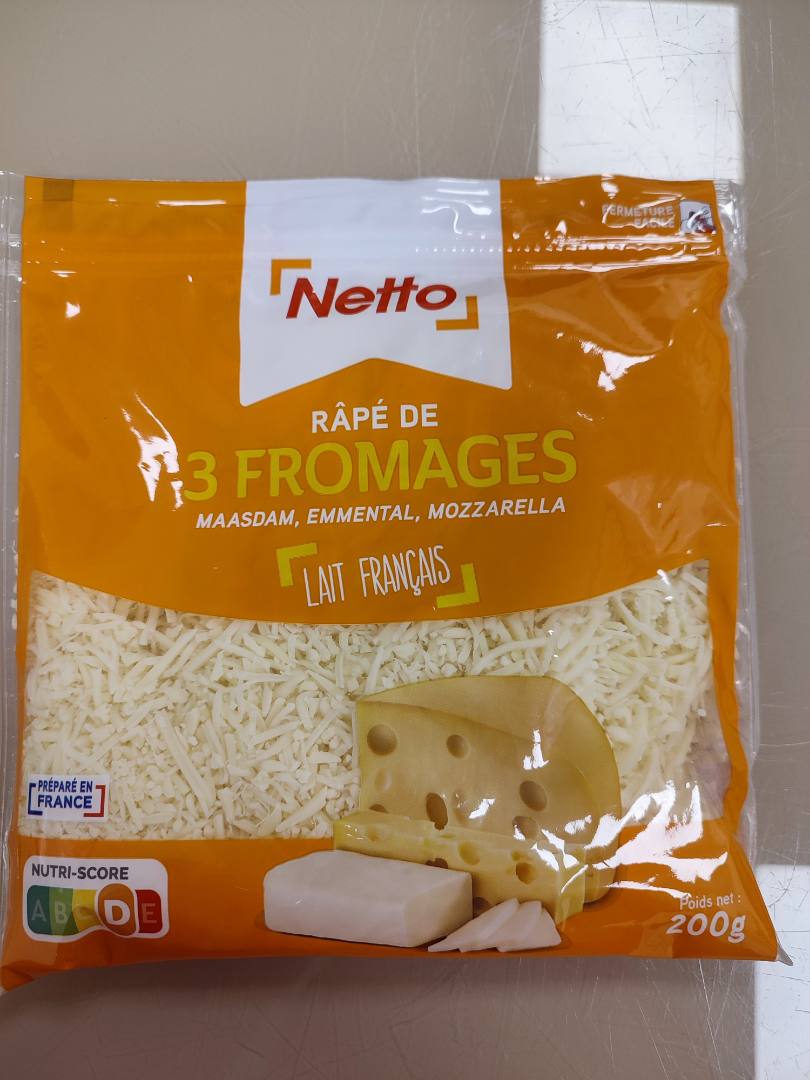
France – Grated 3 cheeses Maasdam, Emmental, Mozzarella 200g NETTO – Listeria monocytogenes

Gov France

Product category
Food
Product subcategory
Milk and dairy products
Product brand name
CLEAN
Model names or references
Grated 3 cheeses Maasdam, Emmental, Mozzarella 200g NETTO
Product identification
GTIN Batch Date
3250392354404 107B (all times) Minimum durability date 06/26/2024
Packaging
200g
Start/end date of marketing
From 04/17/2024 to 04/24/2024
Storage temperature
Product to keep in the refrigerator
Health mark
FR 44.023.001 CE
Geographical sales area
Departments: AISNE (02), ARDENNES (08), AUBE (10), COTES-D’ARMOR (22), FINISTERE (29), GIRONDE (33), ILLE-ET-VILAINE (35), LANDES (40), LOIRE-ATLANTIQUE (44), MARNE (51), MEURTHE-ET-MOSELLE (54), MEUSE (55), MORBIHAN (56), NORD (59), PAS-DE-CALAIS (62), PYRENEES-ATLANTIQUES (64 ), HAUTES-PYRENEES (65), SOMME (80)
Distributors
CLEAN

Research – New Research Reveals Why You Should Always Refrigerate Lettuce

Scitech Daily

Leafy greens are valuable for their dietary fibre and nutrients, yet they may also carry dangerous pathogens. Lettuce, in particular, has frequently been linked to foodborne illness outbreaks in the U.S. A recent study from the University of Illinois Urbana-Champaign investigates the factors influencing E. coli contamination in five different types of leafy greens: romaine lettuce, green-leaf lettuce, spinach, kale, and collard greens.

“We are seeing a lot of outbreaks on lettuce, but not so much on kale and other brassica vegetables. We wanted to learn more about the susceptibility of different leafy greens,” said lead author Mengyi Dong, now a postdoctoral research associate at Duke University. Dong conducted the research as a doctoral student in the Department of Food Science and Human Nutrition (FSHN), part of the College of Agricultural, Consumer, and Environmental Sciences (ACES) at the U. of I.

Findings on Temperature and Leaf Surface Impact

The researchers infected whole leaves from each of the five vegetables with E. coli O157:H7 and observed what happened after storage at 4° C (39° F), 20° C (68° F), and 37° C (98.6° F). Overall, they found that susceptibility was determined by a combination of temperature and leaf surface properties such as roughness and the natural wax coating.

“At room temperature or higher, E. coli grows very fast on lettuce, but if lettuce is refrigerated at 4° C (39° F), we see a sharp decline in the E. coli population. However, for waxy greens like kale and collard, we get the opposite results. On these vegetables, E. coli grows slower under warmer temperatures, but if it is already present, it can survive longer under refrigeration.”

Research – Impact of food residue on recovery of Listeria monocytogenes and Salmonella Typhimurium from stainless steel surface

I

Wiley Online

Abstract

This study evaluated the impact of different food residues on the recovery of Listeria monocytogenes and Salmonella Typhimurium from stainless steel surfaces. Food residues tested include lettuce rinsate, blended lettuce, low-fat milk, and whole milk for Listeria monocytogenes, and powdered infant formula, all-purpose flour, and whole milk dairy powder for Salmonella Typhimurium. Bacterial suspensions were inoculated on stainless steel surfaces with or without food residues and held for different time periods. Significant differences (P < 0.0001) in Salmonella Typhimurium recovery were observed between the no food residue control and all food residues over 24 hours. For Listeria monocytogenes, minimal variability in recovery was observed among food residue types, with significant differences from the no food residue control (P < 0.05) observed after 24 hours. The study also found that surface sampling can spread Listeria monocytogenes and Salmonella Typhimurium on stainless steel surfaces, suggesting that food residue type may affect microbial recovery during environmental monitoring.

Research – Exploring Extended-Spectrum Beta-Lactamase (ESBL)-Producing Escherichia coli in Food-Producing Animals and Animal-Derived Foods

MDPI

Abstract

Antimicrobials serve as crucial treatments in both veterinary and human medicine, aiding in the control and prevention of infectious diseases. However, their misuse or overuse has led to the emergence of antimicrobial resistance, posing a significant threat to public health. This review focuses on extended-spectrum beta-lactamase (ESBL)-producing Escherichia coli in animals and their associated food products, which contribute to the proliferation of antimicrobial-resistant strains. Recent research has highlighted the presence of ESBL-producing E. coli in animals and animal-derived foods, with some studies indicating genetic similarities between these isolates and those found in human infections. This underscores the urgent need to address antimicrobial resistance as a pressing public health issue. More comprehensive studies are required to understand the evolving landscape of ESBLs and to develop strategic public health policies grounded in the One Health approach, aiming to control and mitigate their prevalence effectively.

Research – Changes in the Quality and Microbial Communities of Precooked Seasoned Crayfish Tail Treated with Microwave and Biological Preservatives during Room Temperature Storage

MDPI

Abstract

The qualities of precooked foods can be significantly changed by the microorganisms produced during room temperature storage. This work assessed the effects of different antibacterial treatments (CK, without any treatment; microwave treatment, MS; microwave treatment and biological preservatives, MSBP) on the physicochemical properties and microbial communities of precooked crayfish tails during room temperature storage. Only the combination of microwave sterilization and biological preservatives significantly inhibited spoilage, as evidenced by the total viable count (4.15 log CFU/g) after 3 days of room temperature storage, which satisfied the transit time of most logistics companies in China. Changes in pH and TVB-N were also significantly inhibited in the MSBP group compared with those in the CK and MS groups. More than 30 new volatile compounds were produced in the CK groups during room temperature storage. However, in the MSBP groups, the volatile compounds were almost unchanged. The correlations between the microbial composition and volatile compounds suggested that specific bacterial species with metabolic activities related to amino acid, energy, cofactor, and vitamin metabolism, as well as xenobiotics biodegradation and metabolism, were responsible for the changes in volatile compounds. These bacteria included Psychrobacter, Arthrobacter, Facklamia, Leucobacter, Corynebacterium, Erysipelothrix, Devosia, Dietzia, and Acidovorax. Overall, our findings provide a foundation for the development of strategies to inhibit spoilage in precooked crayfish tails stored at room temperature.

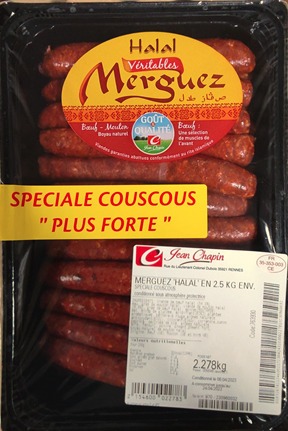
France – MERGEZ HALAL COUSCOUS – Salmonella

Gov France

Product category
Food
Product subcategory
Meats
Product brand name
Unbranded
Model names or references
763930
Product identification
GTIN Batch Date
3267411546009 970/241130031 Use-by date 05/10/2024
Packaging
Plastic tray under modified atmosphere
Start/end date of marketing
From 04/22/2024 to 05/10/2024
Storage temperature
Product to keep in the refrigerator
Health mark
FR 35.353.003 CE
Geographical sales area
Whole France
Distributors
METRO FRANCE
List of points of sale
List_of_METRO_sales_points.pdf

RASFF Alerts – Aflatoxin – Dried Figs – Nutmeg -Groundnuts – Hazelnut Meal – Ground Chillies – Pistachios

RASFF

Aflatoxins in Turkish dried figs in Germany and the Netherlands

RASFF

Aflatoxins in Indonesian nutmeg in the Netherlands

RASFF

Aflatoxin B1 and total aflatoxins in groundnuts from the United States in France

RASFF

Aflatoxin B1 and total aflatoxins in dried figs from Turkey in France

RASFF

Aflatoxin B1 and total aflatoxins in hazelnut meal from Georgia in France

RASFF

Aflatoxine B1 in groundnuts from Paraguay in the Netherlands

RASFF

Aflatoxins in ground chilies from Germany in Romania

RASFF

Aflatoxins in pistachios from Turkey and the USA in Spain

RASFF Alert – Mycotoxin – Chilli Peppers

RASFF

Peperoncino da India mycotoxins in chili peppers from India in Italy

RASFF Alerts – Salmonella – Polish Poultry Products – Brazilian Poultry Products – Sesame seeds – Raisins – Walnut Kernels – Chicken Inner Fillet Meat – Sock Samples – Chicken Meat Preparations

RASFF

Salmonella spp in sesame seeds from Türkiye in Greece

Gov France

Salmonella spp in chicken meat preparation Brazil in the Netherlands

RASFF

Salmonella spp in raisins from Türkiye in the Netherlands

RASFF

Salmonella spp. in walnut kernels from the United States, via the Netherlands in Germany

RASFF

Salmonella spp in chicken kebab from Poland in Spain

RASFF

Salmonella spp. in chicken/turkey kebab from Poland in Italy

RASFF

Salmonella Minnesota in salted chicken breast from Brazil in Germany

RASFF

Salmonella Heidelberg in poultry meat preparation from Brazil in Germany

RASFF

Salmonella spp in Chicken inner fillet Meat in Bulgaria

RASFF

Salmonella Enteritidis in socks samples in the chicken coop from Poland, UK, Ireland and France

RASFF

Detection of salmonella infantis on chicken meat preparations from Spain in France