Food Safety Website – Stop Foodborne Illness

Stop Foodborne Illness

Incorporated as a not-for-profit in California in 1994, STOP began as a grassroots effort. The U.S. government and non-governmental organizations were not addressing this public safety issue and STOP stepped in to fill the void. The founders knew that increasing awareness about foodborne pathogens had to be a guiding principle.

Initially, STOP learned that there is not a singular government agency – there are many – that oversee food safety in the U.S. We also identified the lack of effective communication at all levels of governmental hierarchy – federal, state and local. It was clear that we weren’t the only organization seeking answers. As STOP became more knowledgeable of how food becomes contaminated, the weaknesses of the system and the complexity of the challenge of preventing foodborne illness became very apparent.

Learning that the United States government — our government — had known about emerging foodborne pathogens but lacked a comprehensive plan to combat them was disheartening. It was identified that as early as 1982, scientists and pathologists had been quietly warning the United States Department of Agriculture (USDA), Congress, and the media that a failure to inspect meat and poultry for bacteria would lead to a food safety disaster.

Time was of the essence and although there was significant resistance at every turn, STOP knew it held the truth.

STOP added its strong voice to the Safe Food Coalition, a group of consumer, public health and labor organizations which has advocated for improvements to the food safety system, particularly with respect to meat and poultry, since 1986. Industry held power, influence, and money. Victims’ families and survivors held onto lives that had been irreparably altered by foodborne illness. Families continued to tell their stories through the advocacy of STOP and its coalition partners.

STOP’s voices became a clarion call for change and eventually STOP was invited to participate in policy making. After countless hours spent educating the USDA and the meat industry about the devastation caused by E. coli, STOP became a key element in facilitating the first meat and poultry reforms since 1906. In 1996, STOP founders Roni and Nancy, were invited to witness this historic overhaul being signed into law by President Clinton.
Research – Monitoring online posts by consumers could help improve food safety

Phys Org

An estimated 48 million cases of foodborne illness are contracted in the United States every year, causing about 128,000 hospitalizations and 3,000 deaths, according to the Centers for Disease Control (CDC). In some instances, the source is well known, such as a batch of tainted ground beef that infected 209 people with E. Coli in 2019. But 80 percent of food poisoning cases are of unknown origin, making it impossible to inform consumers of hazardous food items.

David Goldberg, assistant professor of management information systems at San Diego State University, wants to improve the traceability and communication of risky  products. In a new study published by the journal Risk Analysis, his research team proposes a new Food Safety Monitoring System (FSMS) that utilizes consumer comments posted on websites to identify products associated with food-related illnesses.

The researchers utilized an AI technology called text mining to analyze comments and reviews from two websites: Amazon.com, the world’s largest e-commerce retailer, and IWasPoisoned.com, a site where consumers alert others to cases of food poisoning. The database consisted of 11,190 randomly selected Amazon reviews of “grocery and canned food” items purchased between 2000 and 2018, along with 8,596 reviews of food products posted on IWasPoisoned.com. These two datasets allowed the researchers to test the text mining tools before analyzing 4.4 million more Amazon reviews.

UK – An outbreak of human listeriosis associated with frozen sweet corn consumption: Investigations in the UK

Science Direct

The use of Whole genome sequencing (WGS) identified a multi-country outbreak of human listeriosis associated with consumption of frozen sweet corn produced in Hungary. The purpose of this report was to summarise information on the cases occurring in the UK which were part of this outbreak and outline investigations on the presence of Listeria monocytogenes in the affected food chain.

Prior to the international recall of this product in 2018, 12 UK cases of listeriosis were identified as infected by the outbreak strain between 2015 and 18. Epidemiological and microbiological investigations confirmed these cases as belonging to the outbreak. A further case occurred in 2019 and a contaminated frozen pack from one of the implicated batches of sweet corn was recovered from the patient’s domestic freezer.

The outbreak strain was also detected in products from a sandwich manufacturer in 2018 which added frozen sweet corn directly to sandwich fillings. The sandwich manufacturer’s sweet corn was supplied by a distributor in England which obtained frozen products from the Hungarian manufacturer implicated in the outbreak. Within the distributor’s premises, 208 food and environmental samples were taken: L. monocytogenes was detected in 44% of 70 samples of frozen sweet corn and 5% of 79 other foods.

The outbreak strain was detected in the frozen sweet corn, in one other frozen food (mixed vegetables) and in the factory environment. The outbreak strain was also recovered from frozen beans on retail sale in the first four months of 2019. Five other L. monocytogenes strains together with two other Listeria species were detected in samples from the importer’s premises. One of the L. monocytogenes strains in the importer’s factory, which was distinct from the outbreak strain, was also recovered from sweet corn collected from the sandwich manufacturer, sweet corn tested in England in 2013 and 2016 and the blood of two cases of human listeriosis which occurred in England in 2014. This report shows how analysis by WGS provides evidence to understand complex food chains.

This report also highlights risks for transmission of human listeriosis from frozen sweet corn and the potential for misuse of this food as a ready-to-eat product.

Germany – Germany warns of salmon linked to Listeria infections

Food Safety News

A significant proportion of listeriosis cases in Germany are caused by eating smoked or cured salmon products, according to the Robert Koch-Institut (RKI).

A total of 22 cross-federal state outbreaks of listeriosis have evidence pointing to smoked or cured salmon products as the cause of infections. This includes 15 illnesses from 2010 to 2015 and 41 in both 2019 and 2020.

These outbreaks include 236 clinical Listeria monocytogenes isolates and 208 cases of listeriosis could be assigned to these isolates.

Patients were diagnosed between 2010 and 2020. This past year 41 people got sick in 14 of the 22 outbreaks which suggests that the sources of infection persist and outbreaks are ongoing.

Israel – New York Corned Beef – Listeria monocytogenes

Click to access RCL_14012021_EN.pdf

USA – FDA Enforcement Notices Update

FDA

Enforcement Report – Week of January 20, 2021

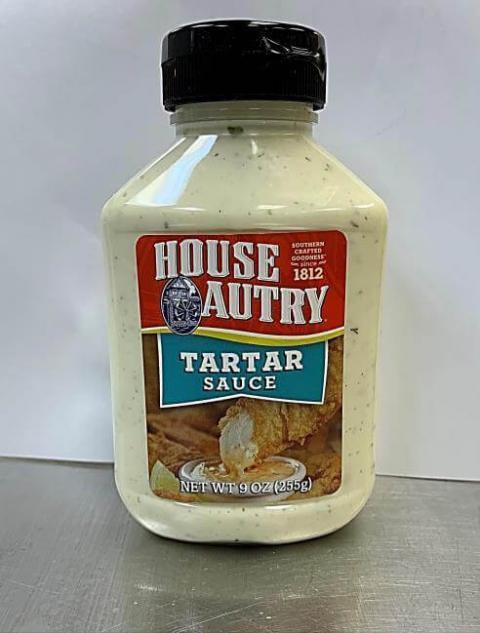
USA – House-Autry Mills Announces Voluntary Recall of House-Autry Tartar Sauce Due to Spoilage

FDA

House-Autry Mills, Inc. is voluntarily recalling 9 oz. House-Autry Tartar Sauce (60013) with the following Best By dates: BB 08182021, BB 08232021, BB 09162021, BB 09172021, BB 09182021 and BB 09212021 as a precaution, due to the company’s co-manufacturer’s verification of spoilage associated with the product. Several factors cause food spoilage, making items unsuitable for consumption. Light, oxygen, heat, humidity, temperature and spoilage bacteria can all affect both safety and quality of perishable foods. When subject to these factors, foods will gradually decline.

Samples have been issued to two separate laboratories for confirmation testing, but the company has decided to recall products produced from the specific lot received from the co-manufacturer to reduce any risk to our consumers.

The product was distributed between December 15, 2020 and January 18, 2021. The products are packaged in 9 oz. clear plastic bottles and sold to distribution centers in the following states: South Carolina, North Carolina, Virginia, Pennsylvania, Florida and Ohio.

No illnesses have been reported to date in connection with this issue.

The following products are affected by the recall:

Product Name: House-Autry Tartar Sauce – 9 oz. bottle

UPC: 0 73484-60013 4

BB 08182021 (located on the top portion of the bottle)
BB 08232021 (located on the top portion of the bottle)
BB 09162021 (located on the top portion of the bottle)
BB 09172021 (located on the top portion of the bottle)
BB 09182021 (located on the top portion of the bottle)
BB 09212021 (located on the top portion of the bottle)

Consumers who have purchased these products are urged to discontinue use and return them to the place of purchase for a full refund. Consumers with questions may contact the company by calling 1-800-849-0802, 8am-5pm EST daily, or by emailing Retail@House-Autry.com.

To learn more about House-Autry Mills, please visit house-autry.comExternal Link Disclaimer.

About House-Autry Mills

Founded in 1812 and based in Four Oaks, N.C., House-Autry Mills is a producer of stone- ground grits, chicken and seafood breaders, corn meal, and hushpuppy, biscuit and corn bread mixes available at more than 13,000 grocery stores in 37 states. The company has produced innovative products for more than 200 years and offers nearly three-dozen classic Southern products. For more information, please visit www.house-autry.comExternal Link Disclaimer.


Company Contact Information

Consumers:
House-Autry Mills
 1-800-849-0802
 Retail@House-Autry.com
Media:
Frank Pogue
 919-963-6200
 FPogue@House-Autry.com

Product Photos

USA – FDA Alert: Certain Lots of Sportmix Pet Food Recalled for Potentially Fatal Levels of Aflatoxin

FDA

The U.S. Food and Drug Administration, in cooperation with the state departments of agriculture for Missouri, Oklahoma, Arkansas, Kansas, Kentucky, Louisiana, New Mexico, Oregon, Texas, and Washington, is investigating certain Sportmix pet food products manufactured by Midwestern Pet Foods, Inc. that may contain potentially fatal levels of aflatoxins. 

On January 11, 2021, Midwestern Pet Foods expanded the recall to include additional products that contain corn and were made in their Oklahoma manufacturing plant.

On January 25, 2021, FDA added a list of countries to which the recalled product may have been exported by Midwestern Pet Foods. 

Fast Facts

  • FDA is alerting pet owners and veterinary professionals about certain Sportmix pet food products (see list below) manufactured by Midwestern Pet Foods, Inc. in their Oklahoma plant that may contain potentially fatal levels of aflatoxins.
  • As of January 21, 2021, FDA is aware of more than 110 pets that have died and more than 210 pets that are sick after eating Sportmix pet food. Not all of these cases have been officially confirmed as aflatoxin poisoning through laboratory testing or veterinary record review. This count is approximate and may not reflect the total number of pets affected.
  • This is an ongoing investigation. Case counts and the scope of this recall may expand as new information becomes available.
  • Aflatoxins are toxins produced by the mold Aspergillus flavus, which can grow on corn and other grains used as ingredients in pet food. At high levels, aflatoxins can cause illness and death in pets.
  • Pets experiencing aflatoxin poisoning may have symptoms such as sluggishness, loss of appetite, vomiting, jaundice (yellowish tint to the eyes or gums due to liver damage), and/or diarrhea. In severe cases, this toxicity can be fatal. In some cases, pets may suffer liver damage but not show any symptoms.
  • Pet owners should stop feeding their pets the recalled products listed below and consult their veterinarian, especially if the pet is showing signs of illness.  The pet owner should remove the food and make sure no other animals have access to the recalled product.
  • FDA is asking veterinarians who suspect aflatoxin poisoning in their patients to report the cases through the Safety Reporting Portal or by calling their local FDA Consumer Complaint Coordinators. Pet owners can also report suspected cases to the FDA.

Midwestern Pet Foods, Inc. may have exported the recalled product to one consignee, respectively, in each of the following countries: Bahrain, Barbados, Chile, Costa Rica, Curacao, Cyprus, Czech Republic, Ecuador, El Salvador, French Polynesia, Ghana, Guatemala, Honduras, Hong Kong, Iceland, Indonesia, Ireland, Israel, Korea, Kuwait, Lebanon, Lithuania, Malaysia, Mexico, New Zealand, Nicaragua, Panama, Peru, Singapore, Taiwan, Trinidad, Ukraine, UAE, Uruguay, and Vietnam.

Information – Food Safety During Pregnancy

MPI

FW20017: Food Safety During Pregnancy
Most foods and drinks are safe to consume during pregnancy. But there are some products pregnant women should be careful with or avoid. Public Health and Food Safety authorities in most OECD countries provide risk communication material related to food safety during pregnancy. Such a resource is available on the New Zealand Food Safety (NZFS) website.
However, this advice was published in 2007 and was based on information available then. Since that time a range of new foods has been introduced and become popular in the diet of New Zealanders, while there is improved understanding over which foods might be a risk.
NZFS wants to ensure the food safety advice for pregnancy remains current with the latest science and dietary practices for New Zealand.It is important that food safety advice for pregnant women captures all of the foods that could be a risk, however it needs to balance this with ensuring pregnant women can maintain a varied diet and have access to the widest source of nutrition without being overly restrictive.
To achieve this a research project was commissioned to the Institute of Environmental Science and Research Limited (ESR) to provide a scientifically robust background for updating food safety advice for pregnant women. Food safety considerations are focused on Listeria monocytogenes, Toxoplasma gondii, mercury and caffeine, as these four hazards have known specific impacts on the foetus.
Other microbiological and chemical hazards were not targeted as the risks are not pregnancy specific and food safety advice for the general public is also applicable for pregnant women. This report is restricted to food safety issues and does not cover advice on healthy nutrition during pregnancy.Maternal exposure to the microbiological hazards Listeria monocytogenes and Toxoplasma gondii is strongly linked to adverse effects on the foetus. For two other microbiological hazards, Salmonella spp. and Campylobacter spp., associated with adverse outcomes specific to the pregnancy period, the supporting epidemiological evidence is weaker.
The report has examined up-to-date information on these two other hazards and provided safety advice where relevant.The research examined data on complex changes in the maternal immune system that include both down regulation and up regulation of aspects of the immune system. Evidently pregnant women may be more susceptible to some infections than non-pregnant women, but no more susceptible to most types of infections. However, the complications of common infections in pregnant women can be more severe.
The main outcome of the research is an evaluation of evidence for food safety advice during pregnancy. The report included an evaluation of all food groups listed in the current New Zealand Food Safety’s guide to food safety in pregnancy. Consideration was also given to a small number of foods that were not previously evaluated in relation to pregnancy. Additional advice was proposed for these foods. NZFS agrees with the suggestion that advice should

New Zealand Food Safety Food Safety During Pregnancy be included in the guide for sprouts, recommending that these foods are not eaten unless cooked; for dried herbs recommending thorough cooking and a recommendation to not drink unpasteurised fruit juice and cider (non-alcoholic). The report confirmed that in most cases, New Zealand Food Safety’s advice on foods to eat or not eat during pregnancy are consistent with the available scientific evidence.
In a small number of instances, suggestions were made to better align the advice with the current available evidence. NZFS agrees with these suggestions and intends to expand the advice accordingly. Based on the evidence provided NZFS agrees that the current advice related to low acid soft pasteurised cheeses (e.g. Brie, Camembert, blue, ricotta, mozzarella, feta) should be strengthened to recommend that pregnant women do not eat these cheeses unless cooked.The report supports NZFS’s intention to make its advice on a range of commercial pasteurised dairy products with relatively short shelf-life less restrictive. Currently the advice is to dispose products like pasteurised milk or yoghurt after two days of opening.
The reviewed scientific evidence identified that, if that the products are refrigerated in original packaging and care is taken not to contaminate lids when using, it is safe to follow manufacturer’s advice on the package. Suggested modifications will allow pregnant women better planning of their daily diets and will also reduce unnecessary food wastage.
The report has suggested the current advice related to soft serve ice cream be reconsidered. However, NZFS’s opinion is that, given the likelihood of Listeria sloughing into the product through its processing, current advice to avoid this product during pregnancy is adequate. For some foods the scientific evidence is not currently strong enough to support specific food safety advice on these foods, although the available evidence suggests they may represent potentially emerging risk foods for pregnant women. A brief summary of such foods is provided at the end of the report. NZFS will follow up on any new scientific research related to these products.

Europe – Yersiniosis – Annual Epidemiological Report for 2019

ECDC

Yersinia p

For 2019, 29 countries reported 7 048 confirmed yersiniosis cases in the EU/EEA. The overall notification rate of 1.7 per 100 000 population remained stable from 2015 to 2019. The highest rates were reported by Finland, Lithuania and Czechia. The highest rate was detected in 0–4 year-old children, with 7.2 per 100 000 population for males and
5.9 per 100 000 population for females.

Download