Research – Initial reports of foodborne illness drive more public attention than food recall announcements

Journal of Food Protection

Recall announcements by the Food and Drug Administration (FDA) and Food Safety Inspection and Service (FSIS) are important communication tools. Nonetheless, previous studies found that effects of recalls on consumer demand are small. Social media analytics can provide insights into public awareness about food safety related incidents. Using the social listening data this study analyzes how the public, in social and online media space, responds to, interacts with, and references food safety recalls and/or initial announcements of foodborne illness outbreaks as reported by Centers for Disease Control and Prevention (CDC). Analysis suggests that mentions quantified in the social and online media searches conducted moved closer in-step with the CDC’s initial reports of foodborne illness outbreaks than FDA and FSIS recall announcements. Issuance of recalls may not necessarily be a popular source of food risk information in social media space when compared with reactions to the CDC’s initial illness reports. This relative popularity reflects people more often sharing/posting about illness risk regardless of whether a recall occurs. This suggests that recall announcements by FDA and FSIS may not induce wanted changes in consumers’ behavior, while initial illness reports by CDC may. Although recalls by FDA and FSIS may not generate social media posts, their primary role is to take potentially unsafe food items off grocery shelves. Online media analytics provides policy makers with implications for effective food risk communication planning; initial CDC reports drive immediate attention more than FDA and FSIS recalls.

India – At least 42 students of PTU fall sick after eating mess food; hospitalised

Hindustan Times

While the students undergoing treatment at the hospital stated that at least 80 students had consumed the food at the mess and suffered food poisoning, PTU registrar Sandeep Kazal said that 28 students were hospitalised. He added that there may be more students who got treated, but only 28 were admitted to the hospital.

Food supply inspector Harjot Singh said a team had visited the hostel mess and found that the quality of food products was good but there was no cleanliness in the mess. “We have issued a notice to the varsity to clean the mess within two days,” said Singh.

USA – Fast-Food Chain Is Linked to 40 Cases of Food Poisoning

Yahoo News

Forty people have reported illnesses after eating at an Arby’s in Springfield, Ill. since Feb. 15, the Sangamon County Department of Public Health confirmed to two local news stations, NewsChannel 20 and WAND 17.

Officials first visited the Arby’s restaurant on Feb. 23 after calls were made to the health department. They then returned on Feb. 24 as the store was closed for deep cleaning. They also visited again the next day, still finding issues, but are still unable to pinpoint the exact cause of the food poisonings.

Sweden – Yersinia (Sweden, January 2021–) – Increase in cases of yersinia infection.

Folkhalsomyndigheten#

kswfoodworld.com

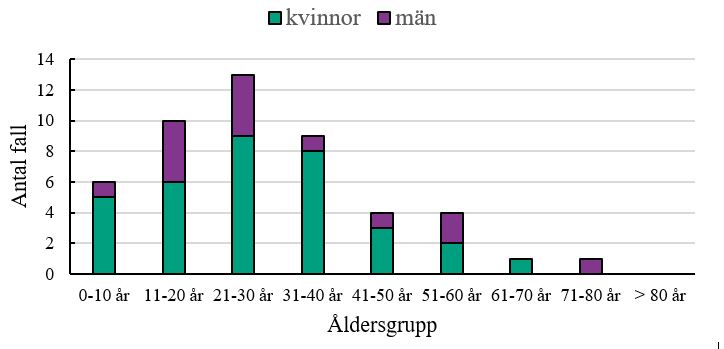
Since the second week of January, more than twice as many people have contracted yersinia infection as during the same period in the immediately preceding years. An increased number of patients has mainly been observed in the regions of Stockholm, Västra Götaland and Halland, which together account for 33 of the total of 48 disease cases reported since 11 January. Of the patients, a majority are aged 11-40 and most are women (figure). In the ongoing investigation, the Swedish Public Health Agency collaborates with the infection control units in the affected regions to try to identify the source of the infection through interviews of the cases and surveys.

As part of the outbreak investigation, the Swedish Public Health Agency also collects yersinia isolates from disease cases in the affected regions. The isolates are typed using whole genome sequencing (analysis of the genome of the bacterium) to clarify who has been affected by a common source of infection.

Figure. Distribution by age and sex of persons reported to be infected with yersinia infection 11 January – 2 February 2021.

Figure.  Distribution by age and sex of persons reported to be infected with yersinia infection 11 January – 2 February 2021.

Sweden – National outbreak with Salmonella Enteritidis identified.

Folkhalsomyndigheten

Salm2

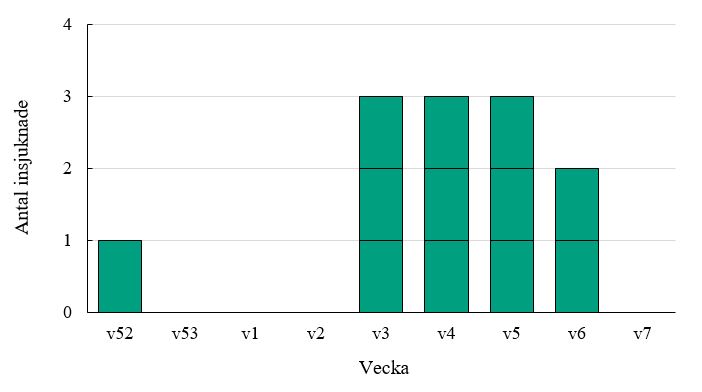
Twelve cases of Salmonella Enteritidis disease have been linked using whole genome sequencing (analysis of the bacterium’s genome). Eight of the twelve patients are children under the age of ten and the cases are resident in ten different regions. All cases except one have fallen ill on January 20 or later (figure). There are as many women / girls as men / boys who have fallen ill.

The affected infection control units and the Swedish Public Health Agency are jointly investigating the outbreak to identify the source of the infection.

Figure. Disease curve for outbreak cases with Salmonella Enteritidis (n = 12), 2021-02-23.

Diagram showing the disease curve for the outbreak cases with Salmonella Enteritidis (n = 12), 2021-02-23.  The figure shows that eleven of the cases fell ill during week three or later.

USA – Ongoing lead, Legionella water issues in schools

Downtown Publications

CDC legionella

As students return to full in-person instruction, many Birmingham Public Schools continue to be plagued by locations where legionella has been found, as well as lead and copper, with remediation continuing in all affected buildings.

Reports have come in from Greenfield, Quarton, Beverly, Pierce, Harlan and West Maple elementary schools, Berkshire Middle School, and Seaholm and Grove high schools, indicating that while there have been improvements in the water quality at the schools since they were last tested last fall, continued remediation is still needed to eliminate all legionella from school plumbing. There have not been updates Derby Middle Schools or Birmingham Covington School.

According to communications from the school, “BPS is focused on the remediation of legionella while providing a lead-free source of drinking water for all staff and students. BPS will shift to cold water flushes to reduce copper and lead in the system in the coming weeks. All individuals should use water from home or bottled water until water filter stations are enabled again.”

At Groves, while legionella was found at more than 220 locations at the school in the first round of testing, following remediation and retesting, there are currently 79 locations were it was found.

USA – J&J Distributing Recalls Ready-to-Eat Meat and Poultry Salads and Wrap Products Due to Possible Listeria Contamination

FSIS USDA

WASHINGTON, Feb. 26, 2021 – J&J Distributing, a St. Paul, Minn., establishment, is recalling approximately 33 pounds of ready-to-eat meat and poultry salads and wrap products that may be adulterated with Listeria monocytogenes (Lm), the U.S. Department of Agriculture’s Food Safety and Inspection Service (FSIS) announced today.

The fully cooked, not shelf stable salads and wraps were produced and packaged on Feb. 23, 2021 and list a “Sell-by” date of Feb. 28, 2021 on the packaging label. The following products are subject to recall: [View Labels (PDF Only)]:

  • 9-oz. plastic container of “COBB SALAD” on the product label.
  • 10-oz. plastic container of “Because life is delicious. tastebuds Bacon Lettuce Avocado Tomato Wrap” on the label.
  • 10-oz. plastic container of “Because life is delicious. tastebuds Turkey Ranch Club Wrap” on the label.
  • 10-oz. plastic container of “Because life is delicious. tastebuds Chicken Caesar Wrap” on the label.
  • 12-oz. plastic container of “Because life is delicious. tastebuds Southwest Style Chicken Salad” on the label.
  • 12-oz. plastic container of “Southwest Style Chicken Salad” on the label.

The products subject to recall bear establishment number “EST. 38450” inside the USDA mark of inspection. These items were shipped to retail locations in Minnesota and Wisconsin.

The problem was discovered when the firm received confirmation from their third-party lab that a product contact surface sample returned positive for Lm.

There have been no confirmed reports of adverse reactions due to consumption of these products. Anyone concerned about an injury or illness should contact a healthcare provider.

Consumption of food contaminated with Lm can cause listeriosis, a serious infection that primarily affects older adults, persons with weakened immune systems, and pregnant women and their newborns. Less commonly, persons outside these risk groups are affected.

Listeriosis can cause fever, muscle aches, headache, stiff neck, confusion, loss of balance and convulsions sometimes preceded by diarrhea or other gastrointestinal symptoms. An invasive infection spreads beyond the gastrointestinal tract. In pregnant women, the infection can cause miscarriages, stillbirths, premature delivery, or life-threatening infection of the newborn. In addition, serious and sometimes fatal infections in older adults and persons with weakened immune systems. Listeriosis is treated with antibiotics. Persons in the higher-risk categories who experience flu-like symptoms within two months after eating contaminated food should seek medical care and tell the health care provider about eating the contaminated food.

FSIS is concerned that some product may be in consumers’ refrigerators. Consumers who have purchased these products are urged not to consume them. These products should be thrown away or returned to the place of purchase.

FSIS routinely conducts recall effectiveness checks to verify recalling firms notify their customers of the recall and that steps are taken to make certain that the product is no longer available to consumers. When available, the retail distribution list(s) will be posted on the FSIS website at www.fsis.usda.gov/recalls.

Media and consumers with questions regarding the recall can contact Jason Jaynes, J&J Distributing Owner, at (651) 292-3822.

Consumers with food safety questions can call the toll-free USDA Meat and Poultry Hotline at 1-888-MPHotline (1-888-674-6854) or live chat via Ask USDA from 10 a.m. to 6 p.m. (Eastern Time) Monday through Friday. Consumers can also browse food safety messages at Ask USDA or send a question via email to MPHotline@usda.gov. For consumers that need to report a problem with a meat, poultry, or egg product, the online Electronic Consumer Complaint Monitoring System can be accessed 24 hours a day at https://foodcomplaint.fsis.usda.gov/eCCF/

USA – Outbreak Investigation of Listeria monocytogenes – Hispanic-style Fresh and Soft Cheeses (February 2021)

FDA

The FDA, along with CDC and state and local partners, are investigating a multistate outbreak of Listeria monocytogenes infections linked to queso fresco cheeses made by El Abuelito Cheese, Inc.

As part of this outbreak investigation, the Connecticut Department of Public Health collected product samples of El Abuelito-brand Hispanic-style fresh and soft cheeses from a store where a sick person bought cheeses. On 2/19/2021, Whole Genome Sequencing (WGS) analysis conducted by the Connecticut State Laboratory determined that the Listeria monocytogenes found in the samples is a match to the outbreak strain. At this time, El Abuelito Cheese, Inc. has ceased production and distribution of all products processed or handled in the same facility as the Queso Fresco.

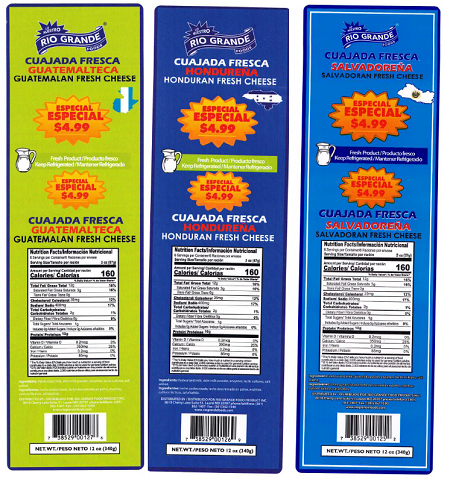
The FDA has initiated an on-site inspection of the facility. On 2/24/2021, the firm notified customers via letter that it was expanding the recall announced on 2/19/2021. The expanded recall includes El Abuelito, Rio Grande, and Rio Lindo brand queso frescos. It also includes El Abuelito-brand Quesillo (Oaxaca, string cheese), and Requeson (Ricotta) cheeses that are manufactured or handled in the same facility as the Queso Fresco products linked to this outbreak.

At this time, FDA is recommending that in addition to the recalled queso fresco cheeses, consumers, restaurants, and retailers should not eat, sell, or serve any El Abuelito-brand Quesillo (Oaxaca, string cheese) or Requeson (Ricotta) cheeses.

The FDA’s recommendation does not include any additional products with the El Abuelito Cheese, Inc. label because they are not manufactured or handled in the same facility; this includes El Abuelito Meat, Inc., Panela cheese, cotija cheese, mole, crema centroamericana, and crema mexicana. Updates will be provided as they become available.

Recommendation

Consumers, restaurants, and retailers should not eat, sell, or serve any recalled El Abuelito, Rio Grande, or Rio Lindo brand queso fresco cheeses. Additionally, they should not eat, sell, or serve any El Abuelito brand Quesillo (Oaxaca, string cheese) or Requeson (Ricotta) cheeses.

FDA recommends that anyone who purchased or received any El Abuelito brand Quesillo, Requeson, or recalled Queso Fresco cheeses use extra vigilance in cleaning and sanitizing any surfaces and containers that may have come in contact with these products to reduce the risk of cross-contamination. Listeria can survive in refrigerated temperatures and can easily spread to other foods and surfaces.

If you are at higher risk for severe Listeria illness (if you are pregnant, aged 65 or older, or have a weakened immune system due to certain medical conditions or treatments) do not eat any recalled El Abuelito, Rio Grande, or Rio Lindo brand Queso Fresco cheeses and do not eat any brand of quesillo or requeson cheeses until we learn more about whether other brands of cheeses may be affected.

  • Ask your retailer if any queso fresco cheese you buy is supplied by El Abuelito. If you are unable to obtain an answer, do not buy it and throw away the queso fresco cheese you have at home.
  • Call your healthcare provider right away if you have these symptoms after eating any queso fresco, quesillo, or requeson cheeses:
    • Pregnant people typically experience only fever, fatigue, and muscle aches. However, Listeria infection during pregnancy can lead to miscarriage, stillbirth, premature delivery, or life-threatening infection of the newborn.
    • People who are not pregnant may experience headache, stiff neck, confusion, loss of balance, and convulsions, in addition to fever and muscle aches.
  • Follow these five steps to clean your refrigerator, containers, and surfaces that may have touched the cheeses. Listeria can survive in the refrigerator and can easily spread to other foods and surfaces.

Product Images

Sample Product Label from the Outbreak Investigation of Listeria monocytogenes in Hispanic-style Fresh and Soft Cheeses (February 2021) - Rio Grande
Sample Product Label from the Outbreak Investigation of Listeria monocytogenes in Hispanic-style Fresh and Soft Cheeses (February 2021) - Rio Lindo
Sample Product Label from the Outbreak Investigation of Listeria monocytogenes in Hispanic-style Fresh and Soft Cheeses (February 2021) - El Abuelito
Sample Product Label from the Outbreak Investigation of Listeria monocytogenes in Hispanic-style Fresh and Soft Cheeses (February 2021) - Chirilagua, Yorito

Recall Information

On 2/24/2021, the firm notified customers via letter that it was expanding the recall of El Abuelito, Rio Grande, and Rio Lindo brand queso frescos, which was announced on 2/19/2021, to include El Abuelito-brand Quesillo (Oaxaca, string cheese) and Requeson (Ricotta) cheeses. These additional products were manufactured or handled in the same facility as the contaminated Queso Fresco products linked to this outbreak.

At this time, FDA is recommending that in addition to the recalled queso fresco cheeses, consumers, restaurants, and retailers should not eat, sell, or serve any El Abuelito-brand Quesillo (Oaxaca, string cheese) or Requeson (Ricotta) cheeses.

The FDA’s recommendation does not include any additional products with the El Abuelito Cheese, Inc. label because they are not manufactured or handled in the same facility; this includes El Abuelito Meat, Inc., Panela cheese, cotija cheese, mole, crema centroamericana, and crema mexicana. Updates will be provided as they become available.

FDA has posted a list of retailers that may have received Hispanic-styles cheeses from the El Abuelito Cheese, Inc. facility in Paterson N.J.  It is possible that this list may not include all retailers who have received these cheeses, however, this list represents the best information currently available to the FDA.

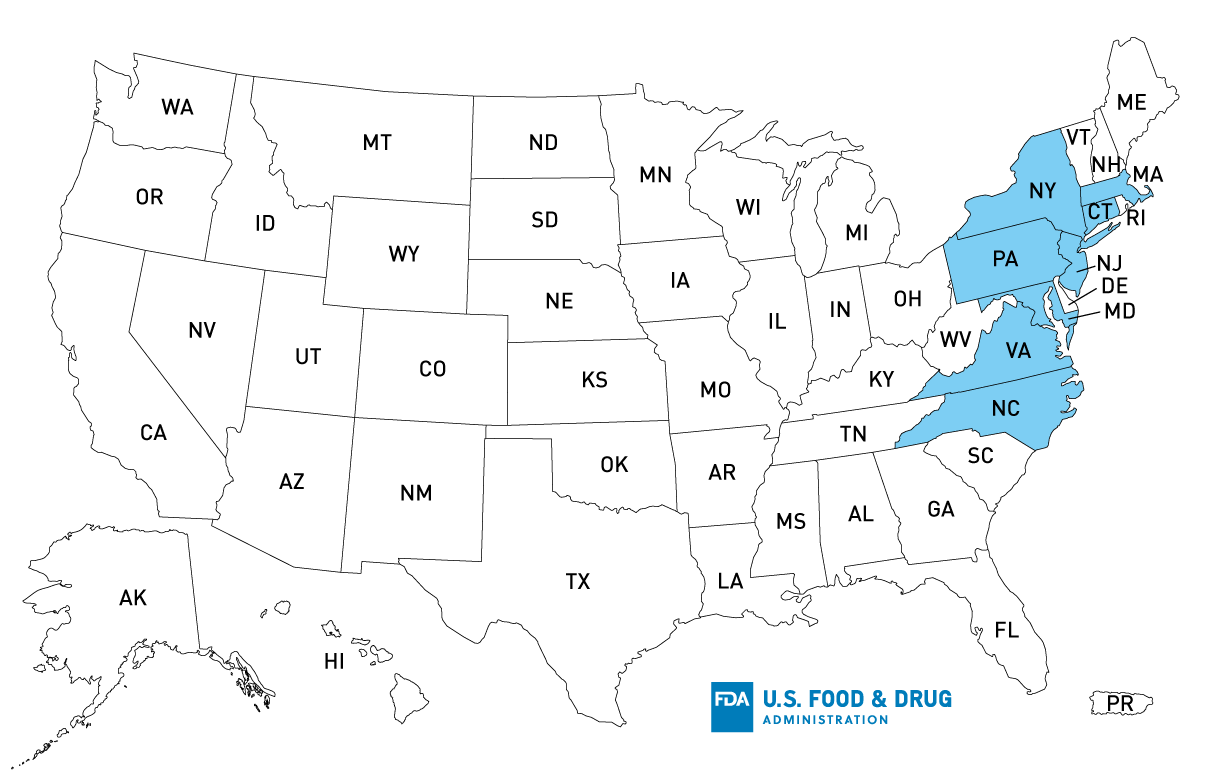
Map of U.S. Distribution of Recalled El Abuelito Queso Fresco

U.S. Distribution of Recalled El Abuelito Queso Fresco

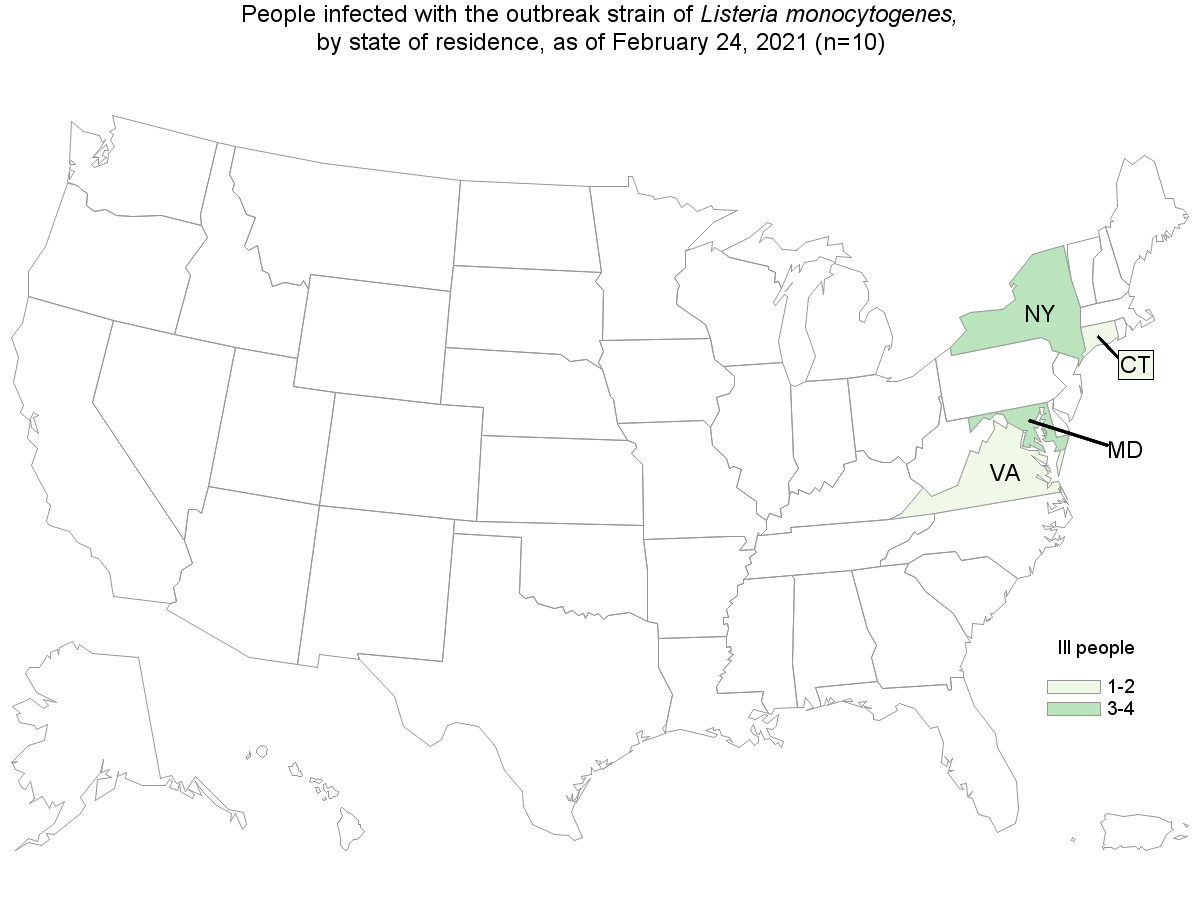
Case Count Map Provided by CDC

CDC Case Count Map for the Outbreak Investigation of Listeria monocytogenes in Hispanic-style Fresh and Soft Cheeses - 2/24/2021

Case Counts

Total Illnesses: 10
Hospitalizations: 9
Deaths: 0
Last Illness Date: 2/9/2021
States with Cases: CT (1), MD (4), NY (4), and VA (1)
Product Distribution*: CT, MA, MD, NC, NJ, NY, PA, VA
*States with confirmed distribution; product could have been distributed further

France – Product recall: Grated Comté from Les Croisés brand – Listeria monocytogenes

Oulah

Product recall: Grated Comté from Les Croisés brand

ENCOUNTERED PROBLEM

Presence of Listeria monocytogens

PROPOSED SOLUTION

People who may have this product are asked not to consume it and to return it to the point of sale where it was purchased.

People who have consumed this product and who present with fever, isolated or accompanied by headaches, are invited to consult their attending physician, notifying him of this consumption.
Pregnant women should pay special attention to these symptoms, as well as immunocompromised people and the elderly. These symptoms may suggest listeriosis, a disease that can be serious and can take up to eight weeks to incubate.

FURTHER INFORMATION

▸ Barcode
3564706619692

▸ Packaging
130g

▸ DDM
04/16/21

▸ Stamp
FR 25 601 003 CE

▸ Marketing
This product was marketed in the Self-Service department from 02/23/21.

▸ Consumer service contact
0 800 86 52 86 Service and free call

▸ Source
https://www.e.leclerc/

Research – Hepatitis A outbreak with the concurrence of Salmonella Typhi and Salmonella Poona infection in children of urban Vellore, south India – 2019

IJID Online

Background: Outbreaks of Hepatitis A virus (HAV) infection continue to be reported from India, that have transitioned from hyper-to-intermediate endemicity. Hepatitis A and Salmonella sp. share similar routes of transmission and may co-infect individuals at risk. We report here an outbreak of hepatitis A with concomitant Salmonellosis from an urban settlement of Vellore in south India between July and August 2019.

Our findings highlight that Hepatitis A infection can present as sporadic outbreaks in communities with sub-standard water and sewage systems, along with the co-infection of other enteric infections such as invasive Salmonellosis. Thus, population-based surveillance for Hepatitis A is required in India, to identify populations and geographical regions at risk, and thereby potentially plan implementation strategies for Hepatitis A vaccination.