Research – Ozone Treatments for Preserving Fresh Vegetables Quality: A Critical Review

MDPI

Ozone is recognized as an antimicrobial agent for vegetables storage, washing, and processing. This strong disinfectant is now being used in the food industry. In this review, the chemical and physical properties of ozone, its generation, and factors affecting ozone processing efficiency were explained as well as recent regulatory developments in the food industry. By then selecting three vegetables, we show that ozone avoids and controls biological growth on vegetables, keeping their attractive appearance and sensorial qualities, assuring nutritional characteristics’ retention and maintaining and increasing the shelf-life. In liquid solution, ozone can be used to disinfect processing water and vegetables, and in gaseous form, ozone helps to sanitize and preserve vegetables during storage. The multifunctionality of ozone makes it a promising food processing agent. However, if ozone is improperly used, it causes some deleterious effects on products, such as losses in their sensory quality. For an effective and a safe use of ozone, specific treatment conditions should be determined for all kinds of vegetables. In a last step, we propose highlighting the different essential characteristics of ozone treatment in order to internationally harmonize the data relating to the treatments carried-out.

Research – Rapid Testing and Interventions to Control Legionella Proliferation following a Legionnaires’ Disease Outbreak Associated with Cooling Towers

MDPI

Legionella_Plate_01

Most literature to date on the use of rapid Legionella tests have compared different sampling and analytical techniques, with few studies on real-world experiences using such methods. Rapid tests offer a significantly shorter feedback loop on the effectiveness of the controls. This study involved a complex of five factories, three of which had a history of Legionella contamination in their cooling water distribution system. Multiple sampling locations were utilised to take monthly water samples over 39 months to analyse for Legionella by both culture and quantitative polymerase chain reaction (qPCR). Routine monitoring gave no positive Legionella results by culture (n = 330); however, samples were frequently (68%) positive by qPCR for Legionella spp. (n = 1564). Legionella spp. qPCR assay was thus found to be a good indicator of cooling tower system health and suitable as a routine monitoring tool. An in-house qPCR limit of 5000 genomic units (GU)/L Legionella spp. was established to trigger investigation and remedial action. This approach facilitated swift remedial action to prevent Legionella proliferation to levels that may represent a public health risk. Cooling tower operators may have to set their own action levels for their own systems; however, in this study, 5000 GU/L was deemed appropriate and pragmatic. View Full-Text

Research – Microbiological contamination of ready to eat algae and evaluation of Bacillus cereus behavior by microbiological challenge test

Journal of Food Protection

Consumption of seaweeds, often categorized as a superfood, is becoming popular in western countries. Algae can be marketed fresh, but are usually sold dehydrated to ensure longer shelf life. The consumption, often as ready to eat, open up possible risks for public health because of foodborne pathogens that can contaminate the raw material during harvesting or manipulation. In this study, fourteen ready to eat foods based on dehydrated algae, representative of the most consumed species, were considered. The microbial content, with a focus on Listeria monocytogenes and Bacillus cereus, was investigated by plate counts and B. cereus strains were isolated and identified by 16s rRNA gene sequencing. The microbiological quality was heterogeneous among the samples and, in particular, marine bacteria, Listeria spp., B. cereus and coliforms were detected. To contribute to related risk assessment, the ability of B. cereus to grow during refrigerated storage was evaluated, to our knowledge for the first time, by a microbiological challenge test on two ready to eat foods based on Undaria pinnatifida and Palmaria palmata.  Despite this study demonstrating the inability of B. cereus to proliferate in seaweed-based food, its presence in dehydrated foodstuffs cannot rule out the replication after rehydration before consumption, making it necessary to shed light on the possible risks for consumers.

Research – Biofilm-forming ability of poultry Campylobacter jejuni strains in the presence and absence of Pseudomonas aeruginosa

Canadian Journal of Microbiology

The aims of this study were to evaluate the ability of Campylobacter jejuni isolated from a poultry slaughterhouse to form biofilm in the presence and absence of Pseudomonas aeruginosa, and the effect of surface (stainless steel, polystyrene), temperature (7, 25, and 42 °C), and oxygen concentration (microaerophilic and aerobic conditions) on the formation of biofilm. The genes ahpC, cadF, clpP, dnaJ, docA, flaA, flaB, katA, kpsM, luxS, racR, and sodB, related to biofilm formation by C. jejuni, were also investigated. All isolates formed biofilm on stainless steel and on polystyrene, in both aerobic and microaerophilic atmospheres, including temperatures not optimal for C. jejuni growth (7 and 25 °C), and biofilm also was formed in the presence of P. aeruginosa. In dual-species biofilm on stainless steel, biofilm formation was 2–6 log CFU·cm−2 higher at 7 °C for all isolates, in comparison with monospecies biofilm. Ten genes (ahpC, cadF, clpP, dnaJ, docA, flaA, flaB, luxS, racR, and sodB) were detected in all isolates, but katA and kpsM were found in four and six isolates, respectively. The results obtained are of concern because the poultry C. jejuni isolates form biofilm in different conditions, which is enhanced in the presence of other biofilm formers, such as P. aeruginosa.

Research – Investigation of On-Farm Transmission Routes for Contamination of Dairy Cows with Top 7 Escherichia coli O-Serogroups

Springer

Shiga toxin-producing Escherichia coli (STEC) are foodborne bacterial pathogens, with cattle a significant reservoir for human infection. This study evaluated environmental reservoirs, intermediate hosts and key pathways that could drive the presence of Top 7 STEC (O157:H7, O26, O45, O103, O111, O121 and O145) on pasture-based dairy herds, using molecular and culture-based methods. A total of 235 composite environmental samples (including soil, bedding, pasture, stock drinking water, bird droppings and flies and faecal samples of dairy animals) were collected from two dairy farms, with four sampling events on each farm. Molecular detection revealed O26, O45, O103 and O121 as the most common O-serogroups, with the greatest occurrence in dairy animal faeces (> 91%), environments freshly contaminated with faeces (> 73%) and birds and flies (> 71%). STEC (79 isolates) were a minor population within the target O-serogroups in all sample types but were widespread in the farm environment in the summer samplings. Phylogenetic analysis of whole genome sequence data targeting single nucleotide polymorphisms revealed the presence of several clonal strains on a farm; a single STEC clonal strain could be found in several sample types concurrently, indicating the existence of more than one possible route for transmission to dairy animals and a high rate of transmission of STEC between dairy animals and wildlife. Overall, the findings improved the understanding of the ecology of the Top 7 STEC in open farm environments, which is required to develop on-farm intervention strategies controlling these zoonoses.

Belgium – Goat Cheese with Salmon Recall – Listeria monocytogenes

AFSCA

Recall of the Belle Chèvre company
Product: Goat cheese with salmon.
Problem: Possible presence of Listeria Monocytogenes.


In agreement with the AFSCA, Belle Chèvre is withdrawing from sale the goat cheese with salmon “Ambachtelijke geitenkaas met gerookte zalm” (4x75g) and is recalling it to consumers because of the possible presence of Listeria Monocytogenes.

Belle Chèvre asks its customers not to consume this product and to bring it back to the point of sale where it was purchased where they will be reimbursed.

Product Description: Product

Name: Ambachtelijke geitenkaas met gerookte zalm (4x75g)
Brand: Belle Chèvre
Minimum Durability Date (DDM): Multiple dates affected. See label with “date + bij max. + 7 ° C ”applied by the point of sale
Lot number: 0803211202
Sales period: from 3/12/2020 to 03/17/2021
Type of packaging: Transparent plastic packaging and under vacuum
Weight: Per 4 pieces of 75 g.

Product photo:


The product was sold by: Baliehof (Luc Callemeyn) Gistelsteenweg, 577 – 8490 Jabbeke.

For any further information , contact:

Sophie Haerinck via mail: sophie.haerinck@gmail.com
GSM: 0474 / 51.09.50

Denmark – Lack of heat treatment of raw materials used in smoothie – updated

DVFA

Lundberg Nordic ApS is recalling a smoothie product because the raw materials are not heat-treated.
Updated 19.03.2021.

Recalled Foods , Published: March 15, 2021

Modified March 19, 2021
Updated 19.03.2021: Store changed under “Sold in”
 
What food:
Smoothie Plus – Strawberry Apple Blueberry ( see picture here )
Net content: 330 ml
Best before date: 14.03.2021 and 04.04.21
EAN barcode no .: 5713300011632
Sold in:
Bilka and Føtex stores
Company recalling:
Lundberg Nordic ApS
Store Kongensgade 81 C
264 Copenhagen
Cause:
Lack of heat treatment of raw materials. 
Risk:
Risk of diarrhea.
Advice for consumers:
The Danish Veterinary and Food Administration advises consumers to deliver the product back to the store where it was purchased or to discard it.

Denmark – Risk of bacterial toxin in red beetle roe – Clostridium botulinum

DVFA

Agustson A / S – Nora recalls a batch of NORA SEAFOOD Red beet roe 60g with best-before date 23/10/2021. There is a risk that some glasses from the batch contain toxins from the bacterium Clostridium botulinum, which can cause the disease botulism.

Recalled Foods , Published: March 19, 2021

And

What food:
NORA SEAFOOD Red beetle roe (see picture here )
Net weight: 60 grams
Production date: 23/04/2020
Best before date: 23/10/2021
EAN barcode no .: 5709505840030
Lot number: L0114
Sold in:
Net stores throughout the country
Company recalling:
Agustson A / S – Nora, Lundahl Nielsens Vej 2, 7100 Vejle
Cause:
The Statens Serum Institut has detected the presence of toxin from the bacterium Clostridium botulinum (called botulinum toxin) in an opened glass with beetroot roe from the above batch. The Danish Veterinary and Food Administration has therefore justified suspicion that the source of an outbreak of a disease at a private company is due to beetroot roe from the above party. Botulinum toxin is not suspected in other batches from the same supplier.
Risk:
If botulinum toxin is present in the catfish roe, you can get sick with the serious disease botulism (“sausage poisoning”).
The symptoms of the disease botulism usually start from a few hours up to 36 hours after eating food with the toxin in. The symptoms can include. be nausea, vomiting and possibly diarrhea, then visual disturbances and muscle paralysis.
Read more about botulism and food here .
Advice for consumers:
Consumers who have purchased beetroot roe from the above lot should discard them or deliver them back to the store where they were purchased.
See also related news on the Statens Serum Institut’s website here .

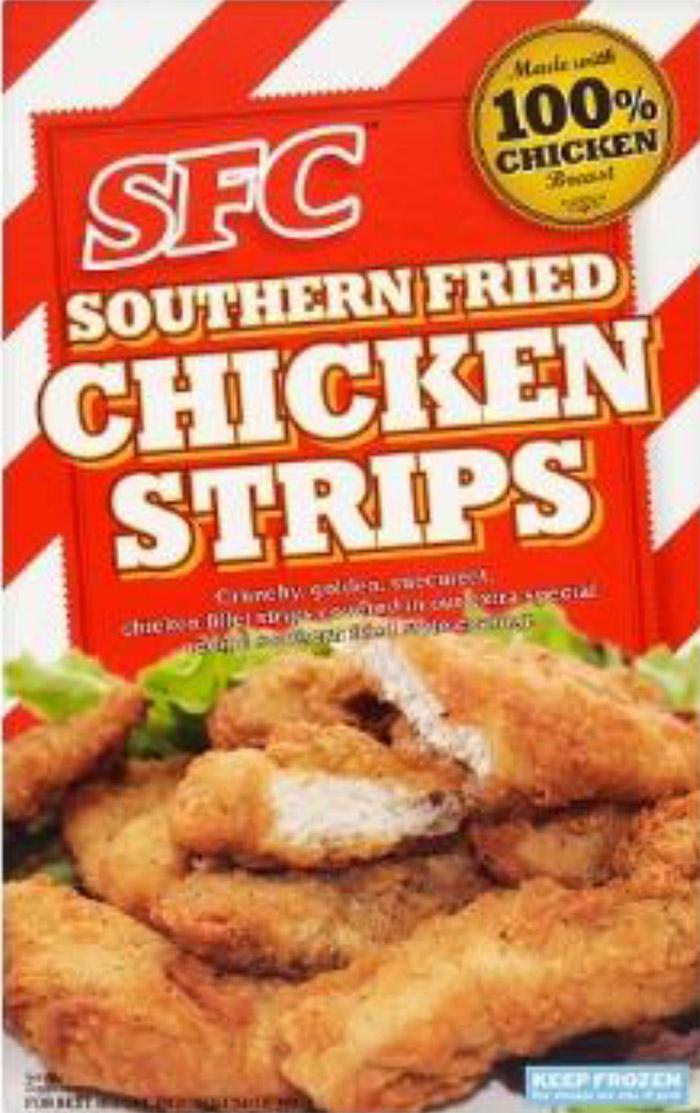
Iceland – Salmonella in SFC chicken pieces.

MAST

Matvælastofnun warns against consuming SFC Take Home Boneless Bucket 650g and SFC Southern Fried Chicken Strips 400g chicken pieces due to salmonella contamination. Aðföng, which imports the chicken pieces, recalls the products in consultation with the Reykjavík Health Inspectorate. In the case of the SFC Take Home Boneless Bucket 650g chicken piece, this is an extension of the previous recall .

The recall only applies to the following products:

  • Trademark: SFC
  • Product Name: Take Home Boneless Bucket – Crunchy golden pieces of tasty, succulent Chicken Crispy Strips, Dippers and Poppets coated in a Southern Fried Style coating
  • Best before date: All dates up to and including 30.06.2022
  • Batch number: All batch numbers
  • Barcode: 5031532020629
  • Net amount: 650g
  • Storage conditions: Freezer
  • Distribution: Hagkaup stores all over the country

SFC chicken

  • Trademark: SFC
  • Product Name: Southern Fried Chicken Strips – Crunchy, golden, succulent Chicken Fillet Strips covered in our extra special recipe Southern Fried Style coating
  • Best before date: All dates up to and including 30.06.2022
  • Batch number: All batch numbers
  • Barcode: 5031532020018
  • Net amount: 400g
  • Storage conditions: Freezer
  • Distribution: Bónus and Hagkaup stores all over the country

SFC Southern Fried Chicken Strips 400g chicken pieces

Customers who have purchased the above products are asked not to consume them and return them to the store where they were purchased for a refund. Further information can be obtained from Aðfang’s quality manager by phone 530 5600 or via the email address gaedastjori at adfong.is.

Related material

Luxembourg – RECALL: MINI MONT D’OR OF THE BRAND LES MONTS DE JOUX – SUSPECTED PRESENCE OF LISTERIA MONOCYTOGENES

SAP

Last name Mini Mont d’Or
Mark THE MONTS DE JOUX
Bar code 3476810000702
Use by date (DLC) 04/06/2021
Lot 3053

Danger  : suspected presence of Listeria monocytogenes

Listeria monocytogenes can cause fever, headache, and gastroenteritis. Vulnerable people such as the immunocompromised and the elderly and young children may experience neurological symptoms due to meningitis. Pregnant women should also pay special attention to these symptoms. Gastroenteritis can appear between a few hours and 3 days after consumption, while neurological symptoms may not appear until after 3 months. People who have consumed these products and who have these symptoms are advised to consult a doctor, notifying him of this consumption.

Sale in Luxembourg by: Auchan

A sale by other operators cannot be excluded.

Source of information: Auchan recall notification

Communicated by: Government Commission for Quality, Fraud and Food Safety .