Iceland – Warning against consuming mussels from Hvalfjörður – Algal Toxins

MAST

Matvælastofnun continues to warn against picking and consuming mussels from Hvalfjörður, as DSP algae toxins were recently detected above the reference limits.  

DSP algae toxins in mussels can cause abdominal pain, diarrhea, nausea and vomiting. Symptoms appear soon after consumption and disappear within a few days. 

A representative of the Food Administration collected mussels on Friday 22 October at Fossá in Hvalfjörður. The purpose was to investigate whether it was safe for the public to pick mussels in Hvalfjörður. The results of the measurements showed that the DSP algae toxin was 440 µg / kg but a month ago 1150 µg / kg was measured in the mussel. Both values ​​are well above the limit of 160 µg / kg. 

Consumers are still warned not to eat mussels from the fjord as things stand. The agency will continue to monitor the situation and let them know when it will be safe to eat mussels from the fjord. During the winter, sampling is monthly, as algae growth is slow during the dark winter months and algae toxicity changes are slower. 

Finally, the Food Administration would like to draw attention to the fact that there is always a risk involved in consuming shellfish collected during shell picking, and this is always at your own risk.  

Ireland – Boil water notice issued for thousands in Co Longford – Cryptosporidium

Irish Times

crypt

Almost half of the population of Co Longford is subject to a boil water notice which was issued on Thursday.

It comes after the cryptosporidium barrier at a treatment plant was compromised following a deterioration in the raw water quality of the lake source, Irish Water said.

Following consultation with the HSE, Irish Water and Longford County Council decided to issue a boil water notice for the area supplied by the Longford Central Public Water Supply to protect public health.

The population impacted by this notice is approximately 17,500 people. The areas affected include all customers in Longford Town, Newtown Forbes, Balinalee, part of Edgeworthstown, part of Drumlish, part of Killashee and surrounding areas.

Experts from Irish Water and Longford County Council are assessing the situation with a view to having the notice lifted as quickly as possible. In the meantime, all customers of this supply are advised to boil water before use until further notice.

USA – Three Grocery Chains recall frozen, cooked shrimp because of risk of Listeria monocytogenes

Food Safety News

Listeria kswfoodworld food safety food poisoning

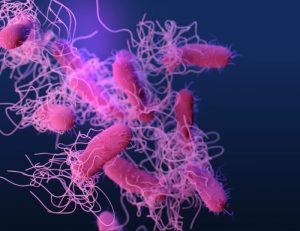
Image CDC

Three grocery chains are recalling certain frozen, cooked shrimp after testing revealed Listeria monocytogenes.

Winn-Dixie, Fresco y Más, and Harveys Supermarkets stores recalled their Fisherman’s Wharf brand “Jumbo Cooked Shrimp” according to company officials with the chains’ parent company, SoutheasternGrocers.

Because of the long shelf life of the product, which reaches into 2023, there is concern that consumers may have the product in their home freezers.

The recalled frozen shrimp is packaged in plastic bags with 16-20 pieces in each bag. The 16-ounce bags are marked with the UPC number 2114003262 and a best-by date of April 5, 2023. 

Consumers are advised to not use the recalled shrimp and to throw them away or return them to the place of purchase for a refund.

USA – Shellfish growing area reopened after closure for link to outbreak

Food Safety News

A shellfish growing area has reopened for shellfish harvesting after a Camyboacter outbreak closed the pond two months ago.

Potter Pond is located in South Kingstown, RI, and was under investigation by the Rhode Island Department of Health (RIDOH), the Rhode Island Coastal Resources Management Council (CRMC), and Rhode Island of Environmental Management (DEM).

Potter Pond had been closed to shellfish harvesting because of bacterial contamination that was detected in early September. A RIDOH investigation indicated that eight people became ill after consuming raw shellfish harvested from Potter Pond and that the illnesses were because of Campylobacter bacterial contamination. The Campylobacter contamination has been linked to flocks of birds aggregating near shellfish growing areas.

Ireland – Recall of a Batch of Joyces Supermarkets of Galway Tipperary Brie due to the Presence of E. coli.

FSAI

Tipperary Brie for Recall

Summary
Category 1: For Action
Alert Notification: 2021.95
Product: Joyce’s Supermarkets of Galway Tipperary Brie; pack size:155g; approval number: IE 1089 EC
Batch Code: Use by date: 17/11/2021
Country Of Origin: Ireland

Message:

The above batch of Joyce’s Supermarkets of Galway Tipperary Brie is being recalled due to the presence of E. coli.  Point-of-sale recall notices will be displayed in stores supplied with the implicated batch.

Nature Of Danger:

E. coli at the levels detected indicates a possible hygiene issue and the potential for the presence of harmful bacteria.

Action Required:

Manufacturers, wholesalers, distributors, caterers & retailers:

Retailers are requested to remove the implicated batch from sale.

Consumers:

Consumers are advised not to eat the implicated batch.

Research – The Effective Use of HACCP for the Control of Environmental Microbial Contamination by the use of Operational Prerequisite Programs – Russell Berg – November 2021

LinkedIn

When the concept of prerequisites was first formulated in the late 1980s there was no distinction in importance between them. In many ways this goes against the principle of HACCP, in which resources should be allocated according to risk. Hence greater control should be imposed at Critical Control Points rather than Control Points. In the early days of HACCP (but unfortunately still is often the case) this principle has been applied to the direct product pathway, but barely to the processing environment. In this sense in the U.K. all fourteen allergens are treated the same way, as far as legislation, but many food manufacturers do not treat all the allergens the same as far as environmental control. Very food factories exclude staff from bringing any of the listed allergens on to site, but many exclude peanuts and tree nuts from site. Hence the risk from all the allergens is not considered the same, so as far as allergen control. In these circumstances peanuts and tree nuts could be considered and controlled by Operational Prerequisite Programs (OPRP), whilst other allergens would be controlled by Prerequisite Programs (PRP), to reflect the risk level.

The concept of OPRPs was first introduced in ISO 22000:2005 to address this problem with environmental controls but created some confusion in that they would bean intermediate control between Control Points and Critical Control Points along the direct product pathway. By this definition the main difference between CCPs and OPRPs is that CCPs are critical for safe food whilst OPRPs are essential for food safety. A better term for OPRP would be ECP (Essential Control Point).When this standard was updated in ISO 22000:2018 more details were included in the definition about controlling OPRPs (either by measurement or observation) but the use of OPRPs was not clarified to avoid the confusion.

However Ismail in his LinkedIn article of 15thNovember 2019(Ref. 1)gave a good resolution to the problem by splitting food safety hazards into two categories. Type A hazards are introduced with the raw materials and are best controlled by Critical Control Points and (Process) Control Points along the direct product pathway. Examples of these are Campylobacter in poultry or E. coli in raw meat. Type B hazards are introduced from the processing environment, usually due to poor or inadequate GMP (Good Manufacturing Practice). These hazards are controlled by (Environmental) Control Measures(as part of PRPs) and the ones essential to food safety should be controlled by OPRPs Examples of these hazards are Staphylococci aureus from food handler’s hands and pathogens(microbes with the potential to cause harm)spread by flies. Unlike CCPs, which deal with contamination, multiplication and survival of microbial hazards, environmental OPRPs are only concerned with contamination of food with microbial hazards.

For the rest of this article we will be concerned with Type B microbial hazards.

Denmark – Mold/Mould on Apple Slices

DVFA

Coronet Cake Company Aps is recalling a batch of Rema 1000, Christmas apple slices due to the discovery of mold in the product.

Recalled Foods , Published: November 5, 2021

What food:
Rema 1000, Christmas apple slices
Net weight: 560g
Best before date: 16-06-2023 and 20-06-2023
EAN code: 5705830601667
Sold in:
Rema 1000 stores throughout the country
Company recalling:
Coronet Cake Company Aps
Valorevej 16
4130 Viby Sjælland
Cause:
The company has found that there is a risk of mold in the product.
Risk:
Mold formation makes the product unsuitable as food.
Advice for consumers:
The Danish Veterinary and Food Administration advises consumers to deliver the product back to the store where it was purchased or to discard it.

Sweden – Sweden searches for source of Salmonella outbreak; Campylobacter stats released

Food Safety News

kswfoodworld salmonella

More than 30 people have been confirmed sick in Sweden with Salmonella infections since early October.

The national monophasic Salmonella Typhimurium outbreak has affected 33 people. Whole genome sequencing has shown that patients have the same strain of Salmonella Typhimurium, so are suspected of having been infected by a common source of infection.

Affected local infection control units, the Swedish Food Agency (Livsmedelsverket) and the Public Health Agency of Sweden (Folkhälsomyndigheten) are investigating the outbreak.

The source of infection has not been found but is believed to be a food with a wide distribution in Sweden.

Cases range in age from 2 to 89 years old with a median age of 29. They live in seven different regions of Sweden.

Sixteen people younger than age18 and 13 more older than 60 have been infected. Women make up 21 cases and 12 men are ill.

Monophasic Salmonella Typhimurium was in the top three for the causes of Salmonella patients infected in Sweden in 2020.

France – goat cheese 100 gr – Salmonella

Gov france

Identifying information for the recalled product

  • Product category Food
  • Product sub-category Milk and dairy products
  • Product brand name fromagerie saint jaume
  • Names of models or references natural goat cheese 100gr
  • Product identification
    GTIN Lot Dated
    376007810062 24.10 Recommended consumption date 11/25/2021
  • Start date / End of marketing From 10/27/2021 to 11/03/2021
  • Storage temperature Product to be stored in the refrigerator
  • Health mark FR 83 012 001 CE
  • Geographical sales area Departments: VAR (83)
  • Distributors Leclerc la seyne – Marseille cheese

Practical information regarding the recall

  • Reason for recall non-compliant test results
  • Risks incurred by the consumer Salmonella spp (causative agent of salmonellosis)

France – Turkey and veal curved dry sausage with hazelnuts – Listeria monocytogenes

Gov france

Identifying information for the recalled product

  • Product category Food
  • Product sub-category Meats
  • Product brand name Unbranded
  • Names of models or references Turkey and veal curved dry sausage with hazelnuts
  • Product identification
    Lot Dated
    9771000295 Use-by date 02/19/2022
  • Start date / End of marketing Since 25/10/2021
  • Storage temperature Product to be stored in the refrigerator
  • Geographical sales area Whole France
  • Distributors No distributors
  • List of points of saleELEV_CHEVILLOTTE_VAL.pdf

Practical information regarding the recall

  • Reason for recall presence of Listeria monocytogenes
  • Risks incurred by the consumer Listeria monocytogenes (causative agent of listeriosis)