France – Sweetened Yogurt – Enterobacteriaceae – E.coli

Gov france

Identification information of the recalled product

  • Product category Feed
  • Product subcategory Milk and dairy products
  • Product brand name LOCATION
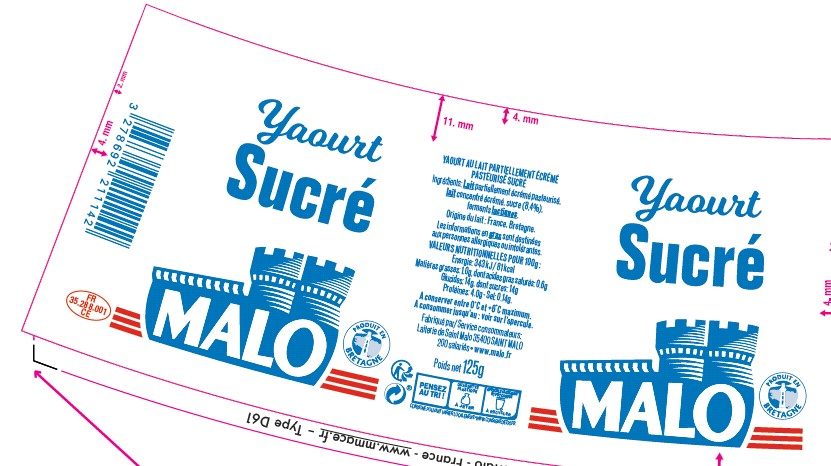
  • Model names or references sweetened yogurt brand MALO packaging cardboard pot
  • Identification of products
    GTIN Lot Date
    3278692211142 DLC 11/07/2022 Use-by date 07/11/2022
  • Packaging Packaging UVC cardboard jar 4x125g
  • Marketing start/end date From 08/06/2022 to 11/07/2022
  • Storage temperature Product to be stored in the refrigerator
  • Health mark FR 35.288.001 CE
  • Geographic area of ​​sale Whole France
  • Distributors INTERMARCHE-LOGIDIS-MONOPRIX-LECLERC-SYSTEM U-CARREFOUR-TEAM OUEST-AUCHAN-CASINO-MY GOURMET GARDEN-METRO-PRO A PRO
  • List of points of saleTraceability_Yoghurt_pot_carton_sucré_Malo_DLC_11_07_2022.pdf

Practical information regarding the recall

  • Reason for recall Suspicion of Enterobacteriaceae germ contamination
  • Risks incurred by the consumer Escherichia coli

France – Smoked Norwegian Salmon – Listeria monocytogenes

Gov france

Identification information of the recalled product

  • Product category Feed
  • Product subcategory Fishery and aquaculture products
  • Product brand name BOURGAIN AND SON
  • Model names or references Catering dish 150g and 300g
  • Identification of products
    Lot Date
    205215 Use-by date 20/06/2022
  • Packaging150g 300g Pre-sliced ​​strips Barons Chunks 250g
  • Marketing start/end date From 05/25/2022 to 06/13/2022
  • Storage temperature Product to be stored in the refrigerator
  • Health markFR62160108 CE
  • Geographic area of ​​sale Whole France
  • Distributors Norocean Scapartois Auchan Saint martin Boulogne Private customers Ange Opal fish Flavors and Terroirs
  • List of points of saleSalmon_from_Norway_smoked_lot_205215_DLC_20.pdf

Practical information regarding the recall

  • Reason for recall Presence of listeria
  • Risks incurred by the consumer Listeria monocytogenes (agent responsible for listeriosis)

Research – Impact of chlorinated water on pathogen inactivation during wheat tempering and resulting flour quality

Journal of Food Protection

Outbreaks of enteric pathogens linked to wheat flour have led the wheat milling industry to seek solutions addressing this food safety concern. Chlorinated water at 400-700ppm has been used in the flour milling industry as a tempering aid to control growth of yeast and mold in tempering bins. However, the effectiveness of chlorinated water for inactivating enteric pathogens on wheat kernels remained unknown. Five strains of Shiga-toxin producing Escherichia coli (STEC) and two strains of Salmonella were inoculated onto hard red spring wheat at 7 log CFU/g and stored at room temperature for 1-month. Inoculated wheat was tempered with four concentrations (0, 400, 800, 1200ppm) of chlorinated water (pH 6.5). The reduction due to chlorine was determined by calculating change in cell density at each chlorine level using the response at 0ppm as a reference. Uninoculated wheat tempered with chlorinated water was used to measure flour quality parameters. Changes in pathogen density over 18 hours ranged from -2.35 to -0.30 log CFU/g with 800ppm chlorinated water and were not significantly different from changes at 400ppm and 1200ppm. Significant (p< 0.05) differences in the extent of reduction were observed among strains. However, the effect of chlorinated water at reducing native microbes on wheat kernels was minimal, with an average reduction of 0.39 log CFU/g for all concentrations. No significant (p>0.05) changes occurred in flour quality and gluten functionality, or during breadmaking for grains tempered at 400 and 800ppm chlorinated water. There were small but significant (p<0.05) changes in flour protein content, final viscosity, and water absorption when tempered with 1200ppm chlorinated water. The data showed that the level of chlorinated water currently used in industry for tempering could reduce enteric pathogen numbers by 1.22 log CFU/g for STEC and 2.29 log CFU/g for Salmonella, with no significant effects on flour quality and gluten functionality.

Research – Growth Kinetics of Listeria monocytogenes on Cut Red Cabbage

Journal of Food Protection

Listeria monocytogenes is a foodborne pathogen associated with fresh produce vectors such as leafy greens. Recent outbreaks and recalls associated with red cabbage-containing salads have brought attention to this food commodity. While data on the proliferation of L. monocytogenes is available for different varieties of white cabbage, no information is available on the fate of this pathogen on red cabbage. The aim of this study was therefore to explore the survival of L. monocytogenes on cut red cabbage (var. capitata f. rubra ) during storage at different temperatures. Red cabbage was cut into 5 × 4 cm pieces and spot inoculated with a six-strain cocktail of rifampicin-resistant L. monocytogenes , resulting in an initial inoculation level of at 4 log CFU/g. Samples were stored at 5 or 10°C for 14 d, or at 25°C for 7 d. At intervals during storage, L. monocytogenes was enumerated by homogenization of cabbage with Butterfield’s phosphate buffer (BPB), and serial dilutions were plated onto Brain Heart Infusion (BHI) agar supplemented with rifampicin. No growth of L. monocytogenes was observed on cut red cabbage during storage at 5°C, and only minimal proliferation was observed at the higher temperatures. Significant population increases of 0.83 and 1.07 log CFU/g were determined after 3 d storage at 10 and 25°C, respectively. The modeled growth rates for L. monocytogenes on cut red cabbage storage at 5 and 10°C were 0.11±0.03 and 0.27±0.07 log CFU/g per d, with calculated times to a 1 log CFU/g increase of 9.51 and 3.70 d, respectively; however, L. monocytogenes did not achieve a 1 log increase at either temperature in this study. At 25°C, the modeled growth rate of L. monocytogenes on cut red cabbage was 1.15±0.36 log CFU/g, leading to calculated and observed 1 log increases in 0.87 and 3.00 d, respectively. Results from this study aid in understand the fate of L. monocytogenes on cut red cabbage during storage at different temperatures.

Indonesia – Indonesian Masters: Organisers probe suspected food poisoning involving Malaysian, Thai players

Malay Mail

The 2022 Indonesian Masters organising committee is investigating cases of Malaysian and Thai badminton players who came down with suspected food poisoning after having breakfast at a hotel here yesterday.

A spokesman of the All Indonesia Badminton Association centre manager, Broto Happy, said they sympathised with the victims and took a serious view of the incident, which they found out through social media.

The affected players or team managers have not lodged any official reports with the organising committee so far, he said in a statement today.

After liaising with the organising committee, the Badminton World Federation (BWF) urged team managers to remind their players to be cautious when ordering food from outside the hotel or consuming certain types of food.

Meanwhile, Broto said laboratory tests showed that the players who received treatment had probably eaten unhygienic food but there was no food poisoning.

“In cases of food poisoning, the effects are immediate,” said Dr Grace Corlesa Joselini, the tournament doctor.

She said players staying at the two official tournament hotels are free to order food online or eat at nearby restaurants.

Online media reports last night said five Malaysian and Thai players had sought treatment at hospitals for food poisoning.

Research – Investigators raid Ferrero as part of Salmonella outbreak probe

Food Safety News

Authorities have searched a number of Ferrero sites as investigations continue into a large Salmonella outbreak.

Six facilities in Belgium and Luxembourg were targeted this week including the factory in Arlon which is believed to be where contaminated occurred. The Belgian food safety agency stopped production at the plant in early April but it could reopen this month.

The monophasic Salmonella Typhimurium outbreak linked to Kinder chocolate has sickened almost 450 people including 122 in the United Kingdom, 118 in France as well as four in Canada and one in the United States.

Ferrero said it was cooperating with authorities as part of the investigation.

Documents and computer hardware were seized during the operation but no arrests were made, according to the Luxembourg Public Prosecutor’s Office.

The two outbreak strains of monophasic Salmonella Typhimurium were identified in 10 of 81 samples taken in Ferrero’s Arlon plant in Belgium between December 2021 and January 2022.

France – Fruit tartlet Trad – Salmonella

Gov france

Identification information of the recalled product

  • Product category Feed
  • Product subcategory Cereals and baked goods
  • Product brand name Fruit tartlet Trad.
  • Model names or references Fruit tartlet Trad.
  • Identification of products
    Batch
    All lots
  • Marketing start/end date From 07/06/2022 to 08/06/2022
  • Storage temperature Product to be stored in the refrigerator
  • Further information Sold in traditional pastry in our store.
  • Geographic area of ​​sale Carcassonne
  • Distributors E.Leclerc Oxydis

Practical information regarding the recall

  • Reason for recall The HAFNER Company is withdrawing the sale of the following products following the detection of the presence of salmonella.
  • Risks incurred by the consumer Salmonella spp (causative agent of salmonellosis)

Quebec – Notice not to consume basil and arugula pesto packaged in glass jars and sold by Pastamalfi handmade inc. – Food Safety

Quebec

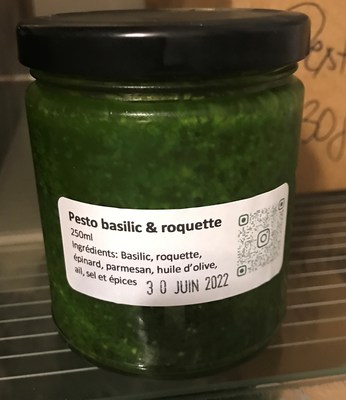
basil and arugula pesto (CNW Group/Ministry of Agriculture, Fisheries and Food)

The Ministry of Agriculture, Fisheries and Food (MAPAQ), in collaboration with the Food Inspection Division of the City of Montreal and Pastamalfi handmade inc., located at 6270, rue Hamilton , in Montreal, is warning the public not to consume the product indicated in the table below, because it has not been prepared and packaged in such a way as to ensure its safety. .

Product name

Format

Affected lot

“Basil & Arugula Pesto”

250ml

Units sold until June 10, 2022

The product that is the subject of this warning was offered for sale until June 10, 2022, on the Instagram account of the company named above and at the Terrone establishment, located at 124 Westminster Avenue North, Montreal West. The product was packaged in glass jars and sold chilled. The product label includes, in addition to its name, the list of ingredients.

The operator is voluntarily recalling the product in question. It has agreed with MAPAQ and the Food Inspection Division of the City of Montreal to distribute this warning as a precautionary measure. In addition, people who have this product in their possession are advised not to consume it. They must return it to the establishment where they bought it or throw it away. Even if the affected product shows no signs of tampering or suspicious odors, its consumption may represent a health risk. It should be noted that no case of illness associated with the consumption of this food has been reported to MAPAQ to date.

USA – Multistate Outbreak of Hepatitis A Virus Infections Linked to Fresh Organic Strawberries

CDC

At a Glance
  • Reported cases: 18
  • States: 3
  • Hospitalizations: 13
  • Deaths: 0

CDC recommends that people who purchased fresh organic strawberries branded as FreshKampo or HEB during March 5, 2022, through April 15, 2022, and then froze those strawberries for later consumption take the following actions:

  • Check your freezer for these fresh organic strawberries. If you froze them to eat later, do not eat them.
  • Throw away any remaining fresh organic strawberries that you froze for later consumption. If you are unsure of what brand you purchased, when you purchased your fresh organic strawberries, or where you purchased them prior to freezing them, you should throw the strawberries away.
  • If you have eaten these organic strawberries, purchased fresh and later frozen, within the last 14 days and are not vaccinated against hepatitis A, contact your local health department or health care provider to discuss getting postexposure prophylaxis (hepatitis A vaccine or immune globulin). Getting postexposure prophylaxis within 14 days of exposure can help prevent illness.
Outbreak Information
Clipboard icon
  • As of June 7, 2022, there are:
    • 18 outbreak-associated cases of hepatitis A reported from 3 states (California, Minnesota, and North Dakota).
    • Illnesses started on dates ranging from March 28, 2022, to May 6, 2022.
    • 13 people have been hospitalized. No deaths have been reported.
  • Epidemiologic and traceback evidence indicate that fresh organic strawberries are the likely source of this outbreak.
    • In interviews, 11/14 (79%) reported eating fresh organic strawberries.
What is Hepatitis A?

Hepatitis A is a contagious liver infection caused by the hepatitis A virus. The hepatitis A virus is found in the stool and blood of people who are infected. The hepatitis A virus is spread when someone ingests the virus, usually through close personal contact with an infected person or from eating contaminated food or drink. Hepatitis A can be prevented with a vaccine, which is recommended for all children at age one and adults at risk.

Symptoms of Hepatitis A

Human figure with ache
  • Symptoms of hepatitis A usually appear 2 to 7 weeks after exposure and can include
    • Yellow skin or eyes
    • Not wanting to eat
    • Upset stomach
    • Stomach pain
    • Throwing up
    • Fever
    • Dark urine or light-colored stools
    • Joint pain
    • Diarrhea
    • Feeling tired
  • Not everyone with hepatitis A has symptoms. Adults are more likely to have symptoms than children.
  • People who get hepatitis A may feel sick for a few weeks to several months but usually recover completely and do not have lasting liver damage. In some people, though, the illness may be so severe that the patient needs to be hospitalized.
  • In rare cases, hepatitis A can cause liver failure and even death. This is more common in older people and in people with other serious health issues, such as chronic liver disease.

Quebec – Notice not to consume products packaged in glass jars and sold by Le Corylus Resto-Bistro (Pépinière et verger Pedneault et Frères inc.) – Food Safety

Quebec

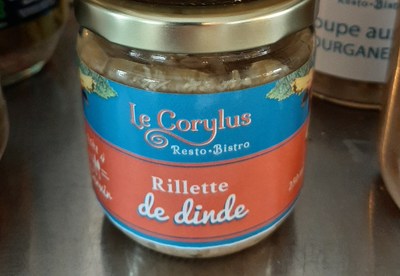
turkey rillette (CNW Group/Ministry of Agriculture, Fisheries and Food)

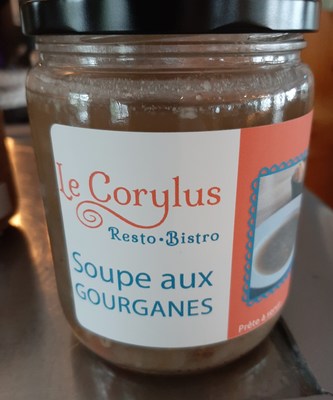
fava bean soup (CNW Group/Ministry of Agriculture, Fisheries and Food)

The Ministry of Agriculture, Fisheries and Food (MAPAQ), in collaboration with Le Corylus Resto-Bistro, located at 3094, chemin des Coudriers, in Isle-aux-Coudres advises the population not to consume the products indicated in the table below, because they have not been prepared and packaged in such a way as to ensure their safety.

The products that are the subject of this warning were offered for sale until June 10, 2022, at the establishment designated above and at the Pépinière et verger Pedneault et Frères inc. , located at 3384, chemin des Coudriers, in L’Isle-aux-Coudres. They were packaged in glass jars and sold at room temperature. The label of the products includes, in addition to their name, the mention “Le Corylus Resto-Bistro”.

The operator is voluntarily recalling the products in question. It has agreed with MAPAQ to issue this warning as a precautionary measure. Also, people who have any of these products in their possession are advised not to consume it. They must return it to the establishment where they bought it or throw it away. Even if the affected products show no signs of tampering or suspicious odors, their consumption may represent a health risk. No case of illness associated with the consumption of these foods has been reported to MAPAQ to date.

Product name

Format

Affected lot

“Turkey rillettes”

250ml

Units sold until June 10,
2022

” Fava Bean Soup “

500ml