USA – FSIS Stopping Salmonella Sampling of Raw Siluriformes in all raw fish

Food Safety News

USDA’s Food Safety and Inspection Service (FSIS) has issued a notice informing inspection program personnel (IPP) that FSIS will stop sampling for Salmonella sampling in raw fish in both domestic and imported products.

The final rule “Mandatory Inspection of Fish of the Order Siluriformes and Products Derived from Such Fish” (80 FR 75590; December 2, 2015) amended the Agency’s regulations to establish a mandatory inspection program for these fish and products derived from these fish. FSIS conducted exploratory sampling for Salmonella in raw fish to monitor its presence.

FSIS inspection program personnel are informed that the agency is stopping Salmonella sampling for raw fish in domestic and imported products.  After July 13, 2022, IPP will no longer receive sampling tasks for the project codes:

If any sampling tasks remain after July 13, 2022, IPP should cancel the remaining sampling tasks and select “Not collected for miscellaneous reasons” as the reason for the cancellation.

Research – Novel Approaches to Environmental Monitoring and Control of Listeria monocytogenes in Food Production Facilities

MDPI

Listeria monocytogenes is a serious public health hazard responsible for the foodborne illness listeriosis. L. monocytogenes is ubiquitous in nature and can become established in food production facilities, resulting in the contamination of a variety of food products, especially ready-to-eat foods. Effective and risk-based environmental monitoring programs and control strategies are essential to eliminate L. monocytogenes in food production environments. Key elements of the environmental monitoring program include (i) identifying the sources and prevalence of L. monocytogenes in the production environment, (ii) verifying the effectiveness of control measures to eliminate L. monocytogenes, and (iii) identifying the areas and activities to improve control. The design and implementation of the environmental monitoring program are complex, and several different approaches have emerged for sampling and detecting Listeria monocytogenes in food facilities. Traditional detection methods involve culture methods, followed by confirmation methods based on phenotypic, biochemical, and immunological characterization. These methods are laborious and time-consuming as they require at least 2 to 3 days to obtain results. Consequently, several novel detection approaches are gaining importance due to their rapidness, sensitivity, specificity, and high throughput. This paper comprehensively reviews environmental monitoring programs and novel approaches for detection based on molecular methods, immunological methods, biosensors, spectroscopic methods, microfluidic systems, and phage-based methods. Consumers have now become more interested in buying food products that are minimally processed, free of additives, shelf-stable, and have a better nutritional and sensory value. As a result, several novel control strategies have received much attention for their less adverse impact on the organoleptic properties of food and improved consumer acceptability. This paper reviews recent developments in control strategies by categorizing them into thermal, non-thermal, biocontrol, natural, and chemical methods, emphasizing the hurdle concept that involves a combination of different strategies to show synergistic impact to control L. monocytogenes in food production environments.

USA – Will There Be a Cyclospora Outbreak in the U.S. This Summer?

Food Poisoning Bulletin

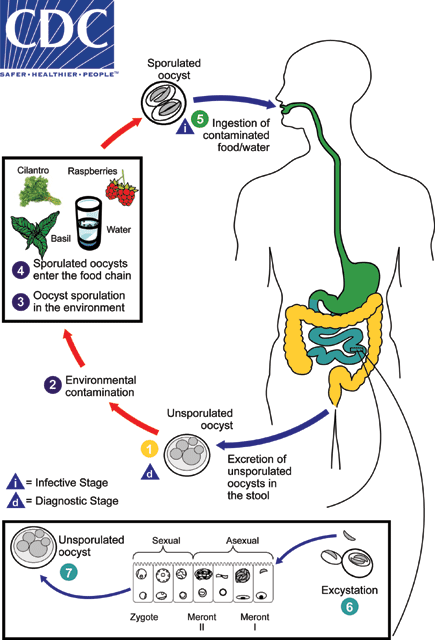
Will there be a cyclospora outbreak in the United States this summer? There have been multiple cyclospora outbreaks in the past nine years, including in 2013, 2014, 2015, 2016, 2017, 2018, 2019, 2020, and 2021. This year may be no exception.

In the past, Cyclospora outbreaks have been linked to fresh produce, including cilantro, raspberries, basil, mesclun, vegetable trays, bagged salad mixes, and snow peas. The cyclospora parasite is transmitted through human feces. The oocyst must mature, or sporulate, outside of the body before it becomes infectious. This infection is not passed person-to-person.

It is very difficult to protect yourself against this parasite, since it can cling to produce, especially produce such as leafy greens and herbs, and is not easily washed or rinsed off. And since most of the foods it contaminates are eaten without being heated, there is no kill step to destroy the parasite.

Research – New, Free Toolkit Looks to Improve Food Safety Culture

Quality Assurance Mag
Stop Foodborne Illness Logo

The Alliance to Stop Foodborne Illness created what it said is an evolving food safety culture toolkit tailored for small and medium-sized food businesses to help companies mature their food safety cultures.

Food safety culture is one of the biggest drivers of change across the food industry. By definition, a mature and positive food safety culture consists of shared values, norms and beliefs that affect mindsets and behaviors toward food safety in, across and throughout the company. Leaders in mature and positive cultures demonstrate ownership and recognize food safety is integral to the consumer and the success of their company.

Every company has a food safety culture — good, bad or okay — but how do you work to improve when you might not know how to start?

The Alliance to Stop Foodborne Illness created an evolving food safety culture toolkit tailored for small and medium-sized food businesses to help companies mature their food safety cultures.

Because one more person impacted by foodborne illness is too many, the toolkit is offered for free to strengthen food safety behaviors that help prevent our friends, loved ones, and neighbors from getting sick.

This is a initiative between Stop Foodborne Illness (STOP) and members of the Alliance — which consists of industry-leading food safety practitioners from Fortune 500 companies and guided by Dr. Lone Jespersen, STOP board member.

The Alliance working group spent the last year creating this initial guide drawing on science, personal food safety culture experiences, and working with STOP constituent advocates negatively impacted by a foodborne illness.

The toolkit helps businesses create a strategy to improve their food safety culture. “This toolkit helps food companies shift from doing the bare minimum to avoid recalls to making good, holistic choices to protect overall public health,” said Dr. Vanessa Coffman, Director of Alliance to Stop Foodborne Illness. “By sharing our Alliance members’ best practices, smaller companies can now build a path toward improving their own food safety culture. This toolkit is not a checklist. It is a process of continual learning, a helpful guide in choosing tools most effective for your workforce.”

Much like a food safety culture journey, the toolkit will evolve with additional resources, guides and how-to strategies. “We will continue to enhance this toolkit for as long as organizations continue to want to keep products and families safe from foodborne illness,” said Coffman.

France – Fruit or strawberry finger tartlets -Salmonella

Gov france

Identification information of the recalled product

  • Product category Feed
  • Product subcategory Sweet products
  • Product brand name E. LECLERC
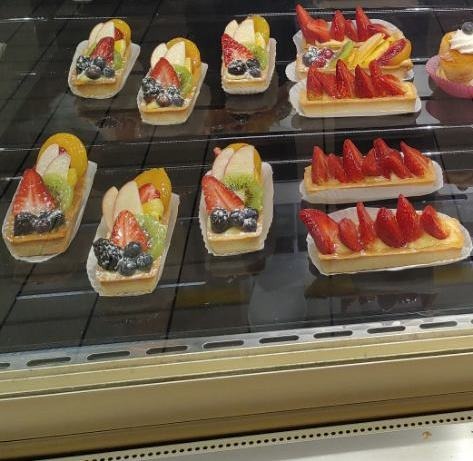
  • Model names or references Fruit or strawberry tartlets sold in the traditional pastry department of the E. LECLERC center in CARCASSONNE
  • Identification of products
    Batch Date
    All lots Use-by date between 04/19/2022 and 06/10/2022
  • Marketing start/end date From 19/04/2022 to 08/06/2022
  • Storage temperature Product to be stored in the refrigerator
  • Further information The product was assembled in the store within the pastry department. It was sold in the traditional pastry department of the E.LECLERC center in Carcassonne. The product concerned is the dough (in finger format) used as a base for fruit or strawberry tarts.
  • Geographic area of ​​sale CARCASSONNE
  • Distributors The pastry department of the E. LECLERC center in CARCASSONNE

Practical information regarding the recall

  • Reason for recall Presence of salmonella in HAFNER brand pasta used as a base for tartlets.
  • Risks incurred by the consumer Salmonella spp (causative agent of salmonellosis)

USA – Built Brands Voluntarily Recalls “Banana Cream Pie Puffs” Protein Bar Because of a Possible Health Risk – E.coli

FDA

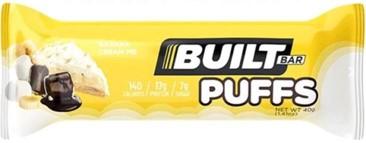
“Built Bar Puffs”

Summary

Company Announcement Date:
FDA Publish Date:
Product Type:
Food & Beverages
Reason for Announcement:
Potential Pathogenic E. Coli
Company Name:
Built Brands, LLC
Brand Name:
Built
Product Description:
Protein Bar – Banana Cream Pie Puffs

Company Announcement

Built Brands, LLC. of American Fork, UT, is recalling 4,196 individual bars of its “Banana Cream Pie Puffs” protein bar because they have the potential to be contaminated with pathogenic Escherichia coli. Although the exact strain has yet to be determined customers must not eat this product as it may pose a serious health risk. Pathogenic Escherichia coli can cause diarrhea, severe stomach cramps and vomiting. Most people recover within a week, but some illnesses can last longer and can be more severe.

The recalled product was distributed nationwide to 1,049 potential customers through mail orders, and would have been received by customers after June 6, 2022.

The product comes in a 40 gram package marked with lot # D22151011 on the outside of the wrapper.

No illnesses have been reported to date in connection with this recall.

The potential for contamination was noted after routine testing conducted by an accredited third-party laboratory at the request of Built Brands detected the presence of Escherichia coli.

Testing results for additional products made by Built Brands indicate other similar products are not affected and the contamination was an isolated incident, likely resulting from a failure to follow GMP practices.

Consumers who have purchased the product in question are urged to contact the company at questions@built.com for a full refund or replacement. Consumers with questions may also contact the company at questions@built.com or by phone at 1-801- 845-2991 between 8:00 am – 5:00 pm, Monday-Friday, MST.


Company Contact Information

Consumers:
Built Brands, LLC
 1-801-845-2991
 questions@built.com

Mexico – At least 30 people suffered from severe food poisoning in Seyé, Yucatan

The Yucatan Times

On Sunday, June 12th, around two in the afternoon many people began to go to a private clinic located near the outskirts of the municipality of Seyé, presenting the same symptoms.

Nausea, high or low blood pressure, vomiting, and diarrhea were just some of the symptoms suffered by men, women, and children, due to the food poisoning cases that forced the municipal authorities to report the events to the Ministry of Health.

The Secretary of Public Security (SSP) transferred some people to other places for their attention, and staff from the Ministry of Health arrived in Seyé to carry out the corresponding investigations.

UK – Three dead in UK fish Listeria outbreak

Food Safety News

Three people have died in an ongoing Listeria outbreak linked to fish in the United Kingdom.

The UK Health Security Agency, Food Standards Agency (FSA), Public Health Scotland and Food Standards Scotland (FSS) are investigating the Listeria monocytogenes outbreak that was first made public in April.

Twelve patients across the UK have been identified, including three in Scotland, with onset dates of illness between October 2020 to March 2022.

Ten sick people are over the age of 65, and one is a pregnant woman. Three of those affected who are older than 65 have died.

Six people have fallen ill since January 2022. The majority of patients reported eating smoked fish.

The FSA and FSS are doing food chain and microbiological investigations including whole genome sequencing (WGS) but the cause is yet to be confirmed.

Belgium – CamemVert Nature and CamemVert with Black Garlic 120g (LOT 22171 DDM 06/15/22) from the Tomm’Pousse brand – Listeria monocytogenes

AFSCA

Recall of ACT ON EAT
Product: CamemVert Nature and CamemVert with Black Garlic 120g (LOT 22171 DDM 06/15/22) from the Tomm’Pousse brand.
Problem: Possible presence of Listeria monocytogenes.


In agreement with the FASFC, ACT ON EAT withdraws the products CamemVert Nature and CamemVert à l’Ail Noir 120g (LOT 22171 DDM 15/06/22) from the Tomm’Pousse brand from sale and recalls them from consumers due to the possible presence of Listeria monocytogenes.

ACT ON EAT asks its customers not to consume these products and to return them to the point of sale where they were purchased.

Product description

– Product name: CamemVert Nature and CamemVert with Black Garlic
– Brand: Tomm’Pousse
– Date of minimum durability (BDD) (“Best before (or end)”): 06/15/ 22
– Batch number: 22171
– Sales period: from 05/13/2022 to 06/02/2022
– Type of packaging: Paper and cardboard packaging
– Weight: 120g

The product was distributed by:

AUTRE CHOSE Avenue Kennedy 1/11 1330 Rixensart
VEGGIVORE Chaussée de Châtelet 18 6060 Gilly

For any additional information , contact:

Mrs. Lucy BERNARD
lucy@actoneat.com

Quebec – Notice not to consume Below Zero brand frozen IQF whole raspberries sold by La Corne d’Abundance – Norovirus

Quebec

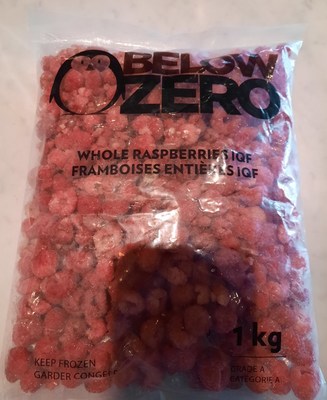
IQF whole raspberries (CNW Group/Ministry of Agriculture, Fisheries and Food)

The Ministry of Agriculture, Fisheries and Food (MAPAQ), in collaboration with the company La Corne d’Abundance, advises the population not to consume the product listed in the table below, as this food may have been contaminated with norovirus.

This warning stems from a Canadian Food Inspection Agency food recall involving Below Zero brand IQF Whole Raspberries originating from China and distributed to several establishments across Canada .

The product was offered in a frozen state. Its label includes, in addition to its name, the mentions “Below Zero” and “Mantab”.

Establishment

Product name

Format

Affected lot

The cornucopia

1988 Notre Dame Street

L’Ancienne-Lorette

“IQF WHOLE RASPBERRIES”

1kg

Lot No. XT21253

PO: M14475

BB/MA: 2023-SE-09

The company named in the table is voluntarily recalling the product in question. It has agreed with MAPAQ to issue this warning as a precautionary measure. In addition, people who have this product in their possession are advised not to consume it. They must return it to the establishment where they bought it or throw it away.

Even if the product does not show signs of tampering or suspicious odor, it could be contaminated with norovirus and cause illness when consumed. Generally the possible symptoms are nausea, vomiting, diarrhea and abdominal cramps. Muscle pain, fatigue, fever, chills and headache may also occur. People exposed to norovirus usually show these symptoms within 24 to 48 hours of eating contaminated food. Cases of illness have been reported to MAPAQ and could be associated with the consumption of this food.