Category Archives: water microbiology

Italy – Natural mineral water 100 cl PLOSE (TMC 13.07.2023) – Microbial Risk

Salute

Brand : Acqua Plose

Name : Natural mineral water 100 cl PLOSE (TMC 13.07.2023)

Reason for reporting : Recall due to microbiological risk

Publication date : 28 July 2021

Click to access C_17_PubblicazioneRichiami_1298_azione_itemAzione0_files_itemFiles0_fileAzione.pdf

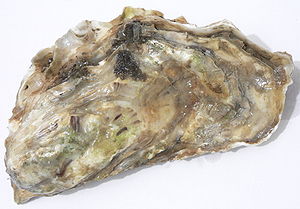
Hong Kong – Trade instructed to suspend importing and selling of ready to eat raw oysters harvested in Samish Bay in US – Vibrio parahaemolyticus

CFS

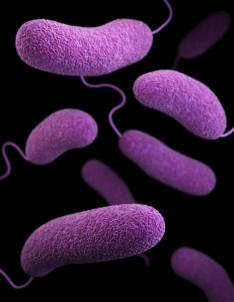
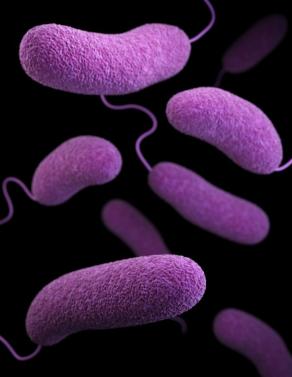
Vibrio

The Centre for Food Safety (CFS) of the Food and Environmental Hygiene Department today (July 23) instructed the trade to suspend the import of ready to eat raw oysters harvested in Samish Bay of the United States (US). The trade should also stop using or selling the product concerned immediately should they possess it.

A spokesman for the CFS said, “The CFS noticed that the Washington State Department of Health reported that ready to eat raw oysters harvested in Samish Bay of the US, which were suspected to be contaminated with Vibrio parahaemolyticus, were under recall. Upon learning of the incident, the CFS immediately contacted local major importers for follow-up. A preliminary investigation found that the importer, Asia-Taylor (A&T) Finefoods Limited, had imported some of the affected product which was on sale in its retail outlet. For the sake of prudence, the CFS has immediately instructed the trade to suspend the import into and sale within Hong Kong of all ready to eat raw oysters harvested in the abovementioned area in the US, and instructed the importer to stop sale and remove from shelves the affected product.”

The CFS is also tracing the distribution of the product concerned. The trade should also stop using or selling the product concerned immediately should they possess it.

The spokesman pointed out that as oysters feed by filtering a large volume of seawater, pathogens (such as Vibrio parahaemolyticus) can accumulate in them if they are grown in or harvested from contaminated water. Raw or partially cooked oysters are high risk foods. Susceptible groups, such as pregnant women, young children, the elderly and people with weakened immune systems or liver diseases, should avoid eating them.

The CFS will inform the US authorities and will also notify the local trade. It will continue to follow up on the incident and take appropriate action to safeguard food safety and public health. An investigation is ongoing.

USA – High heat, low tide likely triggering spike in shellfish-linked infections – Vibrio

DOH WA

Food Illness

News Release

For immediate release: July 16, 2021   (21-170)Spanish

Media contact: Teresa McCallion, Communications, 360-701-7991

High heat, low tide likely triggering spike in shellfish-linked infections

OLYMPIA – An outbreak of vibriosis in Washington has already surpassed the highest number of cases ever recorded by the state for the month of July. Recent high temperatures and low tides in Washington State are likely to blame for the increased rate of illness, which is associated with eating raw or undercooked shellfish, especially oysters that are contaminated with Vibrio.

Found naturally in the environment, Vibrio bacteria thrive in warm temperatures. When midday low tides coincide with warm weather, Vibrio bacteria can grow quickly, increasing risk of illness among people who eat raw or undercooked oysters.

Vibriosis symptoms include diarrhea, abdominal cramps, nausea, vomiting, headache, fever, and chills. The illness usually occurs 4 hours to 4 days after eating contaminated shellfish, with mild or moderate symptoms that typically run its course in 2 to 3 days. Most people get sick within one day of consuming raw or undercooked shellfish.

People with weakened immune systems or liver disease are at higher risk for Vibrio infections. These people, and anyone who wants to avoid illness, should eat only thoroughly cooked shellfish.

“Another effect of the recent heat wave is the perfect storm of conditions for Vibrio infections. It’s important that when enjoying shellfish, we follow simple steps to stay healthy,” said Todd Phillips, Director of the Office of Environmental Health and Safety.

The Three Cs can prevent illness from Vibrio.

  • Cook at 145° F for 15 seconds to destroy Vibrio bacteria.
  • Check the DOH Shellfish Safety Map before heading to the beach to harvest shellfish recreationally. Shellfish gathered from open and approved areas should be harvested as the tide goes out.
  • Chill quickly. Bring a cooler with ice with you when harvesting shellfish recreationally or purchasing for a store or seafood stand (or have them packed on ice). Oysters should be put on ice or refrigerated as soon as possible.

When preparing shellfish, people should wash hands frequently and not return cooked shellfish to the plate or cutting board where raw shellfish was prepared.

Visit the DOH Vibriosis web page for more information.

The DOH website is your source for a healthy dose of informationFind us on Facebook and follow us on Twitter. Sign up for the DOH blog, Public Health Connection.

Nigeria – Cholera Outbreak

HPS

20 July 2021

Article: 55/2905

The Nigeria Centre for Disease Control reports continued transmission of cholera in the country, with 14,343-suspected cases, including 325 deaths, reported by 16 Nigerian states from 1 January through to 27 June 2021.

Travellers to the region are advised to only consume safe food and water. Food and drink to be wary of include untreated water, ice, shellfish, salads, unwashed fruit and vegetables. Travellers are also advised that good personal hygiene is essential, particularly frequent hand washing.

A vaccine is available to protect against cholera, but as the risk to most travellers is very low, it is only recommended for:

  • volunteers, aid workers and medical personnel in disaster relief situations where cholera outbreaks are likely
  • those travelling to work in slums or refugee camps, areas affected by natural disasters, or countries experiencing cholera outbreaks and where care with food and water is difficult or not possible

Further information relating to cholera can be found on the TRAVAX (for health professionals) and fitfortravel (for the general public) websites.

Click to access 1d3271f656ea9bd07f3c9885a0b5a26c.pdf

India – Cholera outbreak: 16 of 24 water samples found non-potable in Panchkula

The Tribune

Of the 24 water samples collected from Abheypur and Budhanpur villages, 16 were found to have coliform bacteria, meaning “non-potable”.

The samples were analysed at a government laboratory in Ramgarh. Four other samples collected from Sector 16 (one sample), Rajiv Colony (two) and Indira Colony (one) were found to be fit for drinking. So far, 55 samples have been collected and sent to the Ramgarh laboratory for analysis.

Of the 55 water samples, the report of 28 (16 found non-potable and 12 potable) have been received, while that of 27 is still awaited. Of the 35 stool samples, 23 have been found positive for vibrio cholera. Meanwhile, the number of patients infected with cholera reached 440 today. As many as 72 (30 adults and 42 children) are still under treatment at the Civil Hospital in Sector 6.

Germany – Legionnaires’ disease sickens five, kills 2 in Heilbronn

Outbreak News Today

CDC legionella

In Heilbronn District, in northern Baden-Württemberg, Germany, it is reported that five men and women have contracted Legionnaires’ disease and two have died.

The patients came from Obersulm, Ellhofen, Weinsberg and Löwenstein, health officials announced. Most of them are middle-aged and older men. The two deceased men had a previous illness and were 49 and 81 years old.

Health authorities are feverishly looking for the source of the contamination.

Experts from the Heilbronn health department are not assuming that contaminated drinking water is the cause of the infections. The sick lived in different places, there are several water suppliers. “The surrounding sewage treatment plants were also sampled,” said a spokeswoman for the dpa office. “We assume that the cause can be found in an evaporative cooling system.” The health department fears that there may be more cases.

USA – Minnesota DOH investigates Legionnaires’ disease associated with an Albert Lea hotel

Food Poison Journal

Legionella_Plate_01

State health officials investigating Legionnaires’ cases linked to Albert Lea hotel
Early evidence suggests source may be the spa; recent guests with undiagnosed symptoms should consult with their health care provider

Cases of Legionnaires’ disease associated with an Albert Lea hotel are prompting state health officials to warn anyone who stayed at the hotel in late June to seek medical care promptly if they are ill.

Minnesota Department of Health investigators have identified two laboratory-confirmed cases so far among people from unrelated groups who were at the Ramada by Wyndham Albert Lea and spent time in the pool/hot tub area around the last weekend of June.

Research – Sachet water consumption as a risk factor for cholera in urban settings: Findings from a case control study in Kinshasa, Democratic Republic of the Congo during the 2017–2018 outbreak

PLOS One

Food Illness

Cholera is a diarrheal disease caused by ingestion of the Vibrio cholerae bacterium. Outbreaks in urban areas are becoming increasingly frequent in Sub-Saharan Africa. Risk factors for cholera have been studied in rural settings but not sufficiently in urban areas. Understanding context-specific risk factors is key for successful outbreak response. During a cholera outbreak in Kinshasa, the Democratic Republic of the Congo we were able to identify a previously unknown behavioural risk factor of particular relevance in urban settings–the consumption of drinking water from plastic sachets. Water sachets are sold on the streets of all major cities in Sub-Saharan Africa. It requires biting off an edge and sucking out the water, and we think that external contamination of these sachets was an important transmission route in the Kinshasa outbreak. Water sachets are predominantly consumed by socio-economically disadvantaged groups who lack piped water supply in their homes and have poor access to sanitary infrastructure. This makes our findings particularly relevant because these are the very populations who are at increased risk of getting and transmitting cholera. Health messaging and response measures should include consumption of water sachets as a potential risk factor during future cholera outbreaks in urban low-resource settings.

Research – Use of Oxidative Stress Responses to Determine the Efficacy of Inactivation Treatments on Cryptosporidium Oocysts

MDPI

crypto

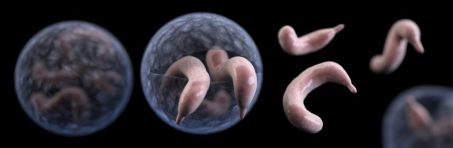
Cryptosporidium oocysts are known for being very robust, and their prolonged survival in the environment has resulted in outbreaks of cryptosporidiosis associated with the consumption of contaminated water or food. Although inactivation methods used for drinking water treatment, such as UV irradiation, can inactivate Cryptosporidium oocysts, they are not necessarily suitable for use with other environmental matrices, such as food. In order to identify alternative ways to inactivate Cryptosporidium oocysts, improved methods for viability assessment are needed. Here we describe a proof of concept for a novel approach for determining how effective inactivation treatments are at killing pathogens, such as the parasite Cryptosporidium. RNA sequencing was used to identify potential up-regulated target genes induced by oxidative stress, and a reverse transcription quantitative PCR (RT-qPCR) protocol was developed to assess their up-regulation following exposure to different induction treatments. Accordingly, RT-qPCR protocols targeting thioredoxin and Cryptosporidium oocyst wall protein 7 (COWP7) genes were evaluated on mixtures of viable and inactivated oocysts, and on oocysts subjected to various potential inactivation treatments such as freezing and chlorination. The results from the present proof-of-concept experiments indicate that this could be a useful tool in efforts towards assessing potential technologies for inactivating Cryptosporidium in different environmental matrices. Furthermore, this approach could also be used for similar investigations with other pathogens. View Full-Text

USA – Shigella linked to Splash Park at Tanganyika Wildlife Park in Goddard Kansas

Food Poison Journal

The Kansas Department of Health and Environment (KDHE) and Sedgwick County Health Department (SCHD) continue to investigate cases of illness associated with Tanganyika Wildlife Park in Goddard, Kan., just west of Wichita. KDHE became aware of the possible link between the cases on Friday, June 18 and began investigation the same day.

Initially, there were three cases that were identified as linked to the park. These cases have tested positive for Shigella bacteria. Additional testing is underway to determine if the bacteria from each person are related. Shigella is a bacteria spread from person-to-person through exposure to contaminated stool (faeces).

Shigella spreads easily; just a small number of bacteria can spread illness.