Category Archives: Vibrio

USA – Marylanders sickened by Vibrio infection from Venezuelan crab meat

Delaware Online

ANNAPOLIS, Md. (AP) — The health department is warning Marylanders to avoid fresh Venezuelan crab meat after several reports of illness.

News outlets report the Maryland Department of Health has confirmed at least nine cases of Vibrio infections linked to consumption of fresh, unpasteurized crab meat from Venezuela.

No one has died, but two of the nine confirmed cases have resulted in hospitalization.
Vibrio bacteria can cause diarrhea, abdominal cramping, vomiting, fever and chills.

The imported crab meat is sold in plastic tubs under different brand names.

Bermuda – Conch Poisonings Spark Warning

Tribune 242 


THERE have been four confirmed cases of conch poisoning and as many as six unconfirmed cases, Health Minister Duane Sands announced yesterday.

According to Dr Sands, the exposure took place in the previous 72 to 96 hours with a number of the patients affected having eaten at Potter’s Cay.

Noting that an outbreak of conch poisoning is something the country can “ill afford” right now, Dr Sands was adamant the issue can be easily mitigated if proper hygiene is maintained.

Four cases have been confirmed via laboratory testing but Dr Sands said there are a number of unconfirmed cases – “possibly as many as six” awaiting laboratory results. He added the affected people are being treated at both Doctors Hospital and Princess Margaret Hospital, and so far, all the self-identified patients are Bahamian.

Conch poisoning is caused by vibrio parahaemolyticus, a bacteria which requires salt water to live. According to Dr Sands, when ingested, vibrio bacteria can cause watery diarrhoea, which is usually accompanied by abdominal cramping, vomiting, fever, nausea, and chills.

These symptoms often occur within 24 hours of ingestion and last about three days. He added that severe illness is “rare” and typically occurs in people with a “weakened” immune system.

The last major outbreak of conch poisoning occurred in the 1990s, around 1991 and 1999, Dr Sands said. He added that there were more than 1,100 cases of vibrio parahaemolyticus poisoning during that era.

The health minister was also adamant the issue is not with the conch meat itself.

“Vibrio is not an issue of the meat itself. Vibrio is a bacteria that ordinarily lives in seawater and is a part of the surface of the conch. The conch meat itself is not infected with vibrio parahaemolyticus. So you can wash it off. So, testing the conch meat itself is not the issue.

Research – Microbiologists and plant scientists find secret to tackling cholera

Science Daily 


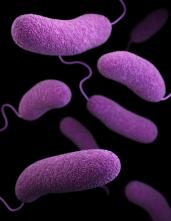
While cholera rages across many regions of the world, a team of microbiologists and plant scientists has pinpointed a genetic weakness in the pandemic’s armor, which could lead to future treatments.


The current cholera pandemic began in Indonesia in 1961. Rather than fade away like its six previous worldwide outbreak predecessors, the responsible strain is thriving and actually picking up steam. A discovery, led by scientists from Michigan State University and Tufts University and featured in the current issue of PNAS, shows the key genetic change the seventh pandemic acquired to thrive for more than 50 years.

The interdisciplinary team of scientists reveal the first ever signaling network for a new bacterial signal, cyclic GMP-AMP (cGAMP), in the human cholera pathogen. The team also identified the first protein receptor of cGAMP as a phospholipase enzyme that remodels the V. cholerae membrane when cGAMP is produced.

“When this pandemic emerged, it virtually displaced all of the other V. cholerae isolates, or previous strains, on a worldwide scale,” said Chris Waters, MSU microbiology professor, who co-led the study with Wai-Leung Ng, Tufts microbiologist. “No one really knows why this happened. Our discovery of cGAMP synthase and phospholipase, which are present only in the seventh pandemic, could be key drivers of the seventh cholera pandemic.”

Research – A new toxin discovered in Cholera bacteria

Science Daily 


The bacterium Vibrio cholerae was discovered more than 150 years ago but remains as one of the main causes of bacterial infectious disease globally, especially in low-income nations where it occurs endemic, and outbreaks of cholera disease can lead to major epidemics.

In addition to causing cholera disease characterized by very severe watery diarrhea, different variants of V. cholerae can cause, for example, wound infections and infections in the ear canal (ear inflammation). If the infection is reaching the bloodstream, it can lead to blood poisoning. Such variants of Vibrio bacteria are common in brackish water, but can be found both in freshwater and saltwater and are also present in such environments in our country.

Scientists from Umeå University have now discovered and characterised the structure and function of a so far unknown Vibrio toxin. A team led by Professor Sun Nyunt Wai at Department of Molecular Biology and MIMS used the worm Caenorhabditis elegans as a predatory host for the bacteria and identified by molecular genetic analysis the V. cholerae genes required for production and release of the new protein toxin, now called MakA.

“In addition to the toxicity of MakA demonstrated with C. elegans, our studies revealed that upon infection of Zebrafish the toxin caused damage in particular to the intestinal system,” explains Sun Nyunt Wai.

Sun Nyunt Wai lrSun Nyunt Wai and her colleagues were also curious about the details of the bacterial release mechanism of the newly discovered toxin from V. cholerae.

Research – MMWR Examines Trends of Foodborne Illness Outbreaks From 2006 to 2017

Food Poisoning Bulletin 


The CDC is examining trends of foodborne illness outbreaks for 2017 and describes changes in incidence since 2006 in its Morbidity and Mortality Weekly Report (MMWR) for March 23, 2018. Foodborne illness is a substantial health burden in the Untied States. In 2017, there were 24,484 infections, 5,677 hospitalizations, and 122 deaths attributed to food borne illness.

Despite ongoing food safety measures in the United States, foodborne illness continues to be a substantial health burden. The 10 U.S. sites of the Foodborne Diseases Active Surveillance Network (FoodNet)* monitor cases of laboratory-diagnosed infections caused by nine pathogens transmitted commonly through food. This report summarizes preliminary 2017 data and describes changes in incidence since 2006. In 2017, FoodNet reported 24,484 infections, 5,677 hospitalizations, and 122 deaths. Compared with 2014–2016, the 2017 incidence of infections with Campylobacter, Listeria, non-O157 Shiga toxin–producing Escherichia coli (STEC), Yersinia, Vibrio, and Cyclospora increased. The increased incidences of pathogens for which testing was previously limited might have resulted from the increased use and sensitivity of culture-independent diagnostic tests (CIDTs), which can improve incidence estimates (1). Compared with 2006–2008, the 2017 incidence of infections with Salmonella serotypes Typhimurium and Heidelberg decreased, and the incidence of serotypes Javiana, Infantis, and Thompson increased. New regulatory requirements that include enhanced testing of poultry products for Salmonella might have contributed to the decreases. The incidence of STEC O157 infections during 2017 also decreased compared with 2006–2008, which parallels reductions in isolations from ground beef.§ The declines in two Salmonella serotypes and STEC O157 infections provide supportive evidence that targeted control measures are effective. The marked increases in infections caused by some Salmonella serotypes provide an opportunity to investigate food and nonfood sources of infection and to design specific interventions.

Canada – Vancouver Island cholera warning: Cases linked to eating herring eggs

Outbeak News Today 


The First Nations Health Authority and Island Health are warning the public following confirmed cases of Vibrio cholerae infection associated with eating herring eggs. The bacteria can be found in the aquatic environment and can cause intestinal illness after eating contaminated foods. Illness may include mild to severe nausea, vomiting, and very severe watery diarrhea. Some people don’t become ill and don’t know they have been infected. Health authorities are asking you to take the following precautions and actions:

  • Do not consume herring eggs harvested from French Creek to Qualicum Bay area from kelp, seaweed or other surfaces.
  • If you are ill, ensure you are drinking small amounts of fluid frequently to keep hydrated. Visit your physician or health center to ensure treatment and confirmation of the cause of illness. Letyour health care provider know if you have eaten raw or lightly-cooked herring eggs within 5
    days of onset of illness or caring for someone who became ill after eating herring eggs.
  • The bacteria can be passed from person to person, even if you don’t have symptoms. Always wash your hands well after going to the bathroom or caring for someone who has been ill.
  • If you have stored herring eggs, please call First Nations Health Authority Environmental Public Health Services at 250-924- 6125. Samples are being requested for testing (keep cold and in original packaging).
  • Discard any extra stored herring eggs to avoid further illness. Freezing does not kill the bacteria.
  • When handling herring eggs, practice proper handwashing and sanitize dishes and equipment to avoid cross contamination.
  • Ensure other community members who may have received herring eggs are aware of these precautions and actions. If they are ill, we request that they be in contact with their physician or Health Center.
  • A sanitary shellfish closure exists for bivalves in the French Creek/Qualicum Bay area. Harvesters are reminded to check area closures prior to harvesting bivalves to prevent illness.

RASFF Alert -Vibrio vulnificans – Wild Raw Giant Tiger Shrimps

kswfoodworld food safety poisoning

RASFF-Vibrio vulnificus (in 4 out of 5 samples /25g) in frozen wild raw giant tiger shrimps (Penaeus monodon) from Indonesia in France

USA – Vibrio Outbreak Raw Oysters

Food Poisoning BulletinVibrio

Vibrio outbreak associated with eating raw oysters and raw clams has sickened at least 104 people in 13 states over the last six months, according to the Centers for Disease Control and Prevention (CDC). Six people have been hospitalized.

Public health investigators have traced the source of some of these illnesses to shellfish harvest areas in Connecticut, Massachusetts, New York, and Virginia. Massachusetts issued a recall of oysters,  Connecticut issued a recall of oysters and clams. Implicated harvest areas in Virginia were closed in July and remain closed.  In Massachusetts, they were closed in August and remain closed. In New York they were closed in June and reopened in mid-September. In Connecticut, they were closed in August and reopened in mid-September.

Research – Increasing Vibrio Prevalence

Food Safety NewsVibrio

With a nearly 50-percent mortality rate, Vibrio vulnificus is the most deadly foodborne pathogen in the world, according to University of North Carolina at Charlotte Biology Professor Jim Oliver. And instances of infection in the U.S., however rare, are rapidly rising.

Fifteen years ago, there were 21 confirmed cases of Vibrio vulnificus and parahaemolyticus infections in the U.S. Last year, there were 193.

While infections from either of the pathogens are still rare compared with, say, Salmonella and Campylobacter, the incidence rate grew faster than any of the other five microbes tracked in the Centers for Disease Control’s 2012 Food Safety Progress Report. The vulnificus strain is responsible for 95 percent of seafood-related illness fatalities in the U.S., according to a 2013 study by Oliver and Joanna Nowakowska. Another Vibrio strain, parahaemolyticus, is milder, causing diarrhea, nausea, fever and chills, according to CDC.

USA – Oyster Recall – Vibrio parahaemolyticus

Food Poisoning BulletinVibrio

Wegmans is recalling Cape Neddick Blue Point oysters, sold individually, because they may be contaminated with Vibrio parahaemolyticus. This bacteria can make you sick if the oysters are eaten raw. Only Cape Neddick/Blue Point oysters with these UPC codes are recalled: 2-06146-00000, 2-06152-00000, and 2-06153-00000