Category Archives: Uncategorized

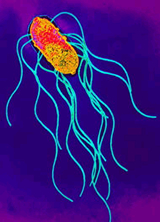
Switzerland – Be careful eating Chinese fondue, says Swiss food safety agency – Campylobacter

Le News  Campylobacter_jejuni_01


Chinese fondue is a culinary crossover between two nations. A dish that exists in both China and Switzerland. The Swiss version retains the communal pot of hot broth, thinly sliced raw meat and Chinese mushrooms of the original but departs radically in terms of flavour.

According to the Federal Food Safety and Veterinary Office (FSVO), food poisoning rises at the end of the year, something partly attributable to Chinese fondue. Raw chicken, and its high rate of campylobacter contamination, is the main cause. In general meat is the most likely source of food poisoning, according to FSVO, and men between 18 and 30 are the most likely to get poisoned.

Norway – Norway investigates Listeria infections; Sweden, Denmark report on Campylobacter and Salmonella

Food Safety News

Norwegian authorities are investigating a potential outbreak of Listeria monocytogenes that has affected six people.

The Norwegian Institute of Public Health (Folkehelseinstituttet) reported an increase in cases of people infected with Listeria in December. Of the six cases, four are from Oppland and Hedmark. Usually, one to two patients with listeriosis are reported monthly.


UK – Drinking raw milk – has led to a dangerous rise in food poisoning and killed TWO people, experts warn

The Daily Mail

Drinking raw milk has led to a dangerous rise in food poisoning, say experts   

  • A child fed raw milk in Wales died from a type of E. coli poisoning, while a man died of listeriosis after eating cheese made with raw milk 
  • Unlike pasteurised milk, which is heat-treated to kill bacteria, raw milk can harbour dangerous germs


India – FSSAI issues guidance note on irradiated foods safety; busts myths around it

FNBNEWS

FSSAI has issued a guidance note on irradiated food titled Irradiated Food is Safe – Busting Myths Around It. It aims at making Food Business Operators (FBOs) understand the technological benefits, safety and wholesomeness of irradiated foods.

The note has detailed information on irradiation technology, its benefits, food irradiation facilities in India, public perception, commercial prospects in India and use of irradiation technology globally.


Irradiation is a physical process in which food commodities like bulk or pre-packaged are exposed to controlled doses of energy of ionising radiation such as gamma rays or X-rays to achieve different technological objectives.

The note stresses on the fact that radiation technology can be termed as one process with multiple uses. The application of food irradiation on the basis of dose requirements like low, medium and high can help in extension of shelf-life, destruction of storage and quarantine insect pests, and killing of parasites, pathogens and spoilage microorganisms.


In India, regulations on radiation processing have been notified under Food Safety and Standards (Food Products Standards and Food Additives) Amendment Regulations, 2016. Further, as per FSS (Food Products Packaging and Labelling) Regulations, 2011, irradiated products are labelled and can be identified with the ‘Radura’ logo in a typical label:

 

UK – Scots dog owners urged to check food now over Salmonella outbreak fears after traces of bacteria found in Just Natural products

The Scottish Sun Salmonella kswfoodworld

SCOTS dog owners have been urged to check their pooches’ food after a number of products were recalled when traces of salmonella were found.

Avondale Pet Foods Ltd recalled Just Natural Chicken & Tripe as shoppers could unwittingly have bought the contaminated grub.

Research – Genomically Informed Strain-Specific Recovery of Shiga Toxin–Producing Escherichia coli during Foodborne Illness Outbreak Investigations

Journal of Food Protection

Next-generation sequencing plays an important role in the characterization of clinical bacterial isolates for source attribution purposes during investigations of foodborne illness outbreaks. Once an illness cluster and a suspect food vehicle have been identified, food testing is initiated for confirmation and to determine the scope of a contamination event so that the implicated lots may be removed from the marketplace. For biochemically diverse families of pathogens such as Shiga toxin–producing Escherichia coli (STEC), the ability to detect specific strains may be hampered by the lack of a universal selective enrichment approach for their recovery against high levels of background microbiota. The availability of whole genome sequence data for a given outbreak STEC strain prior to commencement of food testing may provide food microbiologists an opportunity to customize selective enrichment techniques favoring the recovery of the outbreak strain. Here we demonstrate the advantages of using the publicly available ResFinder tool in the analysis of STEC model strains belonging to serotypes O111 and O157 to determine antimicrobial resistance traits that can be used in formulating strain-specific enrichment media to enhance recovery of these strains from microbiologically complex food samples. The improved recovery from ground beef of model STEC strains with various antimicrobial resistance profiles was demonstrated using three classes of antibiotics as selective agents, suggesting the universal applicability of this new approach in supporting foodborne illness investigations.

Research – Traceability for Foodborne Illness Outbreaks Improving —Upgrading technology, on industry and consumer side, could help stem tide

Medpage Today

Traceability remains key to identifying the source of a foodborne illness outbreak, but the progress that agencies such as the FDA and CDC have made in tracking and sourcing these outbreaks has been evident with the amount of information available with each successive outbreak this year.

Research – Bacteria found in ancient Irish soil halts growth of superbugs: New hope for tackling antibiotic resistance

Science Daily

Researchers analyzing soil from Ireland long thought to have medicinal properties have discovered that it contains a previously unknown strain of bacteria which is effective against four of the top six superbugs that are resistant to antibiotics, including MRSA. Antibiotic-resistant superbugs could kill up to 1.3 million people in Europe by 2050, according to recent research. The World Health Organisation (WHO) describes the problem as ‘one of the biggest threats to global health, food security, and development today.’

Research – Long-Term Depuration of Crassostrea virginica Oysters at Different Salinities and Temperatures Changes Vibrio vulnificus Counts and Microbiological Profile

Journal of Food Protection

Previous short-duration depuration studies with the eastern oyster (Crassostrea virginica) demonstrated difficulty in achieving significant naturally incurred Vibrio vulnificus population count reductions. The present study used long-duration depuration (14 days) at controlled temperatures (10 or 22°C) and salinities (12, 16, or 20 mg/g). All depuration temperature–salinity combinations significantly reduced V. vulnificus counts, with greatest reductions seen in 12 mg/g, 10°C seawater (2.7-log CFU/g reduction) and in 20 mg/g, 22°C seawater (2.8-log reduction). Mesophilic vibrios dominated the overall microflora of freshly harvested oysters, whereas refrigerated storage selected for psychrotrophic bacteria (Pseudomonas spp., Aeromonas spp., Shewanella spp., Psychrobacter spp.) as well as did depuration at 10°C (Pseudoalteromonas spp., Shewanella spp., Vibrio spp.). Depuration at 22°C retained dominance of mesophilic vibrios, including pathogenic species, followed by Shewanella spp., Pseudoalteromonas spp., and Photobacterium spp. Although aerobic plate counts were lower in 22°C depurated oysters (5.0 log versus 6.0 log) compared with 10°C, depuration at 10°C offered greater V. vulnificus population reductions than depuration at 22°C. This advantage was only seen at 12 mg/g salinity, with no impact at 16 and 20 mg/g salinities. No depuration treatment reduced V. vulnificus counts to nondetectable levels. Use of prolonged depuration may be a helpful intervention to control V. vulnificus populations in oysters.

Research – A Quantitative Risk Assessment of Human Salmonellosis from Consumption of Walnuts in the United States

Journal of Food Protection

We assessed the risk of human salmonellosis from consumption of shelled walnuts in the United States and the impact of 0- to 5-log reduction treatments for Salmonella during processing. We established a baseline model with Salmonella contamination data from 2010 to 2013 surveys of walnuts from California operations to estimate baseline prevalence and levels of Salmonella during preshelling storage and typical walnut processing stages, considered U.S. consumption data, and applied an adapted dose-response model from the Food and Agriculture Organization and the World Health Organization to evaluate risk of illness per serving and per year. Our baseline model predicted 1 case of salmonellosis per 100 million servings (95% confidence interval [CI], 1 case per 3 million to 1 case per 2 billion servings) of walnuts untreated during processing and uncooked by consumers, resulting in an estimated 6 cases of salmonellosis per year (95% CI, <1 to 278 cases) in the United States. A minimum 3-log reduction treatment for Salmonella during processing of walnuts eaten alone or as an uncooked ingredient resulted in a mean risk of <1 case per year. We modeled the impact on risk per serving of three atypical situations in which the Salmonella levels were increased by 0.5 to 1.5 log CFU per unit pretreatment during processing at the float tank or during preshelling storage or posttreatment during partitioning into consumer packages. No change in risk was associated with the small increase in levels of Salmonella at the float tank, whereas an increase in risk was estimated for each of the other two atypical events. In a fourth scenario, we estimated the risk per serving associated with consumption of walnuts with Salmonella prevalence and levels from a 2014 to 2015 U.S. retail survey. Risk per serving estimates were two orders of magnitude larger than those of the baseline model without treatment. Further research is needed to determine whether this finding reflects variability in Salmonella contamination across the supply or a rare event affecting a portion of the supply.