Category Archives: Uncategorized

Research – Utility of Whole Genome Sequencing To Describe the Persistence and Evolution of Listeria monocytogenes Strains within Crabmeat Processing Environments Linked to Two Outbreaks of Listeriosis

Journal of Food Protection

This article describes the identification and investigation of two extended outbreaks of listeriosis in which crabmeat was identified as the vehicle of infection. Comparing contemporary and retrospective typing data of Listeria monocytogenes isolates from clinical cases and from food and food processing environments allowed the detection of cases going back several years. This information, combined with the analysis of routinely collected enhanced surveillance data, helped to direct the investigation and identify the vehicle of infection. Retrospective whole genome sequencing (WGS) analysis of isolates provided robust microbiological evidence of links between cases, foods, and the environments in which they were produced and demonstrated that for some cases and foods, identified by fluorescent amplified fragment length polymorphism, the molecular typing method in routine use at the time, were not part of the outbreak. WGS analysis also showed that the strains causing illness had persisted in two food production environments for many years and in one producer had evolved into two strains over a period of around 8 years. This article demonstrates the value of reviewing L. monocytogenes typing data from clinical cases together with that from foods as a means of identifying potential vehicles and sources of infection in outbreaks of listeriosis. It illustrates the importance of reviewing retrospective L. monocytogenes typing alongside enhanced surveillance data to characterize extended outbreaks and inform control measures. Also, this article highlights the advantages of WGS analysis for strain discrimination and clarification of evolutionary relationships that refine outbreak investigations and improve our understanding of L. monocytogenes in the food chain.

Research – Assessment of Microbial Populations in the Manufacture of Vacuum-Packaged Ready-to-Eat Roast Beef and in a Related Production Plant

Journal of Food Protection

Some microbiological criteria were monitored for 6 months in vacuum-packaged roast beef (15 production batches), raw beef (10 batches), and other meat products (12 batches) produced in an Italian small to medium-size enterprise. Fifty-five environmental swab samples also were analyzed. The main bacterial groups were identified by cultural methods according to International Organization for Standardization standards. Listeria monocytogenes was enumerated with the most-probable-number protocol, and species identification was confirmed with a specific PCR assay. Immediately after vacuum packaging, all ready-to-eat (RTE) products had low mean aerobic colony counts (<102 to 2.4 × 10² CFU g−1), anaerobic colony counts (1.6 to 6.5 × 101 CFU g−1), Enterobacteriaceae counts (1.1 to 1.4 × 101 CFU g−1), and Escherichia coli counts (generally below the detection limit). Nevertheless, the prevalence of L. monocytogenes in these samples was 3.7%. In roast beef samples, the aerobic and anaerobic colony counts reached unacceptable levels (>106 CFU g−1) after 14 days of refrigerated storage. Because the prevalence of L. monocytogenes increased to 13.3% during storage, a substantial reduction in the shelf life of these products is recommended. Surfaces without direct contact with food (floors and drains) had the highest mean counts for aerobic colonies (8.0 × 10³ to 9.5 × 10⁵ CFU/cm2), anaerobic colonies (2.9 × 10³ to 3.2 × 10⁴ CFU/cm2), Enterobacteriaceae (1.5 × 101 to 8.4 × 101 CFU/cm2), and E. coli (6.0 to 7.7 CFU/cm2). The levels of L. monocytogenes on direct food contact surfaces were below the detection limit, but more than 25% of floor samples were contaminated. These results reveal the persistence of L. monocytogenes in food processing environments, although at very low levels, posing a high risk of postcooking recontamination for RTE products. To improve hygienic conditions and reduce cross-contamination, an increase in operator awareness and a reassessment of surface sanitization protocols are needed.

Research – 2017 BIOMIN Mycotoxin Survey Results

Biomin

The latest edition of the annual survey, covering 18757 agricultural commodity samples from 72 countries with over 73000 analyses, highlights the main dangers from the most important mycotoxins in primary feedstuffs and their potential risk to livestock animal production.

The survey results provide an insight on the incidence of aflatoxins (Afla), zearalenone (ZEN), deoxynivalenol (DON), T-2 toxin (T-2), fumonisins (FUM) and ochratoxin A (OTA) in the primary components used for feed which include corn (maize), wheat, barley, rice, soybean meal, corn gluten meal, dried distillers grains (DDGS) and silage, among others.

RASFF Alerts – Salmonella – Sesame Seeds – Ground Black Pepper – Chicken Breast Fillets

RASFF-Logo

RASFF -Salmonella (presence /25g) in sesame seeds hulled from Nigeria, via Turkey in Poland

RASFF-Salmonella (present /25g) in sesame seeds from Nigeria in Poland

RASFF-Salmonella (present /25g) in ground black pepper from Vietnam in Spain

RASFF-Salmonella enterica ser. Typhimurium in frozen chicken breast filletts from the Netherlands in the Netherlands

RASFF Alert – Listeria monocytogenes – Smoked Salmon

RASFF-Logo

RASFF-Listeria monocytogenes (presence /25g) in chilled smoked Norwegian salmon from Latvia in Italy


RASFF Alert – E.coli – Live Mussels

RASFF-Logo

RASFF -too high count of Escherichia coli (940 MPN/100g) in live mussels (Mytilus edulis) to be purified from Ireland in Ireland

RASFF Alert – Histamine – Chilled mackerel (Scomber scombrus)

RASFF-Logo

RASFF -histamine (410 mg/kg – ppm) in chilled mackerel (Scomber scombrus) from France in Belgium

RASFF Alerts – Aflatoxin – Peanuts – Pistachios – Groundnuts – Almonds

RASFF-Logo

RASFF-aflatoxins (B1 = 37.7; Tot. = 44.3 µg/kg – ppb) in peanuts with shell from Egypt in Italy

RASFF-aflatoxins (B1 = 73.8; Tot. = 79 µg/kg – ppb) in pistachios in shell from Syria in Greece

RASFF-aflatoxins (B1 = 21.2; Tot. > 24 µg/kg – ppb) in groundnuts from China in Spain

RASFF-aflatoxins (B1 = 60; Tot. = 71 µg/kg – ppb) in shelled pistachios from the Netherlands in the Netherlands

RASFF-aflatoxins (B1 = 92; Tot. = 110 µg/kg – ppb) in almonds from the United States in the Netherlands

RASFF Alerts – Animal Feed – Salmonella – Fish Meal – Soybean Meal

RASFF-Logo

RASFF-Salmonella (presence /25g) in fish meal from the United States in Greece

RASFF-Salmonella enterica ser. Mbandaka (presence /25g) in soybean meal from Brazil in Belgium

Information -FDA issues new guidelines for washing avocados after Listeria finding

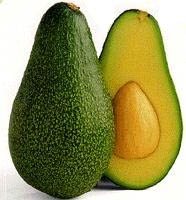
File:Avocado.jpegWTHR 

After recent FDA sampling found a significant presence of listeria on the skins of avocados, the agency is suggesting consumers was all avocados before cutting or eating.

The FDA tested more than 1,000 domestic and imported avocados for salmonella, listeria and E. coli. While less than 1 percent of the avocado pulps tested contained listeria, more than 17 percent of the skins tested did.

The testing included 361 skin samples; 64 were positive for listeria. The bacteria was present in both imported and domestic avocados.

For most healthy people, listeria is not a health threat in low levels. But for pregnant women and people with weakened immune systems, it can be dangerous.

Foodsafety.gov recommends washing all produce —including the skin — before eating or cutting into, even if you’re not planning to cut the skin off. The bacteria could be transferred from the knife to the fruit.

It’s best to use a produce brush to clean produce firm enough to withstand it.

FDA