Category Archives: Uncategorized

RASFF Alerts – STEC E.coli – Soft Cheese

RASFF-Logo

RASFF – shigatoxin-producing Escherichia coli (stx1+ stx2- eae-) in soft cheese from Belgium in Germany

RASFF Alerts – Aflatoxin – Groundnuts -Peanut Butter – Mixed Nuts – Dried Fig Cubes – Cayenne Pepper – Hazlenut Kernels – Pistchios – Chilli Powder – Dried Figs

RASFF-Logo

RASFF – aflatoxins (B1 = 2.6; Tot. = 3.3 µg/kg – ppb) in groundnuts with shell from Argentina in the UK

RASFF – aflatoxins (B1 = 149.1; Tot. = 168.55 µg/kg – ppb) in groundnuts from the United States in Slovakia

RASFF – aflatoxins in organic peanut butter from the Netherlands, with raw material from Germany in the Netherlands

RASFF – aflatoxins (B1 = 15; Tot. = 17.9 µg/kg – ppb) in groundnuts from Egypt in Italy

RASFF – aflatoxins (B1 = 3.1; Tot. = 3.7 µg/kg – ppb) in mixed nuts from Turkey in France

RASFF – aflatoxins (B1 = 11.1; Tot. = 16.6 µg/kg – ppb) in dried fig cubes from Turkey in France

RASFF – aflatoxins (B1 = 9.1; Tot. = 18.5 µg/kg – ppb) in dried figs cubes from Turkey in France

RASFF – aflatoxins (B1 = 7.8 µg/kg – ppb) in groundnuts with shell from India in the UK

RASFF – aflatoxins (B1 = 90; Tot. = 103 µg/kg – ppb) in ground nuts from China in Belgium

RASFF – aflatoxins (B1 = 11.1; Tot. = 11.6 µg/kg – ppb) in Cayenne pepper powder from India in the UK

RASFF – aflatoxins (B1 = 7.2 mg/kg – ppm) in hazelnut kernels from Georgia in Greece

RASFF – aflatoxins (B1 = 106.19; Tot. = 117.01 µg/kg – ppb) in pistachios with shell from the United States, dispatched from Turkey in Italy

RASFF – aflatoxins (B1 = 7.6 µg/kg – ppb) in chili powder from India in Belgium

RASFF – aflatoxins (B1 = 13.5; Tot. = 15.5 µg/kg – ppb) in groundnuts with shell from China in Spain

RASFF – aflatoxins (B1 = 21; Tot. = 29 µg/kg – ppb) in dried figs from Turkey in France

RASFF Alerts – Animal Feed – Enterobacteriaceae – Feed for Ornamental Fish – Raw Pet Food

RASFF-Logo

RASFF – high count of Enterobacteriaceae (150 CFU/g) in feed for ornamental fishes from China in Germany

RASFF – too high count of Enterobacteriaceae (190; 89; 21;140; 86 CFU/g) in frozen raw pet food from the Netherlands in Belgium

RASFF Alert – Animal Feed – Salmonella – Dog Chews – Dried Pigs Ears – Rapeseed Meal-

RASFF-Logo

RASFF – Salmonella enterica ser. Livingstone (in 1 out of 5 samples /25g) in dog chews- dried pig ears from Switzerland in Austria

RASFF – Salmonella (presence /25g) in rapeseed meal from Germany in Denmark

RASFF – Salmonella enterica ser. Agona (presence /25g) in rapeseed meal from Lithuania in Denmark

RASFF – Salmonella enterica ser. Mapo (presence /50g) in dog chews from Poland in Italy


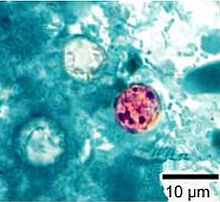
USA – FDA warns about fresh basil imported from Siga Logistics de RL de CV from Morelos in Mexico – Cyclospora

Food Safety News 220px-Cyclospora_cayetanensis_stained

Consumers should not buy, eat, or serve any fresh basil exported by Siga Logistics de RL de CV from Morelos, Mexico to the United States.

The fresh basil from Siga Logistics de RL de CV located in Morelos, Mexico is the subject of a multi-state outbreak investigation of Cyclospora illnesses potentially linked to fresh basil exported by Siga Logistics de RL de CV located in Morelos, Mexico.

As of July 9, health official found 132 illnesses in ten states that are attributed to the outbreak.   Four patients required hospitalization.   Restaurants in Florida, Minnesota, New York and Ohio exposed patrons to the parasite.

Cyclospora is a parasite typically transmitted by contaminated food.    Some areas, such as Massachusetts, are this year experiencing higher Cyclosproa case counts than normal. States with Cyclospora cases associated with the current outbreak are found in CT, FL, IA, MA, MN, NY, OH, RI, SC, and WI.

USA – Case Count Rises to 10 in Atlanta Sheraton Legionnaires Disease Outbreak

Outbreak News Today Legionella_Plate_01

The Georgia Department of Public Health reports that case counts are up to 10 now in the outbreak of Legionnaires’ Disease linked to the downtown Atlanta Sheraton hotel. The property remains closed amid the outbreak and its investigation. At this time, no definitive source at the property has been confirmed to have caused the illnesses. According to local media reports, the “investigators continued testing water in pools, fountains, hot tubs, faucets, chillers and other locations at the hotel.”

USA – Issues with Vibrio vulnifcus and Enterococcus

CBS Austin

The family of an elderly San Marcos man wants to spread a message after he died last month from a flesh-eating bacteria following a fishing trip on the Texas Gulf Coast.

His family took him to a Victoria hospital where he was immediately diagnosed with vibrio and underwent surgery. He did not survive.

According to the CDC, the infection often spreads very quickly. Early symptoms of necrotizing fasciitis can include:

  • A red or swollen area of skin that spreads quickly
  • Severe pain, including pain beyond the area of the skin that is red or swollen
  • Fever

See a doctor right away if you have these symptoms after an injury or surgery. Even though minor illnesses can cause symptoms like these, people should not delay getting medical care.

WJHG

The infection caused by Enterococcus is completely different from the infection caused by Vibrio Vulnificus or Group A Streptococcus, which is associated with what people refer to as “flesh-eating bacteria.”

“It’s very rare, Necrotizing Fasciitis is a complication from an infection, so, the most common bacteria that causes the Necrotizing Fasciitis is Group A Streptococcus, it can also be caused by Vibrio Vulnificus, which is a naturally occurring bacteria that lives in warm marine waters,” said Scully.

Unlike Vibrio Vulnificus, Group A Strep can be found in places other than saltwater, meaning you don’t have to enter the gulf to contract it.

Last week, it was reported an Alabama man had contracted Necrotizing Fasciitis in Panama City Beach. According to the report, it was a strand of strep, Group A Strep. FDOH-Bay County says it can’t be confirmed that case of Necrotizing Fasciitis was contracted in Panama City Beach due to it being caused by Group A Strep.

USA – Stockyards, SRA Beef Pork Products Recalled For Possible Contamination

Food Poisoning Bulletin

US Foods of Birmingham, Alabama is recalling about 712 pounds of raw and frozen beef and pork products that may be adulterated due to possible product contamination. The recall notice does not state what may have contaminated these products. There have been no confirmed reports of adverse reactions due to the the consumption of these products. Anyone who is concerned about an injury or illness should contact a healthcare provider.

The fresh and frozen raw beef and pork items were produced on July 18, 2019. These items were shipped to restaurants in Alabama, Florida, Georgia, Mississippi, and Tennessee.

You can see the list of recalled products, along with the product name and type, the packaging date, lot code, package code, and other relevant information at the USDA web site.

Australia – Listeria cases among at-risk persons are a timely reminder for food safety

Gov Au

The Australian Government Department of Health in collaboration with jurisdictions is currently investigating three cases of Listeria infections (listeriosis) occurring in Victoria, Queensland and New South Wales. All cases occurred in people aged over 70 years and all had significant underlying health conditions. Unfortunately two people (from NSW and Victoria) have died.

Investigations have implicated smoked salmon as the likely source. This is a timely reminder for people to ensure that food is handled, prepared and stored safely, and that those most at-risk of listeriosis avoid certain foods.

Listeriosis is an illness usually caused by eating food contaminated by the bacterium Listeria monocytogenes. The bacteria are widely distributed in the environment and can grow in food at refrigeration temperatures. Most people who are exposed to Listeria will only develop mild symptoms, though illness can be severe in those most at-risk. Those at increased risk of illness include pregnant women and their unborn babies, newborn babies, the elderly, and people of all ages with immune systems weakened by illness or medication.

If you (or someone in your household) have a weakened immune system or are pregnant, the best way to avoid Listeria is to eat freshly cooked or freshly prepared food.

Try to avoid foods that have a higher risk of Listeria contamination such as:

  • chilled seafood such as raw oysters, sashimi and sushi, smoked ready-to-eat seafood and cooked ready-to-eat prawns
  • cold meats from delicatessen counters and sandwich bars, and packaged, sliced ready-to-eat meats
  • cold cooked ready-to-eat chicken (whole, portions, or diced)
  • rockmelon
  • pre-prepared or pre-packaged fruit or vegetable salads, including those from buffets and salad bars
  • soft, semi-soft and surface-ripened cheeses such as brie, camembert, ricotta, blue and feta
  • refrigerated paté or meat spreads
  • soft serve ice cream
  • unpasteurised dairy products.

You can further reduce your risk by:

  • avoiding food that is past its best before or use by date
  • refrigerating leftovers promptly and using them within 24 hours, or freezing them
  • cooking food thoroughly
  • reheating food until it is steaming hot.

Listeria infection starts with flu-like symptoms such as fever, chills, muscle aches, nausea, and sometimes diarrhoea.

People can start experiencing symptoms within a few days, but symptoms can take a number of weeks to appear after eating a contaminated product.

For information on listeria and food visit the Food Standards Australia New Zealand website.

For more information see the Listeria fact sheet.

For information on foods to eat or avoid when pregnant visit the NSW Food Authority website.

For further information on the investigation into the cases of listeriosis please contact the relevant state health departments.

Russia – Uzbeks Hospitalized In Russia For Suspected Food Poisoning

RFERL

Uzbekistan’s Foreign Ministry says 69 Uzbek labor migrants, including a child, have been hospitalized with symptoms of food poisoning in Russia’s Samara region.

The ministry said on July 21 that three of the hospitalized Uzbeks were in a very serious condition.

The ministry said investigations have been launched into the mass sickness. It said representatives from Uzbek diplomatic missions in Russia visited the hospitalized Uzbek citizens on July 19 and had discussed the situation with local authorities.

Russia’s Investigative Committee said earlier that dozens of Uzbek citizens were hospitalized with food-poisoning symptoms on July 16-17 in the Syzran district of the Samara region.