Category Archives: Uncategorized

Research -A systematic review of source attribution of human Campylobacteriosis using multilocus sequence typing

ECDC

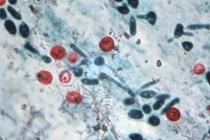
 gastroenteritis is a leading cause of acute bacterial gastroenteritis in high, low, and middle income countries. The number of confirmed cases has continued to increase across countries of the European Union (214,000 in 2013 to 246,000 in 2016 and 2017) [1], and over 800,000 cases are estimated to occur annually in the United States (data from 2000 to 2008) [2]. In low income countries  is increasingly implicated in growth faltering among children under 2 years of age [3].

Chicken products have been identified as an important risk factor for human infection by a variety of techniques including natural experiments, case–control studies, and increasingly by the application of genotypic methods [410]. Other infection sources identified by observational epidemiological studies include cattle, sheep, pigs, wild birds and the environment [10].

Alongside epidemiological studies there has been an increasing use of population genetic analyses to attribute human cases to likely sources. In these analyses, the genetic diversity of isolates from humans is compared with that of collections of  isolates obtained from possible sources of infection, allowing quantitative attribution to these sources.

Multilocus sequence type (MLST) data [8] have become the standard data used in such population genetic analyses, the results of which are generally consistent with the findings from epidemiological analyses [11,12]. Large collections of isolates have been sequenced at the MLST loci from a wide range of sources. The approaches provide a potential means of monitoring change in sources of human infection, for example those that occur as a consequence of public health and food chain interventions [13]. Insights obtained from seven-gene MLST analyses can also inform analyses using more extensive genomic data, as large well sampled datasets of whole genome sequenced (WGS) isolates accumulate from humans and putative sources. Other techniques such as multiplex PCR, PFGE, and comparative genomic fingerprinting have neither been taken up widely nor offer compatibility with whole genome based approaches.

Studies analysing MLST data vary in terms of both the analytical algorithm applied and the reference datasets used [1318] (‘reference’ data throughout this paper describe data from known reservoirs such as animal species that can act as sources of human infection). Here, our objectives on the use of MLST analysis to attribute infection in human populations to sources are to: (i) summarise the findings from these studies to date; (ii) describe the approaches used; and (iii) identify lessons to guide further genetic source attribution work using these data and more extensive genomic data as they become available.

USA -Wegmans Veggie Power Blend & Tofu Shiitake Slaw – Listeria monocytogenes

FDA

Company Announcement

Reason for Recall:

The products are being recalled because they have the potential to be contaminated with Listeria monocytogenes.

This recall is connected to a voluntary recall of vegetable products announced by Mann Packing Co., Inc. on November 3 after they were notified by the Food and Drug Administration and the Canadian Food Inspection Agency of potential contamination.

How to identify the recalled product:

  1. Veggie Power Blend

Sold on the Self-Serve Cold Bar between 9/29/2019 and 11/04/2019

Tofu Shiitake Slaw

Sold on the Self-Serve Cold Bar between 9/29/2019 and 11/04/2019

Refund information:

Customers may return to the Service Desk for a full refund.

For more information, contact:

Wegmans Food Markets at 1-855-934-3663 Monday through Friday from 8:00 AM – 7:00 PM or Saturday and Sunday from 8:00 AM – 5:00 PM

Kenya -10 Admitted to Isiolo Hospital After Eating Bad Camel Meat

All Africa

At least 10 people have been admitted to a hospital in Isiolo County after they are bad camel meat.

Officials said Friday that about 165 other people were treated and discharged.

The 175, including children and adults, consumed the uninspected meat from a camel that died mysteriously.

The victims were treated of vomiting, diarrhoea and stomach ache symptoms.

It is alleged that the owner of the camel had been directed to bury the carcass of the camel that died from unknown disease but ignored the directive.

Canada -Updated Food Recall Warning – Various raw beef and raw veal products recalled due to E. coli O157:H7

CFIA

kswfoodworld E.coli O157

Image CDC


Recall details

Ottawa, November 5, 2019 – The food recall warning issued on November 4, 2019 has been updated to include additional product information. This additional information was identified during the Canadian Food Inspection Agency’s (CFIA) food safety investigation.

Industry is recalling various raw beef and raw veal products from the marketplace due to possible E. coli O157:H7 contamination. Consumers should not consume and distributors, retailers and food service establishments such as hotels, restaurants, cafeterias, hospitals and nursing homes should not sell or use the recalled products described below.

The following products have been sold as indicated in the table below.

Ongoing investigation

See complete list of recalled products associated with this ongoing investigation.

Recalled products

Recalled products – Consumer

Brand Product Size UPC Codes Additional Information / Distribution
None Dry Aged Burgers 6.5oz Variable (clerk-served) None All ‘Packed on’ dates from 2019JUL09 up to and including 2019JUL23 Sold at Chantecler Boucherie, 1318 Queen Street West, Toronto
None Ribeye Variable (clerk-served) None All ‘Packed on’ dates from 2019JUL09 up to and including 2019JUL23 Sold at Chantecler Boucherie, 1318 Queen Street West, Toronto

What you should do

If you think you became sick from consuming a recalled product, call your doctor.

Check to see if you have the recalled products in your home or establishment. Recalled products should be thrown out or returned to the location where they were purchased.

Food contaminated with E. coli O157:H7 may not look or smell spoiled but can still make you sick. Symptoms can include nausea, vomiting, mild to severe abdominal cramps and watery to bloody diarrhea. In severe cases of illness, some people may have seizures or strokes, need blood transfusions and kidney dialysis or live with permanent kidney damage. In severe cases of illness, people may die.

Background

This recall was triggered by the CFIA’s inspection activities. The CFIA is conducting a food safety investigation, which may lead to the recall of other products. If other high-risk products are recalled, the CFIA will notify the public through updated Food Recall Warnings.

The CFIA is verifying that industry is removing the recalled products from the marketplace.

Illnesses

There have been no reported illnesses associated with the consumption of these products.

Related recalls

2019-11-04 – Various raw beef and raw veal products recalled due to E. coli O157:H7

2019-10-30 – Various raw beef and raw veal products recalled due to E. coli O157:H7

2019-10-29 – Various raw beef and raw veal products recalled due to E. coli O157:H7

2019-10-28 – Various raw beef and raw veal products recalled due to E. coli O157:H7

2019-10-25 – Various raw beef and raw veal products recalled due to E. coli O157:H7

2019-10-24 – Various raw beef and raw veal products recalled due to E. coli O157:H7

2019-10-23 – Various raw beef and raw veal products recalled due to E. coli O157:H7

2019-10-22 – Various raw beef and raw veal products recalled due to E. coli O157:H7

2019-10-21 – Various raw beef and raw veal products recalled due to E. coli O157:H7

2019-10-19 – Various raw beef and raw veal products recalled due to E. coli O157:H7

2019-10-18 – Various raw beef and raw veal products recalled due to E. coli O157:H7

2019-10-17 – Various raw beef and raw veal products recalled due to E. coli O157:H7

2019-10-16 – Various raw beef and raw veal products recalled due to E. coli O157:H7

2019-10-15 – Various raw beef and raw veal products recalled due to E. coli O157:H7

2019-10-12 – Various raw beef and raw veal products recalled due to E. coli O157:H7

2019-10-11 – Various raw beef and raw veal products recalled due to E. coli O157:H7

2019-10-10 – Various raw beef and raw veal products recalled due to E. coli O157:H7

2019-10-09 – Various raw beef and raw veal products recalled due to E. coli O157:H7

2019-10-08 – Ryding-Regency Meat Packers Ltd. brand raw beef products recalled due to E. coli O157:H7

2019-10-07 – Various raw beef and raw veal products recalled due to E. coli O157:H7

2019-10-06 – The Beef Boutique Ltd. brand raw beef products recalled due to E. coli O157:H7

2019-10-04 – Ryding-Regency Meat Packers Ltd. brand raw beef products recalled due to E. coli O157:H7

2019-10-03 – Ryding-Regency Meat Packers Ltd. brand raw beef products recalled due to E. coli O157:H7

Kenya – Kenya: Seven Brands of Peanut Butter Recalled From Kenyan Market – Aflatoxin

All Africa

Kenya Bureau of Standards (Kebs) have suspended seven peanut butter from the market following high level of Aflatoxin.

The seven products are True Nuts (Truenutz Kenya) Fressy (Fressy Food Company Limited), Supa Meal (Supacosm Products Limited), Nuteez (Jetlak Foods Limited) Sue’s Naturals (Nature’s Way Health), Zesta (Trufoods Limited) and Nutty by nature (Target Distributors).

RECALLED

Kebs has instructed the manufacturing company of the seven ‘substandard’ peanut butter to discontinue from supplying the products.

They have also been directed to recall all their products from the market immediately.


Canada -Updated Food Recall Warning – Ready-to-Eat Filicetti brand Dry Cured Italian Style Sausage (Hot) recalled due to Salmonella

CFIA

Recall details

Ottawa, November 5, 2019 – The food recall warning issued on October 17, 2019 has been updated to include additional product information. This additional information was identified during the Canadian Food Inspection Agency’s (CFIA) food safety investigation.

Filicetti Foods Inc. is recalling Filicetti brand Dry Cured Italian Style Sausage (hot) from the marketplace due to possible Salmonella contamination. Consumers should not consume the recalled product described below.

The following product has been sold in British Columbia, Ontario and Quebec.

Recalled product

Brand Product Size UPC Codes
Filicetti Dry Cured Italian Style Sausage (Hot ) Variable None 610

What you should do

If you think you became sick from consuming a recalled product, call your doctor.

Check to see if you have the recalled product in your home. Recalled products should be thrown out or returned to the store where they were purchased.

Food contaminated with Salmonella may not look or smell spoiled but can still make you sick. Young children, pregnant women, the elderly and people with weakened immune systems may contract serious and sometimes deadly infections. Healthy people may experience short-term symptoms such as fever, headache, vomiting, nausea, abdominal cramps and diarrhea. Long-term complications may include severe arthritis.

Background

This recall was triggered by CFIA food sampling activities following an investigation into a foodborne illness outbreak. The CFIA is conducting a food safety investigation, which may lead to the recall of other products. If other high-risk products are recalled, the CFIA will notify the public through updated Food Recall Warnings.

The CFIA is verifying that industry is removing the recalled product from the marketplace.

Illnesses

The Public Health Agency of Canada is investigating an outbreak of human illness. Please refer to the Public Health Notice for further details on this active outbreak investigation.

Product photos

Printer ready version of photos

  • Filicetti - Dry Cured Italian Style Sausage (Hot)

Research – Effect of Vacuum Packaging on Histamine Production in Japanese Spanish Mackerel (Scomberomorus niphonius) Stored at Various Temperatures

Journal of Food Protection

ABSTRACT

The effect of polyethylene packaging (PEP) in air cushion and vacuum packaging (VP) on histamine related to the quality of Japanese Spanish mackerel (JS mackerel) was studied with samples stored at −20, 4, 15, and 25°C. The aerobic plate count (APC), total volatile basic nitrogen (TVBN), and histamine concentrations of the PEP and VP samples stored at 25°C increased as the storage time continued. The PEP and VP samples stored at temperatures below 15°C showed lower levels of APC, TVBN, and histamine, with VP samples having considerably lower levels of APC, TVBN, and histamine than PEP samples. For the frozen JS mackerel stored at −20°C for 2 months and then thawed and stored at 25°C, the VP treatment delayed the increases of TVBN and histamine longer than did the PEP treatment. Thus, the storage of VP JS mackerel at temperatures below 4°C could prevent quality deterioration and extend shelf life.

HIGHLIGHTS
  • Lower APC, TVBN, and histamine were found in VP samples than PEP samples.

  • VP delayed TVBN, and histamine increased at 25°C in thawed JS mackerel.

  • VP JS mackerel below 4°C prevented quality deterioration and extended shelf life.

USA – Another food service worker with Hepatitis A

Food Poison Journal

According to press reports, a food handler at a Somerset County ShopRite worked while infected with hepatitis A and may exposed shoppers to the highly contagious virus, health officials announced Monday

The employee, who worked that the Somerville store’s deli, was contagious between Oct. 13 and Oct. 30 so anyone who bought food from the deli should throw it away, according to a joint statement the New Jersey and Somerset County health departments.

Anyone who ate anything from the store’s deli between those dates and was not previously vaccinated against Hepatitis A should consider getting a vaccine as soon as possible, but no later than two weeks after eating food from this deli, the statement said. For most people, the latest date would be Nov. 13.

Research- Effect of natural microbiota on growth of Salmonella spp. in fresh pork – A predictive microbiology approach

Science Direct Salmonella kswfoodworld

Abstract

This study was undertaken to model and predict growth of Salmonella and the dominating natural microbiota, and their interaction in ground pork. Growth of Salmonella in sterile ground pork at constant temperatures between 4 °C and 38 °C was quantified and used for developing predictive models for lag time, max. specific growth rate and max. population density. Data from literature were used to develop growth models for the natural pork microbiota. Challenge tests at temperatures from 9.4 to 24.1 °C and with Salmonella inoculated in ground pork were used for evaluation of interaction models. The existing Jameson-effect and Lotka–Volterra species interaction models and a new expanded Jameson-effect model were evaluated. F-test indicated lack-of-fit for the classical Jameson-effect model at all of the tested temperatures and at 14.1–20.2 °C this was caused by continued growth of Salmonella after the natural microbiota had reached their max. population density. The new expanded Jameson-effect model and the Lotka–Volterra model performed better and appropriately described the continued but reduced growth of Salmonella after the natural microbiota had reached their max. population density. The expanded Jameson-effect model is a new and simple species interaction model, which performed as well as the more complex Lotka–Volterra model.

Highlights

► High concentrations of natural microbiota in raw pork reduced growth of Salmonella. ► This growth reducing effect was temperature dependent. ► A new expanded Jameson-effect model was introduced for description of this effect.

USA/Canada – Mann Packing Co., Inc. Voluntarily Recalls Vegetable Products Sold in the United States and Canada Due to Potential Health Risks

FDA

Mann Packing Co., Inc. announced today the voluntary recall of a series of vegetable products sold to select retailers in the United States and Canada. The voluntary recall is a response to a notification by the Food and Drug Administration and the Canadian Food Inspection Agency of a potential contamination with Listeria monocytogenes. To date, public health officials have not reported any illness associated with these products.

Mann Packing is issuing this recall out of an abundance of caution. Listeria monocytogenes is an organism which can cause serious and sometimes fatal infections in young children, frail or elderly people, and others with weakened immune systems. Although healthy individuals may suffer only short-term symptoms such as high fever, severe headache, stiffness, nausea, abdominal pain and diarrhea, Listeria infection can cause miscarriages and stillbirths among pregnant women. Mann Packing will continue to work closely with the authorities to investigate the issue.

The recalled products have “Best If Enjoyed By” date of October 11, 2019 to November 16, 2019. The full list of products and all corresponding product images are available at https://mannpackingproductlist11-2019.usExternal Link Disclaimer and https://mannpackingproductlist11-2019.caExternal Link Disclaimer

Consumers who believe that they are in possession of any of the products affected by this recall should dispose of the product in an appropriate waste container.

For any inquiries or comments, all consumers are welcome to call the 24 hour customer service line at 1-844-927-0707 or email Mann Packing Co., Inc. at consumers@mannpacking.com