Category Archives: Uncategorized

Research – Exploitation of plant extracts and phytochemicals against resistant Salmonella spp. in biofilms

Science Direct

Salmonella is one of the most frequent causes of foodborne outbreaks throughout the world. In the last years, the resistance of this and other pathogenic bacteria to antimicrobials has become a prime concern towards their successful control. In addition, the tolerance and virulence of pathogenic bacteria, such as Salmonella, are commonly related to their ability to form biofilms, which are sessile structures encountered on various surfaces and whose development is considered as a universal stress response mechanism. Indeed, the ability of Salmonella to form a biofilm seems to significantly contribute to its persistence in food production areas and clinical settings. Plant extracts and phytochemicals appear as promising sources of novel antimicrobials due to their cost-effectiveness, eco-friendliness, great structural diversity, and lower possibility of antimicrobial resistance development in comparison to synthetic chemicals. Research on these agents mainly attributes their antimicrobial activity to a diverse array of secondary metabolites. Bacterial cells are usually killed by the rupture of their cell envelope and in parallel the disruption of their energy metabolism when treated with such molecules, while their use at sub-inhibitory concentrations may also disrupt intracellular communication. The purpose of this article is to review the current available knowledge related to antimicrobial resistance of Salmonella in biofilms, together with the antibiofilm properties of plant extracts and phytochemicals against these detrimental bacteria towards their future application to control these in food production and clinical environments.

USA -Dozens of norovirus-like cases linked to Brave Horse Tavern

Outbreak News Today

Food Borne Illness - Norovirus -CDC Photo

Image CDC

Public Health — Seattle & King County is reporting some 43 cases of a norovirus-like illness linked to a Seattle restaurant.

Officials say the outbreak is associated with Brave Horse Tavern on 310 Terry Ave N, in  Seattle. The patients experienced symptoms of vomiting, diarrhea, body aches, chills, and fever.

Health officials report:

Since November 27, 2019, 30 people from 5 meal parties reported becoming ill after consuming food and drinks from Brave Horse Tavern on November 23 and 24, 2019.

We identified at least 11 employees who experienced symptoms consistent with norovirus dating back to November 24, 2019. At least 2 employees had 2 total household members with symptoms dating back to November 20, 2019.

Research – Inactivation kinetics of inoculated Escherichia coli and Listeria innocua in fresh‐cut Chinese cabbage using sweeping frequency ultrasound

Wiley Online

Abstract

Sweeping frequency ultrasound washing is a recent technology of applying varying ultrasound frequencies in the decontamination of fresh produce. Ultrasound inactivation of Escherichia coli and Listeria innocua inoculated on fresh‐cut Chinese cabbage was investigated at sweeping frequencies of 28 ± 2 to 68 ± 2 kHz for washing time of 5–40 min. The survival ratio of E. coli and L. innocua decreased with the time of exposure to ultrasound washing and varying frequencies. E. coli were more sensitive to ultrasound washing than L. innocua, achieving >3.0 log reductions after 10 min of washing with 40 ± 2 kHz. A nonlinear Weibull model was used to describe the experimental data, and the fitness of the model was evaluated by the coefficient of determination (R2) and the root mean square error (RMSE). The model used provided a good fit with R2 ≥ .98 for both bacteria and RMSE values in the range of 0.03–0.21 and 0.02–0.32 for E. coli and L. innocua, respectively.

Practical Application

Ultrasound decontamination is an alternative nonthermal technology that has been applied in recent years to improve the microbial safety of fresh produce. The bacterial inactivation is predominantly attributed to cavitation, an occurrence that interrupts cellular arrangement and function. With the known significance of sanitization in the processing of vegetables, it is imperative to develop and appraise novel approaches that contribute to the microbial safety of these fresh produce. Largely, the results of our study could guide the design of new ultrasonic fresh produce wash systems in addition to current industrial practice related to frequency selection and use of ultrasound during fresh produce sanitation.

Research – Interaction and inactivation of Listeria and Lactobacillus cells in single and mixed species biofilms exposed to different disinfectants

Wiley Online

Abstract

Listeria spp. are ubiquitously found in both the natural and the food processing environment, of which Listeria monocytogenes is of an important health risk. Here, we report on the formation of single and mixed species biofilms of L. monocytogenes/Listeria innocua and Lactobacillus plantarum strains in 24‐well polystyrene microtiter plates and on the inactivation of 24‐hr and 72‐hr biofilms using quaternary ammonium compound‐, tertiary alkyl amine‐, and chlorine‐based disinfectants. Fluorescent in situ hybridization (FISH) and LIVE/DEAD BacLight staining were applied for 72‐hr L. innocua–L. plantarum mixed biofilms in the LabTek system for the species identification and the reaction of biofilm cells to disinfectants, respectively. L. monocytogenes/L. innocua were more resistant to disinfectants in 72‐hr than in 24‐hr biofilms, whereas L. plantarum strains did not show any significant differences between 72‐hr and 24‐hr biofilms. Furthermore, L. innocua when grown with L. plantarum was more resistant to all disinfection treatments, indicating a protective effect from lactobacilli in the mixed species biofilm. The biofilm formation and reaction to disinfectants, microscopically verified using fluorescence in situ hybridization and LIVE/DEAD staining, showed that L. innocua and L. plantarum form a dense mixed biofilm and also suggested the shielding effect of L. plantarum on L. innocua in the mixed species biofilm.

Research – Identification and genotyping of Listeria monocytogenes in the chicken shredding line

Wiley Online

Abstract

The present research was carried out to determine the presence of Listeria monocytogenes in the equipment, staff, and products in the chicken shredding facilities operating in Samsun, and to serotype and genotype the isolates by PCR and PFGE analysis, respectively. Of the total of 192 samples tested, 25 were found to be L. monocytogenes positive from which 51 isolates were acquired. In serotyping of the 51 isolates; 47 (92.2%) and four isolates (7.8%) were identified as 1/2a (3a) and 1/2c (3c), respectively. Twenty‐six of the 51 isolates (51%) were resistant to at least one antibiotic, and 13 (25.5%) were resistant to more than one antibiotic. In the PFGE evaluation, at least 80% similarity was taken as a basis, and in the dendrogram, it was determined as a result of restricting with the Apal enzyme that the isolates were distributed to 25 different clusters and 45 subsets, and as a result of restricting with the AscI enzyme, they were distributed to 29 different clusters and 36 subsets.

Practical Application

Listeria monocytogenes constitutes a major problem for the food industry due to its widespread availability in nature and its role as an environmental contaminant in food processing plants.

Research – Listeria monocytogenes in dairy plants in Southern Brazil: Occurrence, virulence potential, and genetic diversity

Wiley Online

Abstract

Listeria monocytogenes is a foodborne pathogen widely distributed in nature. The aims of this study were to evaluate the occurrence of Listeria spp. in three dairy plants located in Southern Brazil, and to characterize the L. monocytogenes isolates according to serotypes, virulence genes, and PFGE. A total of 212 samples were collected, and 15 were positive for Listeria spp., of which seven were L. monocytogenes. L. monocytogenes isolates harbored all the 11 virulence genes evaluated and belonged to the main virulent serotypes, indicating potential risks of listeriosis for consumers. The PFGE analysis indicated low genetic diversity among the isolates, and the same pulsotypes were detected in a 2‐month period, indicating persistence of L. monocytogenes.

Practical applications

The study evaluated the occurrence of Listeria spp. in three dairy plants located in Southern Brazil, as well as characterized the L. monocytogenes isolates according to serotypes, virulence genes and PFGE. The presence of Listeria species indicated postprocessing contamination in the dairy plants and threat to public health. Furthermore, the isolates showed a low genetic diversity, since only two pulsotypes were identified, highlighting the strain’s persistence in the processing environment and/or the presence of clones in this region.

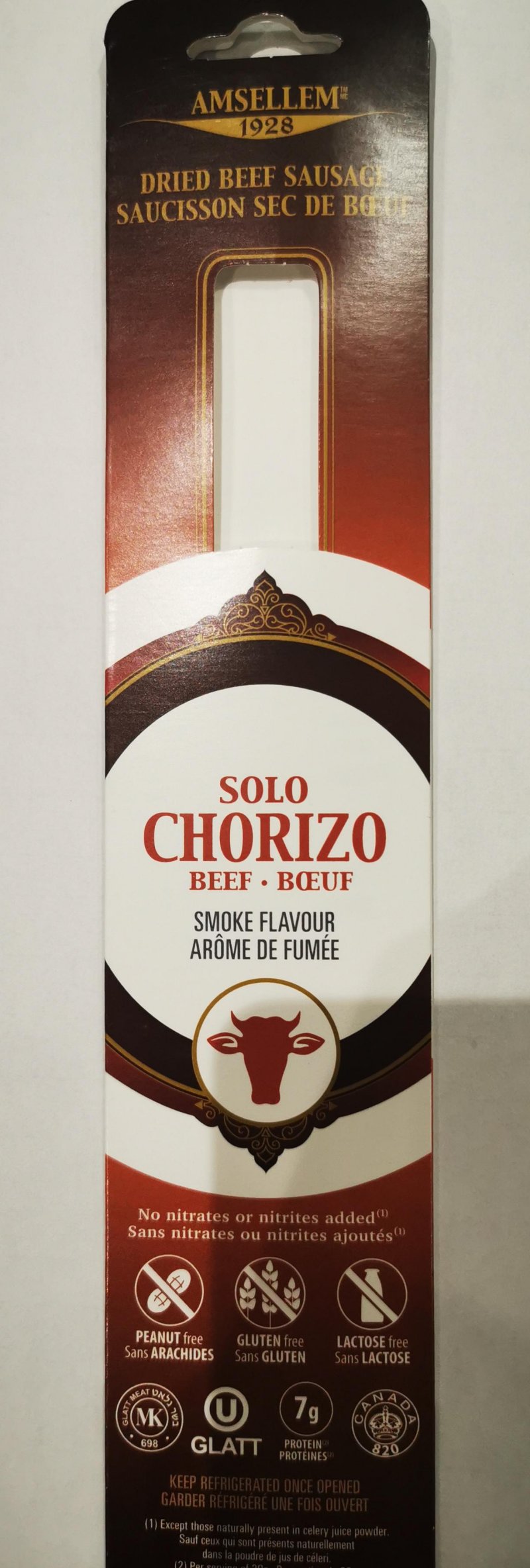
Canada – Food Recall Warning – Amsellem brand Solo Chorizo – Dried Beef Sausage recalled due to Salmonella

CFIA

Recall details

Ottawa, December 4, 2019 – Usine Amsellem Inc. is recalling Amsellem brand Solo Chorizo – Dried Beef Sausage from the marketplace due to possible Salmonella contamination. Consumers should not consume the recalled product described below.

Recalled product

Brand Product Size UPC Codes
Amsellem Solo Chorizo – Dried Beef Sausage 28 g 6 28055 38930 9 91002DC-707
BB 2020 AVR 08

Illnesses

There have been no reported illnesses associated with the consumption of this product.

Product photos

Printer ready version of photos

  • Amsellem - Solo Chorizo – Dried Beef Sausage

Research – Massachusetts General Hospital publishes new Shigella research

Outbreak News Today

The bacterial pathogen Shigella, often spread through contaminated food or water, is a leading cause of mortality in both children and older adults in the developing world. Although scientists have been studying Shigella for decades, no effective vaccine has been developed, and the pathogen has acquired resistance to many antibiotics. The recent discovery of an early adherence step in the infection cycle by researchers at Massachusetts General Hospital (MGH) could provide a new therapeutic target or even a new method for vaccine development.

As it moves through the digestive system, Shigella traverses the small intestine and subsequently infects the large intestine, causing cramping, diarrhea and dehydration in the disease called shigellosis. “We wanted to determine how Shigella makes its first contact with epithelial cells in the early stages of disease development,” says Dr. Christina Faherty, senior author on the study published in mSphere. “Because of certain gene sequence annotations, and the way that Shigella appeared following growth in standard laboratory media, it was believed that Shigella strains do not produce fimbriae or other adherence factors.” Fimbriae are short hair-like fibers that bacterial cells use to adhere to individual epithelial cells to instigate infection.

Research -Anti‐listeria activity and shelf life extension effects of Lactobacillus along with garlic extract in ground beef

Wiley Online

Abstract

The current study investigates the effect of Lactobacillus reuteri and Lactobacillus plantarum combined with water extract of garlic on microbial growth, chemical changes, and sensory attributes in ground beef samples at refrigeration condition (+4°C) up to 12 days of storage. in vitro study revealed that garlic extract combined with L. reuteri or L. plantarum caused 2.13 and 2.57 log reduction in the Listeria monocytogenes count, respectively. Combination of L. plantarum and 1% garlic extract significantly (p < .05) reduced aerobic mesophilic bacteria (1.64 log cycle) and L. monocytogenes (1.44 log cycle) counts in ground beef. Lipid oxidation was also significantly (p < .05) lower in samples treated with L. plantarum plus garlic extract (1%). Furthermore, higher sensory scores were received by samples treated with Lactobacillus plus garlic extract. In conclusion, the combination of L. plantarum and garlic extract was found to be suitable to use in ground beef by controlling the L. monocytogenes growth and increasing its shelf life.

Practical Applications

Garlic extract not only has an antimicrobial activity but also has a stimulatory effect on the Lactobacillus spp. growth. On the other hand, some Lactobacillus strains can inhibit pathogenic bacteria. Then, the combination of Lactobacillus and garlic extract may be used to produce new bio‐preserved and functional meat products. The current study indicated the potential of Lactobacillus combined with garlic extract to control microbial and chemical changes in ground beef. The combination of Lactobacillus plantarum and garlic extract significantly (p < .05) reduced Listeria monocytogenes counts and lipid oxidation rates and improved the sensory scores in ground beef.

USA – Investigation of E. coli O157:H7 Outbreak Linked to Romaine from Salinas, California, November 2019

FDA

kswfoodworld E.coli O157

Image CDC


Recommendation

FDA, CDC, and state health authorities are investigating an outbreak of illnesses caused by E. coli O157:H7 in the United States. Epidemiologic, laboratory, and traceback evidence indicates that romaine lettuce from the Salinas, California growing region is a likely source of this outbreak. According to CDC, there have been 102 cases reported in 23 states.  The latest date that one of these patients reports becoming ill was on November 18, 2019.

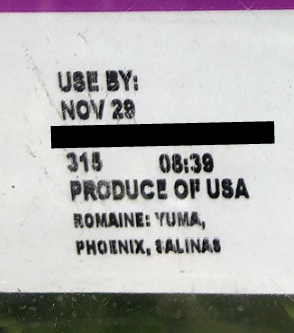
Romaine from Salinas, California Label Enjoy By December 2, 2019


Romaine from Salinas, California Label Use By November 29, 2019

Consumers: Consumers should not eat romaine lettuce harvested from Salinas, California. Additionally, consumers should not eat products identified in the recall announced by the USDA on November 21, 2019.

Romaine lettuce may be voluntarily labeled with a harvest region. If this voluntary label indicates that the romaine lettuce was grown in “Salinas” (whether alone or with the name of another location) do not eat it. Throw it away or return it to the place of purchase.  If romaine lettuce does not have information about harvest region or does not indicate that it has been grown indoors (i.e., hydroponically- and greenhouse-grown), throw it away or return it to the place of purchase. Consumers ordering salad containing romaine at a restaurant or at a salad bar should ask the staff whether the romaine came from Salinas.  If it did, or they do not know, do not eat it.

At this time, romaine lettuce that was harvested outside of the Salinas region has not been implicated in this outbreak investigation. Hydroponically- and greenhouse-grown romaine, which is voluntarily labeled as “indoor grown,” from any region does not appear to be related to the current outbreak. There is no recommendation for consumers to avoid using romaine harvested from these other sources.

Restaurants and Retailers: Restaurants and retailers should not serve or sell romaine harvested from Salinas, California.  If you do not know the source of your romaine lettuce, and if you cannot obtain that information from your supplier, you should not serve, nor sell it.

Suppliers and Distributors: Suppliers, distributors and others in the supply chain should not ship or sell romaine harvested in Salinas, California. If the source of the romaine lettuce is unknown, you should not ship, nor sell the product.

For Restaurants, Retailers, Suppliers and Distributors: Currently, the FDA does not have enough traceback information to identify the specific source of the contamination that would allow us to request a targeted recall from specific growers.

FDA requested that industry voluntarily withdraw romaine grown in Salinas from the market and is requesting that industry withhold distribution of Salinas romaine for the remainder of the growing season in Salinas. Without more specific traceback information, this was the most efficient way to ensure that contaminated romaine was off the market.

At this time, romaine lettuce that was harvested outside of the Salinas region has not been implicated in this outbreak investigation. Hydroponically- and greenhouse-grown romaine, which is voluntarily labeled as “indoor grown,” from any region does not appear to be related to the current outbreak. There is no recommendation for consumers or retailers to avoid using romaine harvested from these other sources.

Update

According to the CDC, as of December 2, 2019, 102 people infected with the outbreak strain of E. coli O157:H7 have been reported from 23 states. The case patients report that illnesses started on dates ranging from September 24, 2019 to November 18, 2019. Illness onset dates reported to date are prior to the public warning issued on November 22.

Based on available traceback data, FDA requested that industry voluntarily withdraw romaine grown in Salinas from the market and is requesting that industry  withhold distribution of Salinas romaine for the remainder of the growing season in Salinas. This was the most efficient way to ensure that contaminated romaine was off the market.

Products that were part of the U.S. Department of Agriculture’s Food Safety and Inspection Service (FSIS) announced recall related to this outbreak investigation had a “Best By” of Nov. 1 or earlier, more than one month ago, and should no longer be on the market.

FDA continues to actively investigate the cause of this outbreak. FDA, with the assistance of staff from the California Department of Public Health and the California Department of Food and Agriculture, immediately deployed investigators to three farms in the Salinas area that were identified based on the traceback investigation. On the farms, investigators sampled soil and animal droppings, compost, water, and other potential environmental sources. The samples and information collected during the farm investigations are currently being analyzed. Investigators are attempting to identify any factors that could have led to contamination. Additionally, state partners are testing romaine lettuce samples for E. coli that they have collected from stores and from case patients’ homes.

The FDA and state partners are conducting a traceback investigation to determine whether a common supplier or source of contamination can be identified.  This investigation involves collecting and analyzing potentially hundreds of distribution records to trace the romaine that may have been available at points of exposure reported by ill people to their source. We are continuing to collect these records.

This remains an evolving and fluid situation. Information about our findings will be forthcoming as the investigation proceeds.

The Salinas region as defined by the United Fresh Produce Association and the Produce Marketing Association Romaine Taskforce ReportExternal Link Disclaimer includes: Santa Cruz, Santa Clara, San Benito, and Monterey counties in California.

Case Counts

Total Illnesses: 102
Hospitalizations: 58
Deaths: 0
Last illness onset: November 18, 2019
States with Cases:  AZ (3), CA (4), CO (6), FL (1), IA (1), ID (3), IL (1), MD (4), MI (1), MN (3), MT (1), NE (1), NJ (7), NC (1), NM (2), OH (12), OR (1), PA (8), SD (1), TX (4), VA (4), WA (2), WI (31)