Category Archives: Uncategorized

Research – Slovenian study reveals low levels of C. difficile in food

Food Safety News Clost

Researchers in Slovenia have described results from a long-term, national Clostridioides difficile food surveillance project. Positive results were found in meat, fresh produce and poultry.

The three-year period of testing revealed a low proportion of Clostridioides — formerly Clostridium — difficile contaminated food and high genotype variability. As the risk of infection associated with Clostridioides difficile contaminated food is unknown, no measures were recommended for positive results.

Because of an increasing association between Clostridioides difficile and food, in 2015, the Administration of the Republic of Slovenia for Food Safety, Veterinary Sector and Plant Protection (UVHVVR) included it in national food surveillance. In Slovenia, the number of cases increased from 316 in 2013 to 665 in 2017.

Retail minced meat and meat preparations such as beef, pork and poultry were sampled from 2015 to 2017. They were collected at food markets and grocery stores in all Slovenian regions. Selected raw retail vegetables, leaf salads and root vegetables, and ready-to-eat salads were sampled during 2016 and 2017 and seafood only in 2017.

USA – Blue Bell Directors Reach $15 Million Listeria-Outbreak Deal

Bloomberg

Blue Bell Creameries Inc. directors agreed to a $15 million settlement resolving claims that their alleged mismanagement led to a 2015 listeria outbreak that forced the ice-cream maker to recall all products.

The deal means a Blue Bell shareholder won’t get a chance at an April 27 trial to determine whether Blue Bell’s board did enough to oversee the cleanliness of the company’s plants. Delaware Chancery Court Judge Joseph Slights III must approve the deal.

Blue Bell officials agreed to settle to cut down the “expense, inconvenience and distraction” the listeria allegations caused, according to a filing Friday in Chancery Court. The $15 million in cash will be returned to the company under the terms of the deal.


France – Salmonella – Meat Preparations

AFSCA

Recall from Spar Colruyt Group
Product: several meat preparations with the expiry date (DLC) of 04/30/2020
Problem: presence of Salmonella


During microbiological checks at the supplier, the presence of Salmonella was noted in a raw material used for different meat preparations bearing the expiry date (DLC) of 04/30/2020 .

In consultation with the AFSCA, Spar Colruyt Group has therefore decided to withdraw the products concerned from the sale.


Customers who bought these products are asked not to consume them and to bring them back to the store, where they will be reimbursed. In the meantime, all stores have removed the affected products from the shelves.

Product description:

Check the expiration date and the batch code of the meat you bought from Spar Colruyt Group between 24/4/2020 and 29/4/2020.

General information on the packaging of the meat concerned:
Use by date (DLC): 30/4/2020
Lot number: 02017114

Does the above information correspond to that of the product purchased?
Check the descriptions below. Bring the products back to your store.

  • Kids mix skewer
  • Bacon-cheese duo sausage
  • Bacon sausage
  • Pork / beef sausages
  • Minced pork-beef ± 250 g
  • Ground pork-beef ± 550 g
  • Bacon Burgers
  • Flemish burger
  • Kidsburger
  • BBQ sausage

These products have been offered for sale in the following stores:
Spar Colruyt Group

Infographics -Did you know that superbugs can be found in food?

WHO

Information – World Food Safety Day 2020

WHO

The second World Food Safety Day (WFSD) will be celebrated on 7 June 2020 to draw attention and inspire action to help prevent, detect and manage foodborne risks, contributing to food security, human health, economic prosperity, agriculture, market access, tourism and sustainable development.

Following the success of the first celebration in 2019, this year again WFSD reinforces the call to strengthen commitment to scale up food safety made by the Addis Ababa Conference and the Geneva Forum in 2019 under the umbrella of “The Future of Food Safety”.  WHO, in collaboration with the Food and Agriculture Organization of the United Nations (FAO) is pleased to facilitate Member States efforts to celebrate the World Food Safety Day.

Under the theme “Food safety, everyone’s business”, the action oriented campaign will promote global food safety awareness and call upon countries and decision makers, the private sector, civil society, UN organizations and the general public to take action.

Food safety is a shared responsibility between governments, producers and consumers.  Everybody has a role to play from farm to table to ensure the food we consume is safe and will not cause damages to our health.  Through the World Food Safety Day, WHO pursues its efforts to mainstream food safety in the public agenda and reduce the burden of foodborne diseases globally.

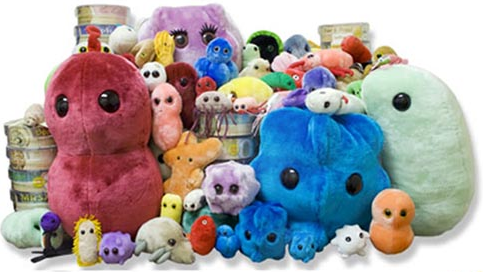
Interesting ?? – E.coli Earrings :)

Giant Microbes

E. coli earrings cardboard back


Australia – Juicy Isle Pty Ltd — Pure Tassie Apple and Blackcurrant 1.5L – Patulin

FSANZ

Photograph of Pure Tassie Apple Blackcurrant 1.5L

Identifying features

Best before date
6 October 2020
Other
EAN 9315251901190/ APN 09315251901206

What are the defects?

The recall is due to microbial (mycotoxin patulin) contamination.

What are the hazards?

Food products contaminated with mycotoxins (patulin) may cause illness if consumed.

What should consumers do?

Any consumers concerned about their health should seek medical advice and should return the product to the place of purchase for a full refund.

For further information, please contact Juicy Isle Pty Ltd by phone on 03 6274 5999 or visit www.juicyisle.com.au

Traders who sold this product

NSW – Coles, IGA, Original Organic Juice
QLD – Coles, IGA
VIC – Coles, IGA
TAS – Hills Street Grocer, IGA Strahan, Port Cygnet Grocer, Macquarie
Supermarket, IGA Dover, Oyster Cove Fruit and Vegetable Store
SA – Coles, Drake’s, Foodland and On the Run stores
WA – IGA

Where the product was sold
International
New South Wales
Queensland
South Australia
Tasmania
Victoria
Western Australia
Dates available for sale
  • 1 January 2020 – 23 April 2020

Recall advertisements and supporting documentation

Coordinating agency

Food Standards Australia New Zealand is the coordinating agency for this recall.


Australia – Kimchi Company Kimchi 600g and 300g – Recall –

FSANZ

Product information

The Kimchi Company Pty Ltd is conducting a recall of The Kimchi Company Kimchi 600g and 300g jars.  The product has been available for sale at Harris Farm Markets in NSW.

Date markings

Exp Date 22.09.2020

Kimchi Company Kimchi

Problem

The recall is due to Potential microbial contamination due to under-allocation of salt.

Food safety hazard

Food products with the potential for microbial contamination may cause illness if consumed.

Country of origin

South Korea.

What to do​

Any consumers concerned about their health should seek medical advice and should return the products to the place of purchase for a full refund.

For further information please contact:

The Kimchi Company Pty Ltd
Ph: 0449 051 894
www.kimchicompany.com.au

Related links:

Research – Food Safety and Invasive Cronobacter Infections during Early Infancy, 1961–2018

CDC

Abstract

Invasive Cronobacter infections among infants are associated with severe neurologic disabilities and death. Early Cronobacter reports typically featured hospitalized and preterm infants and recognized contaminated powdered infant formula (PIF) as a transmission vehicle. To clarify recent epidemiology, we reviewed all cases of bloodstream infection or meningitis among infants that were reported to the Centers for Disease Control and Prevention and in the literature (1961–2018; n = 183). Most infants were neonates (100/150 [67%]); 38% (42/112) died, and 79% (81/102) had reported recent PIF consumption. In the final quarter of the study period (2004–2018), case counts were significantly higher (global average 8.7 cases/year); among US cases, significantly higher proportions occurred among full-term (56% [27/48]) and nonhospitalized (78% [42/54]) infants. PIF contamination, most commonly from opened containers, was identified in 30% (21/71) of investigations. Our findings reaffirm the need to promote safer alternatives for infant feeding, particularly among neonates.

Research – Multiple Cruise Ship Outbreaks of Norovirus Associated with Frozen Fruits and Berries — United States, 2019

CDC norovirus-1080x655

From July to September 2019, cruise line X experienced sudden, unexplained outbreaks (>3% of the passenger population) of acute gastroenteritis (AGE) among passengers on 10 cruise ships sailing in Europe. The rapid onset of vomiting and diarrhea followed by recovery within 24 hours were consistent with norovirus infection. Investigations by the cruise line throughout the summer yielded no clear source of the outbreaks even after extensive food testing. On September 18, 2019, CDC’s Vessel Sanitation Program (VSP) was notified of an outbreak of AGE on cruise ship A of cruise line X, sailing into U.S. jurisdiction (defined as passenger vessels carrying ≥13 passengers sailing to the United States from a foreign port) from Germany to New York City (1). By the end of the 19-day voyage on September 23, a total of 117 of 2,046 (5.7%) passengers and eight of 610 (1.3%) crew members met the case definition for AGE (three or more loose stools within a 24-hour period or more than normal for the patient, or vomiting plus one other sign or symptom including fever, diarrhea, bloody stool, myalgia, abdominal cramps, or headache). Four stool specimens were collected and tested for norovirus at CDC’s National Calicivirus Laboratory; three tested positive for norovirus by quantitative reverse transcription–polymerase chain reaction (RT-PCR). No outbreak source was determined after a field investigation by a VSP team on September 22.